If you are unvaccinated for Covid-19 and end up in the hospital, will you get a lesser degree of care?
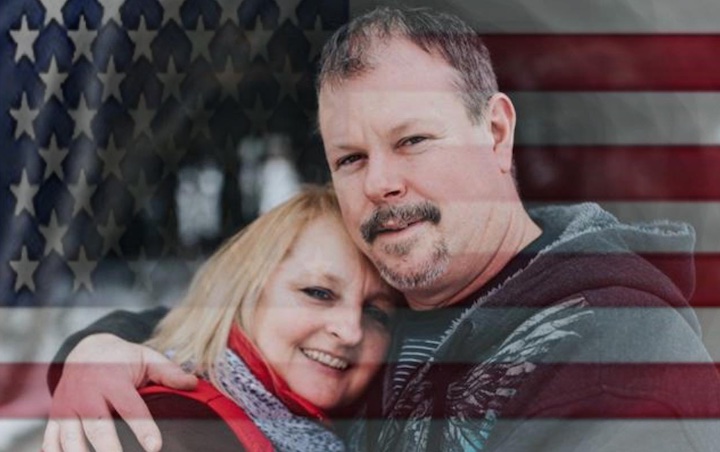
Dwayne Downes of Homer, Alaska thinks so. Both he and his wife contracted Covid-19, and while he lived to tell the story and was not hospitalized, after more than two and a half weeks of hospitalization, his wife Fannie died on Sept. 15.
Although recent publicity has been given to how some unvaccinated Covid patients treat hospital workers, with reports of patients spitting, verbally abusing, and sometimes becoming combative, some patients have their own version of the relationship between themselves and the hospitals.
(This is one man’s account, in which he asserts unvaccinated patients are treated differently. The author doesn’t seek to extrapolate it to all doctor-patient experiences.)
Dwayne Downes said the care his wife Fannie received at South Peninsula Hospital was sub-par. He said she was put in a room and all but forgotten about by the staff. Then, when she went downhill, she was transferred to Providence Medical Center in Anchorage, and the same thing happened — she was far down the hall, and he feels she was ignored, her chart not read or understood by the medical staff, and he thinks that was, in part, because of her status as an unvaccinated patient.

Fannie had been medevaced to Providence. While Dwayne drove to Anchorage to be by her side, he was allowed to see her just once, then the hospital refused to allow him in, until his niece, who is a nurse from out of state, called and pleaded with Providence to let her uncle be with his wife. Finally, the people in charge of the decision relented.
Dwayne discovered in talking to his niece that after two and a half weeks, his wife was no longer infectious but was being isolated as though she was infectious and left to languish. She had been hospitalized for two and a half weeks at South Peninsula Hospital before she got to Providence. Downes was, in the end, allowed to hold her hand while she died.
Dwayne observed that she was given minimal care at both places.
“They had the attitude of ‘Let God sort it out,'” he said.
“I don’t have proof of that. Those beds are full. They have semi-trucks lined up. People are dying. But I saw the front section all the way to the back section where Fannie was. And they gave her minimal care, just tubes through a glass door. I don’t understand why they were just letting her die, while in the front, they are caring for them,” he said.
Fannie was raised as an Amish, and later became a Mennonite. The couple carved out a piece of paradise in Homer, where Fannie raised chickens, and worked hard on their property, while Dwayne worked at a tire shop. Amish are very skeptical of the Covid-19 vaccines, in general. They are some of the most resistant people in America when it comes to this particular vaccine protocol, and they are conservative in general.
By the time Fannie was in Providence, she had had a collapsed lung that had been badly repaired and needed to be re-repaired, and blood clots, and although Dwayne asked for Ivermectin or other drugs he had learned about, the doctors said no, it would not help at that stage.
“I thought she would do better. But she was in the back section. They would do nothing for her. They were trying to convince me to pull the plug,” Dwayne said. He called her family and got their permission to allow her to die; her wish was for no life support.
Dwayne was able to hold her hand, and assure her he loved her, and that her family and loved ones would miss her; he is deeply grieving her loss.
Today, Dwayne is back at the tire shop where he works, making a living helping people get their cars and trucks ready for winter roads. But he wants his story told because he doubts he is not the only one who has watched an unvaccinated loved one pushed to the back of the line for care.
As he said, “I can’t prove it,” but it’s what it felt like to him.
The celebration of life for Fannie Downes will be at 3 pm, Oct 9 at Moose Run, out East End Rd.