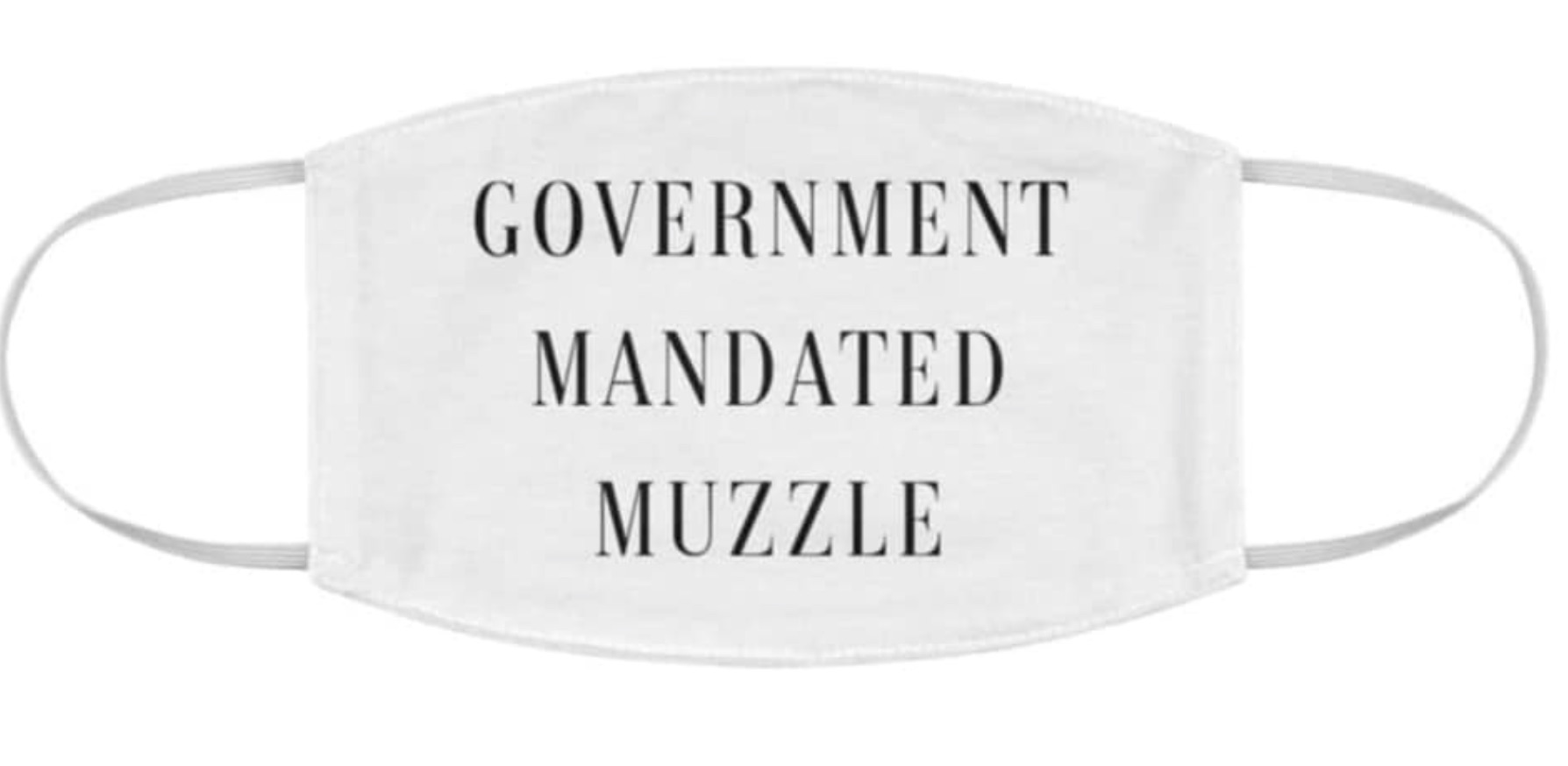
The Anchorage mask law will go into effect if and when the Anchorage Assembly votes to override the veto of Mayor Dave Bronson. This is not AO 2021-91, but a sneak look-alike “emergency ordinance” that required no public testimony.
When it does go into effect Thursday evening, with the presumed veto override, all who are in Anchorage must wear masks over their nose and mouth when indoors in a public place, or when gathering with people who are not members of one’s household.
The ordinance requires:
- Medical grade masks or cloth, polypropylene, paper or other face coverings.
- Masks or face coverings should rest snugly above the nose, below the mouth, and on the sides of the face; N95 masks are recommended.
- The following are not face coverings because they allow droplets to be released: a covering that incorporates a valve that is designed to facilitate easy exhalation, mesh masks, lace masks or other coverings with openings, holes, visible gaps in the design or material, or vents.
- The mask law does not specifically ban neck gaiter-style masks. The “should” portion of the ordinance leaves wide latitude for interpretation by the public for how to properly wear a mask.
Who must wear the mask
All individuals must wear masks or face coverings over their noses and mouths when they are indoors in areas which are open to the public or which are communal spaces shared with other individuals not from one’s household.
Exemptions exist for cases such as children under the age of five, individuals who cannot tolerate a mask due to a physical or mental disability, and religious assemblies. See below for the full list.
Businesses may choose to allow individuals who request an accommodation under the ADA to wear a face shield or accommodate these individuals through alternate means, such as curbside, delivery, or telephonic service.
Face shields may be permitted for the following individuals, who must wear a face shield whenever a face covering would be required unless it is impossible to do so:
Any individual who cannot tolerate a mask due to a physical or mental disability; the individual’s or guardian’s statement that they are exempt is sufficient evidence;
Also exempt are individuals who are communicating with someone who is deaf or hard of hearing; Individuals performing an activity that cannot be conducted or safely conducted while wearing a mask (for example, a driver experiencing foggy glasses, a dental patient receiving care, an equipment operator where there is a risk of dangerous entanglement).
The ordinance does not apply to the following categories of businesses, people, or activities:
Any child under the age of 5 years but face coverings are recommended for children over 2 years of age.
Individuals who are incarcerated, in police custody, or inside a courtroom; these individuals should follow guidance particular to their location or institution. Presenters, musicians, others communicating to an audience or being recorded, if they are 10 feet from the audience and all members of the audience are wearing face coverings.
Individuals may remove their face coverings to eat, drink, or “briefly scratch an itch.” Employees within their own fully enclosed office or workspace or within an unenclosed workspace if they are totally alone are allowed to remove their masks.
Fully vaccinated employees working in a separate room from the public and unvaccinated coworkers. Employees wishing to utilize this exception must be able to show a “vaccine passport” to their employer. All employees in the separate room that are vaccinated in a manner can be separated from other workers, “consistent with workplace anti-discrimination laws.”
Individuals performing an activity that cannot be conducted or safely conducted while wearing a face covering are exempt.
Individuals who cannot tolerate a face covering due to physical or mental disability are exempt. The individual’s or a guardian’s statement that they are exempted is sufficient evidence.
All athletic activities when a person is actively engaged in that activity are exempt. Indoor gyms, fitness centers, boutique fitness clubs, and other businesses or entities, including the school district, may require face coverings regardless of this exemption. This exemption does not apply to spectators not engaged in athletic activity.
Religious assemblies are exempt.
The Mayor and his executive team are exempt, but not the employees of the municipality, evidently.
Read the full text of the emergency ordinance EO-3 at: www.Muni.org/Assembly
“Businesses, employers, and building owners shall deny admittance to any individual who fails to comply with this Emergency Ordinance, as long as the regulation is applied in a manner consistent with the federal Americans with Disabilities Act (ADA) and any other applicable provision of law,” the ordinance states.
Employers must make sure employees who are present in the workplace have access to and wear masks or face coverings when required.
The Municipality reserves the right to use all available enforcement options to assure compliance with this Emergency Ordinance. Violation of this Ordinance does not create grounds for residents to harass individuals who do not comply with it, the ordinance states.
How long will it last?
The Emergency Order goes into effect immediately and expires when Anchorage has reached a point of sufficient medical capacity or no later than 60 days without further action by the Assembly.
The public health emergency does not end until either (1) crisis standards of care are ended at two of three local hospitals for 14 consecutive days; or (2) there is no longer substantial or high community transmission per the CDC for 14 consecutive days.
“When the Municipality of Anchorage is experiencing a public health emergency, the requirements of this ordinance shall be in effect,” the ordinance states.
The municipality is not experiencing a public health emergency, except that this ordinance falls under the national emergency declared by President Biden, which stays in effect through February 2022, which effectively means the mask ordinance can continue until the president changes the emergency order.