
Great Britain several months ago ended Covid shots for young children, not offering the vaccinations to children under the age of 12 unless they are at high risk for complications from Covid.
The UK Health Security Agency joined Sweden, Finland, Norway, and Denmark, and other countries that no longer recommend mRNA shots to healthy children.
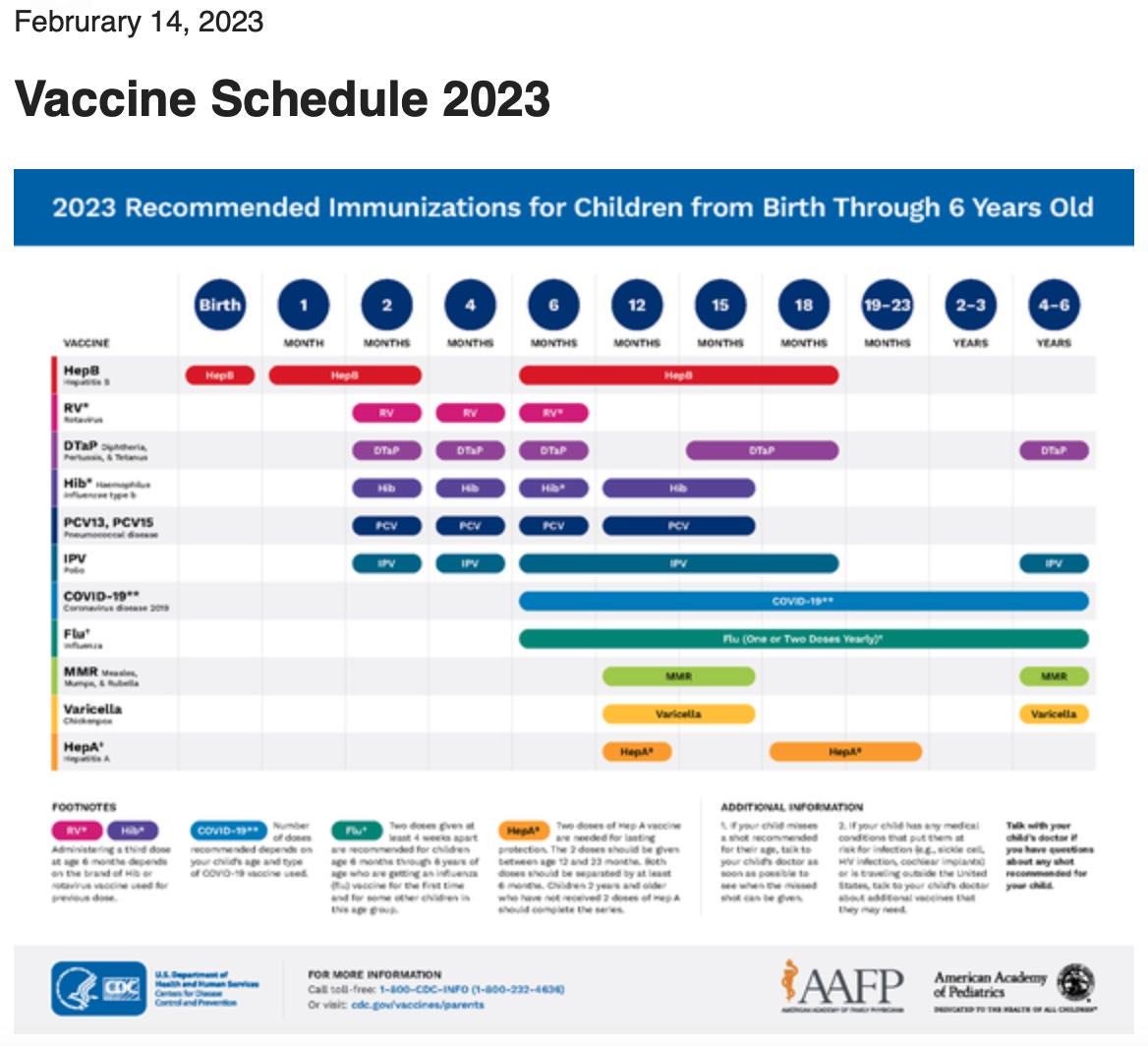
Yet according to the most recent recommendation by the Alaska Department of Health, the Centers for Disease Control and Prevention, and the American Academy of Pediatrics, babies as young as six months should get a Covid shot or two and continue getting boosters on whatever recommended schedule they are issued and approved by medical authorities. Alaska’s recommendation came out officially on Feb. 14.
“The updates to the 2023 Immunization Schedules reflect the schedule changes voted on and approved during the ACIP meeting that occurred in October 2022. The most cross-cutting change is the inclusion of the primary series and other details of authorized or approved COVID-19 vaccines for both children and adults in the Tables and Notes sections of the Schedules,” the Department of Health advised.
But, as Dr. Rochelle Walensky, head of the CDC, told a Senate panel last week, the only reason the Covid vaccination was added to the schedule of “required” childhood vaccinations is that the Advisory Committee on Immunization Practices determined “it was the only way it could be covered in our ‘Vaccines for Children’ program,” which pays for vaccinations for uninsured children. She emphasized the word “only.”
In June of 2022, the Denmark announced it was changing its recommendations for Covid vaccinations: “From 1 July, 2022, it will no longer be possible for children and youngsters under the age of 18 to receive the 1st jab, and from 1 September, 2022, it will no longer be possible to receive the 2nd jab,” the Danish Health Authority said. Fact-checkers from the AP and Reuters pushed back against news organizations that described this as a ban on the vaccinations for children under the age of 18, labeling that characterization as “false.”


