
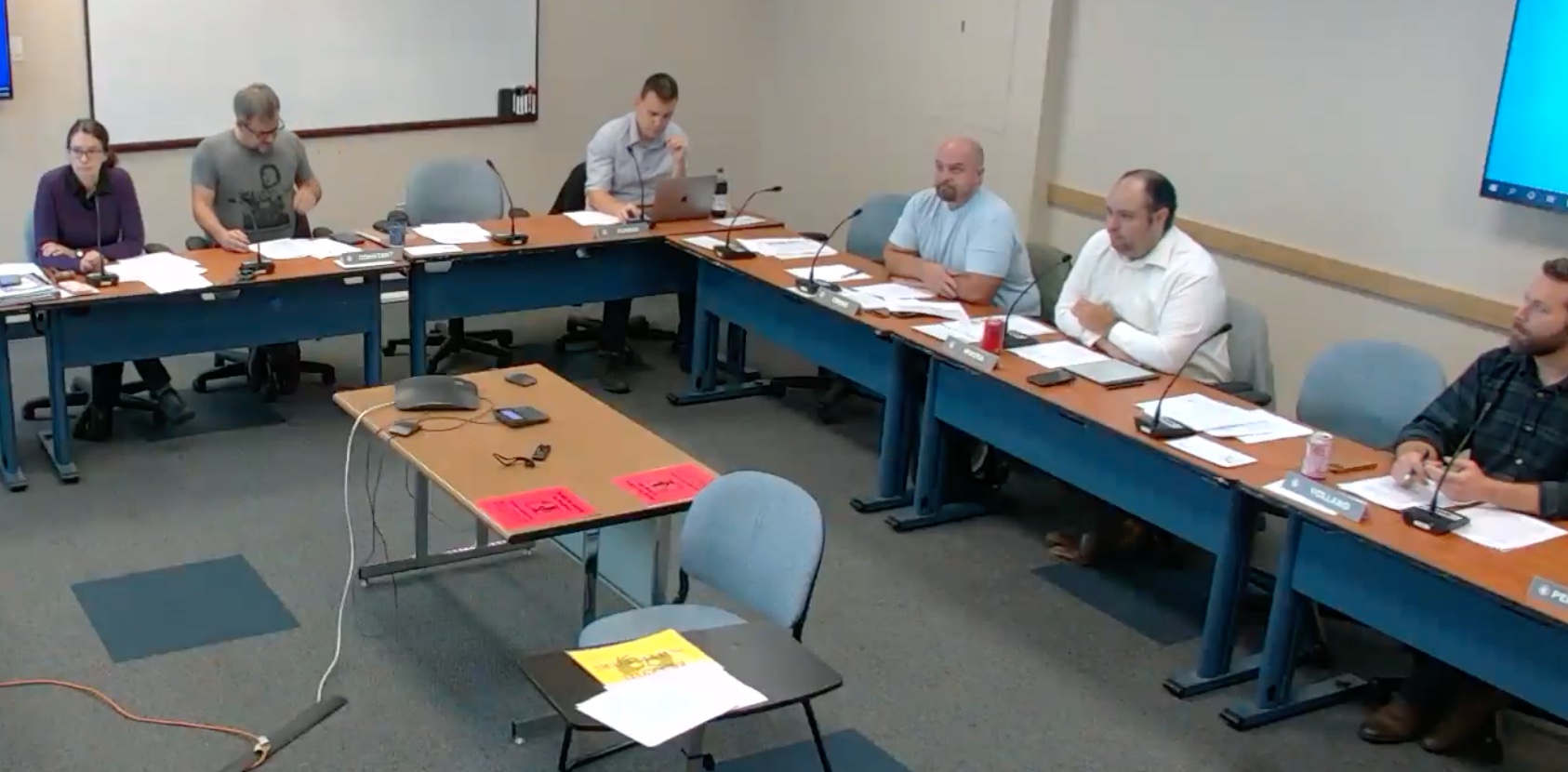
The Anchorage Assembly met in a special meeting midday on Thursday to override the mayor’s vetoes of select projects the Assembly had chosen to fund with American Rescue Plan Act funds. The Assembly opposed the veto based on the Assembly’s LGBTQ and Black-Indigenous-People of Color guiding principles.
The Assembly leadership laid a last-minute memo on the table at the beginning of the meeting describing its disagreement with the mayor over the projects.
The memo essentially calls the mayor a racist for vetoing the Assembly’s chosen projects.
The meeting was disrupted constantly by technical issues that made it difficult to hear the participants. The Assembly’s attorney Dean Gates was unintelligible while he described why the veto override was appropriate. But the Assembly leadership’s override memo said, in part:
“The mayor’s vetoes single out regional projects and projects for marginalized communities, such as BIPOC (Black, Indigenous and people of color) Alaskans, LGBTQ+ Alaskans, new immigrants, and people facing homelessness.
“The elimination of funding for these projects goes against the Assembly’s guiding principles to invest once-in-a-lifetime ARPA funds in long-term projects that aid populations that need it most; address current, historical, and geographical inequities in our systems that have intensified due to COVID-19; and have a fair and positive impact across the municipality. Not only do the mayor’s vetoes undervalue these community-driven projects and invalidate the Assembly’s collaborative work, the mayor asserts that this valuable funding opportunity should be directed towards one-time municipal costs (where other alternative funding options are available) instead of impactful investments that will shape the community for years to come,” the memo read.
The memo went on to say the Assembly priorities focus greatly on LGBTQ and the Alaska Black Caucus’ “equity center.”
Assemblyman Chris Constant dramatically read an email into the record that he claimed was sent to the head of the Alaska Black Caucus from a member of the Anchorage community. The email said blacks are lucky to live in Alaska and not in Africa “chasing meerkats,” and Constant said there are obviously still “dark impulses deeply in our community” such as the letter writer.
The letter Constant made a part of the public record follows”
From: Stefan Kozma
Date: August 5, 2022 at 10:37:28 PM AKDT
To: cghodge—-
Subject: White Privilege Card
“Are you seriously stupid enough to think that a Filipina was able to avoid a ticket because she showed the cops a joke white privilege card? This is the problem with your kind, always in victim mentality mode, always a chip on the shoulder and always super UPPITY. This is why nobody wants y’all living next door, or in the same classroom or even the same country. You live in Alaska due to the white man, you use white man’s technology on a daily basis and you have no idea how lucky y’all are not to be back in Africa chasing meerkats with sticks in loin cloths like y’all’s great great grandpappys. Show some respect and appreciation for god’s sake, y’all would have a lot more success in life with that attitude.“
However, the letter from Stefan Kozma appears to have come from a man who actually resides in Alberta, Canada, not from Anchorage, as Constant was presenting. In fact, there is no such person registered to vote in Alaska under that name.
Assemblywoman Meg Zaletel asked that sections of the veto be separated out so that she would be able to vote on the majority of the override. She has a conflict of interest since she leads the Anchorage Coalition to End Homelessness, which skims money from the city to talk about homelessness, yet provide no services. Led by Zaletel, who makes over six figures, ACEH stands to gain from the veto overrides.
Assemblyman Kevin Cross argued with the Assembly leadership memorandum, saying the racist inference by the Assembly leadership is disingenuous. The Black Caucus is getting ARPA funds for a second time, he said, while the Assembly had not funded projects for the Polynesian community, for example. He also reminded the group that the parameters set by the Assembly included directions that no group that had previously been awarded ARPA funds would be awarded them again.
“I don’t think we should be funding studies,” he said. Rather, the Assembly needs to fund shovel-ready projects.
He also didn’t think more grants to push Covid vaccinations were needed.
“The pharmaceutical industry is making $98 million a day off the vaccines. They can pay for their own advertising. They don’t need us,” said Assemblyman Cross, adding that $250,000 to advertise vaccine availability would not make a dent.
Assemblywoman Austin Quinn-Davidson noted the “awkwardness of a bunch of white people talking about which groups of color ‘deserve’ or should get these funds. I find it personally very awkward and it’s a reminder to me why we need to diversify this Assembly and I will do what I can to continue trying to recruit members and candidates who reflect the diversity of our community.”
Quinn-Davidson supported the reelection of white Forrest Dunbar over challenger Stephanie Taylor, who is black. Quinn-Davidson also supported the election of freshman Assemblyman Daniel Volland over Stephanie Taylor for the new downtown district that was carved out by the Assembly to increase liberal strength on the body. Both Dunbar and Volland are white middle-aged males.
“Also, I’m just so tired of us all fighting all the time and I think we don’t need to pit groups against each other. You know, we can acknowledge that there’s so much money, we made our best decision collaboratively, we all compromised and what we ended up with was a package that didn’t include everyone. And that doesn’t mean we can’t go find funds.”
The vetoes passed 8-3 for the section Zaletel was not able to vote on, and 10-2, and 11-1 for the rest of the vetoes.


