
Alaska Railbelt Reliability Council Selects Black & Veatch to Lead First-Ever Regionwide Energy Plan

12
Alaska's Arctic Energy System | IARC uaf-iarc.org

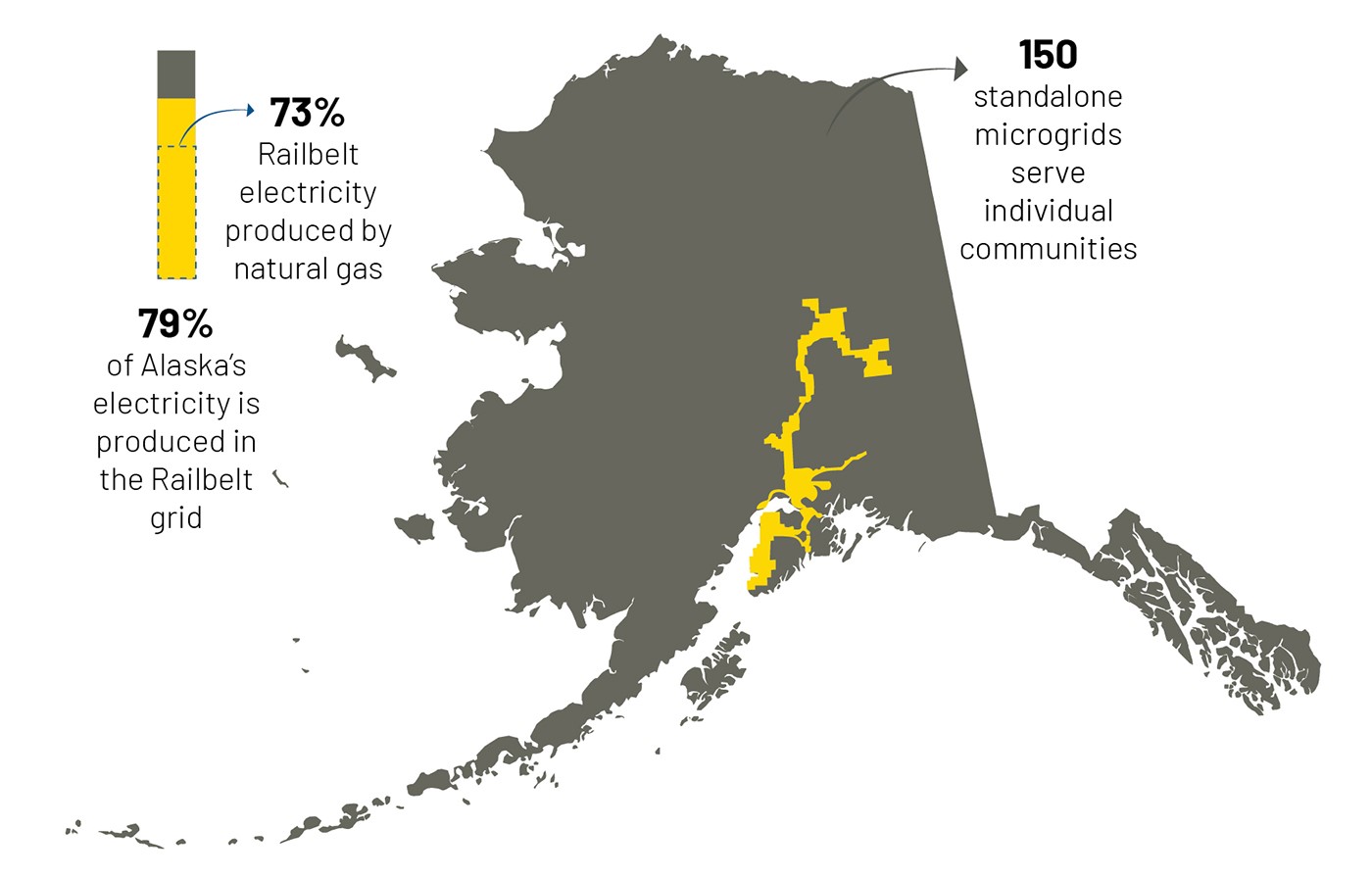
In a pivotal step toward managing power reliability for the majority of Alaskans, the Alaska Railbelt Reliability Council (RRC) has chosen engineering firm Black & Veatch to spearhead the development of the Railbelt’s inaugural systemwide Integrated Resource Plan (IRP). Announced December 2, 2025, this comprehensive strategy aims to ensure a reliable, affordable, and future-ready electricity system across the 700-mile corridor from Fairbanks to Homer, which serves about 75% of the state’s population.

Historically, Railbelt utilities have operated independently, consistent with seven co-op principles. The new IRP shifts this paradigm by creating a central planning organization among the region’s five key utilities: Golden Valley Electric Association, Matanuska Electric Association, Chugach Electric Association, Homer Electric Association, and Seward Electric System. It will also incorporate input from independent power producers (IPPs), businesses, consumer advocates, and energy experts to create a roadmap for generation, transmission, and storage investments. This approach is expected to minimize costs, bolster grid resilience against Alaska’s harsh conditions, and integrate renewables while balancing environmental and affordability goals.

The RRC, established by the Alaska Legislature, emphasizes shared standards to avoid redundant expenses and deliver optimal value. Black & Veatch, with over 40 years of IRP experience—including projects in Alaska—will employ advanced modeling and real-world data to craft the plan.

“I am excited for the opportunity to lead the RRC and realize the value provided through Railbelt-wide standards and regional planning. This IRP will help achieve long-term reliability, sustainability and affordability for Alaskans,” said Ed Jenkin, CEO of the Alaska Railbelt Reliability Council.

The two-year process kicks off with public engagement, including webinars, meetings, and workshops for feedback. An initial open webinar will outline participation details, with registration soon available on the RRC website. The final plan is slated for submission to the Regulatory Commission of Alaska in early 2027.

For more information, visit www.akrrc.org or www.bv.com.

12 COMMENTS

  1. My memory tells me that a number of years ago there was a study performed regarding the railbelt generation composition wherein the study indicated that the grid could absorb not more than 3 of the new aero derivative turbines due to lack of spinning mass. This study was simply ignored due to the fact that the new turbines are more fuel efficient. The end result has cost millions in trying to maintain a stable grid with many “bolt-on” technologies required to work together to hold the frequency. Now add wind and solar and the whole thing gets harder to hold on to without ecologically disasterous BES systems or spinning mass flywheels. Now the big question for ex-CEA Ed Jenkins, will the utilities actually listen this time???

    • I’m guessing the study you mentioned was rejected because they found someone who understands how the grid works instead of listening to people who came from the lower 48 because they couldn’t hack it there. Wind and solar require reliable, dispatchable, and responsive generation sources especially on a grid the size of the railbelt. Adding more wind and solar will add more uncertainty and cost, and yet there are studies out there claiming we should do just that. In fact you can get a study to say whatever you want, it just depends on who you pay to provide the study.

  2. It amazes me that the brain trust in this state seems to be so small that the state is continuously paying other people to tell them what they already know. At some point, this crap has to stop and we have to start being a lot smarter with the money we spend or we are going to be broke.

  3. B&V will send their interns and recent high school graduates to Alaska to “work” on this while their executives take cruises and boondoggles.

  4. I seem to recall that sometime in the past a similar study stated that considerable savings would be realized if the numerous rural electrical co-ops and municipal providers consolidated their efforts. Made a lot of sense at the time, still does. Of course, it was never seriously considered as the individual entities would never give up their lucrative gig of providing the most expensive electricity in the USA! I suspect this study will also ultimately wind up in the round filing cabinet!

    • Your assertion fails the test of scrutiny. The study you refer to was biased toward a socialistic government controlled grid. This concept was seriously flawed since the whole state is not connected to the grid. This would have the cities and grid attached footing the financial burden for those who choose to live in places not attached to the grid. Therefore, in an official rebranding of the idea and to get the authorizations to move forward with large scale projects, the Power Cost Equalization (PCE) was implemented, which is now the favorite tool for the “renewable” sector as it actually makes sense in the micro grids, but in fact, is actually a wealth transfer from those attached to the railbelt to those not connected.

LEAVE A REPLY

Please enter your comment!
Please enter your name here

This site uses Akismet to reduce spam. Learn how your comment data is processed.