
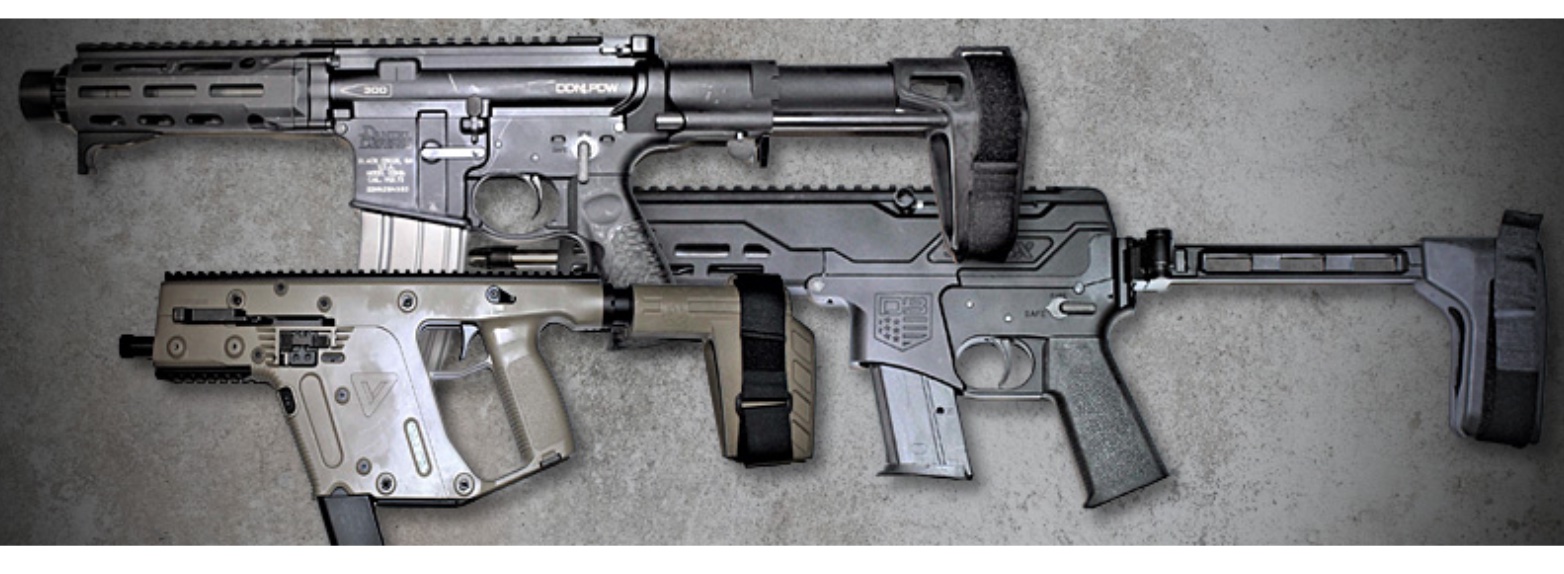
Alaska Attorney General Treg Taylor joined a coalition of 24 states in a lawsuit against U.S. Attorney General Merrick Garland and the Bureau of Alcohol, Tobacco, Firearms and Explosives (ATF) that seeks to stop a new regulation requiring gun owners to register pistol braces, also known as stabilizing braces.
Pistol braces are commonly used by gun owners in Alaska, but the Biden Administration is now classifying these pistols, when they have a brace attached, as short-barreled rifles.
“This is another example of this administration blatantly attacking the constitutional rights of our citizens” said Alaska Governor Mike Dunleavy. “For over 10 years, shooters have used these braces in accordance with the law. They should not now be penalized with an invasion of privacy or criminal action because this President has such disdain for citizens who exercise their right to bear arms.”
Pistol braces were originally designed to assist disabled shooters, many who are veterans, by allowing them to support the firearm with their forearm.

The ATF specifically approved pistol braces as legal in 2013 and reaffirmed the decision multiple times. But with the new rule change, American gun owners will now have to register all guns with a pistol brace attachment and pay a $200 fee each, or be committing a felony in violation of the National Firearms Act.
What qualifies as a pistol brace will be decided by the ATF as it chooses, according to the agency’s own description of the rule.
“ATF’s new definition for stabilizing braces is arbitrary. The bureau is declaring that they will effectively decide on a case-by-case basis whether a firearm is subject to the NFA. Every American gun owner is in danger of potentially facing felony charges at the whim of these bureaucrats and without any new statute in place. The NRA believes this rule will fail for the same reasons the bump stock rule failed — ATF can only apply federal statutes; it can’t rewrite them,” said Jason Ouimet, executive director, National Rifle Association Institute for Legislative Action.
“In sum, ATF’s factors are little more than window dressing for the agency to reach whatever outcome it wants, regardless of the facts,” according to the lawsuit.
Although the rule went into effect Jan. 31, gun owners have until May 31 to register their firearms with braces.
“Many Alaskans who purchased these firearms with braces, did so with the knowledge that the ATF had approved their use and they were legal accessories,” said Attorney General Taylor in a statement provided by the Department of Law. “Using the ATF rule is a blatant attempt by this administration to bypass Congress and create de-facto laws. Not only will allowing this rule to be enacted hurt many Alaskan gun owners, but it will also create a dangerous precedent in our nation.”
The lawsuit asks the United States District Court for the District of North Dakota Western Division to declare the rule unlawful and set it aside.
Attorney General Taylor joined in the lawsuit led by West Virginia along with Alabama, Arkansas, Florida, Georgia, Idaho, Indiana, Iowa, Kansas, Kentucky, Louisiana, Missouri, Mississippi, Montana, Nebraska, New Hampshire, North Dakota, Oklahoma, South Carolina, South Dakota, Tennessee, Utah, Virginia and Wyoming.
The other plaintiffs are Firearms Regulatory Accountability Coalition Inc. (an advocacy group), SB Tactical (a brace manufacturer), B&T USA (a firearms importer and manufacturer) and Richard Cicero, a retired police firearms instructor and a wounded warrior who uses stabilizing braces.
In addition to the states that are suing, veterans from Texas and Wisconsin have sued over the new rule that affects up to 40 million pistols in America. The National Rifle Association is also suing. Gun Owners of America, the Gun Owners Foundation, and Texas Attorney General Ken Paxton filed a separate lawsuit against ATF on Thursday over the pistol brace rule. That suit was filed in U.S. District Court for the Southern District of Texas.


