
Alaska’s all-mail-in election was a hurry-up solution by the Division of Elections for the empty seat left vacant by the late Congressman Don Young. The ballots, including the instructions and the “secrecy sleeve,” that the voted ballots go into, went in the mail to Alaska voters on April 27.
With 30 days to go until the June 11 deadline, 25,000 ballots have been returned to the Division of Elections.
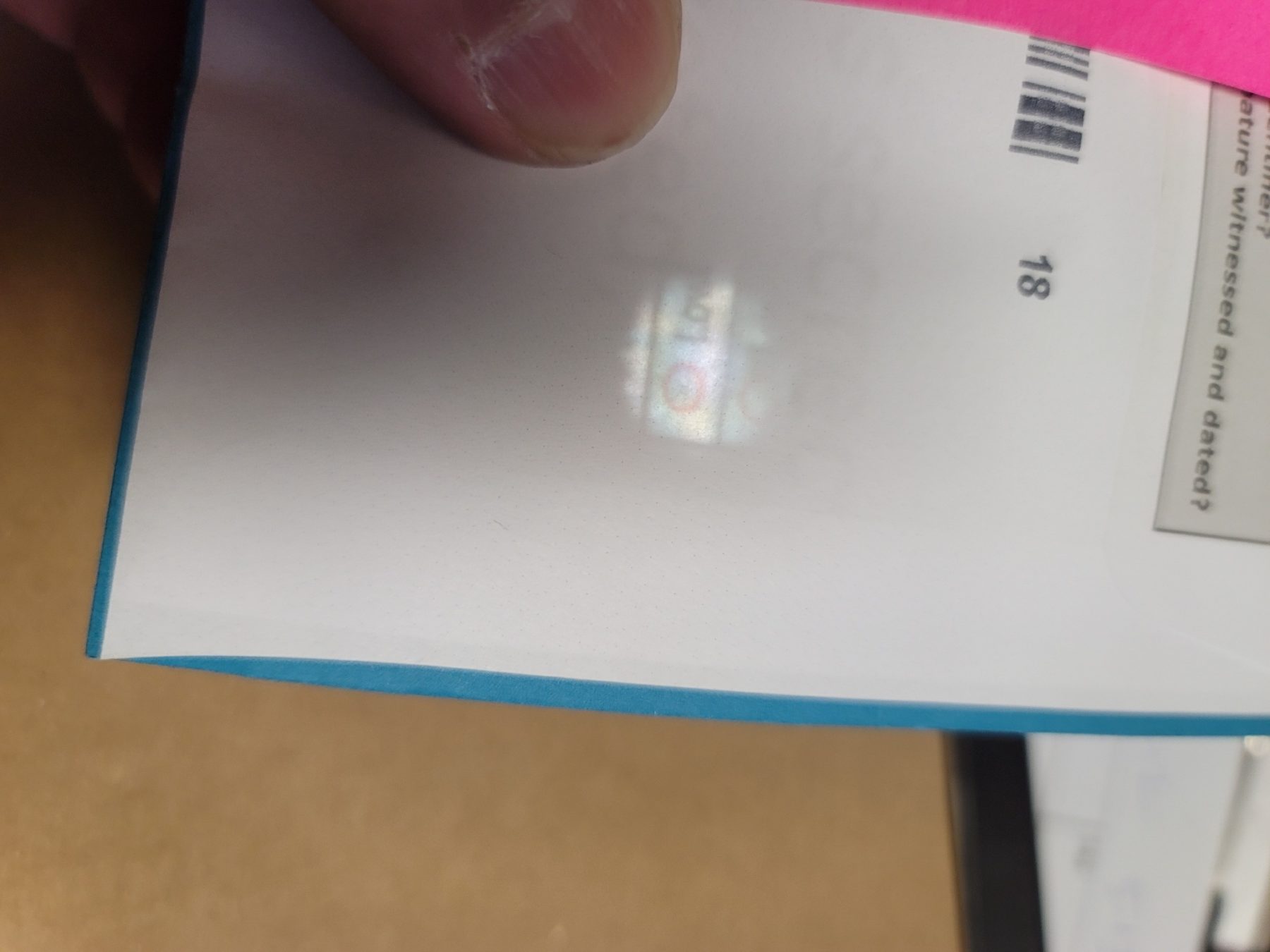
But one Alaskan wanted to see if the ballot and the secrecy sleeve really protected his vote. He assembled his ballot packet, sealed it, and then shined a mini flashlight to the opposite side of it. Indeed, it was easy to see the names on the ballot and exactly what bubble he had filled in. The same could be done with a light table or a car headlight.
This makes Alaska’s mail-in ballots especially vulnerable to ballot harvesters, who could collect ballots from communities, elders, or by going house to house, hold them up to a light, and toss or shred the ones they don’t like.
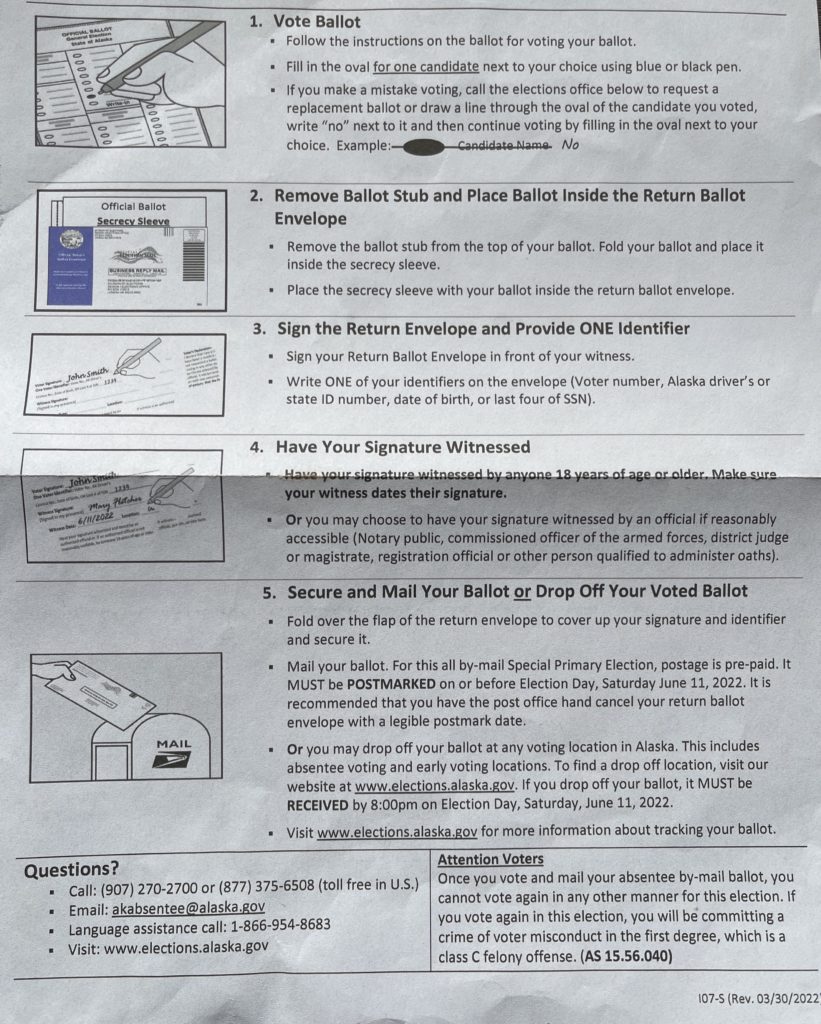
Another security flaw of the mail-in ballot is the instructions telling voters that if they make a mistake and fill in the wrong oval, they should put a line through that candidate’s name and write the word “No.” Then, they should fill in the bubble for the intended candidate. That method is insecure, critics say, as it allows someone else who has access to the voted ballot to re-vote that ballot by following that instruction.
“This seems sketchy,” said a voter who contacted Must Read Alaska about the technique for fixing the ballot. While it would be difficult for an election worker to change many ballots surreptitiously, on a ballot with 48 names on it, the top four will advance to the general election with fewer votes than what people would normally expect to see. The voting system that confuses many Alaskans is brought to them by Ballot Measure 2, which they passed narrowly in 2020. It established a jungle primary and a ranked choice voting general election.
Alaska is conducting the special primary election to finish out the term of Congressman Don Young, who died March 18. The special primary election has 48 names on the ballot. The top four vote-getters from the special primary will appear on a special general election ballot for this fill-in seat. That general election will be held the same day as the regularly scheduled primary election, Aug. 16, where many of the same names will appear on the ballot to serve a regular two-year term in Congress.


