LIBERAL MAJORITY WINS ANOTHER ROUND
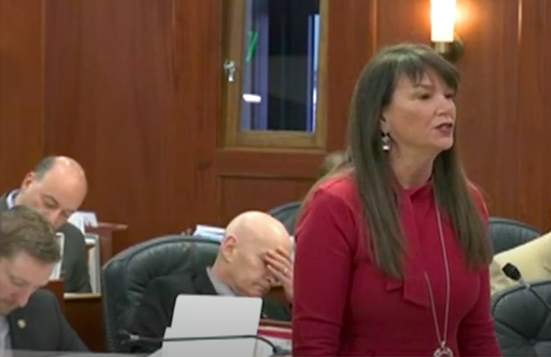
During the House floor discussion and debate over the operating budget on Wednesday, House Minority Leader Charisse Millett of Anchorage rose to challenge Finance Co-Chair Rep. Paul Seaton’s $500,000 item in the budget to fund a study on the benefits of Vitamin D.
Vitamin D is a pet concern for the Homer representative, who is a commercial fisherman. He addresses it often in his newsletters to constituents, has produced booklets for both senior citizens and children on the topic, and has a page devoted to it on his official web site.
Seaton was one of three Republicans who broke with the Republican-led majority to stage a coup in 2017 with Democrats, and in exchange became the co-chair of Finance, in charge of producing the operating budget. Now is his chance to get that Vitamin D project he has long desired.
But Millett wasn’t going to let it go in without a fight.

“While I know that the maker of this section of the bill is a very big fan of Vitamin D, as we all are on the floor, since we’ve been taking it … since he’s been giving of us bottles of it…” Millett began.
She argued the money could be better spent battling the opioid crisis in Alaska, or reducing domestic violence, especially at a time when the State has little money to spare and while Democrats and the governor are talking about an income tax.
“A quick look through the internet, I think my staff came up with over 50 studies that have been done in other circumpolar countries on the value of Vitamin D,” she said. “This rises to the level of ‘I don’t think so,’ for me personally.”
Millett added that it was something that the private sector could fund. Others in the conservative minority rose to say that the federal government has not only the resources but the responsibility for public health studies of this type.
The New York Times has written about the Vitamin D craze. It seems that people are popping the pills in the belief that Vitamin D will “cure what ails you.”
According to the Times:
Millions of people are popping supplements in the belief that vitamin D can help turn back depression, fatigue, muscle weakness, even heart disease or cancer. In fact, there has never been widely accepted evidence that vitamin D is helpful in preventing or treating any of those conditions.
But so firm is this belief that vitamin D has become popular even among people with no particular medical complaints or disease risks. And they are being tested for vitamin D “deficiency” in ever greater numbers.
The number of blood tests for vitamin D levels among Medicarebeneficiaries, mostly people 65 and older, increased 83-fold from 2000 to 2010, according to the Centers for Disease Control and Prevention. Among patients with commercial insurance, testing rates rose 2.5-fold from 2009 to 2014.
Labs performing these tests are reporting perfectly normal levels of vitamin D — 20 to 30 nanograms per milliliter of blood — as “insufficient.” As a consequence, millions of healthy people think they have a deficiency, and some are taking supplemental doses so high they can be dangerous, causing poor appetite, nausea and vomiting.
Vitamin D overdoses also can lead to weakness, frequent urination and kidney problems.
“A lot of clinicians are acting like there is a pandemic” of vitamin D deficiency, said Dr. JoAnn E. Manson, a preventive medicine researcher at Brigham and Women’s Hospital in Boston who helped write an Institute of Medicine report on vitamin D. – New York Times.
“That gives them justification to screen everyone and get everyone well above what the Institute of Medicine recommends.”
REP. SADDLER GIVES SEATON A D IN SCIENCE
But Rep. Seaton is a fan of D and defended his line item, citing studies that show how Alaskans don’t get enough Vitamin D, and that there has been a rise in diseases, the cost of health care, and that he believes that to be a result of the lack of Vitamin D in the diets of Alaskans.
For 10 minutes he speculated that the increase in autism was possibly linked to the lack of the vitamin, and that Alaska’s high cost of health care may be linked to the lack of Vitamin D.
His remarks defending the $500,000 project included anecdotal stories about children with rickets, autism, and the benefits of a traditional subsistence diet.
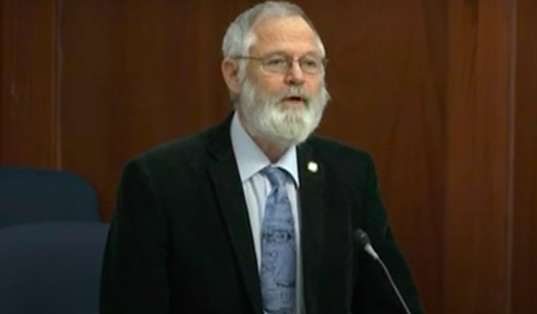
Rep. Dan Saddler took the bait: In remarks informed by his personal experience of being a parent with a child with autism, he said, “We’re being offered what I believe is the cruel fiction that more Vitamin D might prevent autism.”
Debating the science of Vitamin D on the House floor is inappropriate, Saddler added, and before throwing a rhetorical elbow at Finance Chair Seaton, saying that while he had many duties, being chief science researcher was not one of them.
Saddler’s remarks drew a gentle rebuke from House Speaker Bryce Edgmon, who implied he was getting too personal.
Rep. Chris Birch also spoke to strip the D study from the budget: “We don’t need a $500,000 science project to tell us we live in a northern latitude, and that Vitamin D is not aplenty when there’s no sun exposure. I think that’s common knowledge. It’s certainly one of the reasons why I take a multi-vitamin every morning.”
In the end, after 45 minutes of debate, a $500,000 item to study Vitamin D was left in the budget in a vote that was nearly along party lines, with only Reps. Jason Grenn and Sam Kito splitting from the Democrat-led majority and siding with Republicans to trim the sails of Seaton’s obsession with cholecalciferol, Vitamin D.