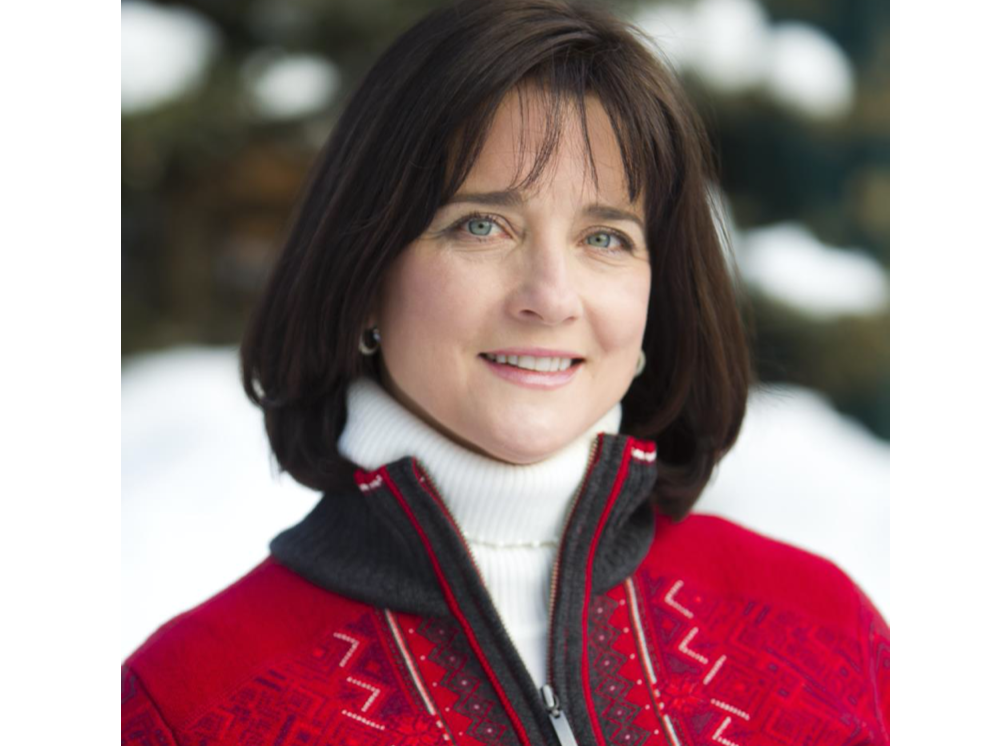
By SENATOR LORA REINBOLD
State government remains too big, and too expensive; we are faced with tough choices.
Government needs to make the tough decisions to reduce spending to a sustainable level, to promote a strong private sector economy, which creates jobs for a more stable future in Alaska.
Alaska remains at the top of the nation, #1 in spending per capita, and spends 2.3 times the national average on state government, according to the Kaiser Foundation. I have said for years: Fix government first, before you take the Permanent Fund dividend, and before you tax Alaskans.
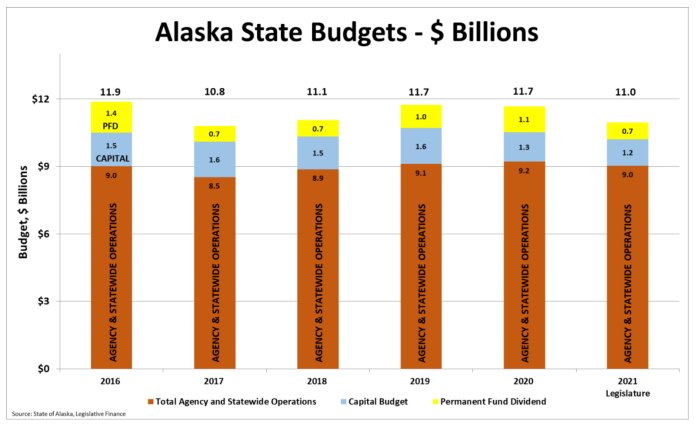
There have been many claims of “deep budget cuts” but the data shows a different story. In fact, the Governor and Legislature have made little progress reducing State spending. The chart below shows spending for the past 5 years for the State Operating budget, the Capital budget and PFDs. Alaska’s Operating budget, including both Agency and Statewide Operations (debt service, retirement, etc.) has increased to $9.2 Billion dollars, in total funds, for FY 2020. During the same period, Capital budgets and PFDs have been reduced. Research has shown reducing Capital budgets and the PFD has the most negative impacts on the economy.
What drives Alaska’s big budgets? Simply put: Too many programs, too many employees, and too many special interests with their hands out, coupled with the governors’ & legislators’ inability to say no. Alaska has one of the highest rates of public employees in the nation, working 37.5 hours a week with healthy union contracts and automatic annual pay increases.
Rural Alaska depends heavily on state funding, with virtually no local tax base to support their communities. Health and Social Services is the largest budget, approaching $3.5 Billion annually, with almost 250,000 Alaskans on the public health system.
Unlike other states, Alaska’s budget is controlled by a few members in legislative leadership using a system of rewards and punishments, and a “binding caucus rule,” where they require legislators to pledge their vote to a budget, before it is constructed.
As an example of the punishment by leadership, I was stripped of the Labor and Commerce chairmanship for voting against a bill that reduced the Permanent Fund dividend and increased the budget.
The chairmanship was given to union loyalist, Sen. Click Bishop and two of my committee assignments were rewarded to newly appointed Sen. Josh Revak, a caucus loyalist.
In addition, lobbyists and special interests drive the budget up and thrive in Juneau’s isolated environment.
State savings accounts are being drained. Since Fiscal Year 2013, government has spent almost $20 billion from the Constitutional Budget Reserve and the Statutory Budget Reserve, leaving these accounts almost empty.
In addition, almost $6 billion has been spent from the Permanent Fund Earnings Reserve on state government. Traditionally, this fund was only used to payout PFDs and inflation proof the Permanent Fund.
Since 2018, the Legislature and governors have been using the Earnings Reserve Account to fund state government, at the expense of the PFD program. Continuing on the path of big government is the greatest threat to the PFD program, and has pulled billions of dollars out of the private sector economy. For years, I have voted no on unsustainable budgets. I warned against using the Permanent Fund Earnings in a 2016 op-ed, “Budget Cuts are Missing, Don’t Touch the Permanent Fund.”
The data tells a compelling story that Alaska has a spending problem. What are some potential solutions?
- After conducting audits, the State Legislature and governor must eliminate poor performing programs and prioritize programs based on constitutional requirements.
- Move the Legislature to the road system, where there is greater access and accountability.
- Dwindling state funds should be appropriated only to programs with the best outcomes and strict accountability.
- The binding caucus rule must be abolished, as it is often used to coerce legislators to vote for leaderships priorities.
- A spending cap must be established.
- Everyone must realize there is no such thing as a “government funded” program; the private sector ultimately pays the bills.
Alaska’s economy is fragile, especially during the COVID-19 crisis; the private sector should not be burdened unnecessarily with additional taxes to sustain big government. Dependency on state dollars must be discouraged.
My allegiance to the Founding Father’s principles, sound economic practices and keeping my promises to the people in my district, will always be stronger than any allegiance to a caucus. It’s time to talk to your legislator and the governor, as they need your encouragement and support to reduce government spending.
Born and raised in Alaska, Republican Sen. Lora Reinbord serves Eagle River, Chugiak & JBER, and is a former State House representative for Eagle River, 2013-18.