
By TIM BARTO
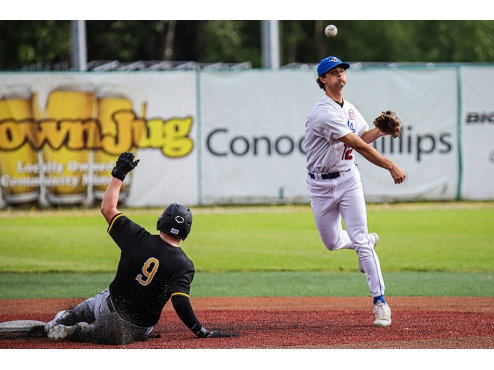
The Alaska Baseball League is in a sort of baseball purgatory. The summer college league used to garner the attention of big league scouts, local baseball fans, and the media. Alaska was the place to play summer ball for serious college players looking to make the game their profession, and it had the respect of coaches from around the country.
The list of ABL alumni who made it to the promised land of professional baseball is extensive and impressive, but it’s also outdated. The list reflects many players from years past but not too many from years not so past.
Twenty-thirty years ago, the daily newspapers, nightly newscasts, and morning radio shows highlighted Alaska Baseball League action, but recent reporting on league action has an obligatory feel to it. It exists, but there’s something of an obligatory feeling about it, as if the media feels it should be reported so it’s given some attention out of respect for what once was . . . and perhaps a desire for what it could become again.
These issues are not unknown to the general managers and coaches of the five ABL teams: the Kenai Peninsula Oilers, Mat-Su Miners, Chugiak-Eagle River Chinooks, and the two Anchorage teams – the Bucs and the Glacier Pilots (and the outlier that is the Fairbanks Goldpanners; more about them later).
The Cape Cod League in New England is the acknowledged heavenly summer ball realm, and has been for over a decade. Other successful leagues inhabit the Midwest, Great Lakes, and southern regions, but the Great Land is not as prominent in the discussion as those other leagues. The Alaska Baseball League is still acknowledged as a good summer league, but good is not good enough; again, like purgatory.
If the five teams want to continue existing, let alone prosper (and they all do), then an infusion of energy and innovation is needed to elevate it to the higher strata. That is why the league hired a commissioner, an individual to coalesce the teams into a unified coalition that will attract not only top college talent but national attention, increased revenue streams, and new fans; and this latter goal – new fans – is crucial.
Without people coming to the ballpark, following their teams, taking an interest in the players, and buying tickets, concessions, and merchandise, the Alaska Baseball League will not prosper and, worse, will cease to exist. Sponsors aren’t going to pay for outfield banners or program ads if there aren’t people at the various ballparks to take in the subliminal messaging and appreciate their community support.
Enter Chip Dill, who has just completed his first season as Alaska Baseball League commissioner. Chip loves baseball and appreciates the legacy of the game in Alaska. He lives in Tennessee, but spent summer here, attending games every night, meeting with team leadership, assessing the ballparks, talking with fans, and getting a feel for Alaska baseball.
Feel is a term often used by baseball people. It’s an intangible, sort of like reading the room when it comes to politics, or exhibiting a presence in a business meeting. If a player always knows the game situation, has the instincts to analyze an opposing pitcher well, and correctly anticipates what is likely to happen next, he is said to have a feel for the game. Conversely, a player who isn’t on top of the game and picks the wrong time to lay down a bunt or take an extra base is said to have no feel.
Chip Dill has feel.
Chip brings not only a love of the game, but the teamwork and leadership he honed as a career fire captain and the business acumen from founding and running a sports data company. He used his experience to analyze the league and come up with a four point plan to make it prosper:
- Restructure the League. Closer planning and fiscal cooperation between the five teams is key, and will be overseen by a board of directors. New staff positions will include scorekeepers, information directors, and video/photographers.
Restructuring includes expanding, as in bringing the charter member of Alaska Baseball – the Fairbanks Goldpanners – back into the league. Talks intensified and will continue throughout the off-season. The hope is to reintroduce the Goldpanners by 2025, perhaps as early as 2024.
- Pique Athlete & Coach Interest. This is where things get tricky, especially for us who consider ourselves baseball purists. Change in baseball, more than any other sport, is often met with derision, even ridicule and disgust. I know because I am one of those who likes the game just the way it is . . . well, just the way it was, before the sacrileges of artificial grass, designated hitters, and interleague play arrived. But the ABL is not the major leagues.
Summer ball is in a different category within the game, especially when it comes to pitching. College coaches have their pitchers on throwing programs and impose innings restrictions and pitch counts that limit the players’ time on the mound. This is simply part of today’s game, especially at the collegiate level. A summer team manager cannot just let a player take the hill and throw as long as the pitcher is looking good and feeling strong. This changes the dynamics of team structures and game strategy but, again, it’s an integral and unavoidable part of the game.
So, Commissioner Dill and the league are considering various alterations, including reducing the season from eight weeks to seven; shortening games from seven innings to nine (at least during the early part of the season); and expanding the rosters to 28 or 30 players, plus four locals.
- Increase Attendance. Some of the ballparks around the league are in disrepair and need maintenance and repairs. Out in Chugiak, increased stadium seating is desperately needed for the increased crowds that show up at Loretta French Park. The league will need to get more local media coverage and expand league-centered merchandising.
- Attract National Attention. As Alaskans, we know that the uniqueness of our state attracts attention. The league needs to use this uniqueness to make it appealing to people outside the state, to include broadcasting games via national networks, such as D1, ESPN, and Fox Sports.
These are ambitious goals, and some of the proposed ideas will probably not make it into the finalized plan, but an attempt must be made. Negotiations and concessions need to be made in good faith with the knowledge that the future of the Alaska Baseball League is on the line.
It’s a great league with a rich history, and it deserves to be saved.
Tim Barto was an Assistant Coach for the ABL’s Chugiak-Eagle River Chinooks, and past president of their Booster Club. When not volunteering his time for love of the game and flattering himself that he has a feel for it, he works as Vice President of Alaska Family Council.



