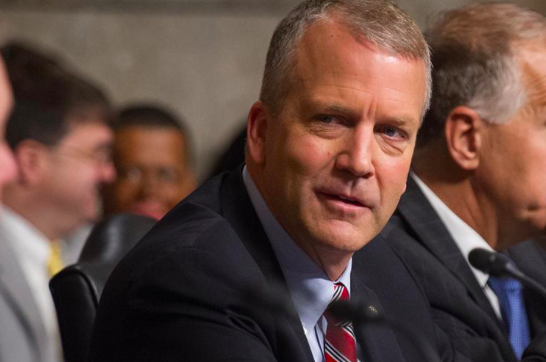
Sen. Dan Sullivan of Alaska did not go the way of Sen. Lisa Murkowski and say he will refuse to vote on a Supreme Court nomination by President Donald Trump.
Instead, he said if the president nominates someone, as he said he will do this week, the Senate should consider that nomination. That’s the constitutional duty of the Senate, Sullivan said.
“The historical precedent and principle of an election year nomination to the Supreme Court, dating back to the founding of our republic, is that the Senate has generally confirmed a President’s nominee from its own party and not confirmed one from the opposing party. President Trump is well within his constitutional authority to nominate an individual for the Supreme Court vacancy, and the Senate will undertake its advice and consent responsibilities on confirmation, as authorized by the Constitution.
“I have a long record of voting to confirm judges to the federal judiciary who will interpret the law, not make new law, and who will respect the values of Alaskans, particularly as it relates to a robust respect for the Second Amendment, access to our lands, the rights of Alaska Natives, and a skeptical view of the power of federal agencies.

“I look forward to seeing who the President nominates and thoroughly assessing her or his qualifications for this important role, as Alaskans expect me to do.”
Earlier this summer, Murkowski said she would not vote on a nominee for the seat of Justice Ruth Bader Ginsburg, should Ginsburg die before the election.
After Ginsburg’s death last Friday, Murkowski repeated her vow to not vote on a replacement offered by this president. She believes the next president should pick the replacement.
Sen. Mitt Romney of Utah today also issued a statement that he will consider a nomination and vote based on the merits of the individual nominated.
“My decision regarding a Supreme Court nomination is not the result of a subjective test of ‘fairness’ which, like beauty, is in the eye of the beholder. It is based on the immutable fairness of following the law, which in this case is the Constitution and precedent. The historical precedent of election year nominations is that the Senate generally does not confirm an opposing party’s nominee but does confirm a nominee of its own,” he wrote.
“The Constitution gives the President the power to nominate and the Senate the authority to provide advice and consent on Supreme Court nominees. Accordingly, I intend to follow the Constitution and precedent in considering the President’s nominee. If the nominee reaches the Senate floor, I intend to vote based upon their qualifications,” Romney wrote.