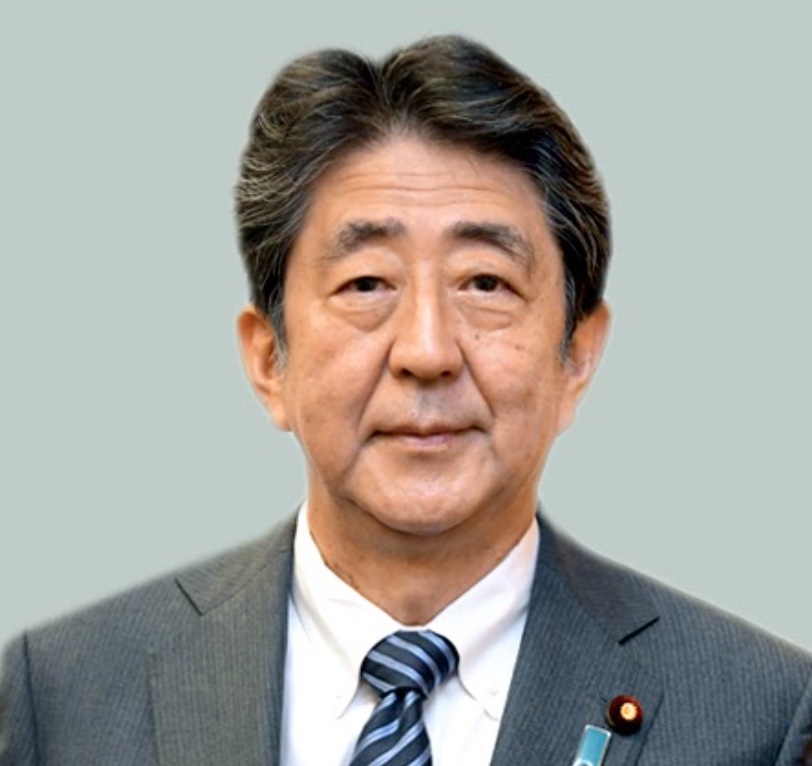
Shinzo Abe, Japan’s most storied former prime minister, was assassinated on Friday in Japan’s old capital city of Nara. He had been speaking on behalf of one of the members of his political party, when a man from the crowd shot him in the neck with a homemade gun. He was rushed to a hospital and died six hours later at the age of 67.
Police apprehended 41-year-old Tetsuya Yamagami at the scene; he is charged with murder. Officials said he made the gun and that he has confessed to intending to kill Abe because the former prime minister had political views he disagreed with. Several more homemade weapons were said to be found in the man’s apartment.
President Trump, on Truth Social, wrote it’s “really BAD NEWS FOR THE WORLD! His killer was captured and will hopefully be dealt with swiftly and harshly.” Trump, who will be visiting Anchorage, Alaska on Saturday, described Abe as “a unifier like no other” who loved his “magnificent country.”

“Shinzo Abe will be greatly missed. There will never be another like him,” Trump said.
Abe was the longest serving prime minister in Japan since World War II and had met with President Donald Trump on many occasions. In fact, he was the first world leader to meet with Trump after the Republican president was elected in 2016. It was at a time when many world leaders were reluctant to meet with the new president. Abe visited Mar-A-Lago on several occasions.
Mainstream media had its own take, calling him “divisive”: “Former Japanese Prime Minister Shinzo Abe, a divisive arch-conservative and one of his nation’s most powerful and influential figures, has died after being shot during a campaign speech Friday in western Japan, hospital officials said,” NPR wrote on Twitter, later deleting the characterization.
Gun violence is rare in Japan. Other than police and the military, no one in Japan may buy any type of firearm. Hunters and target shooters may own shotguns and airguns under strictly enforced conditions, including extensive background checks, required safety checks, and police surprise visits.
“The police check gun licensees’ ammunition inventory to make sure there are no shells or pellets unaccounted for. A prospective gun owner must take an official safety course and then pass a test that covers maintenance and inspection of the gun, methods of loading and unloading, shooting from various positions, and target practice for stationary and moving objects. The license is valid for 3 years. When not in actual use, all guns must be in a locked space. So comprehensive are the gun laws that even possession of a starter’s pistol is allowed only under carefully prescribed conditions. The Japanese crime rate is low. Handguns were used in 209 crimes in 1985. About two-thirds of all gun crimes are committed by organized crime groups. The citizens apparently voluntarily comply with the gun law; accordingly, there is no mandatory minimum penalty for unlicensed firearm possession. Pressure to conform and internalized willingness to do so are much stronger in Japan than in America. The spirit of conformity provides the best explanation for Japan’s low crime rate. It also explains why the Japanese people accept strict gun control. A gun ban in America similar to that in Japan would be alien to our society, which for over 300 years has had the world’s strongest gun culture. Japan’s gun laws are part of an authoritarian philosophy of government that is fundamentally at odds with America’s traditions of liberty,” according to a report from the U.S. Department of Justice, published in 1992.