
A bill passed the Alaska House of Representatives on Friday that would raise the age of sexual consent to 18; the current legal age is 16. The bill will be on the House calendar for a third reading and final vote on Monday.
House Bill 264 passed on a vote of 32-6. If passed by the Senate, Alaska would become the 13th state to have 18 as the age of consent, joining Arizona, California, Delaware, Florida, Idaho, Kentucky, North Dakota, Oregon, Tennessee, Utah, Virginia, and Wisconsin.
The bill was originally about sexual abuse of minors, requiring shelters for runaway minors to screen minors for victimization relating to sexual abuse, sex trafficking, and commercial sexual exploitation. Then the amendments came.
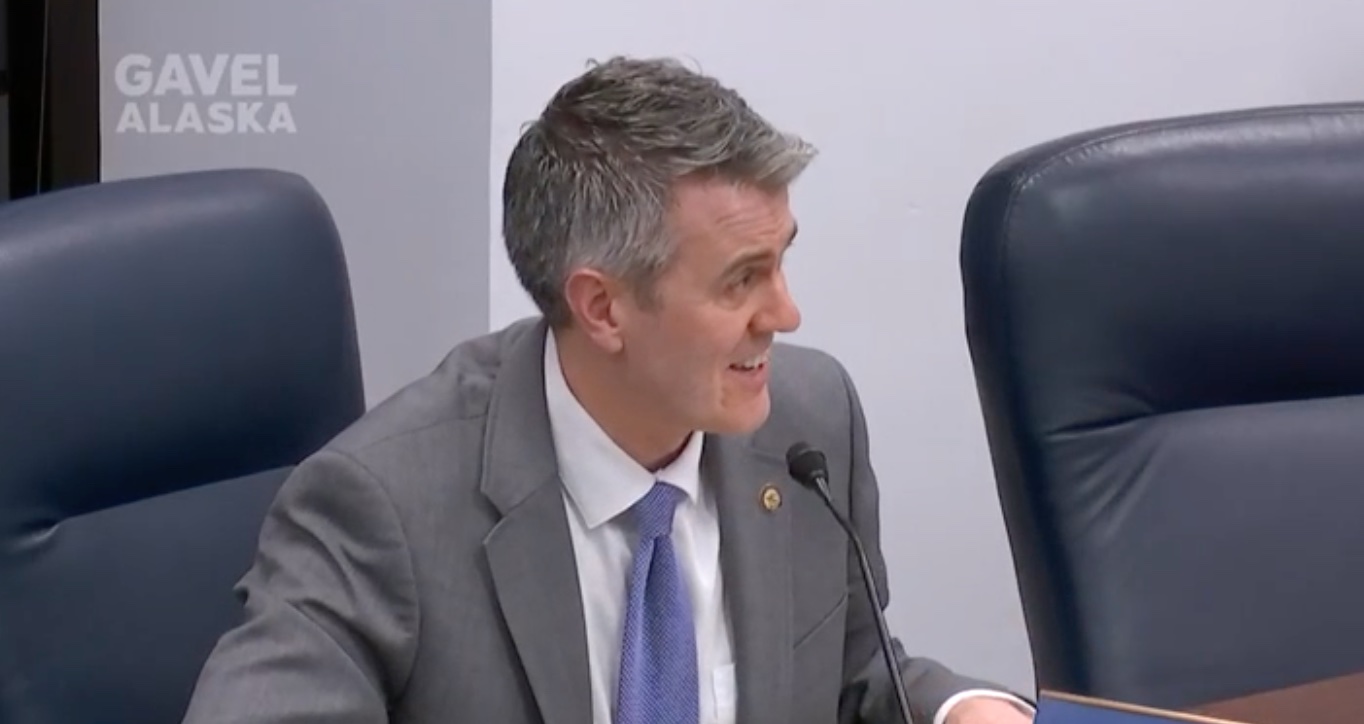
The kink in the bill is the amendment Rep. Andrew Gray earlier tried to wedge into House Bill 67, another bill related to sexual offenders, but he was stymied because legislators remarked that it would change the fiscal note. This time, Gray succeeded on the floor of the House in a new bill. And the Anchorage Democrat got the job done with a handwritten amendment.
The new standard would mean that an adult could be convicted of sexual abuse of a minor for having sex with a high school student who is 17 years and 11 months of age. That’s first-degree abuse of a minor, punishable by up to 99 years in prison. It would include a high school senior having sex with another high school junior or senior.
“My amendment (much smaller than what I wanted — I could only write so fast) did not change ‘close in age’ exemption which in Alaska is 4 years (older or younger). The amendment I did was to first degree sexual assault which requires the older person to be in a position of authority like a teacher or law enforcement officer — it is unlikely that folks who have achieved that position would be within four years of a 16 or 17 year old,” Gray said in an explanation.
There is, however, an issue with this amendment which has not been addressed yet in the State House. The bill creates a conflict with existing parole agreements for sex offenders.
The problem is exemplified in the case of Evan Fischer, who was the former owner/manager of Frontier Tutoring, the man for whom Rep. Calvin Schrage worked as executive director before going into politics.
In 2017 Fischer was convicted and sentenced to 23 years with 11 years suspended for collecting and distributing child sexual exploitation materials (child pornography) as well as sexual abuse of a 15 year old who was not a Frontier Tutoring student, but a student in the Anchorage School District.
Fischer was paroled in 2023 after serving only six years of his 23-year sentence. During parole negotiations, Fischer’s legal counsel argued “the States restricts the age of people who the defendant can be in contact with as 18, but this also is already set in his special conditions, as 16. Since they conflict and 16 is the standard all sexual offenders are required to adhere to the defendant believes 16 is appropriate.”

The State agreed with Fischer’s arguments, and released him early with full permission to use social media services to seek contact with children 16 and older if he so pleases. As noted by Fischer’s legal counsel, the State of Alaska views this arrangement to be “the standard.”
At the time of Fischer’s trial in 2017 Assistant Attorney General Thomas J. Aliberti stated that Fischer “was the most dangerous and reprehensible type of sexual predator. Mr. Fischer presented himself as one who was interested in bettering the lives of the community’s youth, when in actuality he was a wolf in sheep’s clothing, a man who used his authority to gain access and control over a minor to satisfy his own sexual interest. An appropriate sentence in this case is one that is severe enough that it not only protects the community from Mr. Fischer but sends a message to all those who would think about using their positions of authority to sexually abuse and sexually exploit minors that this is not tolerated in the State of Alaska.”
Rep. Schrage, who worked for Fischer, voted in favor of this amendment, which also has an allowance for an 18-year-old to marry and have sex with a 16-year-old.
The amendment to HB 264 increasing the age of consent has not addressed how existing parole contracts would be affected. Rep. Gray’s amendment may have a mixed message, in that the state is exerting authority in cracking down on high school sweethearts while simultaneously allowing convicted child rapists to have “contact” with 16-year-olds, since the parole agreement notes that is the age of consent.
The bill may be especially hard on Alaska Native villages, where sexual activity between minors and adults is a known problem. If the bill passes, villages may end up losing many more of their men to prison; Alaska Natives already comprise 47% of the sexual assault arrests in the state, while representing 20% of the population.
According to a state report issued in 2019, Alaska Native females were reported to have the highest victimization rate of any gender or racial group, comprising 50.4% of all reported victims. The median age of female victims was 18, while the most common age was 15. The median age of male victims was 10, while the most common age was 5. In the reported relationships between the victims and suspects, 11% identified the suspect as a stranger. With victims under the age of 11, less than 2% of the reported relationship involved a stranger, whereas 17% of victims aged 18 and over reported the suspect was a stranger.
“There are a lot more child sexual abuse cases than are being reported,” said child psychologist Dolores Subia BigFoot, who directs the Native American Programs at the Center on Child Abuse and Neglect at the University of Oklahoma Health Sciences Center, as quoted by the Tucson Weekly. “There’s a lot of child sexual abuse cases that are not being investigated, and there’s a lot of child sexual abuse cases that are not being prosecuted.”


