
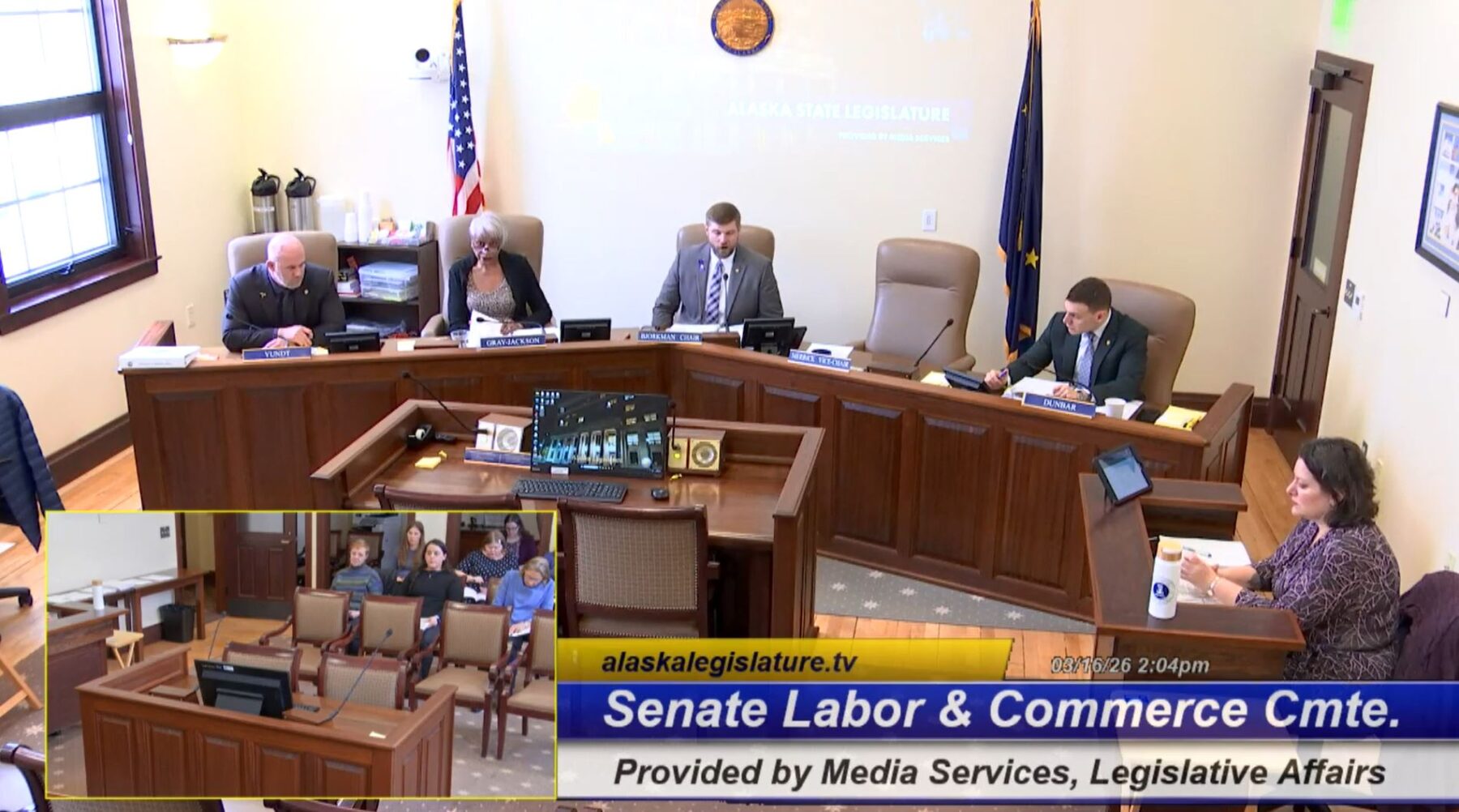
The Alaska Senate Labor and Commerce Committee convened to address four bills with direct implications for public safety, small-business viability, consumer costs, and fraud prevention. The discussion covered regulations for protecting Alaskans from clear harms such as botulism risks and cryptocurrency scams while avoiding overreach that could stifle innovation, invite litigation, or burden local economies.
SB 226 – Safe Homemade Foods and Reduced Oxygen Packaging
Sen. Cathy Giessel (R-Anchorage) presented SB 226 as a narrow, preventive adjustment to Alaska’s expanded homemade food exemptions. The measure separates high botulism-risk items—low-acid foods like meats, vegetables, soups, and vacuum-sealed jerky—from the exempt category, subjecting them to Department of Environmental Conservation (DEC) oversight while leaving jams, jellies, pickles, preserves, bread, baked goods, and most farmers-market staples untouched. Giessel emphasized botulism’s lethality, noting symptoms can appear 18–36 hours after consumption or up to 10 days later, and Alaska’s disproportionately high national share of cases—sometimes up to 50%—with 24 foodborne incidents recorded between 2017 and 2024.
Staff Samantha Freeborn provided a concise analysis of the proposals such as “potentially hazardous homemade food and low oxygen packaging” to prohibited sales without oversight; another section defines reduced oxygen packaging as methods creating vacuum seals. The bill carries a zero fiscal note, reflecting its targeted scope. University of Alaska Fairbanks Cooperative Extension Service specialist Sarah Lewis testified in support, highlighting frequent consultations with entrepreneurs and the triple benefit—consumer protection, reduced liability for uninsured small producers, and avoidance of costly state outbreak responses. She clarified that items like canned beef stew would remain salable if kept fresh, frozen, or refrigerated. Division of Public Health representative Louisa Castrodale confirmed most Alaska cases involve traditional Native foods but noted a documented home-canned salmon incident.
The committee expressed no opposition and signaled intent to advance SB 226 quickly under “bills previously heard,” with members invited to submit concerns or amendments within days. Chair Sen. Jesse Bjorkman (R-Nikiski) indicated a potential vote as soon as March 18 or 20.
SB 111 – Digital Right to Repair
Sen. Forrest Dunbar (D-Anchorage) introduced SB 111 on behalf of the committee, addressing manufacturers’ deliberate barriers to repair—proprietary tools, glued components, software locks, and withheld schematics—affecting consumer electronics, appliances, and heavy machinery. Staff Hahlen Behnken outlined three key updates: a prohibition on parts-pairing (software locks rendering identical replacements inoperable); a markup allowance for powersports dealers mirroring agricultural provisions; and a full exemption for medical devices due to liability and safety concerns.
Invited testimony underscored Alaska-specific challenges. Alaska Environment State Director Dyani Chapman cited a spring 2025 report showing more than one-third of Alaskans live over 100 miles from authorized Apple or LG repair providers, with 100% over 500 miles from Samsung or Maytag service. She linked restricted repair to the world’s fastest-growing waste stream—e-waste—with only 22.3% formally recycled in 2022, exacerbating toxic releases of lead, mercury, and arsenic in rural unlined landfills or burn sites. Chapman projected average annual savings of $382 per Alaskan household on consumer electronics alone, extending to off-road vehicles and equipment, while promoting local resilience.
Eagle River Electronics owner Justin Castle shared widespread community support, recounting dozens of outreach stories from Juneau to Kodiak and Fairbanks, with no opposition voiced. He detailed repair successes achieved without schematics but frequent failures due to Samsung’s refusal to sell parts to independents, Apple’s hardware-ID locks, and Honeywell’s exclusive technician requirements. Public Interest Research Group Senior Director Nathan Proctor reported compliance patterns in more than a dozen states, noting Apple’s recent release of its most repairable laptop since 2012 and a new “repair assistant” tool—demonstrating that legislation prompts practical adaptation. Some appliance makers, however, limit parts to enacted-law states, creating a patchwork.
The committee set SB 111 aside for further consideration, requesting manufacturer responses and rural e-waste testimony.
SB 185 – Insurance Rebates and Advertising Modernization
Staff Savaya Bieber introduced the committee substitute (CS) for SB 185, updating Alaska statutes to align with federal law and the National Association of Insurance Commissioners model. The CS clarifies permissible rebates and value-added services (risk mitigation tools, safety training), bans misleading “free insurance” ads, and shifts the effective date to January 1, 2027. Key guardrails cap product/service value at $250 per policy term or 5% of premium and prohibit offerings solely to group-policy negotiators.
American Property Casualty Insurance Association representative Laura Curtis supported the bill as part of a national modernization trend, enabling loss-prevention partnerships while preserving nondiscriminatory criteria and Division of Insurance oversight. National Association of Mutual Insurance Companies representative Christian Rataj reinforced its pro-consumer focus, noting two years of collaborative development. He highlighted policyholder retention of provided goods even after switching insurers.
Chair Bjorkman flagged the statutory cap for further review—whether to codify it or delegate to regulators—while quipping that “if there is one thing we don’t tolerate here in Senate Labor and Commerce, it’s hanky panky.” The committee adopted the substitute and set the bill aside pending resolution of cap placement.
SB 249 – Virtual Currency Kiosks
The committee devoted substantial time to SB 249, its third hearing. Chair Bjorkman outlined three paths amid documented fraud: an outright ban, tightened transaction limits and fees, or advancing the original bill. He cited Iowa data showing over 95% of kiosk transactions fraudulent and a CoinFlip attorney’s admission that wallet ownership cannot be verified or linked. Department of Public Safety Sergeant Nathan Bucknall confirmed Alaska experience: roughly half of reported scams involve cryptocurrency, with most kiosk transactions fraudulent.
Sen. Elvi Gray-Jackson (D-Anchorage) warned against a categorical ban due to litigation risk under the Dormant Commerce Clause. Sen. Forrest Dunbar clarified the bill targets the kiosk model—not cryptocurrency itself—likening kiosks to untraceable “wire services” enabling fraud, human trafficking, and drug activity. Sen. Rob Yundt (R-Wasilla) distinguished repeat voluntary users from first-time fraud victims, supporting tiered limits.
Conceptual Amendment No. 1 was adopted without objection, reducing daily limits from $1,000 to $500, monthly caps from $10,000 to $5,000, and fee caps from 3% to 2%. Yundt noted these changes would likely render kiosks unviable, effectively achieving consumer protection without explicit prohibition. Dunbar supported the amended bill, praising operator liability for fraudulent transactions as a market incentive for reform, while reiterating a preference for pre-registered wallet requirements. Sen. Kelly Merrick (R-Eagle River) moved to report SB 249 with individual recommendations and fiscal note; the motion carried.


