
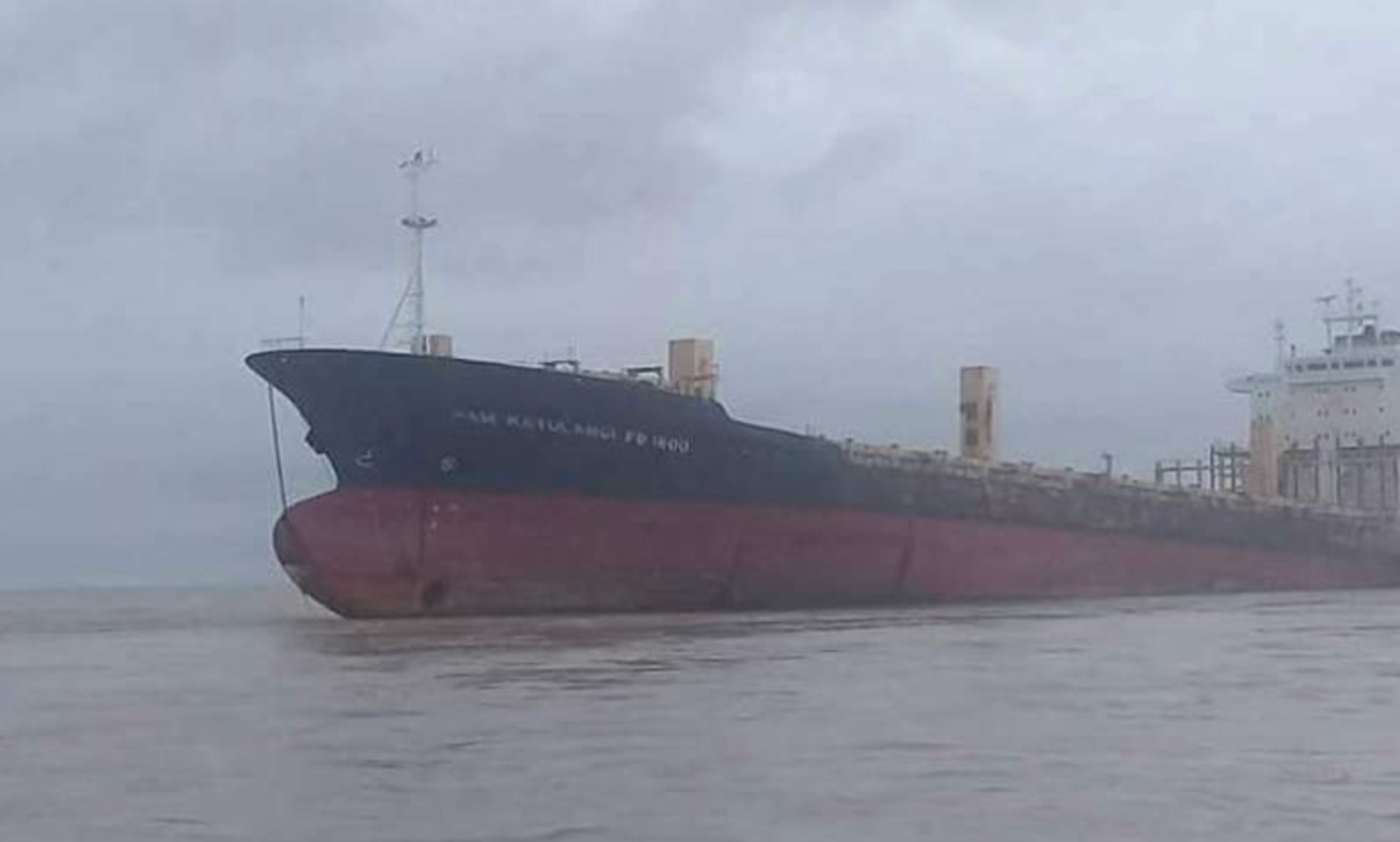
An unusually large number of tankers changed ownership in recent months, according to international reports, leading to speculation that Russian oil is being smuggled by untracked aging oil tankers.
Oil analysts say Russia has joined Iran and Venezuela in using shadow oil tankers to ship large volumes of crude oil.
Russia has acquired about 100 of these old tankers in recent months leading up to Monday’s oil sanctions from the U.S. and European Union. Many of the “dark” oil tankers are old, and they turn off their GPS tracking systems while on the high seas so they can transfer oil onto tankers that have no links to Russia, thus laundering the source of the oil. This prevents the oil exports as being flagged by countries taking part in the sanctions against Russia over its invasion of Ukraine.
International vessel traffic can be seen at this vesselfinder.com website. Dark tankers will not necessarily show up on the vessel tracking system, which is satellite assisted.
Ahead of Monday’s European Union embargo on imports of Russian crude oil, which had been announced months in advance, hundreds of tankers that were aging out of service changed ownership to companies not part of the European Union or G7 countries.
Many of those old tankers, which have no insurance from Western companies such as Lloyds, have already shown up at Russian ports to load crude, according to the Houston Chronicle. It is an environmental disaster waiting to happen, OilPrice.com reports.
In March, news reports revealed that Russian oil tankers had averaged 12 “dark activities” per week since the country invaded Ukraine. That activity has now spiked again.
On Monday, European Union’s cap went into effect, limiting Russian oil to $60 a barrel, meaning companies in the EU, as well and United States, Canada, and Australia, are not buying from any entity that breaches the cap for oil originated in Russia.
“The cap on the price of Russian oil transported by sea is designed to affect the country’s exports worldwide, in addition to the EU-wide embargo on Russian crude oil, which comes into force on 5 December and which the UK is also adopting. Countries not party to the deal will only be able to access services such as insurance, shipping and brokerage if they trade Russian oil at or below the $60 cap. As the countries involved in the deal, such as the UK, are the world’s largest service providers, the belief is that most countries and businesses will be forced to comply,” The Guardian wrote last week.
The G7 nations – Canada, France, Germany, Italy, Japan, the UK and US – provide insurance services for 90% of the world’s cargo while Greece, an EU member state, is a major player in the shipping industry, the newspaper explained.
“The cap is aimed at maintaining the flow of oil to countries such as China, India, Turkey and the United Arab Emirates, which have not banned Russian oil imports, while maintaining economic pressure on the Kremlin,” according to the Guardian.
“The monthly average of both so-called dark activities and ship-to-ship operations in the south Atlantic doubled in the September to November period compared with the previous three months, according to an analysis of movements by the maritime intelligence company Windward. There were around 35 incidents of ‘dark activity’ in September, nearly 50 in October and numbers dipped to just over 40 in November,” Guardian reported.
Windward tracked one tanker that went dark and was sailing under a Cameroon flag, then changed its registration and call sign to a Seychelles-based company, and then was spotted in Cape Verde. From there, it moved to the north mid-Atlantic, where it stayed for three days before heading to the coast of Namibia. It was sending out false signals about its location the entire time. After that, it moved to the coast of Angola and stayed put for six days, which is unusual behavior for a tanker at sea. Windward was able to detect a change in the draft of the vessel on Nov. 20, suggesting that the tanker took on oil at that point, from an unknown source.
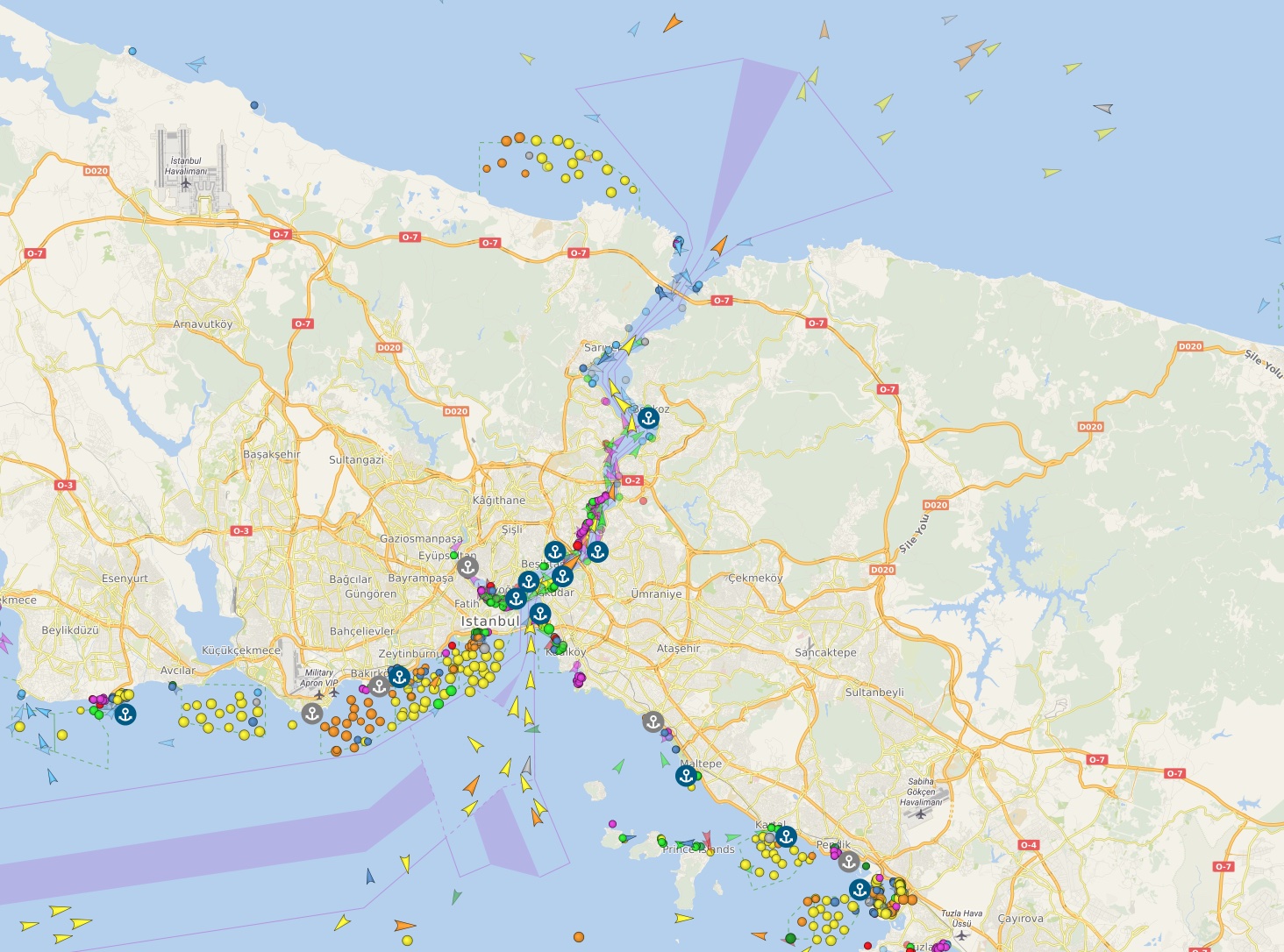
A traffic jam of oil tankers is reported to have built up in Turkish waters near the Bosporus Strait as Turkey’s government demands proof of insurance cover before allowing ships to pass.
Read more about how Russia is evading the oil embargo at qz.com.


