
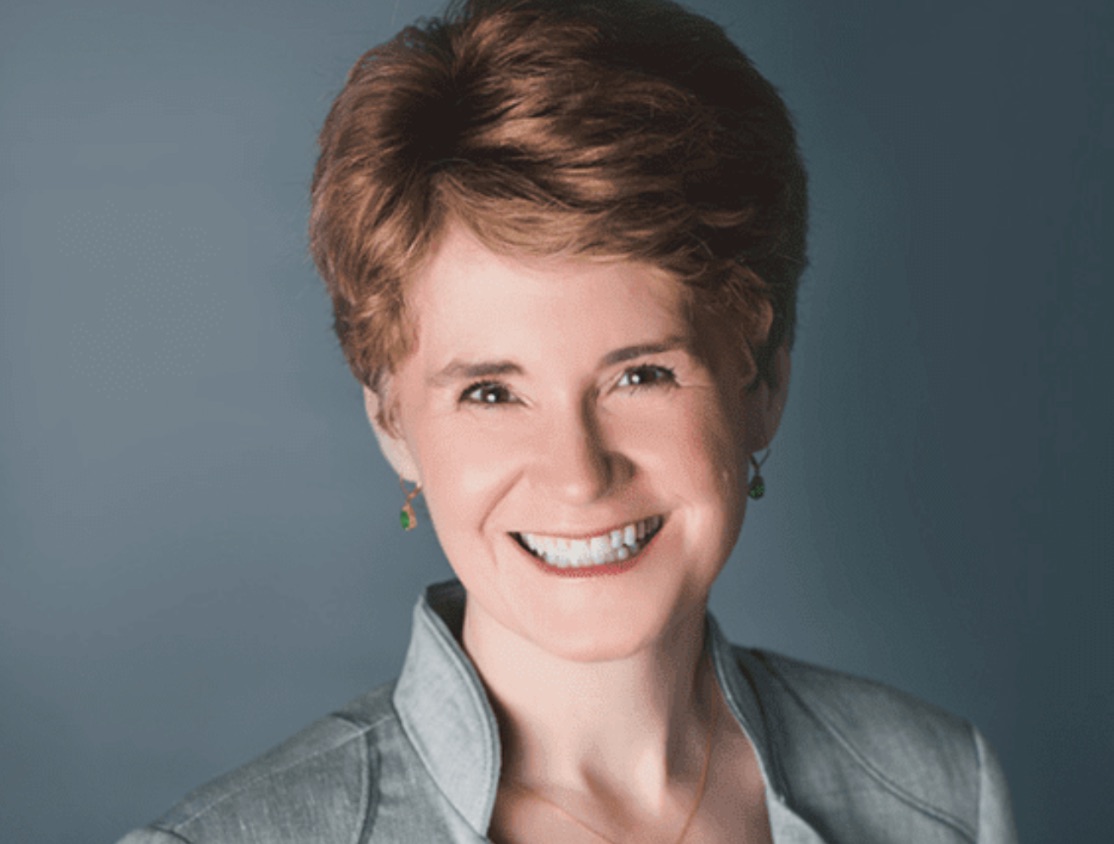
Two members of the Alaska Redistricting Board testified today against Gov. Mike Dunleavy’s nominee to the Alaska Judicial Council. Nicole Borromeo and Melanie Bahnke testified in House Judiciary Committee that nominee Kristie Babcock should be disqualified because she does not live in Fairbanks.
Babcock, a long-time business leader and political activist, is from Soldotna, although she has lived in Juneau and was raised in the Mat-Su Valley. There’s never been a woman from the Kenai Peninsula who has served on the Judicial Council.
In fact, the Alaska Bar Association, which controls three of the seats on the Council for the past 60 years has never appointed anyone except lawyers from Anchorage, Southeast, and Fairbanks.
Yet all of a sudden, the two members of the Redistricting Board feel there needs to be geographic diversity on the council.
If it looks political, it’s no wonder. Last year, Speaker Bryce Edgmon appointed Borromeo to the redistricting board, which is in charge of political boundaries after the completion of the 2020 U.S. Census. She is a lawyer and one of the most radical members to ever serve on the redistricting board. Borromeo signed the Recall Dunleavy petition in 2019.
Also last year, Chief Justice Joel Bolger appointed Melanie Bahnke to the redistricting board. It’s Bolger’s position that the Judicial Council is replacing, as he retires this spring, raising a question about whether Bahnke has been pressured to oppose Babcock. Bahnke has also signed the Recall Dunleavy petition. Bolger has been a foe of Dunleavy.
Both women represent what’s known as “rural” interests, although Borromeo actually lives in Anchorage, while Bahnke lives in Nome.
The two women were savvy enough to know they could not go after Babcock simply because she is married to Tuckerman Babcock, the former chairman of the Alaska Republican Party and a former chief of staff to Dunleavy. Instead, the women said that there needs to be regional diversity on the board.
Kristie Babcock penned an open letter to the Alaska Legislature, which Must Read Alaska obtained today:
In her letter, Babcock said that she had observed the Alaska Judicial Council appointment process since 1990, when she was the director of Boards and Commissions under Governors Walter Hickel and Frank Murkowski. In that role, she had been responsible for reviewing dozens of applications to the council.
“Never in these 32 years has there been the level of attention given geographic representation discussed now. I find this curious,” Babcock wrote to the Legislature on Wednesday.
The council has but three public seats of the seven seats. Three are controlled by the Alaska Bar Association. The Chief Justice has the seventh seat, and runs the council.
“There have been numerous times in history where certain regions don’t have a representative. There has never been any problem identified with that,” Babcock wrote, giving four examples:
“During the council’s 62-year history there have been only 18 of 62 years that someone from rural western Alaska or rural northwest Alaska served. There have been 14 total years, including a 10-year period and a 4-year period, in which there was no public member from the greater Anchorage municipality. There was a total of 17 years in which there was no public member from Fairbanks or the Interior, including a 7-year stretch and a 10-year stretch. There has never been a woman from the Kenai Peninsula appointed. Where was the outage then? Where was the outrage over this ‘lack of geographical representation’ over the past 62 years? There wasn’t any. Is the outrage being voiced now by a small but vocal number of attorneys and retired judges really about geography?” Babcock wrote.
“I’m really not sure why any lawyers or former judges feel they should weigh in on this public seat when the private Bar Association already control three seats directly, which are not even subject to legislative confirmation. Maybe there is some merit to pressing the Bar Association to have at least one of their three members come from rural Alaska, because since statehood they have never done so. In fact, the Bar has never selected members from anywhere other than Fairbanks Anchorage, and Southeast,” she said.
“Frankly, as a private citizen willing to volunteer and asked to do this job, I find these new arguments from a small but loud group of lawyers undignified and inappropriate. Doesn’t the Bar Association already appoint 3 attorneys to the council, not subject to legislative confirmation. Do they really need to choose the public members too?” she asked.
“I would ask that my qualifications be judged on their own merit. I ask that my competence and character be judged, I ask that the respectful consideration I give to my customers, my neighbors, my colleagues and friends be shown to me. I ask that the care I have for all of Alaska be judged for itself — that we not pit region against region, rural against urban, Alaskan against Alaskan. I have lived in Anchorage, Juneau, Wasilla, Kenai, Soldotna and the town of Ninilchik (pop. 836). I love the small coastal community I call home (Soldotna pop. 4649, Kenai pop. 7742). My children and immediate family members have gone to school at UA Southeast, Fairbanks and Anchorage. Alaska has my heart, all of Alaska has my heart,” Babcock wrote, asking that she be judged on her merits, not on her address.


