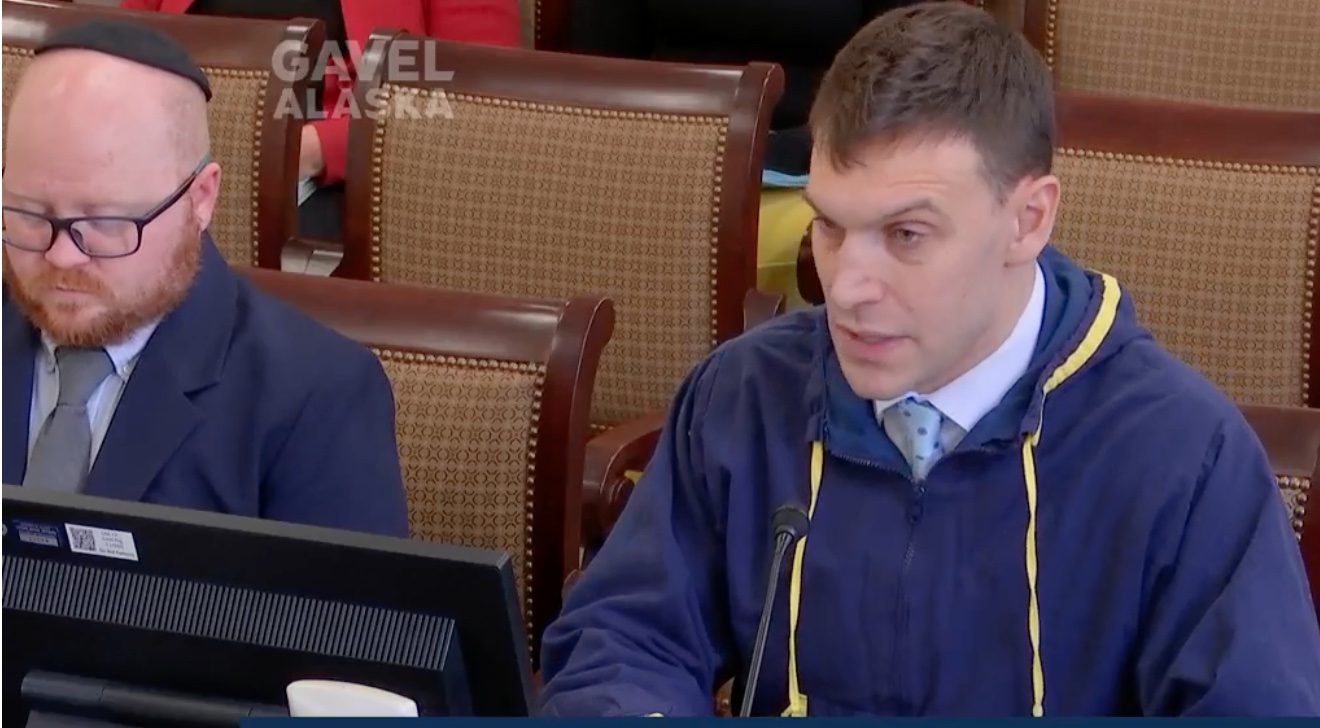
The sponsor of a bill to create a task force to regulate psychedelics in mental health told the Senate Labor and Commerce Committee on Friday the task force will cost nothing. Senate Bill 166’s goal, however, is the same: Prepare Alaska for use of psychedelics in treating some mental illnesses like post traumatic stress disorder.
Sen. Forrest Dunbar, who is pushing the use of some psychedelics for mental health treatment, is a member of the committee, and presented the bill to the only two other members who were present on Friday: Sen. Jesse Bjorkman and Sen. Click Bishop. Both Sens. Kelly Merrick and Elvi Gray-Jackson were no-shows.
“Working with the sponsor in the House and the Department, we have change some of the nature of the task force. Now the overriding purpose of the task force is still exactly the same — we are preparing Alaska, hopefully, for what we see as the very likely legalization in the medical context of certain of these substances,” Dunbar said.

The changes that the committee substitute bill now has include dropping the fiscal note (cost of the bill) because instead of being a task force staffed by the Department of Commerce, it would be a legislative task force staffed by those working in the sponsors’ offices. The language also clarifies that the task force is not there to advocate for legalization but to create a regulatory framework in anticipation of federal legalization of some substances.
Also, there is no longer a requirement that one of the members of the task for be an herbalist. Instead, a seat was added for a registered nurse. The task force will get no per diem or travel.
The Task Force will still consist of a “diverse group of experts and stakeholders” tasked with exploring the integration of psychedelic-assisted therapies into Alaska’s healthcare system, according to the bill. It will meet at least four times, submit a report of recommendations to the legislature and the governor by Dec. 31, and terminate at the convening of the 34th Legislature.
“Research shows the effectiveness of psychedelic-assisted therapies in treating PTSD, depression, anxiety, and substance-use disorders, conditions highly prevalent among veterans. What barriers exist in implementing such therapies in Alaska? What regulations are needed for practitioners to ensure safe integration of psychedelic medicine? These are some of the questions the task force will explore,” Dunbar said in his sponsor statement for the bill.
He said the Food and Drug Administration is currently reviewing the drug known as “ecstasy,” also known as MDMA or “Molly” for treatment of post traumatic stress disorder, “with approval expected by the end of this year.”
But, in fact, the FDA has been asked to review MDMA, or midomafetamine (the active ingredient in street drugs like ecstasy and Molly) for post traumatic stress disorder. The request was made by a pharmaceutical company, Lykos, which has been studying the use of the drug in therapy. The FDA is in a 60-day review period, in which it will decide if the drug will be fast-tracked through the approval process.
If approved, it would reschedule MDMA from Schedule I drug. Schedule I drugs have no accepted medical use and are known to have a high potential for abuse.
The FDA recently accepted a new drug application for midomafetamine (“Molly”) capsules to be used in combination with psychological interventions, including psychotherapy for PTSD. The FDA also granted priority review to the new drug application with a target action date of Aug. 11.
The bill moved from Labor and Commerce Committee to the Senate Judiciary Committee, chaired by Sen. Matt Claman, one of Dunbar’s fellow Anchorage Democrats.