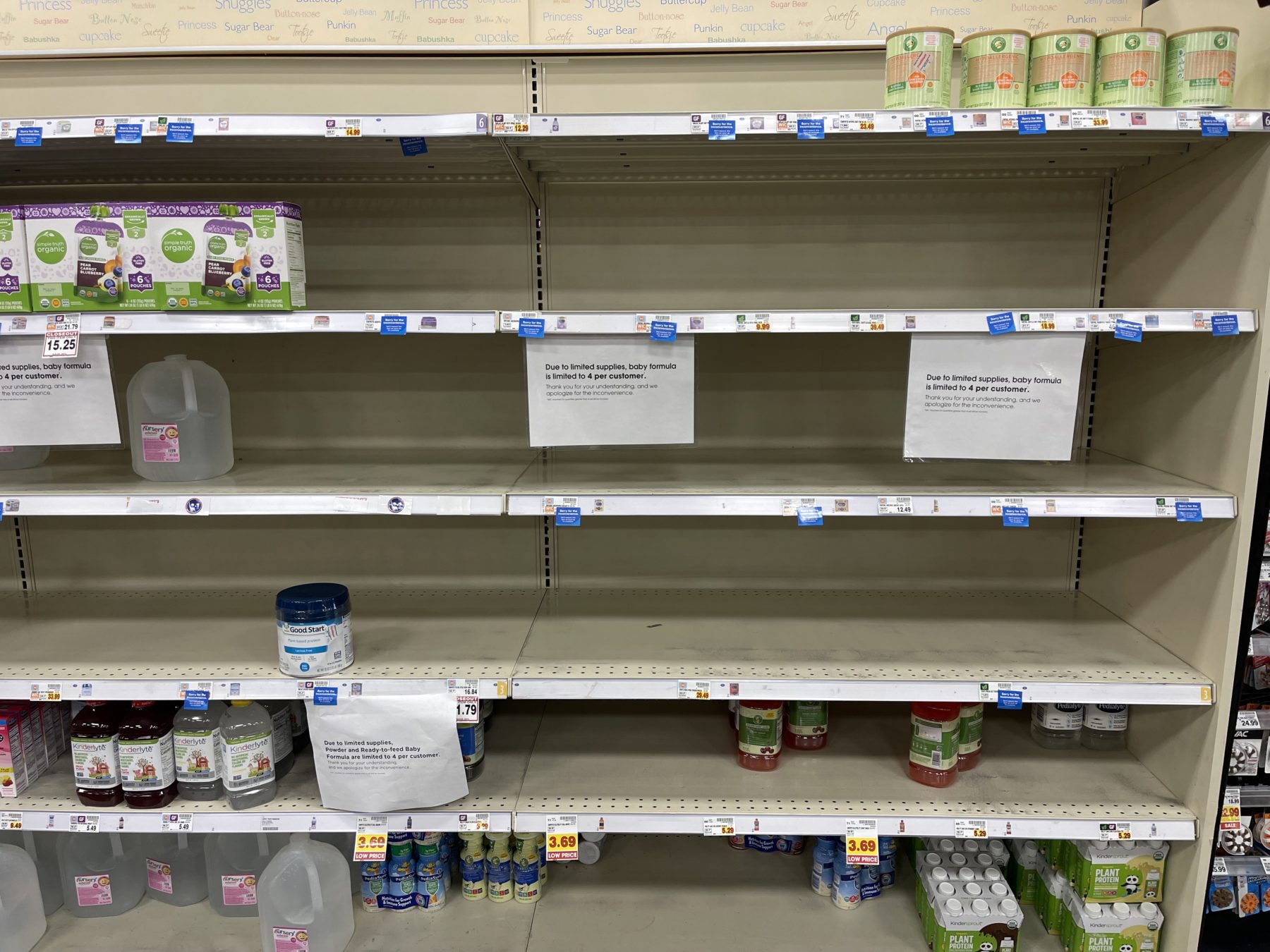
(Pictured above, infant formula nearly out of stock at the West Dimond Fred Meyer on Friday evening.)
One foster mother standing at the infant formula section at Carrs on Northern Lights and Minnesota on Saturday said she had been all over Anchorage looking for formula for her foster baby, who was on her hip. She had not yet found the formula that her foster baby could use.
“What about those moms who cannot afford to drive all over town?” she wondered aloud.
It’s fallout from the Covid-19 pandemic: Health experts are saying that a decline in breastfeeding since the pandemic hit in 2020 is contributing to the infant formula shortage, which may last through July, as the Biden Administration and the private sector struggle through supply chain and production issues.
Breastfeeding is complicated business. Stress can prevent moms from being able to produce milk. The difficulty of finding child care during the pandemic combined with the challenge of finding babysitters, led to uncertain schedules for families. These are among the hurdles for moms being able to breastfeed. Moms who got Covid may have been too sick to breastfeed. Other reasons a baby would need formula is that they are in foster care or have specific health issues.

In Anchorage, the shelves were nearly bare in the infant formula section during a walk-through on Friday and Saturday of several grocery and drug stores. All stores visited by Must Read Alaska are either out of formula or keeping inventory locked up.
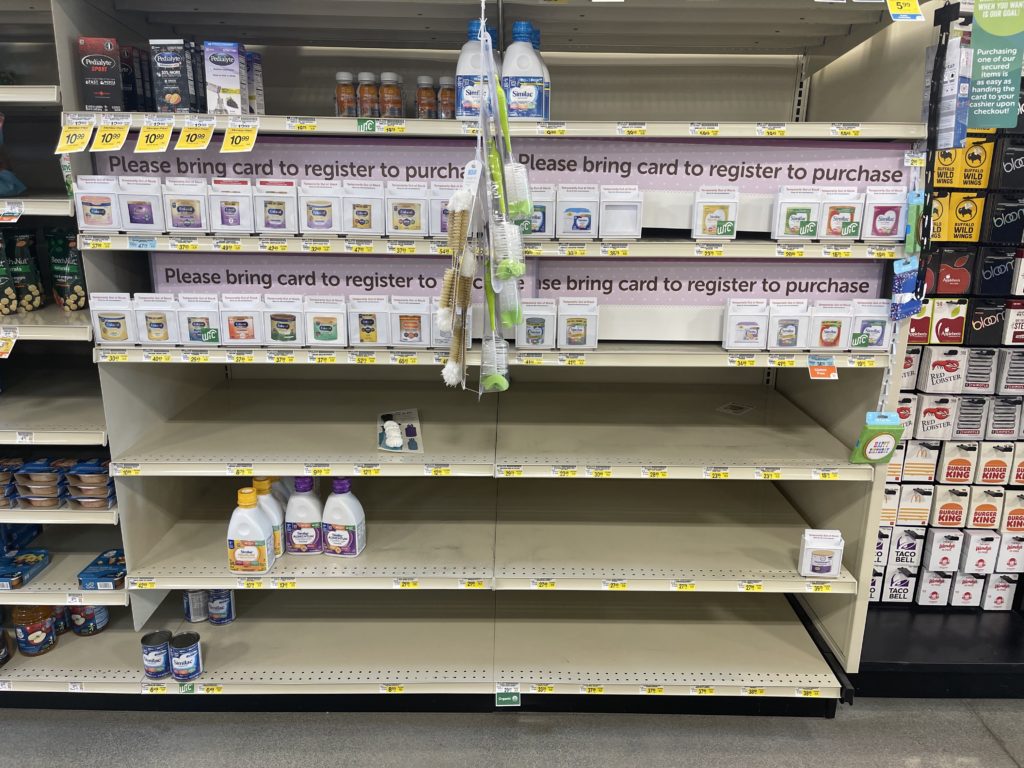
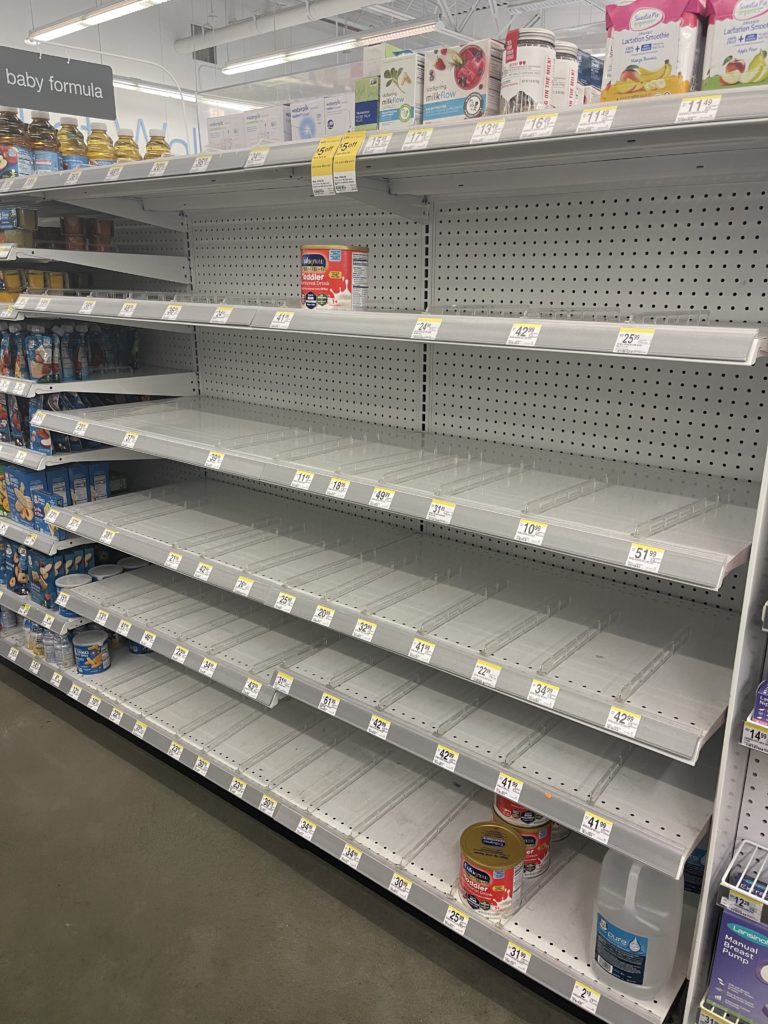
The shortage of formula is also due to a government recall of several types of formulas made by Abbott Nutrition, which provides nearly 50% of all formula sold in America. It’s also because of a drop in births during the pandemic, and then a surge. In addition, new mothers have stopped breastfeeding.
Research from Demographic Intelligence shows that after birth rates crashed in 2020, “the demand for formula was anemic.” But by early 2021, “births came roaring back, leading to very high year-over-year growth rates.” Democraphic Intelligence also found the number of breast-fed one-year-olds declined from roughly 34% in 2020 to roughly 14% in 2022, “reversing decades of growth.” It’s a 69% decline in breastfeeding in two years.
“During the pandemic, many new mothers were unable to get the care and help they needed to successfully breastfeed because of Covid-19 restrictions, experts said. For example, many mothers had shorter hospital stays and were discharged before their baby latched successfully or their milk came in. Parents also had less support and in-person assistance from doulas and peer-support groups, as well as from family and friends, as people reduced contact to avoid exposing newborns to the coronavirus,” according to a report from the Advisory Board, an online publication for health professionals.
The Biden Administration has invoked the Defense Production Act, which requires suppliers to “direct needed resources to infant formula manufacturers before any other customer who may have ordered that good.” And the Biden Administration is importing millions of bottles of three Nestle infant formulas that are scarce in the United States. Two shipments of formula have arrived in Indianapolis and Virginia.
But in Alaska, infant formula is still in extreme short supply and is expected to be at crisis levels through July.