The Biden Administration today announced the the Tribal State Small Business Credit Initiative awards, which are being given directly to tribal governments under the American Rescue Plan.
A total of $73 million will be allocated to 39 tribal governments to support tribal enterprises and small business owners. Fifteen of the awards were announced today.
The Inupiat Community of the Arctic Slope, approved for up to $2.9 million, will administer an equity/venture capital program. Through this initiative, the ICAS Economic Development Department will invest in tribally owned small businesses.
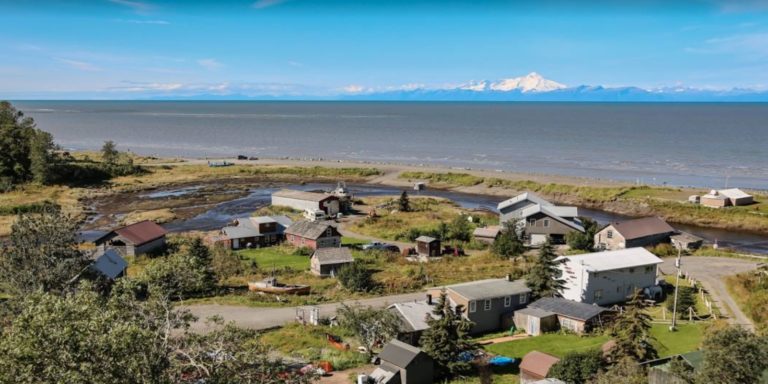
Similarly, Ninilchik Village, approved for up to $689,038, will focus on an equity/venture capital program aimed at providing engineering services. Ninilchik Village Tribe has about 1,000 members, including American Indians who have settled there and been accepted into the tribe.
The 2023 SSBCI awards represent a substantial increase from the program’s original allocation in 2010, with President Biden’s American Rescue Plan, which has driven the national debt to over $32 trillion, contributing more than six times the previous funding amount.
The reauthorization and expansion of the SSBCI program under the American Rescue Plan are projected to benefit 100,000 small businesses nationwide, facilitating the flow of tens of billions of dollars in new small business financing over the next decade, the White House said.
Now the Administration will go on tour to tout the awards. President Biden, Vice President Kamala Harris, First Lady Jill Biden, and other administration leaders will travel across the country over three weeks, highlighting the administration’s spending on manufacturing, infrastructure, and cost-saving initiatives. It’s a campaign tour in thin disguise.
The Alaska Broadband Office got more than $1 billion to help deploy broadband throughout Alaska — but fiber to everyone will cost $1.7 billion, sources say.
The Department of Commerce’s National Telecommunications and Information Administration has announced that Alaska has been awarded a staggering $1,017,139,672.42 as part of President Joe Biden’s “Investing in America” program. This funding, allocated under the “Internet for All” initiative, aims to provide affordable and reliable high-speed Internet service to every American.
The announcement was made by President Biden, Vice President Kamala Harris, and Secretary of Commerce Gina Raimondo during a press conference held at the White House.
“With this funding, along with other federal investments, we’re going to be able to connect every person in America to reliable high-speed internet by 2030,” Biden said.
Raimondo emphasized the significance of this investment, stating, “What this announcement means for people across the country is that if you don’t have access to quality, affordable high-speed Internet service now – you will, thanks to President Biden and his commitment to investing in America.”
The funds for the initiative are part of the $42.45 billion Broadband Equity, Access, and Deployment program established by President Biden’s Bipartisan Infrastructure Law. Each state, along with the District of Columbia and five territories, will administer grant programs within their borders to ensure widespread access to high-speed Internet.
According to a White House fact sheet, Texas will get the largest award of $3.3 billion. California, Missouri, Michigan, and North Carolina will each be awarded over $1.5 billion. The allocation for Alaska is the largest among on a per capita basis, due to the unique challenges the state faces due to its remote geography.
Eligible entities, including states, the District of Columbia, and territories, are to receive their formal notice of allocation on June 30. Following this, they have 180 days to submit their initial proposals outlining the implementation of their grant programs.
Starting July 1, entities can begin submitting their proposals, which will be approved by the NTIA on a rolling basis. Once an initial proposal is approved, eligible entities will be permitted to access at least 20% of their allocated funds to get started.
For more information on the allocations for each state, the District of Columbia, and the territories, InternetForAll.Gov.
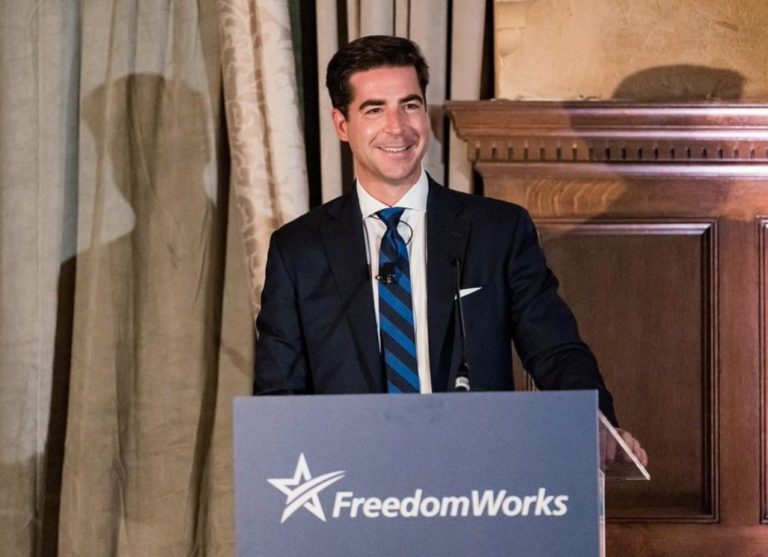
Fox News announced Monday that Jesse Watters will replace news commentator Tucker Carlson in the nightly lineup as the 8 pm (4 pm Alaska) anchor. Laura Ingraham moves to the 7 pm slot, Sean Hannity remains at 9 pm, and Greg Gutfeld moves to 10 pm.
Watters became popular during segments of the political talk show The O’Reilly Factor, with Bill O’Reilly, making his way with a man-on-the-street interview that became its own show, “Watters’ World” in 2015. Fox fired O’Reilly in 2017 over sexual harassment claims. He was at the time, the network’s biggest draw.
Carlson was fired in April, in an instance many believe to be part of a deal made with Dominion Voting Systems, which sued Fox News for defamation for allowing hosts, contributors, and guests to speak badly about the voting system company.
Meanwhile, Carlson has moved to Twitter to produce his show, which is a much shorter segment at this stage than his Fox News hour. His last episode had over 28 million viewers.
Fox, according to Nielsen live plus same day data for May 2023, verged 1.09 million total day viewers, 1.42 million total primetime viewers, 135,000 adults 25-54 in primetime and 126,000 adults 25-54 in total day. But Fox News saw substantial audience drop off in primetime with Carlson now out of the equation.
“The network dropped -32% in average total primetime viewers and -44% in the A25-54 demo, as well as -16% in total day viewers—and -22% in the total day A25-54 demo versus the previous month,” Nielsen reported.
Even before Joe Biden took up residence at 1600 Pennsylvania Avenue in January 2021, there was clear writing on the wall for the damage his administration would do to Alaska’s energy community.
We just didn’t know how bad it was going to get.
After all, his campaign was riddled with promises to the radical environmental movement. Two were going to be exceptionally impactful to our state: a first-day ban of oil and gas leasing on federal lands and in federal waters.
Then, an immediate closing of the Coastal Plain of the Arctic National Wildlife Refuge (ANWR) to development, even after Congress had authorized its opening in 2017 and after its initial lease sale had been held and winning bidders contracted with in early 2021.
When the eco-Left saw its champions named to Cabinet-level positions in the Departments of Energy, Interior, Transportation and the EPA, astute Alaskans knew it was going to be a long four years.
And we were correct.
The Biden administration has – to date – carried out over 55 administrative and executive orders related to resource development projects or opportunities in Alaska. As tracked by U.S. Senator Dan Sullivan, only two have been what could even be considered “wins” for the state, and one came with a huge trade-off.
When ConocoPhillips’ Willow project was approved back in March, the environmental movement acted like team Biden had committed eco-treason.
In fact, while the re-authorization of Willow was something to celebrate, it came with a series of exceptionally damaging long-term trade-offs. First, the project was scaled back from five drill pads to three, which will limit the amount of oil that can be recovered.
The much bigger impact will come from the 13.8 million on-shore, and 2 million off-shore acres that were ordered off-limits to any future development efforts. Those lands and waters all are adjacent to where oil and gas deposits have already been discovered. How many jobs and how much more revenue to local, state and federal coffers were sacrificed in the name of “going green”?
There have been significant efforts from radical environmental organizations to thwart other development projects across our state, and they’ve been given a boost from Team Biden.
The Ambler mining district is known to be rich in copper and critical and strategic minerals that are needed if the country is to establish domestic supplies to help us ‘go green’ and transition from fossil fuels to renewables. While that idea in and of itself is nonsensical, so is the ongoing fight over accessing the Ambler district via a congressionally authorized corridor.
From the cries of “social and environmental justice” emanating from the Left, you’d think the plan was to build a 10-lane superhighway through the most pristine area of Earth. In fact, the 211-mile, 2-lane gravel road will be strictly controlled and private, allowing only for extracted components to reach the Dalton Highway and the rest of Alaska’s road system.
The Pebble Mine in Southwest Alaska is the western world’s largest deposit of copper, which faces a worldwide shortage under the Left’s ‘green’ agenda. The rabid nature of the environmental movement against Pebble has been going on for nearly two decades. Even after the U.S. Army Corps of Engineers released its final environmental impact statement providing an unabashed thumbs-up for the project, the mine’s permits were disallowed for ‘public interest’ reasons that reeked of political shenanigans.
Next, the EPA vetoed the project, citing watershed regulations that were just overturned by the Supreme Court in Sackett vs EPA. It will be interesting to see what narrative the Left uses to attempt to deny Pebble going forward. They certainly won’t be based on facts, since the science is clear that the mine’s plan for development is sound.
If past is prologue, the next 17 months will see the Biden administration attempt to circumvent federal laws, the Supreme Court and science to build its case for protecting the planet at any cost. Those efforts will continue to land Alaska in the crosshairs of radical environmentalists, their wealthy ideologue donors from the Lower 48 and the small-yet-vocal minority of Alaskans who would rather see development efforts cease altogether.
If you want to help counter those misguided efforts, I invite you to contact me at [email protected]. Let’s talk about building a coalition of rational, like-minded Alaskans who will work for a brighter, better energy future. We can – and must – do that for the sake and future of the Great Land.
Rick Whitbeck is the Alaska State Director for Power The Future, a national nonprofit organization that advocates for American energy jobs. In addition to emailing him at [email protected], you can follow him on Twitter @PTFAlaska.
In a move to protect middle-class borrowers from President Joe Biden and his higher interest rates for people with good credit, the House of Representatives passed the Middle-Class Borrower Protection Act.
Alaska Rep. Mary Peltola voted against the passage of the Middle-Class Borrower Protection Act, a bill that garnered bipartisan support of 14 Democrats and that aims to create safeguards against fee changes based on borrowers’ debt-to-income (DTI) ratios. It institutes a one-year freeze on the Biden Federal Housing Finance Agency’s increase of mortgage rates for good-credit borrowers, so that poor-credit borrowers can get better mortgage rates. The punishing rule went into effect in June.
“Why would you punish people by making it more expensive for people that have been most responsible? On the credit score piece, it’s not even clear that it only helps people who are poor. I mean, there are wealthy people who don’t manage their credit well,” Rep. Warren Davidson told reporters. Davidson, who is a Republican from Ohio, is a co-sponsor of the legislation.
The bill’s other co-sponsor, Rep. Tom Emmer of Minnesota, expressed concerns about the Biden Administration’s socialist agenda, stating, “Homeownership already feels out of reach, and now this administration wants to subsidize individuals with a history of financial irresponsibility and penalize Americans who have worked hard to build strong credit.”
Emmer’s office conducted a survey among constituents that revealed that 93% of the 6,000 respondents believed that prospective homebuyers with good credit should not be required to subsidize high-risk borrowers.
Peltola did not survey her constituents before voting against overturning the rule. The measure passed the House with a vote of 230 to 189 and proceeded to the Senate for further deliberation.
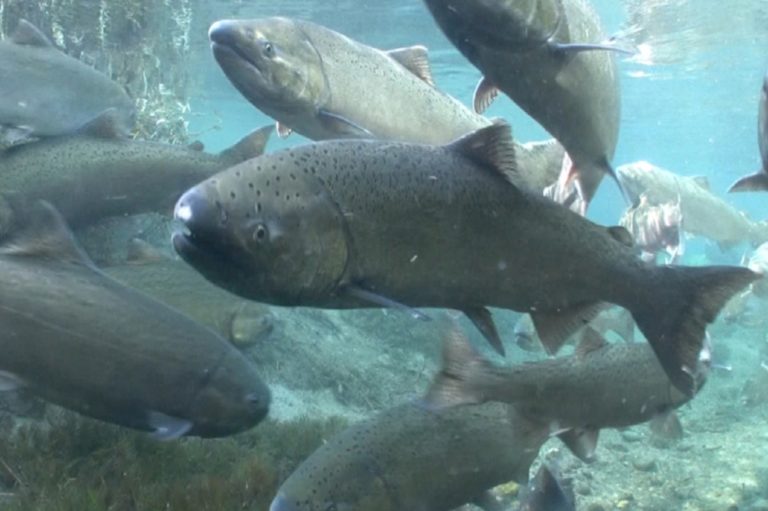
One day after the Ninth Circuit Court of Appeals overturned a Seattle judge’s ruling that had shut down the Southeast Alaska chinook troll fishery, the Alaska Department of Fish and Game delivered the catch limit news to the troll fishermen, specifying the number of kings they are allowed to catch during the upcoming season.
Commercial trollers will have a total allocation of 74,800 chinook salmon during the first retention period, which begins July 1. Based on data from past years, the department thinks that the goal will be reached in 9-10 days, depending on weather.
The Alaska Department of Fish and Game had already announced that between October 2022 and September 30, 2023, trollers would be permitted to harvest 149,100 treaty chinook. Those are not fish originating from Alaska hatcheries. This represents a reduction of 44,100 fish compared to the previous year, amounting to a 30% decrease.
The adjustment in harvest limits can be attributed to the Pacific Salmon Commission’s implementation of a more conservative approach to setting chinook harvest caps for Southeast Alaska. As the regulatory body overseeing fishing practices along the West Coast of the United States and Canada, the PSC makes the catch allocations between the two countries under the U.S.-Canada Pacific Salmon Treaty.
Following the allocation decision, the Alaska Board of Fisheries must approve the management plans that divide the state’s catch among various gear types and user groups.
More information on the exact details of the commercial Southeast chinook fishery can be found at this ADF&G announcement.
Meanwhile, Wild Fish Conservancy, which brought the lawsuit to try to shut down commercial king trolling in Southeast Alaska, said “the appeals process is just beginning,” indicating that the group may make an appeal to the U.S. Supreme Court. That appeal could likely be after the July troll fishery, which is is just four days away.
Anyone who has read or watched Tom Clancy’s “The Hunt For Red October” knows that the U.S. Navy knew of the catastrophic failure of the “Titan’s” hull if not at the time it happened, as soon as the computers reviewed the sound recordings, say a few hours later. Despite the spin from the Biden-media, there was nothing secret.
The United States has had a line of sonobuoys and hydrophones from Murmansk to New York since the early days of the Cold War. If it happens in the North Atlantic, an American submarine or listening station knows about it.
Suffice it to say that I don’t believe anything the Biden Regime says about anything so it wouldn’t surprise me if they ordered the Coast Guard and Navy to string the “Search for Titan” drama out just to cover for Hunter Biden’s bad news, but I don’t know for sure and that is giving them more credit for smart than I like to give them. Maybe it was some sort of sham; maybe they’re just that stupid.
I want to talk about boats not politics. Those of us who’ve been around boats and boating know the term “Six Pack License.” A “Six Pack” isn’t a license; it is a description of a type of boat technically called an “uninspected passenger vessel.”
All those pretty and not-so-pretty things you see bobbing around out there on a holiday weekend are mostly “uninspected passenger vessels.” Almost all the consumer boats are uninspected passenger vessels, meaning they are not built under Coast Guard supervision nor to Coast Guard specifications except in regard to a limited number of safety requirements.
The ”Six Pack” comes from the fact that if you’re a licensed professional mariner, no matter what your rating from 25 ton to unlimited ocean, you cannot take more than six passengers for hire in an uninspected passenger vessel.
If the USCG wants to mess with you about it, they can. If you’re licensed and you take a party out and some of them bring some nice wine to express their appreciation, you can’t legally take it if you have more than six aboard. You sure as hell can’t charge a quarter million bucks to ride an uninspected submersible if you have more than six paying passengers on it.
So, let’s address “The Hunt for Titan.” It is clear that the owner did everything in his power to avoid Coast Guard supervision and inspection of his vessel. He built an “uninspected passenger vessel” to go 14K meters to the bottom of the Atlantic Ocean. He made it down and back a few times.
I had a mid-range uninspected passenger vessel for several years. From what I could see, mine was much better equipped than the “Titan.” It was strictly a good-weather boat. It was pretty safe up until the seas got into the six-foot range, but then uncomfortable and at times downright scary. I could have sold you a ticket to cross the Gulf of Alaska or even run to Kodiak or the Aleutian Chain, and we might have made it safely; a good weather eye and good luck goes a long way, but if anything at all had gone wrong, we were going to die. The guys on the “Titan” had it better; as the French guy said, if anything goes wrong, you’re dead before you know anything is wrong. On the surface, it takes a while to die from cold water and exposure. A Mustang life suit really just helps them find the body.
People will be screaming for retribution, but I think he gamed the system. He built the deep-sea submersible version of a Bayliner Capri, a Sunday afternoon play boat, and sold tickets to take it two miles down in the North Atlantic. I think he found and used a loophole in the USCG regulations and any claim against him would have to be some sort of tort/negligence claim.
At the time they wrote the regulations, the USCG probably wasn’t thinking that some fool would try to take a beer keg or a propane tank to the bottom of the ocean as a passenger vessel. The Pakistani guy and his son probably didn’t know enough to know better, but a couple of the others were experienced mariners and explorers who should have known better than to get inside that thing. What were they thinking?
Art Chance is a retired Director of Labor Relations for the State of Alaska, formerly of Juneau and now living in Anchorage. He is the author of the book, “Red on Blue, Establishing a Republican Governance,” available at Amazon.
It was the tale of two Alaskas in Southcentral on Saturday, and two different types of Alaskans sorting themselves out into festivals as different as they were entertaining.
While downtown Anchorage — very much Joe Biden country — was taken over by rainbows, drag queens, and men in ill-fitting tutus, the Mat-Su Valley was the site of kilt-wearing he-men having a tug-of-war competition and women participating in Celtic feats of strength.
The pride parade, a celebration of gay lifestyle, returned to Anchorage after having shied away from celebrating for the past three years due to fears over Covid.
In the parade were Rep. Jennie Armstrong of downtown Anchorage, Rep. Andrew Gray of East Anchorage, and Sen. Forrest Dunbar of East Anchorage, who wore a Bud Light necktie for the occasion.
Meanwhile, while Dunbar hoisted a rainbow flag as he traipsed through Anchorage, in the Mat-Su, the Scottish Highland Games were the place for hoisting big logs into the air.
At the Alaska State Fairgrounds, the field of play included the tug-o-war, caber toss (log throwing), and the sheaf (bale of hay) tossing competitions, all under a Chamber of Commerce sky. The festival included Scottish bagpipes, heavy athletics, Celtic dance, drumming, kilted mile, scotch tasting, tea tent, salmon tossing, tug-of-war, vendors, historical demonstrations, ax throwing, and children’s events, all of which continued on Sunday in a family-friendly environment.
Siemens Energy, whose subsidiary Siemens Gamesa is the world’s second-largest wind turbine manufacturer, disclosed significant problems with its wind turbine components, causing its shares to plummet and forcing the company to revise its profit forecast for the year.
On Thursday, the German company announced a “substantial increase in failure rates of wind turbine components” after conducting a thorough review of its operations.”
As a result of the findings, Siemens Energy’s board initiated an extended technical review expected to incur costs exceeding $1.09 billion, far surpassing the initial estimations. The unexpected surge in component failures dealt a severe blow to the company’s financial prospects, leading to a drastic drop of over 37% in Siemens Energy’s shares on Friday.
Siemens Gamesa said earlier this year the outlook for the wind industry remains good, pointing to the U.S. Inflation Reduction Act, which is making massive taxpayer-funded investments in wind energy.
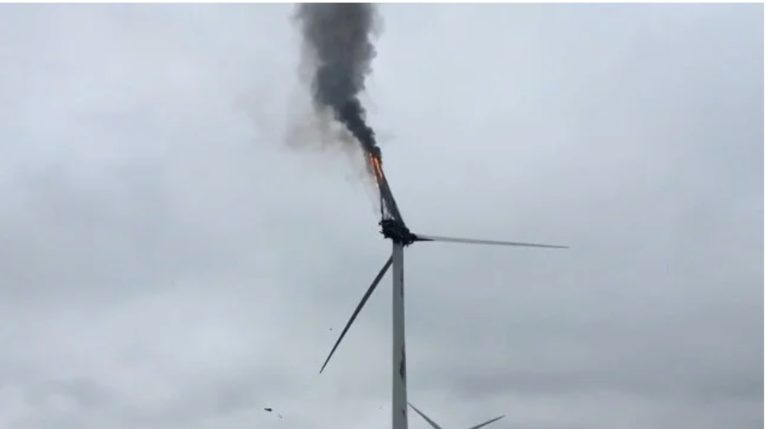
Although fires are relatively rare, the industry and its manufactured high-tech components are relatively new, and more breakdowns may be expected, according to Wind Systems Magazine, which wrote, “Tens of thousands of wind turbines are expected to be installed over the next few years — and with this boost in numbers comes both an increase in expected frequency and greater public scrutiny over wind turbine fires.”
The magazine estimates the number of wind turbines estimated to catch fire per year varies between 1-in-2,000 to 1-in-15,000. As more turbines are installed and existing ones age, the number of fires may increase. Each of these fires could cost as much as $8 million, according to the magazine, quoting insurance writers.
“As most wind-turbine towers exceed 250 feet, they are often out-of-range for ground-based firefighting. Sending a team up to fight the fire presents a significant health and safety risk. Therefore, if no fire suppression system is in place, it will be left to burn out, irreparably damaging the turbine,” the writer points out.
There is also the hazard to those on the ground, as spinning, burning components fall from the sky. Fields and crops can catch fire, and wildfires can spread quickly.
According to Siemens Energy, the magnitude of the component failure problem suggests that it may be occurring in a significant portion of its installed fleet of wind turbines, ranging between 15% and 30%.
The revelations at Siemens have sent shockwaves throughout the renewable energy industry, as Siemens Energy’s wind turbines are widely used globally.
There are currently 70,800 wind turbines across the U.S., according to the U.S. Geological Survey, and Siemens Gamesa has installed more than 10,000 of those wind turbines, totaling approximately 20 gigawatt of installed capacity. In Iowa alone, Siemens Gamesa has erected nearly 1,400 wind turbines for a total of almost 3.5 gigawatt. Since 2005, an average 3,000 turbines have been built in the U.S. each year.
Alaska’s largest wind farm, the Eva Creek Wind Farm operated by Golden Valley Electric Association, has 12 wind turbine generators, developed by manufacturer Goldwind Americas, a wholly-owned subsidiary of Chinese multinational Xinjiang Goldwind Science & Technology Co., Ltd.
During May, the Eva Creek Wind Farm put 5.778,010 kilowatt-hours of power into the electric grid, enough to power 9,630 Interior homes per month (using an average of 600 kWh/month), the association said. May’s capacity factor was 31.6%.
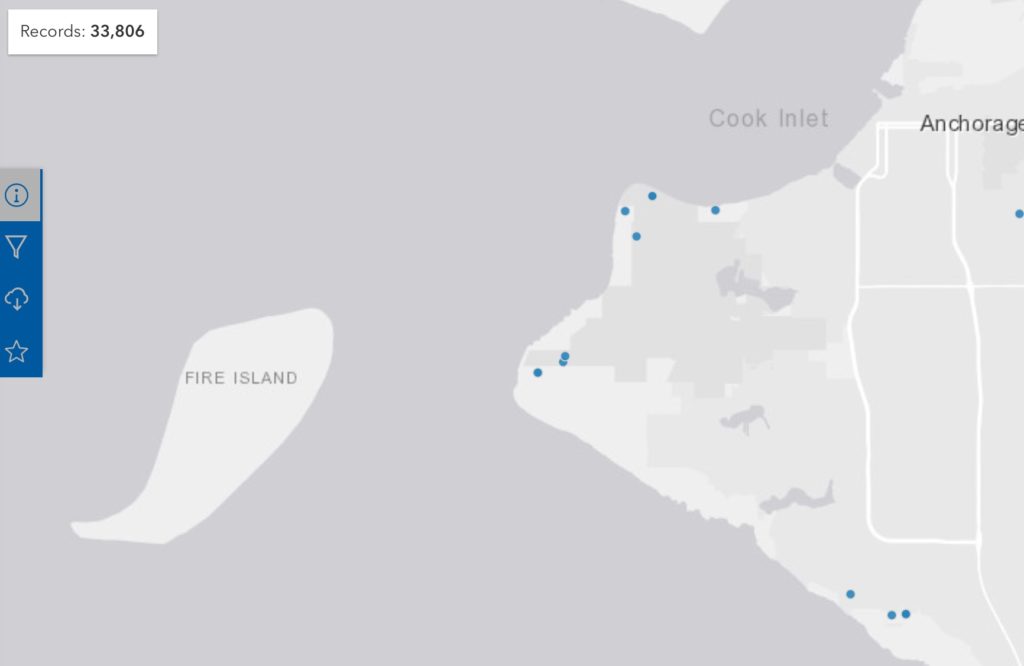
Cook Inlet Region Inc. (CIRI) operates the second-largest wind farm in Alaska on Fire Island in Cook Inlet, where 11 turbines produce about 2% of the annual power generation for Chugach Electric Association, the state’s largest power utility. The original footprint on Fire Island was built with primarily an appropriation from the State of Alaska, and federal money. CIRI’s wind farm is in its 12th year, and the Native corporation has hopes of tripling its wind turbines.
At the time of its construction, there were two bald eagle nests on Fire Island, and the developer, enXco Development Corporation, said the 11-turbine wind farm would not pose any hazard to those nests. Must Read Alaska was not able to determine if those nests remain active on the island, but there are none listed on the State of Alaska bald eagle nest map at this link.