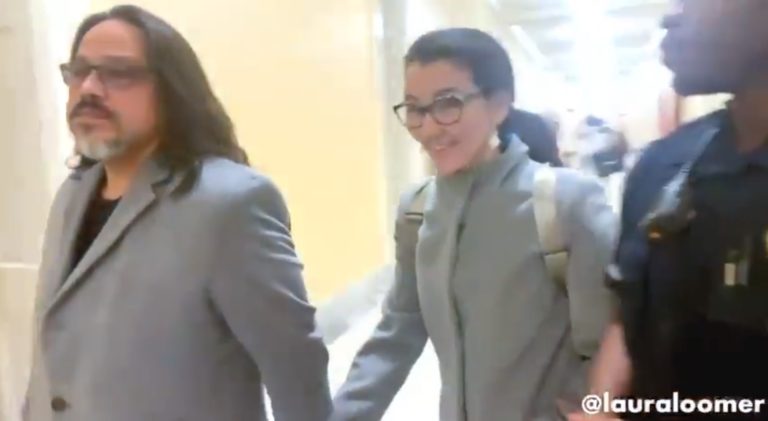
Former US Rep. Mary Peltola filed a civil lawsuit Friday in Bethel Superior Court, possibly seeking damages related to the plane crash that killed her husband, Eugene “Buzzy” Peltola Jr. on Sept. 12, 2023.
The lawsuit names defendants Bruce Werba, a registered master guide, and Alaska Pike Safari’s and Wilderness Adventures LLC, owned by Werba. Neitz Aviation, is also named in the complaint. Frank Neitz is the former owner of Arctic Circle Air.
Peltola’s husband died during a guided moose hunting trip along the Yukon River in 2023. The small plane he was piloting crashed shortly after takeoff from a remote wilderness camp. The accident drew national attention and widespread condolences, as Peltola was serving in Congress at the time.
The case, assigned to Bethel Superior Court Judge William Montgomery, was filed through Bethel attorney Myron E. Angstman and Anchorage attorney Russell L. Winner. Peltola is demanding a jury trial.
While the precise allegations are unknown to Must Read Alaska, the filing has a mark of someone seeking restitution for her husband’s death.
Werba, through his guiding business, conducts annual Yukon moose hunts. Neitz, known for decades of bush flying experience, previously owned a cargo airline before running his current aviation operation.
Bethel is one of the few jurisdictions in America known for high jury awards and it is a venue that plaintiffs’ lawyer prefer for that reason. In the courts, her claim to Buzzy Peltola’s estate is still open, and will likely be open for some time, at least until this matter is settled.
Peltola has been rumored to be preparing to run for statewide office, but these lawsuits throw that rumor into doubt.
On July 15, the US Senate took on one of the most controversial issues of our time — vaccine injuries and the power of Big Pharma. In a hearing titled “Voices of the Vaccine Injured,” Sen. Ron Johnson (R-WI), chairman of the Senate Permanent Subcommittee on Investigations, gave a national platform to families devastated by vaccine injuries, alongside medical experts who question the current system of pharmaceutical immunity.
The hearing exposed heartbreaking personal stories and raised bipartisan concerns about corporate accountability, government oversight, and the unchecked influence of pharmaceutical advertising.
The goal was to magnify the silenced stories of vaccine harm along with a broader debate on vaccine safety, efficacy, and policy. To ensure a balanced presentation, Sen. Richard Blumenthal (D-CT) provided a counterpoint, focusing on the life-saving benefits of vaccines and sharing accounts of losses from preventable diseases. You can watch the entire meeting here.
“All of the witnesses presented powerful testimony and engaged in respectful discussion. I believe all of these stories needed to be told and listened to. I sincerely hope that the hearing helped to bridge the gap and demonstrate how to heal and unify our horribly divided nation,” said Sen. Johnson.
Five witnesses discussed vaccine injuries, and two witnesses discussed vaccine efficacy. One of the witnesses was one of our speakers from last year’s Alaskans 4 PersonalFreedom conference — Dr. Brian Hooker, chief scientist at the Childrens’ Health Defense. He spoke of his son who developed autism after an MMR vaccine.
Testimonies are available in links below.
Emily Tarsell, mother of Christina Tarsell, witness’ daughter died following Gardasil vaccination
Eric Stein, brother of Jessica Stein, witness’ sister died of influenza
Brian Hooker, PH.D., father of Steven Hooker, witness’ son is vaccine injured with autism
Polly Tommey, mother of Billy Tommey, witness’ son is vaccine injured
Serese Marotta, mother of Joseph Marotta, witness’ son died following flu illness
Krystle Cordingley, mother of Corbyn Cordingley, witness’ son died following quadrivalent flu vaccination
One of the positives that came out of the hearing was a shared belief between Democrats and Republicans that the pharmaceutical industry does not have much oversight. Both sides showed concern for the “immunity from legal responsibility” enjoyed by Big Pharma since 1986.
Johnson brought up one of my pet peeves that the FDA allows pharmaceutical companies to advertise on TV. I can’t watch a show without hearing about some new drug for some disease I should ask my doctor about.
Johnson said a whopping $10 Billion was spent by Big Pharma on consumer advertising in 2024, making up just about 25% of the evening ad minutes.
Wouldn’t it be great if that money instead could be directed to those injured by these new great “wonderful” drugs?
Johnson stated the massive amount of money gained from this advertising allows the industry to “control the narrative and suppress stories of drug and vaccine injuries.”
The panel’s ranking Democrat Sen. Blumenthal agreed with Johnson’s concerns of Big Pharma and stated he’d co-sponsor a bill banning pharmaceutical advertisements on TV.
That would certainly be a step in the right direction. I pray it’s time now. A bipartisan push in the Senate would make a difference.
Committee members also shared an interest in reforming the National Vaccine Injury Compensation Program. This is the program established in 1986 that gave legal immunity to pharmaceutical manufacturers.
The vaccine manufacturer immunity occurred when lawsuits threatened to drive companies out of the market. Since they received immunity and we went to VICP instead, the explosion in childhood vaccine recommended doses went from 7 to 76 today.
Although the government does have the VICP, one witness on the panel stated the program has not provided relief to his family over 16 years to support his son who requires around-the-clock care.
Blumenthal asked if the U.S. government holds the pharmaceutical industry to the same standards as other industries.
“I am extremely suspicious as a lawyer that immunity is granted in any blanket way across the board to any manufacturer,” Blumenthal said.
It looks like the Senate (or at least some of the members of this committee) may be looking to write similar legislation.
Sen. Johnson should be applauded for exposing the serious injuries from vaccinations. The testimonies from the family members were hard to listen to without tearing up. Something needs to be done to stop the protection of Big Pharma and its shareholders.
Instead of protecting the industry, we should be protecting our children and ourselves. Remember, the Hippocratic Oath says, “First Do No Harm.” That is the principle that should always be followed, especially for our defenseless children.
Linda Boyle, RN, MSN, DM, was formerly the chief nurse for the 3rd Medical Group, JBER, and was the interim director of the Alaska VA. Most recently, she served as Director for Central Alabama VA Healthcare System. She is the director of the Alaska Covid Alliance/Alaskans 4 Personal Freedom.
I am seeing a barrage of ads on TV addressing our US Sen. Dan Sullivan over the issue of Medicaid. While Medicaid is an important issue, the ads are curious in their content and focus. Just a couple of weeks ago we saw similar ads aimed at Sen. Murkowski. Why the switch?
Are these ads really about Medicaid? Or are they just political ads since Sen. Sullivan will be running for reelection in 2026?
There are a couple of clues that can tell us. First, the claims made about the impact of the Big Beautiful Bill on Medicaid are patently false. They claim that one-third of Alaskans and 50% of our children will lose coverage.
Read the bill. All children under the age of 19 will continue to have coverage, as will pregnant women, families with children under the age of 13, and people with disabilities. That is almost everyone currently being covered.
As for the able-bodied people who will have to show they will work, the political opponents of Sen. Sullivan claim that “most people who are on Medicaid are already working.” Well, OK then, they won’t lose coverage either. Do Alaskans, who have a strong work ethic, really think it is unreasonable to require able bodied people to work for benefits? Everyone else does.
And thanks to the efforts of Senators Murkowski and Sullivan, there are other carve outs for rural areas and areas with high unemployment. For everywhere else, you see business after business posting to hire people for work. Ask any company, and they will tell you that is a very real economic issue.
There are already several groups who help people with Medicaid paperwork, and I am sure they will be very active in supporting eligible people to qualify for and keep their coverage.
The other clue for the meaning of these ads is to look up who is behind the ads: Majority Forward. Look them up at Influence Watch and you will see their report. It will give you some perspective. Turns out they are completely political, with no connection to health policy, and the darkest of the ‘dark money’ groups.
I am sure there will be other Alaskans who will run for election, and will provide an alternative to Sen. Sullivan, and that is welcome in our democracy. But hopefully they will not base their campaigns on the patently false claims about medicaid.
As I said, Medicaid is a legitimate issue, but what else is in the bill that caused our senators and congressman to vote for it?
On balance, this is the most important bill for the future of Alaska that we have seen in the past several decades. Alaska is a resource based economy, and the bill contains many important and enforceable requirements for leasing in NPRA, ANWR and Cook Inlet. It also contains conditions on lawsuits aimed at stopping development, timelines for completion of environmental impact statements, recision of the Roadless Rule in Southeast, loan guarantees for the Alaska gasline project, etc. And these are statutory provisions than can’t be overturned by executive order of a subsequent Presidential administration.
It also gives Alaska 70% of the revenues from oil and gas development on federal lands. We have all recently witnessed the difficult decisions our legislature has had to make due to lack of funding for basic services.
There are more Alaska specific benefits in this bill than for any other state, and I have to give credit to our Congressman Nick Begich for getting these included in the House version of the bill. An amazing feat for a freshman representative.
When combined with President Trump’s executive order on Alaska resource development, and the recent Supreme Court cases of Chevron and the 7 Counties Infrastructure Coalition, we are now positioned for a very strong improvement in Alaska’s economy through the next decade and beyond.
These measures aren’t meant to keep legitimate issues from being raised regarding resource development projects. They are meant to address the constant onslaught of lawsuits and delaying administrative actions intended to block any development in Alaska. For instance, the Center for Biological Diversity has already filed 266 lawsuits against the Trump administration. This doesn’t count suits by Earth Justice, Greenpeace, Sierra Club, Trustees, Natural Resources Defense Council, etc, etc.
What does this have to do with Medicaid?
First, with the jobs that will be available from these developments, Alaskans, if they are willing to take the training, should be able to earn a lot more than would qualify them for medicaid. For instance, the average annual wage for a miner in Alaska is $112,000 per year. For a directional oil driller on the North Slope, it is $149,000 per year. It could lift them and their children out of poverty. To keep the money in Alaska, let’s stop the flow of outside workers by training our own people.
The other connection with medicaid is the state matching requirement for the program, which has been escalating almost every year. That matching money comes from money earned by the state in oil taxes and the oil based permanent fund. You might wonder what that amount is. It wass $455 million last year. Without resource development, we wouldn’t be able to afford the match.
So, let’s take a larger overview look at the Big Beautiful Bill and what is does for Alaska. I am sure we will have a very lively election in 2026 over many issues, but let’s hope it is honest and based on a realistic view of what the Big Beautiful Bill did or didn’t do.
Paul Fuhs is former Mayor of Unalaska, Former Commissioner of Commerce and Economic Development, and Chairman of the board of AIDEA, the Alaska Energy Authority and the State Bond Bank.
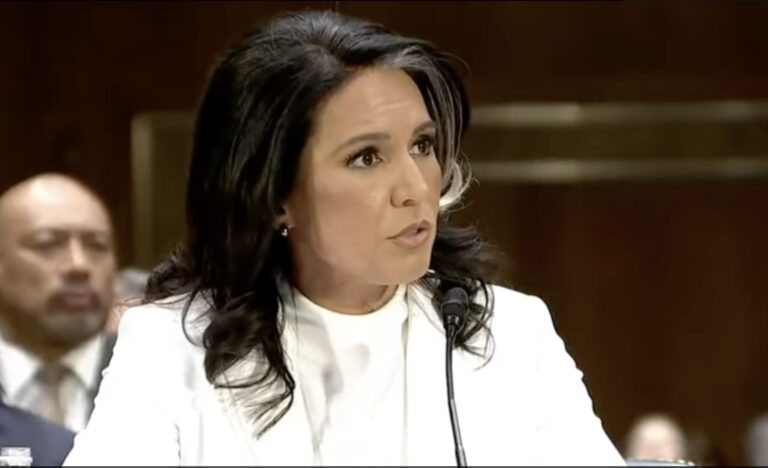
Director of National Intelligence Tulsi Gabbard wants the US Department of Justice to investigate what she says is a “treasonous conspiracy” by former President Barack Obama and his senior advisors to concoct evidence that Russia interfered in the 2016 election.
Gabbard on Friday declassified documents that she said provides “overwhelming evidence” that Obama and his national security advisers conspired to create “a politicized piece of intelligence” to launch a years-long investigation into the now debunked Trump-Russia collusion claims.
“These documents detail a treasonous conspiracy by officials at the highest levels of the Obama White House to subvert the will of the American people and try to usurp the President from fulfilling his mandate,” Gabbard wrote on X.
Trump defeated Hillary Clinton in the 2016 presidential election.
In a news release, Gabbard said the intelligence community had concluded prior to the 2016 election that Russia was “probably not trying … to influence the election by using cyber means.”
After the election in early December, “talking points were prepared for DNI James Clapper stating, ‘Foreign adversaries did not use cyberattacks on election infrastructure to alter the US Presidential election outcome,’” the news release said, but after a top meeting of key Obama advisers, a new intelligence assessment was prepared, “per the President’s request,” that “directly contradicted the IC assessments that were made throughout the previous six months.”
Gabbard said she is referring the matter to DOJ for further investigation.
“After months of investigation into this matter, the facts reveal this new assessment was based on information that was known by those involved to be manufactured i.e. the Steele Dossier or deemed as not credible,” the news release said. “This was politicized intelligence that was used as the basis for countless smears seeking to delegitimize President Trump’s victory, the years-long Mueller investigation, two Congressional impeachments, high level officials being investigated, arrested, and thrown in jail, heightened US-Russia tensions, and more.”
The long-debunked Steele dossier alleged that Trump worked with Russie to interfere in the 2016 presidential election.
Cross–cultural communication requires a knowledge of how culturally different people groups communicate with each other. Studying other languages helps us understand what people and societies have in common, and it has profound implications in developing a critical awareness of social relationships. Indeed, understanding these relationships and the way other cultures function is the groundwork of successful business, foreign affairs, and interpersonal relationships.
Elements of language are culturally relevant and should be considered. There are, however, several challenges that come with language socialization. Sometimes people can over-generalize or label cultures with stereotypical and subjective characterizations. For instance, one may stereotype by saying that Americans eat hamburgers and French fries in the McDonald’s restaurant daily, and Russians eat borshch (beet and cabbage soup) for breakfast and drink vodka before bedtime. Both stereotypes are far from the truth.
With increasing international trade and travels, it is unavoidable that different cultures will meet, conflict, cooperate and blend together. People from different cultures often find it difficult to communicate, not only due to language barriers but also because of different culture, styles, customs, and traditions. These differences contribute to some of the biggest challenges of effective cross–cultural communication.
Cultures provide people with ways of thinking, seeing, hearing, behaving, understanding and interpreting the world. Thus, the same words or gestures can mean very different things to people from different cultures—even when they speak the same language (e.g., Canada, Australia, New Zealand, England, South Africa and the United States).
The quote “Two nations divided by a common language,” often attributed to George Bernard Shaw, highlights the differences in vocabulary, pronunciation, and cultural nuances that can exist between speakers of the same language. When languages are different, however, and translation is needed just to communicate, the potential for misunderstandings significantly increases.
From the mid–1980s to early–2000s, I was an unofficial Russian translator in Alaska for the US and State of Alaska governments, as well as for various public institutions and private individuals. The most challenging aspect of the translation was relaying specific terminology, such as that used by the US Coast Guard, medical professionals, political protocols and verbiage and, especially, jokes and humorous expressions. Often, I had to provide cultural and historic backgrounds before translating a joke.
Ones, a member of the Russian delegation, in an informal setting over dinner, told a joke to his Alaskan counterparts:
“Archaeologists found an ancient sarcophagus in Egypt with human–made artifacts and skeletal remains. Experts around the world thoroughly investigated this finding to identify the person buried in the sarcophagus but had no success. So, they invited a KGB agent (Soviet Committee for State Security) Major Ivan Ivanov to investigate this matter. Major Ivanov spent nearly three hours in solitude with the skeleton and, finally, with a confidence in his voice, reported to the archaeologists that the remains and skeleton belong to the Egyptian Pharaoh Ramses the Second. Archaeologists were impressed by this quick revelation and asked Ivanov, “How certain are you of this remarkable conclusion?” Then Ivanov replied with a great pride, ‘After three hours of the bulldozer interrogation, the skeleton itself revealed to me his identity!’”
The Russian jokester was a large, broad-shouldered man, his voice deep and curt. No one among the Alaskan delegation laughed after hearing the joke. They sat still at the table, holding crystal shots of vodka, and just stared with alarm at the joke-teller.
I had to provide the Alaskans with some background about the notorious brutality of the Soviet KGB. Unfortunately, in the process of explaining the joke, the humor disappeared.
In teaching Russian language at the University of Alaska Southeast for 16 years, my very first message to students was to emphasize that a language must always be understood and learned in a cultural context. As an example, I shared with them a personal and rather humorous story of my early arrival to the United States in Philadelphia during the winter of 1978.
In the early years of my immigration, I watched a lot of TV to learn English, American traditions and lifestyles. Many advertisements described food items and dishes, including various salads, using the word “delicious.”
It was a new experience for me because there were no TV ads for commercial products in the former Soviet Union due to a lack of commercial competition. The government controlled standardized prices for commercial products throughout the entire country.
So, I understood the word “delicious” as a name of the salad (a noun) rather than the quality of the salad (an adjective). In fact, food dishes have a particular name in Russia — Chicken Kiev, Salad Stolichniy (salad capital), Borshch (beet and cabbage soup), Beef Stroganoff (meat stew), Blini (Russian for pancakes), etc.
Later that year, my uncle from Canada, accompanied by his wife and daughter, visited me in Philadelphia. As a welcome greeting to America, they invited me to a fancy restaurant downtown. When the waiter asked for my order, I requested a steak, shot of vodka and “delicious” salad, hoping my order would match the “delicious” salad that I had seen on TV.
The puzzled waiter leaned slightly and whispered to me, “Sir, all our food is delicious.” Then, I clarified to the waiter, “I want a delicious salad.” The confused waiter served me a cabbage with mustard.
So, that evening in the fancy restaurant, I enjoyed a delicious steak and stuffed myself with a cut-in-half cabbage with mustard. This was a prime lesson in cross-cultural miscommunication.
Indeed, the demographics and cultural complexity of our nation changes rapidly. It is only a matter of time before ethnic minorities in our country take a lead in shaping the cultural and ethnic landscape of our nation and, eventually, become a significant ethnic majority. These demographic and cultural changes are unavoidable. However, our society should learn to make inclusive and, yet, conservative cross–cultural adjustments without undermining the fundamental core of American Judeo–Christian religious, cultural and moral values.
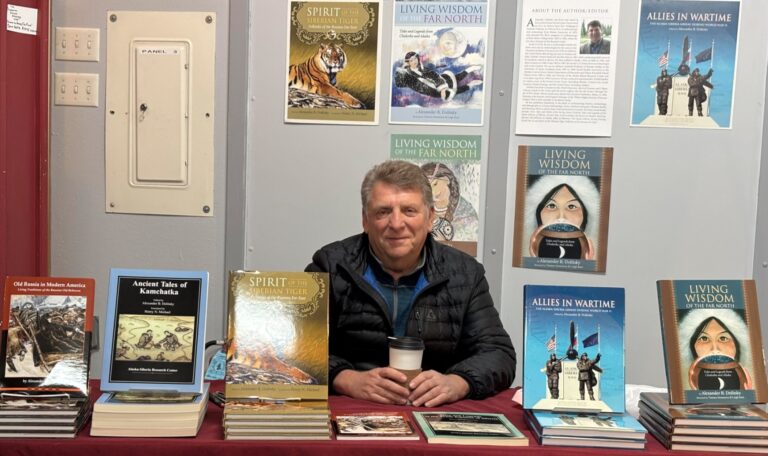
Alexander Dolitsky was born and raised in Kiev in the former Soviet Union. He received an M.A. in history from Kiev Pedagogical Institute, Ukraine in 1976; an M.A. in anthropology and archaeology from Brown University in 1983; and enrolled in the Ph.D. program in anthropology at Bryn Mawr College from 1983 to 1985, where he was also lecturer in the Russian Center. In the USSR, he was a social studies teacher for three years and an archaeologist for five years for the Ukrainian Academy of Sciences. In 1978, he settled in the United States. Dolitsky visited Alaska for the first time in 1981, while conducting field research for graduate school at Brown. He then settled first in Sitka in 1985 and then in Juneau in 1986. From 1985 to 1987, he was U.S. Forest Service archaeologist and social scientist. He was an Adjunct Assistant Professor of Russian Studies at the University of Alaska Southeast from 1985 to 1999; Social Studies Instructor at the Alyeska Central School, Alaska Department of Education and Yukon-Koyukuk School District from 1988 to 2006; and Director of the Alaska-Siberia Research Center from 1990 to 2022. From 2006 to 2010, Alexander Dolitsky served as a Delegate of the Russian Federation in the United States for the Russian Compatriots program. He has done 30 field studies in various areas of the former Soviet Union (including Siberia), Central Asia, South America, Eastern Europe and the United States (including Alaska). Dolitsky was a lecturer on the World Discoverer, Spirit of Oceanus, and Clipper Odyssey vessels in the Arctic and Sub-Arctic regions. He was a Project Manager for the WWII Alaska-Siberia Lend Lease Memorial, which was erected in Fairbanks in 2006. Dolitsky has published extensively in the fields of anthropology, history, archaeology and ethnography. His more recent publications include Fairy Tales and Myths of the Bering Strait Chukchi, Ancient Tales of Kamchatka, Tales and Legends of the Yupik Eskimos of Siberia, Old Russia in Modern America: Living Traditions of the Russian Old Believers in Alaska, Allies in Wartime: The Alaska-Siberia Airway During World War II, Spirit of the Siberian Tiger: Folktales of the Russian Far East, Living Wisdom of the Russian Far East: Tales and Legends from Chukotka and Alaska, and Pipeline to Russia: The Alaska-Siberia Air Route in World War II.
The Trump administration has formally rejected the World Health Organization’s 2024 amendments to the International Health Regulations, according to statements released Thursday by the U.S. Department of State and the Department of Health and Human Services.
The amendments were designed to strengthen global preparedness for future pandemics, introducing new measures such as a dedicated “pandemic emergency” category, expanded information-sharing between nations, and provisions aimed at ensuring equitable access to medical supplies for developing countries. The Biden Administration had initially supported the drafting of these changes during international negotiations in Geneva. They were ultimately finalized in 2024 after the US had exited the negotiation process.
Secretary of State Marco Rubio and Health and Human Services Secretary Robert F. Kennedy Jr. announced the rejection, citing serious concerns over national sovereignty and the potential for undue influence by the WHO over domestic health policies. They also criticized the process as lacking meaningful public input and transparency.
“This administration will never cede control over American public health decisions to unelected international bureaucrats,” Rubio said in a joint statement with Kennedy. “We will always defend the rights of the American people to self-determination.”
Administration officials raised alarms about ambiguous language in the amendments that they argued could open the door to censorship of public discourse, as well as the possible imposition of digital health documentation systems or vaccine passports that could compromise Americans’ privacy rights. They also expressed fears that the amendments could be interpreted to allow the WHO to recommend lockdowns or travel restrictions, although the WHO has clarified it does not have the authority to enforce such actions, and the final amendments specifically preserved national sovereignty.
The rejection follows President Trump’s broader efforts to distance the United States from the WHO, culminating in his January 20, 2025, executive order to withdraw from the global health body. Trump cited the WHO’s handling of the COVID-19 pandemic and alleged undue influence by China as justification for the withdrawal.
The move is seen as a necessary defense of American autonomy.
WHO Director-General Tedros Adhanom Ghebreyesus expressed “regret” over the US decision, warning that the rejection could undermine coordinated global responses to future pandemics.
In earlier statements, Ghebreyesus has expressed the communist notion that health care is an absolute human right and that all humans on the planet are entitled to the same level of health care: “Health cannot be a question of income; it is a fundamental human right,” he said, quoting Nelson Mandela, a devout Marxist. Such a theory would ultimately lead to the United States and wealthier nations being responsible for the health of 8.2 billion people, regardless of their location, lifestyle choices, or medical history.
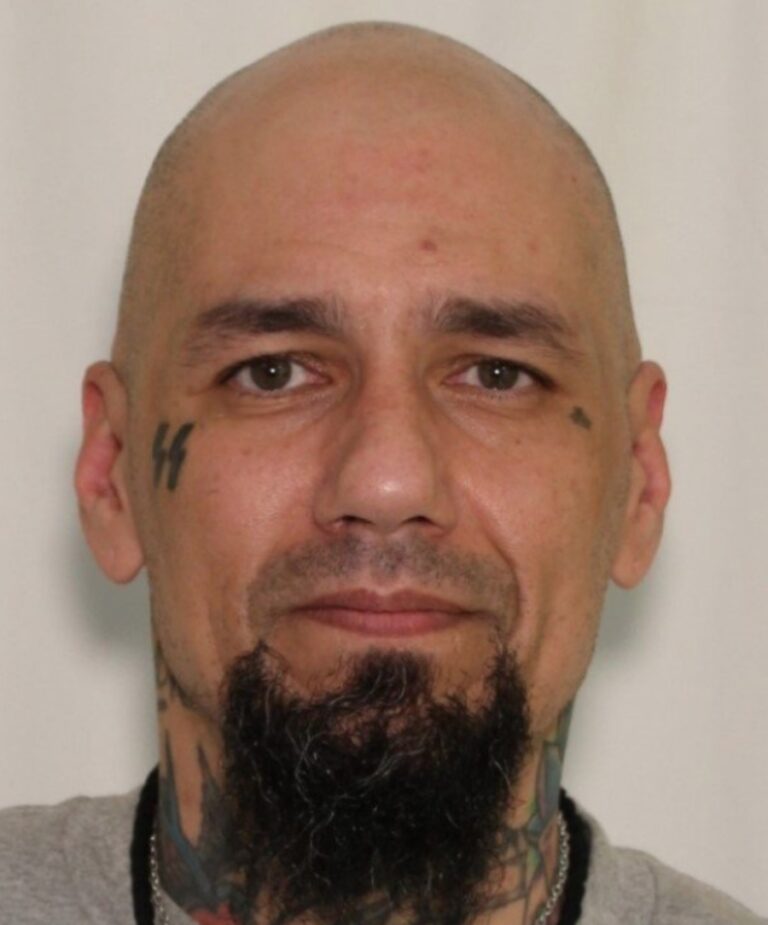
Synister Aryan Krakkerss was on the run from law enforcement this week after he fled from Parkview Center, a halfway house, leading the Anchorage Police Department to issue a felony warrant for his arrest.
Now, police say that Krakkerss, 45, has been served his warrant and has been jailed at the Anchorage Correctional Complex.
Court records show that he has petitioned to change his name from Synister Aryan Krakkerss to Vincent Synister Calderon. His birth name appears to be Vincent Raul Calderon, and his charge sheet includes armed robbery and felony escape.
The mugshot released by law enforcement shows two SS runes tattooed on Calderon’s right cheek. It’s unclear whether that indicates affiliation with a prison-based Neo-Nazi gang operating in Alaska.
On Jan. 26, 2023, five members and associates of the 1488s, a white supremacist gang, were sentenced in Alaska to life in prison for racketeering and kidnapping resulting in a death, among other offenses.
In March that same year, 27 people were indicted by a grand jury for drug trafficking. Most of the accused were tied to the Aryan Family, another white supremacist prison gang. The group trafficked large amounts of fentanyl and methamphetamine from Washington to Idaho and Alaska.
These gangs tend to be extremely violent.
In 2022, five people affiliated with 1488 were convicted for the death of a gang member whose gang tattoo was brutally removed from his body. The victim had a tattoo cut off from his rib cage with a hot knife before being shot. His body was later burned.
While crowds from Anchorage flocked to the Kenai Peninsula for a weekend of salmon dipnetting, one Anchorage man made a different kind of splash along the Sterling Highway.
Alaska State Troopers reported a chaotic scene Friday evening near Mile 46 when multiple 911 calls came in about an adult male running into traffic, striking vehicles, and undressing himself in a roadside pullout. Responding troopers from Seward and Soldotna eventually located the individual in a nearby vehicle.
The man, identified as 29-year-old Aucha Johnson of Anchorage, was arrested on three counts of first-degree indecent exposure, as well as charges of fourth-degree assault and disorderly conduct. He was transported to Wildwood Pretrial Facility in Kenai, where he was held without bail pending arraignment.
Unlike the thousands peacefully casting nets for wild salmon, Johnson’s Johnson became another wild roadside attraction in Cooper Landing.
The University of Alaska Fairbanks will soon be under new leadership, as University of Alaska President Pat Pitney announced the appointment of retired Ambassador Mike Sfraga, Ph.D., as interim chancellor of UAF. Sfraga, a longtime university insider and recent Biden administration appointee, will assume the role July 28, following the retirement of current Chancellor Dan White at the end of the month.
Sfraga, a UAF alumnus and former university vice chancellor, was confirmed in September 2024 as the United States’ first-ever Ambassador-at-Large for Arctic Affairs. His nomination was backed by Alaska Senator Lisa Murkowski after being advanced by President Joe Biden. Despite his high-profile appointment, Sfraga’s tenure as Arctic ambassador was brief and marked by limited public achievements before transitioning back into academia.
President Pitney called Sfraga a “fitting choice to lead America’s Arctic University,” citing his decades-long career within the University of Alaska system and extensive experience in Arctic policy circles. Sfraga will serve in an interim capacity and will not be a candidate for the permanent chancellor position.
Sfraga’s career in the University of Alaska system spans over three decades, with leadership roles ranging from academic posts to administrative offices including UAF vice chancellor, director of the UA Geography Program, and associate vice president of the UA system. He also chaired the U.S. Arctic Research Commission and founded the Polar Institute at the Wilson Center in Washington, D.C.
Sfraga’s appointment comes as UAF begins a search for its next permanent chancellor. President Pitney said additional details on the search process will be released in August.