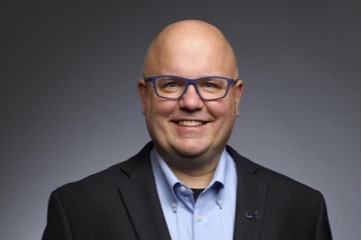
Club for Growth, a network of 500,000 pro-business Americans, has endorsed Nick Begich for Congress for Alaska.
“The Club for Growth is the leading free-enterprise advocacy group in the nation. We win tough battles and we have an enormous influence on economic policy,” the organization explains on its website. “In fact, we are the only organization that is willing and able to take on any Member of Congress on policy who fails to uphold basic economic conservative principles…regardless of party.”
The groupalso endorses candidates such as Sen. Ted Cruz of Texas, Sen. Rick Scott of Florida, Kari Lake for Senate in Arizona, and Bernie Moreno for Senate in Ohio.
By backing Nick Begich, the group is signaling it’s going to take on Rep. Mary Peltola, Alaska’s Democrat in Congress. The Nov. 5 general election is 66 days from Saturday.
” If elected, he will be dedicated to ensuring that Alaskans thrive, standing ready to challenge Washington’s overreach and secure a prosperous future for Alaska,” the organization said in its highlight of Begich.
The Club for Growth endorsement is one of the more difficult ones to get, because the group doesn’t endorse people who will just go along with the Washington, D.C. swamp politics. It’s not interested in lawmakers who cave to special-interest lobbyists.
Begich has received other endorsements this week, including that of Rep. Bruce Westerman, who chairs the House Natural Resources Committee, and Rep. Jim Jordan, chair of Judiciary. Begich was also just named to the National Republican Congressional Committee’s “Young Guns” program, which will super-charge his campaign.
The Anchorage Assembly Democrat majority has prioritized the removal of the hydro dam and associated Anchorage electricity and drinking water from the Eklutna River and will meet with the leaders of the village of Eklutna on Sept. 5 to advance those goals with a formal joint resolution.
The Democrats controlling the Anchorage Assembly want to delay a decision that Gov. Mike Dunleavy must make soon on whether to remove the dam; members hope to wait until a Democrat governor is in office — one who will take action to dismantle the dam, originally built in 1929, and rebuilt twice after that, which powers more than 24,600 residential homes for an entire year.
Eklutna hydroelectric power is the lowest cost renewable energy in Southcentral Alaska; it also provides power to areas of the MatSu Valley and nearly all of the water or Anchorage.
The governor needs to make a decision by October on the 1991 reauthorization of the dam. There has been a public comment period that now ended, and there is no legal language to delay the process, which is what the Assembly majority wants; it is asking for a two-year delay.
As much as it is trying to assert authority, the Assembly doesn’t have legal standing in the decision-making process, as the municipality has no member or voting rights on the ownership committee, which is made up of Chugach Electric Association and Matanuska Electric Association.
The Assembly has sent up every smoke signal possible to indicate it is likely to sue the governor and other related entities, such as the Regulatory Commission of Alaska, if it doesn’t get its way.
Rick Whitbeck, Alaska state director of Power the Future, said that it’s time for rational voices to prevail.
“Like petulant children crying over a toy at the supermarket, the Anchorage municipality leadership continues to whine over a process they have no legal standing in. Their continued tactics will only lead to taxpayer and ratepayer expenditures on a cause they have no hope of winning legally.”
Whitbeck called for the reauthorization and its five-year process to be approved “and for Eklutna to continue to provide always-on, always available, low-cost power and water to Anchorage”
The village of Eklutna is reported to have around 70 members, although the exact tribal roll is hard to determine. Most, if not all of the members live throughout the municipality and depend on the power and water from the Eklutna project. The municipality has lifted the village to a government-to-government status and now meets with village leaders on a formal basis, which is what the Aug. 5 meeting is scheduled as.
On the agenda for the joint meeting on Sept. 5:
“Resolution AR No. AR 2024-276, a resolution of the Anchorage Municipal Assembly authorizing the Anchorage Assembly Chair to sign a Joint Resolution of the Anchorage Assembly and the Native Village of Eklutna in support of exploration of alternative solutions to attain our shared policy goals for full restoration of the Eklutna River.”
• Motion from Tribal Council authorizing President Leggett to sign Joint Resolution AR 2024-276
• Briefing re Gathering Place
• Eklutna River Restoration
• Update from Anchorage Hydropower Utility
• Placenames – changing the names of places around Anchorage to Native names
• Property Taxes
• Education
• Public Safety
• Boarding School Investigation
• Use of Alcohol Tax Funds for Culturally Relevant Programming for Youth Prevention Activities – Municipal Employee Training
The tribe has been working “behind the scenes” with Anchorage, it says in a recent newsletter: “The Land and Environment Department has been working hard on the Eklutna River project – doing the behind the scenes work that is needed to work with our partners.”
Thus, it appears the Anchorage Assembly and/or the mayor have been having consultations and possible meetings “behind the scenes” with the tribe that the public has not been made aware of.
Republicans again have defeated the ranked-choice ballot. And it’s not even November.
In District 9, two Republicans have dropped, leaving Republican Lucy Bauer alone on the ballot to face Ky Holland, who is endorsed by the Alaska Democratic Party.
Candidates Lee Ellis of Girdwood and Brandy Pennington made it official today. Bauer was the leading Republican out of the primary this month, so they’re making room for her.
Ellis came away with 870 votes, Pennington received 811, and Bauer received 933.
Rather than split the donation and volunteer base, and make Republican voters uncertain or confused about who to support, both Ellis and Pennington cleared the runway for Bauer, who can now also get the endorsement of the Alaska Republican Party later in September. Update: Ellis, who only recently registered as a Republican, has endorsed stealth-Democrat Holland. Evidently Ellis was recruited to run by hardline Democrat Rep. Zack Fields as a plant.
Holland will be tough enough to beat with just one Republican in the race. He received 1,880 votes in the primary.
“I dreamed of coming to America when I was a child,” Bauer says on her website. “I immigrated here the first chance I got. I immediately fell in love with the country and never looked back. This country has given me so many opportunities for success and now I’m running for office to give something back. I will work just as hard for you in the State House as I have in building a successful business. I come from humble roots and look forward to serving the community that I have grown so attached to.”
The pattern of Republican self-sacrifice follows what happened earlier in Eagle River, with Republicans Sharon Jackson and Ken McCarty dropping out to clear the path for Republican Jared Goecker to face Sen. Kelly Merrick, who is also a Republican, but who has lost the trust of many due to her allegiance to Democrats. She is not kindly regarded by many in her district, and Goecker got more votes from her in the primary, even though there were two other Republicans to choose from.
In Senate Seat H, Republican Tom McKay dropped, and Republican Liz Vazquez now has a clean shot at taking out Sen. Matt Claman, the Democrat.
That leaves House District 36, where Republicans Dana Mock and Cole Crabgress have both dropped from the November general election to allow Republican Rebecca Schwanke a better chance at defeating Democrat Brandon Kowalski.
There are a handful of Republican-on-Republican races in the MatSu Valley, such as Districts 27, 28, and 30.
In the congressional race, Republican Nancy Dahlstrom dropped out to give Nick Begich a better chance of retiring Rep. Mary Peltola.
Ranked-choice voting was tested first in Alaska in 2022, and Republicans found that it split the donation base, the volunteers, hurt the unity among conservatives, and dragged down the momentum, as people became uncertain about who to trust with their vote, their dollars, and their time.
In 2024, the Alaska Republicans are showing they put their state before their ambitions, pulling together as a team behind one person.
Friday is the last day to in-person drop from the November ballot at the Division of Elections, although some candidates may try to drop electronically over the weekend, with a less-than-certain result. Labor Day is Monday and is also the final day to drop, but the Division of Elections is closed.
Alaska is not the only state where voters are deciding ranked-choice voting matters on the Nov. 5 ballot.
Colorado confirmed on Thursday that the signatures for Initiative 310, which would create a jungle primary and ranked-choice voting general election — just like Alaska’s — were sufficient to make the Nov. 5 general election ballot.
That means Colorado joins Idaho, Missouri, Nevada, and Oregon in having ballot measures relating to either adopting, repealing, or even pre-empting ranked-choice voting.
“This is the highest number of RCV-related statewide ballot measures on the ballot in any year,” says Ballotpedia, a website that known for high-quality election reporting.
Two more measures — one in Arizona and one in Montana — are also pending, but would require legislative action.
The Colorado, Idaho, Nevada, and Oregon measures would adopt ranked-choice voting. Alaska’s would repeal it, and Missouri’s would repeal or preempt the experimental voting method.
In Nevada, ballot measures go though several stages. Approved by voters in 2022, it now must be approved by voters once again, because it is a constitutional amendment. Then, the Nevada Legislature has to adopt it.
As of now, only Alaska and Maine have adopted ranked-choice voting statewide.
The list of all the measures being considered is at this Ballotpedia link.
For nearly five decades, the residents of Eagle River and Chugiak have contributed a significant portion of their tax dollars to the Municipality of Anchorage, only to feel their community has received little in return.
Many of us have long held different views from our neighbors in Anchorage on how a city should be managed. After almost 50 years of growth and maturity, we believe it’s time for Eagle River and Chugiak to stand as their own municipal government. This is the vision of Eaglexit: to detach from Anchorage and incorporate as a home rule borough.
With detachment, the area currently designated as Assembly District 2 (AD2), which includes all of JBER and Eagle River/Chugiak north to the Knik River, would become the Chugach Regional Borough (CRB), a Non-unified Home Rule borough. This transition would allow Eagle River/Chugiak to transform into the city it has long deserved to be: a city of self-governance, small, lean government, and empowered citizens. It would be a place where the will of the people is more closely aligned with their municipal officials.
Within this new borough, we will need to design and implement a new school district. A committee of residents, including myself, have been working diligently on this design, drawing from a wealth of experience and diverse backgrounds. Our committee includes current and retired ASD teachers and staff, private sector business individuals, experienced charter schoolteachers, a former ASD student, and parents/grandparents.
As the chair of the Eaglexit Education Committee, I bring 26 years of teaching experience in the ABC optional program here in Eagle River. I have witnessed firsthand the financial waste a large district can generate and the erosion of quality curricula. I’ve seen staff hired who don’t fit the programs or sound education policy, eroding the culture and expectations of the entire school. I’ve seen teacher morale so low that they leave Alaska altogether in search of better pay, better retirement, and better work environments.
Eaglexit offers a fresh perspective, learning from past mistakes and looking forward to positive changes within our new school district and better outcomes for the future of our community’s children. We’ve reviewed examples from the best schools in the nation.
The Education Committee has completed the charter for this new school district and looks forward to sharing our ideas with the community in greater detail. We will be holding public town halls throughout the winter months to engage with you and discuss our plans.
Our primary goal is to limit the powers of the School Board, the district superintendent, and district administration. Our charter grants the greatest authority to the members of the community of the Chugach Regional Borough, empowering you, the parents, to control the direction of your school district and decide the best educational models and curricula for the students. Our vision is for a district where authority flows from the schools and community to the superintendent and finally to the School Board.
This new district is based on the idea that parents have the right to ensure their children receive the best possible education and future. Each school within the CRB will be a charter school, where the community decides each school’s educational focus. The district will have an open enrollment policy with no boundaries, ensuring every child, regardless of socio-economic status, physical location, or family situation, can attend the school best suited to their needs. Each school’s focus will be to exceed the state standards and expectations, setting a national standard for excellence.
The Chugach Regional Borough will utilize contracted services wherever possible to streamline operations and run the district more efficiently. The School Board will serve solely for the benefit of the students, not its members. The superintendent’s authority will be derived from the community, and will not have the traditional autonomy of a public-school superintendent.
Each charter school within the Chugach Regional Borough will be founded by community stakeholders, including parents, school staff, and community members. Each school will have an Academic Policy Committee made up of staff, parents and community members to ensure the charter of the school is strictly followed. The committee will hire the principal, who will then hire the staff and enforce the charter with their team.
Our intent with the Chugach Regional Borough’s budget is to pay our teachers a competitive wage to attract excellent educators. We believe higher wages will enable teachers to set up a better retirement for themselves since the State no longer offers an attractive retirement plan for quality teachers. With the support of a faculty senate to address grievances, a collaborative teaching environment, higher wages, and better retirement options, we hope to make our district a place teachers want to be part of and raise their families.
Transparency is vital to our model, promoting parent collaboration and inter-school competition. Each school will report information through a district-wide website, including standardized test scores, class sizes, waitlist numbers, and financial disclosures.
Each school in the Chugach Regional Borough will adhere to federal and state laws and regulations regarding the education of special needs and highly gifted students.
Our charter, like the Constitution of the United States, limits the responsibilities and duties of its participants. The regulations and procedures that individual schools choose or that the School Board deems necessary are beyond our purview.
The charter frames a district that reflects the wants and needs of the majority of Chugach Regional Borough families. We, the Chugach Regional Borough Education Committee members, see many issues we could address to curtail today’s social challenges. By framing the charter as we have, we leave it up to the community to decide the social issues they want to address.
The Education Committee members look forward to our public town hall meetings, where we can present our ideas in more detail. We enthusiastically look forward to your questions and input as we build a school district where future generations will thrive.
Ric Smith is a former teacher in the Anchorage School District. He is an Eagle River resident and chair of the Eaglexit Education Committee.
I have in the past expressed hope the Alaska Legislature would encourage production of Cook Inlet gas.
I was, however, very disappointed when a legislator could not move forward a bill to reduce royalty payments on Cook Inlet gas because he could find no certainty it would work to increase production.
This much is clear: It can’t work if not passed. Whether or not it would work is not the point, but that it might work is worth a try.
From Nathaniel Herz article published Aug, 27 in the Alaska Beacon, the results of legislative inaction seem clear: “With time running out before a shortfall in local natural gas production forces Alaska’s urban utilities to import more expensive supplies from outside the state, two small companies say they have reserves that could help fill the gap. But executives from the two privately owned oil companies, BlueCrest Energy and HEX, say they won’t be able to drill wells to access the gas on their state-leased lands without government help.”
The positions that these and other oil and gas producers find themselves is the result of actions of previous administrations in Alaska; of the actions of the federal regulatory agencies and of the ESG (Environmental, Social, Governance) influence on financial institutions. There needs to be some reversal of the previous actions to get them back to a position they should have been at without interference of outside agencies.
The utilities are setting up to sign contracts and install facilities to receive LNG from a non-Alaskan source which with significantly increase the price of electricity and fuel gas for the foreseeable future.
Senate Bill 194 and House Bill 223, both of which were introduced, would have temporarily reduced the royalty rates on production of new Cook Inlet Gas. This is one solution asked for by at least one Cook Inlet gas producer.
For the legislator who could not move the bill forward because he was not certain it would achieve the desired result, he must think that work in the Legislature is a game and not serious business. The game of politics can seriously hurt Alaska and Alaskans if the concern for the results in not considered more important than a perceived political posture. Is there a leader in the crowd?
I have been saying for years that renewable energy will not be able to provide the type of reliability and resilience that is needed for the Railbelt utiiites to ensure the safety and survivability of the citizens of this state that Cook Inlet gas can provide.
Pumped hydro could have helped if those in charge had worked harder to find a way to make it work, but it seems hopeless if Eklutna Power Plant can’t be kept in production. This is indicative of the seriousness with which Alaska energy is considered. Paying to import LNG from a foreign source is embarrassing for an energy-rich state.
My investigation shows that Alaska is not warming 2- to 4-times as fast as the rest of the planet. The past 2 or 3 years have brought back some of the more extreme cold that we did not have for a few years during the last decade. The fear of greenhouse gas-caused global warming is proving to be not founded on good science. The extreme weather issues that are promoted so vigoursly in the news appear to be effects of a shifted jet stream, resulting from the recent warming of the Arctic waters.
The Arctic waters have cooled considerably over the past few years and the subarctic waters are almost back to last-century norms. We need to have our experts research what really is going on and not be so concerned with decarbonization, which may be a useless endeavor.
I worked on the Flour/Northwest natural gas pipeline project in 1978 in Fairbanks. Forty six years later there is still no natural gas flow from the North Slope into Fairbanks. If that much of the gas pipeline had been installed even 30 years ago we would have been able to fuel gas turbine generation in Fairbanks to feed the north end of the Railbelt and would have slowed the rate of consumption of Cook Inlet gas. Maybe we have been looking at huge projects instead of more realistic projects that would better benefit Alaska. It all goes back to leadership and a long term energy plan, which still does not exist.
Starting today, how long will it take to get actions and policies in place to get that Cook Inlet gas production increase started? Can we do it by next week? Surely someone can work out a plan on a napkin, like some of the deals for the haul road and TAPS were done.
Sense the urgency of another cold winter in Alaska and get some desire to make it happen. We have an energy crisis, not a climate crisis. We have an economic crisis, not a climate crisis. Termination dust will be on the surrounding mountains very soon.
Robert Seitz is a professionally licensed electrical engineer and lifelong concerned Alaskan.
There is a saying among veterans that we’re hard on one another, but that we’ll circle the wagons when civilian outsiders attack. Perhaps in another time that was truly the rule. If so, such a tradition expired long before my enlistment in the fall of 2003.
Regardless, one rule remains intact for generations of veterans: Lie about your military service record at your own risk. Governor of Minnesota and vice-presidential candidate Tim Walz is learning that lesson. It’s one he should have known long ago as a retired senior noncommissioned officer.
In the Army, the noncommissioned officer (NCO) leads troops directly. Officers command, plan, and make policy. NCOs make it happen. Good NCOs are the repository of common sense in the ranks, the ones who know their troops well. Having worn the rank of Sergeant, and then becoming an officer myself, I often spoke of the importance of officers having NCO supervision. There’s a reason most U.S. Army officers have an enlisted counterpart, wisdom that was baked into the system long ago. They are integral to a healthy balance of leadership in the military setting.
It is against this backdrop that Tim Walz’s behavior stands out in such stark relief to the Creed of the Noncommissioned Officer, which states, “I will not use my grade or position to attain pleasure, profit, or personal safety.”
The problem is not Master Sergeant Walz moving on to a political career as a civilian. He is following in the wake of many who have come before him—all the way back to the nation’s early years. In the U.S., doing time in the military is frequently a catalyst for one’s political ambitions given the favorable view the public has toward the troops. Consider John Glenn: he was recruited to run for senate specifically for being a Marine and an astronaut. The same can be said of Senator Mark Kelly. Though Americans do not often elect veterans as presidents, they routinely elect them to Congress.
Had Walz retired, gone back to civilian life, and been honest about his military record, this discussion would not be happening. Had he spoken of himself as a “retired Master Sergeant, and former Command Sergeant Major of the 1st Battalion, 125th Field Artillery,” that would have been fine.
I retired last year having been selected for promotion to Lieutenant Colonel. But I chose to depart as a Major rather than waiting months for the date of promotion and completing an additional three years to maintain the higher rank in retirement. Walz himself made a deliberate choice not to complete the requirements to remain a Command Sergeant Major and was returned to the rank of Master Sergeant in retirement.
Everyone in the military leaves eventually, one way or another. Originally planning for a 30-year career, I chose to leave at 20 years for reasons of conscience and a desire to be more present with my family, after having served tours in combat zones. It seems Walz timed his retirement out of a desire to avoid combat deployment altogether, despite claims of reenlisting specifically to fight in the Global War on Terrorism. There were plenty of reasons why one would dislike the idea of deploying to Iraq, a war the Bush Administration never should have started.
Having completed the initial requirements that he signed up for, Walz had every legal right to drop out of the Sergeant Majors academy and retire, instead of continuing to lead his battalion. It is fair to debate the associated honor or dishonor of Walz stepping away as a senior leader when his unit needed him and going behind the back of his immediate supervisors to do so. But the fact remains, it was his choice to make as a free citizen. Many others have made the same choice.
But choosing to step down and then create a false war hero identity for political benefit is deserving of the loudest contempt. Walz attempted to cast himself in the likeness of Rambo, but proves to be more of an emasculated, dancing retired Master Sergeant on the political stage.
Once freed of the shackles associated with his military status, Walz falsely branded himself a combatveteran, a claim debunked by the same left-leaning press that’s doing all it can to ensure he and Harris win in November. Every bit as lacking in ethical prowess, the acolytes running Walz’s public relations effort claim that he merely “misspoke.” That is a lie. Veterans know if they served in a designated combat theater and if they carried a weapon in a war zone. These are not distinctions taken lightly. Suggestions otherwise spit in the faces of those who have been on the ground in dangerous places, putting their lives on the line in America’s defense.
One can criticize Walz for his myriad of insane policy choices, a short list of which includes: tampons in boys’ bathrooms, setting up COVID snitch hotlines, letting Minneapolis burn in 2020, joining Minnesota to a list of states that aim to disregard the electoral college, enthusiastic homosexual grooming of children in public schools, and signing legislation that stripped the rights of children who survive an abortion attempt. He deserves condemnation for playing the “military defender of the nation” card while also saying that there is no right to free speech in that pesky Constitution he pledged allegiance to as a soldier.
Walz’s record as an elected official is reprehensible. Even without bringing his time in the National Guard into the conversation, he is unqualified for leadership at any level.
But since he lied about his military service for personal gain repeatedly over the years, it is right to add that to Walz’s long list of actions that render him unfit for political office.
Chase Spears served as a U.S. Army public affairs officer for 20 years, retiring as a Major-Promotable in 2023. Among other pursuits, he enjoys writing about courage, civil-military relations, communication ethics, and policy. Chase holds a Ph.D. in leadership communication from Kansas State University, where his research focused on the political realities of military norms and actions. He can be found on X, LinkedIn, YouTube, and Substack at @drchasespears.
By ELYSE APEL | THE CENTER SQUAREand MUST READ ALASKA
The North Carolina State Board of Elections narrowly voted against a request to remove Robert F. Kennedy Jr. from the ballot, as has been requested. RFK Jr., formerly a Democrat, has suspended his campaign and has attempted to drop from swing state ballots, as he has now endorsed Donald Trump for president.
The board called the last-minute meeting on Thursday to consider removing the We the People party, which nominated Kennedy as its pick for the presidential election.
The meeting was heated, with the board split down party lines. Chairman Alan Hirsch, and members Jeff Carmon and Siobhan Millan, all Democrats, voted against striking Kennedy from the ballot, while Kevin Lewis and Stacy Eggers, both Republicans, voted to approve.
“The statutory deadline of Sept. 6 can’t be ignored just because of the capricious behavior of one party’s candidate, one party, one person,” Millan said in the meeting. “I’m just going to be real blunt and say I think this whole episode has been a farce, and I feel bad for anyone who’s been deceived.”
The decision follows a summer of controversy for the board, which included multiple lawsuits and a federal investigation.
In early July, the We the People party was first denied access to the ballot, a decision that was later reversed on July 16.
Kennedy announced his decision to suspend his presidential campaign on Aug. 23, less than 24 hours after the Democratic National Convention wrapped. In the press conference, he blamed “shadowy DNC operatives” for fighting his campaign’s access to the ballot at every turn in states across the country.
On Wednesday, We the People party officially requested that Kennedy be removed from their ticket in North Carolina.
Democrats on the board cited the “impracticality” of reprinting ballots as a key factor in their decision; mail-in ballots are supposed to be sent out in the state starting Sept. 6 and many counties have begun printing.
“The decision was made for us when the party didn’t remove him weeks ago,” Carmon said.
The Sept. 6 deadline makes North Carolina one of the first states in the nation to send out its ballots.
Kennedy also can’t get off the ballots of Michigan and Wisconsin, also swing states, after Democrat election officials made the decision in those states. The strategy appears to be to split the Trump vote so he cannot win the states electoral college votes. Kennedy has not been taken off of Alaska’s November ballot, where he is listed as a candidate who got onto the ballot via petition.
All Republican governors, including Alaska Gov. Mike Dunleavy, joined together to state that they will not comply with the World Health Organization’s attempt at one global control over health policy.
The Biden-Harris Administration has been participating in negotiations with the World Health Assembly as part of the intergovernmental negotiating body, and the WHO released a second draft of the WHO Pandemic Treaty in October of 2023.
Twenty-six Republican governors signed a letter this week stating, “if adopted, these agreements would seek to elevate the WHO from an advisory body to a global authority in public health. Under the proposed amendments and treaty, the WHO’s Director- General would supposedly gain unilateral power to declare a ‘public health emergency of international concern’ (PHEIC) in member nations, extending beyond pandemics to include a range of perceived emergencies.”
The governors said the WHO could “erode state sovereignty by granting the WHO’s Director- General the authority to dictate responses to a declared PHEIC, stripping elected representatives of their role in setting public health policies and compelling citizens to comply with WHO directives, potentially including mandates regarding medical treatments.”
“Additional concerns arise regarding the establishment of a global surveillance infrastructure and requirements for member states to censor speech related to public health, potentially facilitating the proliferation of biological weapons,” the governors wrote.
“As governors, we affirm that public health policy is a matter reserved for the states, not the federal government, and certainly not international bodies like the WHO. We are committed to resisting any attempts to transfer authority to the WHO over public policy affecting our citizens or any efforts by the WHO to assert such authority over them,” the letter reads.