There are many solutions to the disastrous performance of Alaska public education. Most of them involve moving control of the money spent per student as close to the student as possible. On the other hand, the political left and their cheerleaders generally try to move control of that money as far from the student as possible, insulating the public schools from oversight and accountability.
Maybe we are fighting the wrong fight.
One of the strengths of President Trump is the ability to shake the box on an intractable problem, allowing solutions after the dust settles. His suggestion to move all the brainwashed Gazans out of Gaza into neighboring Jordan or Egypt is one such example.
How do we shake the box with public education here in Alaska? One solution would be vouchers, paid directly into the hands of parents.
The legislature shall by general law establish and maintain a system of public schools open to all children of the State, and may provide for other public educational institutions. Schools and institutions so established shall be free from sectarian control.
No money shall be paid from public funds for the direct benefit of any religious or other private educational institution.
That seems pretty straightforward. A constitutional amendment would work. Such an amendment is impossible under the current state of affairs in the legislature where Republican majorities end up losing a few members who caucus with democrats, handing control of one or both houses to democrats. Expecting democrats to pass something the Alaska Education unions (NEA Alaska) opposes is a fool’s errand.
Given that, what other options do we have?
As it turns out, the Supreme Court of the United States (SCOTUS) in its Jun 30, 2020 Espinoza v Montana Department of Revenue opinion solved that problem for us.
In Espinoza, Montana set up a program that granted tax credits to those that donate to organizations that award scholarships for private school tuitions. The Montana Department of Revenue published a rule prohibiting families from using the scholarships for private religious schools, essentially the same provision in the Montana state constitution that Alaska has.
In their Espinoza opinion, SCOTUS found that:
The application of the no-aid provision discriminated against religious schools and the families whose children attend or hope to attend them in violation of the Free Exercise Clause of the Federal Constitution.
In other words, this provision in the Montana constitution was unconstitutional religious discrimination. So too is the similar provision in the Alaska constitution.
Haven been given this tool, how to use it?
This is where it gets tricky and will take some political fortitude. The legislature needs to pass legislation in support of vouchers for the public schools. The governor may be able to do the same thing administratively.
Expect that legislation, once signed to immediately be litigated. The Alaska courts will likely do their level best to kill it by finding it unconstitutional. When they do, take it into federal court. Cite the provision in the Alaska Constitution as unconstitutional religious discrimination and see what the judge says. Appeals are likely. Sooner or later, the federal courts or the SCOTUS itself will have to agree that SCOTUS actually meant what they said in Espinoza, and Alaska will have vouchers, moving control of public education money closer to the students than ever before.
The only drawback to this would be election of a Democrat governor who will reprise Gov. Tony Knowles in Katie John, dropping the case with prejudice.
Too convoluted? Perhaps. But it is another approach using a new tool, breaking the current impasse. The public discussion, as what we have been having for years, hasn’t been working, despite the great work by many on Our Side of the argument.
Alex Gimarc lives in Anchorage since retiring from the military in 1997. His interests include science and technology, environment, energy, economics, military affairs, fishing and disabilities policies. His weekly column “Interesting Items” is a summary of news stories with substantive Alaska-themed topics. He was a small business owner and Information Technology professional.
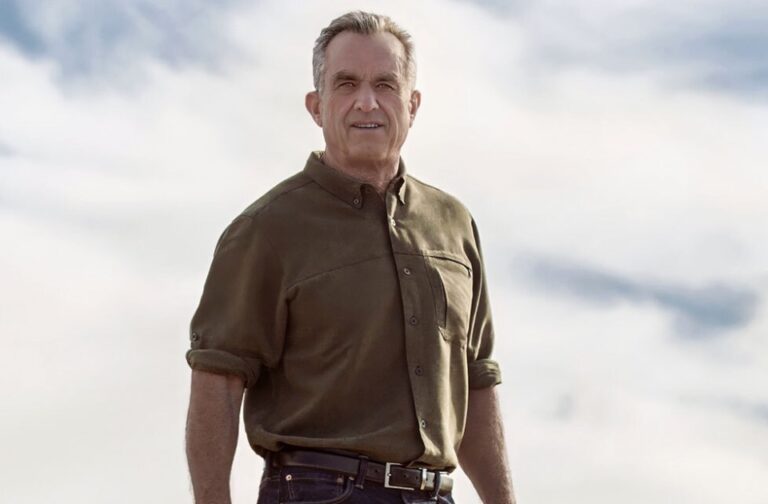
Sen. Lisa Murkowski, after voting in favor of the confirmation of former Rep. Tulsi Gabbard as Director of National Security, announced on Wednesday that she will vote in favor of Robert F. Kennedy Jr. for Secretary of Health and Human Services.
On X, Murkowski wrote what, for her, is a lengthy explanation that laid out her concerns, but also her acknowledgement that many Alaskans had shared their support for RFK Jr., whose confirmation vote is expected to be taken on Thursday in the US Senate.
“I intend to support Robert Kennedy Jr.’s confirmation as Secretary of Health and Human Services. While there is no dispute that the U.S. spends more per capita on healthcare than any other country, our health outcomes do not reflect this investment. Instead of focusing on who covers our exorbitant healthcare costs, we need to reduce these costs by directing our attention to prevention and keeping people healthy. This is the appeal of RFK, and many Alaskans have shared that view with me. Chronic conditions are a significant source of illness and major drivers of public debt; he recognizes this and is committed to addressing it,” Murkowski wrote.
“I continue to have concerns about Mr. Kennedy’s views on vaccines and his selective interpretation of scientific studies, which initially caused my misgivings about his nomination. Vaccines have saved millions of lives, and I sought assurance that, as HHS Secretary, he would do nothing to make it difficult for people to take vaccines or discourage vaccination efforts. He has made numerous commitments to me and my colleagues, promising to work with Congress to ensure public access to information and to base vaccine recommendations on data-driven, evidence-based, and medically sound research. These commitments are important to me and, on balance, provide assurance for my vote,” she wrote.
“I am encouraged by the time he has spent among indigenous peoples, his commitment to tribal sovereignty, and his promised attention to the Indian Health Service. He has spent time in rural Alaska and understands some of the unique public health challenges we face that require complex solutions. There is much shared work ahead to achieve better public health outcomes, and I will push Mr. Kennedy to realize these goals,” Murkowski concluded.
Sen. Dan Sullivan said several weeks ago that he would support RFK Jr.’s nomination by President Donald Trump.
To date, Murkowski has supported most of Trump’s nominees, with the exception of Defense Secretary Pete Hegseth, who has started strongly in the Department of Defense, returning it to a fighting mission, rather than a social club that it was becoming under former Sec. Lloyd Austin.
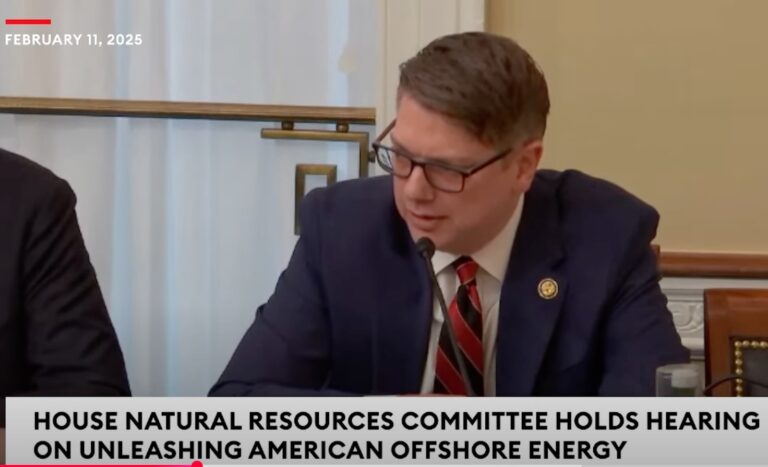
The Democrats who are attempting to make the House Natural Resources Committee their battleground did not come prepared for the likes of Congressman Nick Begich, newly elected from Alaska.
As a Harvard-educated former oil executive who represents a nonprofit dedicated to stopping drilling in the Atlantic Ocean took the microphone to testify against offshore oil drilling in the Atlantic outer continental shelf, she came up against the buzzsaw logic of Begich, who eventually accused her of using a “duplicitous level of doublespeak.”
Margaret Howell has testified before on behalf of Stop Offshore Drilling in The Atlantic, a group she founded several years ago. Here’s her testimony from 2017, essentially bringing the same arguments that she presented on Tuesday.
Begich asked Howell if she supported oil drilling anywhere in the world. She said she supports it in the Gulf of Mexico (now known as the Gulf of America), and she supports it overseas, off the shore of the African continent and China. She said those areas are drilled by American companies, her former colleagues, in fact, and that “it’s important for the workforce that those jobs are available, and they’re happy, my best friend has traveled all over the world drilling for other countries, and our oil companies benefit.”
Then Begich asked her if the Atlantic coastline of the United States has some special ecological significance that the other places do not have.
Watch what Howell has to say, and how Congressman Begich traps her in a net of her own duplicitousness:
Begich has been assigned to the House Natural Resources Committee, one of three committees and eight subcommittees he has added to his workload for Alaska.
President Donald Trump issued a sweeping executive order to reduce the size of the federal workforce, citing the need to increase efficiency, eliminate waste, and restore accountability in government operations.
The order, titled Reforming the Federal Workforce to Maximize Efficiency and Productivity, mandates that federal agencies significantly cut down on hiring, implement large-scale reductions in force, and streamline operations. Under Tuesday’s directive, agencies are limited to hiring one new employee for every four who depart. However, exceptions have been made for positions related to public safety, immigration enforcement, and law enforcement.
“To restore accountability to the American public, this order commences a critical transformation of the Federal bureaucracy,” the order states. “By eliminating waste, bloat, and insularity, my Administration will empower American families, workers, taxpayers, and our system of Government itself.”
There are an estimated two million federal workers, and about 6% of them work full time in the office. About 200,000 are expected to take buyouts by the Trump Administration already, per an earlier order to reduce the size of the workforce through buyouts.
This is the same one-to-four ratio that the first Trump Administration ordered to reduce regulations — only one new regulation could be approved for every four eliminated.
The new executive order enforces a strict hiring ratio across federal agencies. The Office of Management and Budget (OMB) is required to submit a workforce reduction plan, ensuring agencies adhere to the new hiring constraints. The hiring freeze currently in place for the Internal Revenue Service (IRS) remains unaffected.
Each agency will be required to consult with a Department of Government Efficiency (DOGE) Team Lead to assess and approve hiring decisions. Agencies must also submit monthly hiring reports to the United States DOGE Service (USDS) Administrator.
The order directs agencies to prepare for major layoffs, targeting temporary employees and reemployed annuitants. Programs not mandated by law—such as diversity, equity, and inclusion initiatives—are prioritized for elimination.
Agency heads must also submit reports within 30 days identifying statutory requirements for their operations and assessing whether departments or subcomponents should be consolidated or eliminated.
The Office of Personnel Management has been tasked with revising suitability criteria for federal employment. New standards include disqualifications for failure to comply with tax obligations, citizenship requirements, nondisclosure agreements, and government resource misuse.
Although the order mandates aggressive workforce reductions, military personnel are explicitly excluded. Agency heads retain discretion to exempt positions deemed necessary for national security, homeland security, or public safety. The OPM Director may also grant exemptions where necessary.
A group of Alaskans, inspired by Elon Musk and his team of analysts are the Department of Government Efficiency, has started DOGE Alaska.
The initiative was conceptualized in November by Jamie Allard, who has since recruited Alaska citizens dedicated to the same lean-government principles as the Department of Government Efficiency that is exposing government waste and fraud on behalf of President Donald Trump.
In her capacity as a citizen, and not in her job as a representative for Eagle River, Allard has brought on several people as the founding members of the group, including:
Cathy Tilton, Wasilla civic leader
Bob Griffin, former member of Alaska Board of Education
Craig Campbell, former lieutenant governor
Loren Leman, former lieutenant governor
Dan Sullivan, former Anchorage mayor
Jordan Harary, IT and AI
Suzanne Downing, Somewhere in Alaska
Portia Erickson, former community engagement director for Municipality of Anchorage
Sami Graham, educator and former chief of staff, Anchorage mayor
Jordan Schuster, Fairbanks businessman
Jamie Allard, Eagle River
The group will be researching and encouraging others to research waste, fraud, and misuse of public funds in Alaska, and findings will be reported to the public. The group has no role in the administration of Gov. Mike Dunleavy, the Alaska Legislature, or the Trump Administration.
“Of course, it’s our sincerest hope that we don’t find waste, fraud, or abuse in our state budget, but considering that our state has the highest level of federal funding per capita, it’s likely that some federal and state funds are being directed to places where they have marginal benefit. We welcome people to research and send us what they find because this is going to be a group project for Alaska,” said Jamie Allard.
“We are all volunteers, and would love to work ourselves out of the job of tracking down misuse of public money,” she said. “There are so many people in Alaska who have stepped forward to help, and more will step forward, of that I am confident.”
A website with contact information has been established. Alaskans who know of specific instances of misuse of funds can forward the information through the website.
Historically, the United States has provided foreign aid to other countries since 1812; but on a large scale only during and after World War II.
The history of the U.S. foreign assistance is marked by several key events, including Lend-Lease during World War II (1941-1945); the Marshall Plan (1948-1951); the Mutual Security Act/Plan (1951-1961); and the creation of the U.S. Agency for International Development (USAID) from 1961 to present.
The Lend-Lease program was a system of transfer to participating countries of military and other materials necessary for conducting the war. Countries receiving aid through the Lend-Lease program signed a bilateral agreement with the US, stipulating those materials destroyed, lost, or used during the war would not be subject to any repayment whatsoever after the end of the war. Materials left over after the war that were deemed suitable to the needs of the population would be subject to repayment in full or in part by means of long-term credit. Military materials left after the war could be reclaimed by the US government (although the US government repeatedly declared that it would not make use of that right). Equipment and materials ordered but not delivered by the end of the war could be acquired by the ordering country with long-term American credits.
In their turn, countries entering the Lend-Lease contract took upon themselves the obligation to render help to the United States with materials at their disposal.
All in all, during the years of the war, the United States made Lend-Lease deliveries to 42 countries, amounting to a worth of nearly $50 billion dollars. In return, the U.S. received goods and services―and, ultimately, repayments totaling $7.4 billion dollars.
Of the overall sum of Lend-Lease help, Great Britain received nearly $31 billion, France about $1.5 billion, and the Nationalist-controlled regions of China about $600 million.
The entire sum of Lend-Lease deliveries to the USSR from 1941 to 1945, according to Soviet sources, amounted to about $10 billion in war materials and other supplies, approaching the $13 billion distributed to Western Europe under the post-war Marshall Plan.
After the end of World War II, problems arose around the terms of payment for remaining Lend-Lease materials. The US discontinued Lend-Lease deliveries to the USSR in September of 1945. A little over a year later, in December of 1946, the United States annulled the original agreement’s stipulation allowing the USSR long-term credit for materials and equipment ordered under the Lend- Lease Agreement, but not yet shipped. This unilateral annulment, claimed the Soviets, constituted a discriminatory attitude with respect to the USSR in settling the payments under the Lend-Lease Agreement. The U.S. was also accused of delaying negotiations on the issue.
In negotiations with the United States in 1947 and 1948, 1951 and 1952, and at the beginning of 1960, the Soviet government asserted that the Soviet Union had had the greatest effect in securing an Allied victory in World War II; therefore, Soviet diplomats argued, it could not and would not accept discriminatory measures that would leave it in a position inferior to other Lend-Lease recipient nations. The Soviet representatives based their arguments on clauses in the Soviet–American agreement of June 11, 1942, stating that the conditions of the final settlement should be of such a nature as to conform to the common interests of the United States of America and the Soviet Union and to advance the creation and maintenance of peace in the world.
The language of the pact also indicated its intention that Lend-Lease debt settlement conditions do not hinder commerce but, rather, encourage mutually beneficial economic relations between the two nations.
Accordingly, in negotiations that took place in Washington, D.C., in January of 1960, the Soviets insisted that the agreement settling Lend-Lease matters should be reached contemporaneously with the normalization of commercial and economic agreements between the USSR and the US.
However, at that time, America expressed little desire to resolve the question, and the exchange of opinions between the representatives of the USSR and the US was suspended.
Although settlements were made within 15 years of the termination of the Lend-Lease programs with most of the countries that had received aid from the United States, a settlement with the USSR would not be reached until the early 1970s when, on Oct. 18, 1972, an “Agreement on the Disposition of Lend-Lease Supplies in Inventory or Procurement in the United States Between the United States and the USSR” was signed.
In the end, the United States accepted the Soviet Union’s offer to pay $722 million in installments through 2001 to settle its debt. During Russian President Boris Yeltsin’s visit to the United States in 1991, the parties revisited the agreement, with the Russian government agreeing to settle the balance with a payment of $674 million to the U.S. Treasury. This sum was finally paid to the US by the Russian Federation in 2006.
The Marshall Plan, also known as the European Recovery Program, was a program that provided economic assistance to Europe after World War II. It was proposed by Secretary of State George Marshall in 1947 and signed into law by President Harry Truman in 1948.
The goals of the Marshall Plan were to help West European countries become stable partners to the United States; rebuild their private industry and public infrastructure; create markets for American goods; create reliable trading partners for the United States; restore consumption to acceptable levels; and support democratic governments in Western Europe.
The recipient countries involved in the Plan were England, West Germany, Austria, Belgium, Denmark, France, Greece, Iceland, Ireland, Italy, Luxembourg, and Netherlands. The Soviet Union, despite its vocal protests, was excluded from this program due to the emergence of the Cold War between the West and East (1946 to 1986/1991).
The United States spent $13.3 billion on the Marshall Plan between 1948 and 1951. This is equivalent to about $200 billion in today’s U.S. dollars.
Mutual Security Act/Plan. The Marshall Plan addressed each of the obstacles to postwar recovery and, eventually, was replaced by the Mutual Security Act/Plan at the end of 1951; that new plan gave away about $7.5 billion annually until 1961, when it was replaced again by another program— Three-Pronged Program.
Three-Pronged Program. Instead of the Marshall Plan, we now have a Three-Pronged Program combining economic aid, now called “defense support,” administered by the Mutual Security Agency as successor to the Economic Cooperation Administration (ECA); military aid under the Department of Defense; and the Point Four Program and External Certification Authority under Technical Cooperation Administration.
U.S. Agency for International Development (USAID). The Foreign Assistance Act of 1961 established USAID as the federal agency responsible for coordinating foreign aid until present. The Act also aimed to improve the administration of foreign aid and refocus it on the needs of developing countries.
The USAID was created by President John F. Kennedy to coordinate foreign aid, with the main goal to be responsible for disbursing capital and technical assistance to developing countries.
According to the Congressional Research Service, USAID employs about 10,000 people, mostly in Washington D.C., and controls an annual budget of about $50-55 billion. In 2023, USAID poured $10.5 billion into humanitarian aid and $10.5 billion into health programs in countries around the world.
Over the years, despite USAID essential humanitarian work around the world, the agency was subjected to numerous criticisms for its misuse of funds, questionable appropriations and logistical authorities. My good and long-time friend, via private correspondence, shared with me his experience with the USAID agency:
“USAID has always been a covert manipulative agency within the intelligence’ world of the federal government, funneling money to people and causes in other countries that the CIA, mainly, has directed, usually as a means of fomenting political unrest and dissatisfaction. It’s all done under the guise of ‘foreign aid.’ And it seems from these stories coming out now, that the corruption has become closely aligned with the Democratic Party or at least mostly used by influential Democrats for self-enriching corruption purposes (Clinton style). USAID was the agency that funded my ecological work in Poland in the 1980s. I just thought of them as some federal agency that had tons of money available for scientific collaboration in communist and other problematic regions of the world. I learned of them from another ecologist at Colorado State University who had been receiving funding from them for work he was doing in Pakistan. So, I submitted a proposal and found it accepted/funded with minimal review. The guy responsible for interacting with me was delighted to be able to fund something he thought was scientifically interesting for ecology (or so he said with enthusiasm — I pictured him as some poor sap in an office in Washington DC bored out of his mind). Other than the money, which lasted 3 years, I received only one (or maybe 2) phone calls from someone in Washington asking me a few really dumb ‘spy questions’ (like did you see any military bases while you were there? What were your general impressions of how happy the people are?) More recently, while reading several books about ‘state crime’ and corruption, I read how USAID is the classic federal agency of corruption and malfeasance in the CIA’s meddling in foreign affairs. Very interesting to see Musk and Trump focus on it and try to shut it down. Not surprised at all that political judges will try to prevent that from happening. Trump is taking on the CIA directly and forcefully; it’s a very risky business. The Kennedy family learned that the hard way.”
Alexander B. Dolitsky was born and raised in Kiev in the former Soviet Union. He received an M.A. in history from Kiev Pedagogical Institute, Ukraine, in 1976; an M.A. in anthropology and archaeology from Brown University in 1983; and was enroled in the Ph.D. program in Anthropology at Bryn Mawr College from 1983 to 1985, where he was also a lecturer in the Russian Center. In the U.S.S.R., he was a social studies teacher for three years, and an archaeologist for five years for the Ukranian Academy of Sciences. In 1978, he settled in the United States. Dolitsky visited Alaska for the first time in 1981, while conducting field research for graduate school at Brown. He lived first in Sitka in 1985 and then settled in Juneau in 1986. From 1985 to 1987, he was a U.S. Forest Service archaeologist and social scientist. He was an Adjunct Assistant Professor of Russian Studies at the University of Alaska Southeast from 1985 to 1999; Social Studies Instructor at the Alyeska Central School, Alaska Department of Education from 1988 to 2006; and has been the Director of the Alaska-Siberia Research Center (see www.aksrc.homestead.com) from 1990 to present. He has conducted about 30 field studies in various areas of the former Soviet Union (including Siberia), Central Asia, South America, Eastern Europe and the United States (including Alaska). Dolitsky has been a lecturer on the World Discoverer, Spirit of Oceanus, and Clipper Odyssey vessels in the Arctic and sub-Arctic regions. He was the Project Manager for the WWII Alaska-Siberia Lend Lease Memorial, which was erected in Fairbanks in 2006. He has published extensively in the fields of anthropology, history, archaeology, and ethnography. His more recent publications include Fairy Tales and Myths of the Bering Strait Chukchi, Ancient Tales of Kamchatka; Tales and Legends of the Yupik Eskimos of Siberia; Old Russia in Modern America: Russian Old Believers in Alaska; Allies in Wartime: The Alaska-Siberia Airway During WWII; Spirit of the Siberian Tiger: Folktales of the Russian Far East; Living Wisdom of the Far North: Tales and Legends from Chukotka and Alaska; Pipeline to Russia; The Alaska-Siberia Air Route in WWII; and Old Russia in Modern America: Living Traditions of the Russian Old Believers; Ancient Tales of Chukotka, and Ancient Tales of Kamchatka.
Do you know what your Alaska state politician is doing this session?
As usual, I’m late in reading profound accounts of our legislators’ intentions, but after belatedly browsing through “Here are the Alaska legislative priorities to watch this session,” in the Anchorage Daily News on Jan. 21, I thought I’d share my thoughts.
For many of us, Alaska legislative sessions have been nothing short of a clamorous farce.
It’s the season where both Democrats and their counterfeit Republican counterparts exhibit a remarkable deafness to real issues, instead tuning in exclusively to the special-interest channel. Their selective listening is only overcome by an over-the-top, stereophonic focus on boosting the budget’s “essential” line items, such as education funding, and the ever-glorified, yet totally toxic, defined benefits.
In a display of the phoniest bipartisan unity that could rival any well-rehearsed circus clown act, the Alaska House and Senate convened their two-year session with both chambers boasting “bipartisan majorities”, short for a BM.
Of course, in this grand kabuki charade the Democrats dominate every seat while the Republicans are relegated to cameo roles with the exceptions of liberals masquerading as faux Republicans. Be mindful, this comedy is complete with the occasional menace of Gov. Mike Dunleavy’s mighty veto pen, which hopefully is not Ron Weasley’s magic wand.
As lawmakers engage in their endless tug-of-war over every dollar, rural Alaskans are left to wonder if they’re destined for nothing more than being continually ignored with a smaller PFD. In the midst of this feigned partisan pageantry, the establishment majority continues to prioritize political patronage over the true public good.
The legislative priorities are as ambitious as they are contradictory. The Democrat-led majority insists on a permanent bump to education funding, a reformed public-sector retirement plan, election reform, energy policy, and, most impressively, a balanced budget. Can anyone smell the perennial very foul cacophonous fart in an echo chamber?
Meanwhile, the fiscal environment, scarred by a projected decline in oil revenue (again and again with this trite and overused monotonous distortion), forces these high-minded ambitions into the realm of fiscal contortions, because not one of these bought and paid-for phonies will cut the budget. Are Alaskans paying attention?
Instead, the lip service provided by none other than the Left’s frontman, Mr. Perennial Politician himself Sen. Lyman Hoffman emphatically states again for the umpteenth time, “It’s going to be a very tough balancing act.”
This epithet highlights his persistent echoing of the same refrain, as if his political career and his talking points are in perpetual orbit. This is also other legislators’ tiresome, hackneyed chorus. It never stops because they never have anything intelligent to contribute outside of their quest for power and control.
State representatives, like Hoffman and many others, continually declare statements like this, as if budgeting were a high-wire performance juggling babies and razor blades simultaneously without a net.
A withdrawal from the $3 billion Constitutional Budget Reserve is touted as an “absolute last resort”—a secret piggy bank reserved only for the most dramatic of fiscal emergencies.
Wink. Wink.
It’s a cutthroat game for the state’s coffers designed to exclude conservatives, as these intellectually malnourished lawmakers scramble to cling to their ever-shrinking share of the funds yet has anyone noticed the size of the operating budgets in recent years? Their only goal is a regular session recurring fiscal sham where the prize is the perpetuation of political power rather than the common good. After all, this is not about Alaskans but enriching lower 48 special interests.
On the energy front, the state finds itself at a crossroads between ambition and skepticism. With oil revenues in a perennial decline (again we’ve heard this drivel for over 20 years), talk of a trans-Alaska natural gas pipeline has ignited passionate debate for the two to the power of ten time. Anyone bored with the constant bait and switch?
A private company (they are always behind the curtain, remember Trans Canada) is poised to fund this mega project, and the state’s investment development agency is ready to commit $50 million, which of course will turn into $500 million or more.
Yet, voices like Sen. Cathy Giessel, who neither understands fiscal constraint nor consensus in conservative policy, reminds everyone that Alaska is “not a colony to be pillaged,” (yawn) even as over half of its operating budget comes with strings attached by federal dollars.
It’s as if Alaska has become a stage for a grand resource-development opera, where the overture is written in oil, the Alaska Deep State chorus sings of fiscal dependency, and every misstep is a slip and slide into black goo. For you new to Alaska, I kid you not, this has been the flaccid agenda for more years than I can remember. How about just cutting the operating budget?
Meanwhile, election reform plays its role in this political pageant lifting up with their Left hand the shiny bright mirrors which only reflects the continued darkness of progressivism. Lawmakers plan an omnibus election bill that promises to speed up ballot counting, eliminate redundant signature requirements, and clean up the voter rolls. It’s a plan that sounds efficient on paper, yet isn’t it merely another attempt to polish the turd of a system that prioritizes process over progress. It certainly doesn’t repeal ranked-choice voting.
And let us not overlook the public-sector retirement debate. This is a true pièce de résistance in this legislative extravaganza. With a proposal that a new pension system may increase costs by $46 million annually but save annually over $70 million by reducing staff turnover and an unfunded pension liability from the old defined benefits system still in the billions, these wizards are betting that replacing the old guard with new pensioners will somehow fix a chronic staffing crisis, instead of trimming the state personnel in Elon Musk-like fashion. Big Balls is needed.
It’s a budgetary magic trick where money is saved not by cutting costs, but by orchestrating a turnover so complete that it nearly resets the entire system. Can you imagine that?
As the curtain rises on another phony tumultuous session, the continued acts of the endless cycle of taxing the people by eliminating the full Permanent Fund dividend; funneling funds to unions; and receiving the return of a fraction of that money as political favors to these miscreants.
So here we are, spectators in the grand theater of Alaska governance, left to wonder: Is this an ingenious display of political acrobatics designed to serve the public interest, or merely a well-rehearsed routine that perpetuates the same old cycle of power, patronage, and budgetary mischief?
Michael Tavoliero is a writer at Must Read Alaska.
A five-day investigation into historic child abuse cases within the Metlakatla Indian Community, Alaska’s only Indian reservation, has resulted in multiple arrests and an ongoing investigation, according to the Alaska Department of Public Safety.
The operation, which took place from Feb. 2 through 6, 2025, was conducted by the Alaska Bureau of Investigation with the assistance of several agencies.
Authorities focused on allegations of child physical and sexual abuse, as well as domestic violence against adults. During the investigation, 22 children were interviewed, leading to the arrests of three older men who are now in custody at the Ketchikan Correctional Center.
The individuals arrested include:
James Leif Caspersen, 68 – Charged with second- and third-degree assault, fourth-degree assault, and fourth-degree criminal mischief.
Byron Hayward, 60 – Charged with third- and fourth-degree assault and third-degree criminal mischief.
Harry Olsen, 72 – Charged with second- and third-degree sexual abuse of a minor.
Additionally, ABI’s Technical Crimes Unit, in coordination with Task Force Dawnbreaker, investigated multiple cyber tips from the National Center for Missing and Exploited Children regarding child pornography allegedly uploaded from the Metlakatla area between 2021 and 2024. The investigation led to the arrest of Caleb Jametski, 30, who was charged with the distribution and possession of child sexual abuse material. Jametski was remanded to KCC.
Investigators also uncovered reports of additional criminal conduct while in the community, and those investigations remain active. Separate inquiries into alleged Medicaid fraud are also ongoing.
According to the Metlakatla website, the tribe is sovereign.
“The mission of the Metlakatla Indian Community is to improve the lives of our members, and preserve our heritage and culture, through effective self-governance, a commitment to self-sufficiency, and the exercise and strengthening of our tribal sovereignty; we encourage progress while honoring our ancestors, and protecting our land and water for future generations; we promote sustainability by utilizing and respecting our natural resources, developing economic and social opportunities for our members, and implementing efficient and effective systems of governance to enhance our members’ safety, health, and welfare. The Council and tribal executives are dedicated to governing the affairs of the Annette Islands Reserve acting under the authority of our Constitution, ordinances, and policies to fulfill this mission,” the Indian community states.
“The Metlakatla Indian Community, Annette Islands Reserve (AIR), exists by the authority of the Constitution and By-laws of the MIC as approved on August 23, 1944 by the Secretary of Interior and MIC, as an Indian Tribe organized under provisions of the Indian Reorganization Act. AIR is held in trust by the United States for the benefit of MIC, the Secretary of Interior has delegated responsibility to MIC to prescribe rules and regulations governing the use of Annette Island Reserve.”
Although Metlakatlans are protected category of people through a relationship with the federal government, federal agencies were not involved in the roundup of alleged perpetrators.
The Alaska Bureau of Investigation extended its gratitude to the U.S. Coast Guard for its crucial support and also acknowledged the cooperation of the Metlakatla Indian Community Executives, Council, and staff. Other agencies assisting in the operation included:
Alaska State Troopers
Alaska Wildlife Troopers
Department of Health and Human Services Office of Inspector General
Department of Law Office of Special Prosecutions
Alaska Medicaid Fraud Control Unit
Tundra Women’s Coalition
The Children’s Place
WISH (Women in Safe Homes)
AWARE (Aiding Women in Abuse and Rape Emergencies)
S.A.F.E. Child Advocacy Center
Metlakatla, population 1,460, is located on Annette Island. Founded in 1887 by Anglican missionary William Duncan, it has an economy primarily based on tens of millions of dollars in government grants. It also has fishing, tourism, and forestry industries.
Alaskans as young as 16 would be allowed to work in restaurants, and those as young as 18 could serve alcohol if a bill passed Monday by the Alaska Senate becomes law.
Senate Bill 15, the work of sponsor Sen. Kelly Merrick, cleared the Senate on a unanimous 19-0 vote. It now advances to the state House for consideration. It’s legislation very much along the lines of last year’s House Bill 189, which passed both bodies but was vetoed by Gov. Mike Dunleavy, because it, along with four other bills, passed the Alaska House after the midnight deadline of the last day of season.
The changes SB 15 makes in law include:
Employment of Minors: Allows restaurants, seasonal tourism establishments, and theaters to employ 16–21-year-olds, with supervision requirements for those aged 16–17. Employees aged 18–20 can serve alcohol, except in adult entertainment venues.
Theater Alcohol Sales: Expands the time frame for alcohol sales in theaters and removes intermission-related restrictions.
Access to Licensed Premises: Permits 16+ individuals to be in theaters and large resorts without adult supervision, while those under 16 must have guardian consent.
Warning Signs: Updates required signage at alcohol vendors to include warnings about birth defects and cancer risks related to alcohol use.
Repeals & Clarifications: Eliminates outdated theater license provisions and defines “adult entertainment” to ensure those venues cannot employ minors under the new allowances.
The bill doesn’t allow persons under the age of 21 to work in bars where alcohol is the primary sales product. But it does allow 18-year-olds to serve alcohol to patrons in restaurants, breweries, distilleries, and wineries, while excluding bars and package liquor stores.
Also, minors would not be allowed behind the bar or in other areas where alcohol is present.
Alaska’s minimum age for alcohol consumption was lowered to 19 in 1970 and remained there until the federal government changed the legal drinking age to 21 in 1984 and required states to follow.
Under the proposed law, minors under 21 would still not be able to consume alcohol legally, but they could serve it in restaurant and other settings.