The Alaska Department of Revenue released its Spring 2025 Revenue Forecast, providing updated projections for oil prices, oil production, and state revenues.
Unrestricted General Fund revenue, prior to the transfer of revenue from the Permanent Fund Earnings Reserve Account, is forecasted at $2.6 billion for Fiscal Year 2025 and $2.3 billion for FY 2026. These figures indicate a relatively stable financial outlook despite fluctuations in oil prices.
The Alaska Permanent Fund is expected to transfer $3.7 billion to the General Fund in FY 2025 and $3.8 billion in FY 2026. These transfers remain the largest source of funding for government operations and the annual dividends paid to Alaskan residents. Permanent Fund revenue makes up 59% of the Unrestricted General Fund in Fiscal Year 2025. Over the next decade, the Permanent Fund’s contribution is anticipated to range from 62% to 65% of total UGF revenues.
Oil Prices In FY 2024, Alaska North Slope oil prices averaged $85.24 per barrel. The Spring 2025 forecast projects a drop to an annual average price of $74.48 per barrel for FY 2025 and $68 per barrel for FY 2026. Future projections suggest oil prices will remain within a nominal range of $66 to $72 per barrel over the coming years.
Oil Production North Slope oil production in FY 2024 averaged 461,000 barrels per day. The updated forecast pops it up to 466,800 barrels per day in FY 2025, followed by a slight decline to 464,000 barrels per day in FY 2026.
Long-term projections indicate a production peak of 663,500 barrels per day in FY 2034.
The Spring 2025 forecast reflects modest adjustments from the Fall 2024 Revenue Forecast, released in December 2024:
ANS oil price estimates increases by $0.62 per barrel for FY 2025 but decreases by $2 per barrel for FY 2026.
ANS oil production forecasts saw a minor increase of 200 barrels per day for FY 2025 but a reduction of 5,400 barrels per day for FY 2026.
The UGF revenue projection for FY 2025 remains largely unchanged, while FY 2026’s forecast saw a $70 million reduction due to lower expected oil revenues.
The Democrat-controlled Alaska State Legislature appears to be prepared to send a budget to the governor that explodes spending on state worker pensions and the state Department of Education, at a time when revenue will be flat and then somewhat reduced. The only fund that would be able to patch the hole created by the budget’s current trajectory is Alaskans’ Permanent Fund dividends, which appear to be on the list for hospice.
The full report is available on the Alaska Department of Revenue’s website at https://tax.alaska.gov.
The Koloa Rum Company is known for producing popular spirits using pure cane sugar and water from Mount Waialeale, a volcano whose summit is one of the rainiest places on the planet. Business is booming in Hawaii, where the distiller is based, and beyond. Its offerings can be found on the shelves of more than three dozen US states and nine countries.
However, the owners say that a century-old federal law known as the Jones Ac, or the Merchant Marine Act of 1920. has undermined growth.
In a complaint filed in February, the company claimed businesses and consumers in Hawaii pay an “estimated $1.2 billion annually in excess costs—a hidden tax on all goods transported to and from the state” due to the Jones Act.
The original intent of the law when it was introduced was to ensure the development of a competitive merchant marine. To that end, it stipulated that all maritime goods transported between US ports must be carried aboard ships that have been built in America and are both owned and crewed by Americans.
Critics say it’s bad for business. Supporters of the Jones Act argue that it is imperative to both national and homeland security.
Koloa falls squarely in the former camp, pointing to higher prices for goods, fewer shipping options, and “increased operational expenses that reduce their competitiveness compared to mainland businesses.”
The complaint claims that shipping freight from Los Angeles to Hawaii can cost two to three times more than it does to move it from the West Coast of the U.S. to Asia. That’s because there aren’t many ships that meet the requirements of the Jones Act.
As of January 2023, there are fewer than a hundred vessels worldwide that are considered compliant with the law,according to Statista. In contrast, the Danish shipping giant Maersk has a fleet of 735 ships alone.
Imports and exports are a unique challenge for Hawaii.
In 2019, the Cato Institute reported there are just two ships that are compliant with the Jones Act and capable of transporting liquefied natural gas, but both are mainly used for refueling other vessels.
“What they are not used for, nor even capable of, is transporting bulk quantities of LNG for use in large-scale electricity generation,” the institute concluded. For Hawaiians, that translates into increased reliance on foreign energy imports.
Alaska has had its own notable issues with the Jones Act.
Last year, two seafood shipping companies challenged penalties and fines brought on by U.S. Customs and Border Protection. The firms pointed to an exemption of the US-flagged vessel requirement that allows for products to be moved from Alaska to mainland America if they travel by Canadian rail.
In the end, the companies settled and agreed to pay$9.5 million to the federal government in what was the second-largest settlement of a case brought under the Jones Act to date.
Now, the Koloa Rum Company is arguing that the maritime law violates a clause within Article 1, Section 9, Clause 6 of the US Constitution. It is called the Port Preference Clause, and it “prohibits Congress from enacting laws that favor certain ports over others through regulation of commerce or revenue.”
The complaint states that the Jones Act is almost exclusively applied to the ports of Hawaii and Alaska and that it was adopted before either became a state, in part to force them “into subsidizing the American shipping industry.”
The Pacific Legal Foundation, which is representing Koloa Rum at no charge, argues that it is plainly illegal.
“The Constitution’s Port Preference Clause prohibits Congress from favoring ports of one state over those of another to ensure equal treatment in interstate commerce,” the foundation said in a statement.
“The Jones Act, however, was specifically designed to disadvantage Hawaii and Alaska, then territories, despite strong opposition to the law’s discriminatory effects from Hawaiian and Alaskan officials.”
Some legal experts believe that should a case make its way up, the current composition of the Supreme Court could spell the demise of the Jones Act.
US Sen. Dan Sullivan has introduced the Freedom to Haul Act, aimed at rolling back the Biden administration’s electric vehicle mandates for the trucking industry.
The legislation is part of a broader Republican initiative to counter regulations imposing impractical and costly burdens on businesses and consumers.
Sen. Sullivan, a member of the Senate Environment and Public Works Committee, wants to reverse the Biden Environmental Protection Agency’s “Greenhouse Gas Emissions Standards for Heavy-Duty Vehicles – Phase 3” rule, which is a de facto EV mandate on the trucking industry. These regulations disproportionately impact rural states like Alaska, where extreme cold, vast distances, and infrastructure limitations make widespread EV adoption impractical.
“The delusional and costly Biden-era EV mandates are not only disastrous for our economy, they are also completely impractical in rural states—like Alaska—which has extremely cold temperatures and communities separated by thousands of miles where reliable transportation is a matter of life and death,” Sullivan stated.
“President Trump revoked these ridiculous mandates by executive order on day one, halting far-left radical environmentalists’ thinly disguised attempt to get rid of the internal-combustion engine that would only hurt hard-working families across the country and deepen our reliance on Chinese Communist Party-controlled critical minerals. My colleagues and I are backing President Trump’s action with legislation to overturn these ludicrous rules and ensure that our truckers can continue to reliably haul and deliver the goods and services that Americans and Alaskans rely on.”
The Freedom to Haul Act has garnered support from key industry stakeholders, including the Alaska Trucking Association, the American Trucking Association, and Americans for Prosperity.
“The Alaska Trucking Association stands proudly alongside the trucking industry in its dedication to reducing emissions and fostering a sustainable future. We commend the efforts of industry stakeholders who have continuously demonstrated their commitment to innovation and progress while ensuring the smooth movement of goods across our nation. We deeply appreciate Senator Sullivan’s introduction of the Freedom to Haul Act, a critical step in advocating for balanced and practical federal emissions standards,” the Alaska Trucking Association wrote.
The trucking industry has proven its commitment to reducing emissions, “but regulators unfortunately turned their backs on industry stakeholders in support of unworkable mandates. ATA is grateful to Senator Sullivan for introducing the Freedom to Haul Act, which will ensure that ambitious but achievable federal emissions standards do not pick technology winners and losers,” the American Trucking Association wrote.
Americans for Prosperity, a national group active in Alaska, said, “Senator Dan Sullivan understands that Alaskans require diesel and petrol-powered modes of transportation to move goods, fuels, and commerce throughout the very remote regions of his home state. After four years of ‘Bidenomics,’ it’s time to turn the page on the forced electrification of our commercial trucking industry. Let’s stop the scare tactics of the EPA and provide regulatory certainty to commercial trucking operators throughout the United States.”
Sen. Sullivan’s bill is part of a broader legislative package introduced by Republican senators aimed at overturning what they consider overreaching environmental regulations:
Choice in Automobile Retail Sales (CARS) Act – Sen. Mike Crapo: Repeals the Biden EPA’s tailpipe emissions standards for passenger cars and trucks, preventing mandates that effectively require EV adoption.
Preserving Choice in Vehicle Purchases Act – Sen. Markwayne Mullin: Prevents the implementation of the Biden EPA’s Advanced Clean Cars II regulation, which mandates the phase-out of gasoline-powered cars by 2035.
Stop California from Advancing Regulatory Burden (CARB) Act – Sen. Mike Lee: Eliminates the Clean Air Act waiver exemptions that allow California to enforce stricter emissions standards than the federal government, which critics argue increases costs and reduces consumer choice nationwide.
Energy Secretary Chris Wright explained his plans to fortify America’s fragile power grid and a host of other energy policy issues in a Monday interview with the Daily Caller News Foundation.
Wright has his work cut out for him atop the Department of Energy (DOE) after the Biden administration and former Energy Secretary Jennifer Granholm left him with elevated energy prices and fragile power grids in both the U.S. and Puerto Rico.
Before addressing other topics, like the massive portfolio of green energy loans he inherited from his predecessor and the future of climate alarmism politics, Wright made clear that the first step toward strengthening the grid is to “stop digging” a deeper hole with policies that undermine power supply.
“I’m very concerned about the grid, very concerned about the grid,” Wright told the DCNF, noting that average electricity prices surged on the Biden administration’s watch despite relatively limited growth in demand over the same period of time.
“We have to make significant changes in a complicated system. Changing permitting laws is part of that, changing how regulation is done, and then just some common sense moves to enable technology to get more to the existing grid in the time that demand is arriving. We have to increase throughput with the existing physical assets. I think it can be done, but it is a daunting challenge. And I wish we weren’t walking into the hole we’re in right now, but we were dug a hole by the previous administration, and that’s our starting point,” he said.
Grid experts and operators have warned that the Biden administration’s aggressive regulatory agenda for power plants threatens grid reliability in the U.S., with huge swaths of the country already facing risks of inadequate supply in the event of stronger-than-usual conditions in the summer or winter. Shoring up the grid is an even more urgent task in light of the projected surge in aggregate demand analysts are expecting to come from the growth of artificial intelligence (AI) and the power-hungry data centers needed to sustain the cutting-edge technology.
In Wright’s view, part of the solution to America’s power grid problem is using the levers of government to forestall the retirement of coal-fired power plants capable of providing cheap, reliable power to the grid, he told the DCNF.
“If you want to grow your supply, the first thing to do is stop digging the hole. We’ve been closing coal plants for quite some time now. That’s gotta stop. We have to keep these firm, reliable existing plants online. That’s objective number one,” Wright said. “And then there’s existing plants that are open that run at low operating percent of the time because of regulations and things put in the way. We have a fair amount of electricity generating capacity that already exists and connected up to wires. So, that’s low-hanging fruit.”
Another lever at Wright’s disposal to ramp up the U.S. power supply is the Loan Programs Office (LPO), a DOE sub-office that provides financing for innovative energy technologies. President Joe Biden’s Inflation Reduction Act supercharged LPO’s coffers, and the office proceeded to pump billions of dollars into green energy projects.
Wright mentioned “nuclear and next generation geothermal,” as well as grid resilience technologies and other undertakings “that can help resource supply chains for electrical equipment in the United States” as specific things that LPO may look to finance while he runs DOE. However, Wright — a self-professed energy wonk who has worked with a host of different energy sources in the private sector and the founder of Liberty Energy — said that the agency’s general preference is to see the private sector take the lead and innovate.
“The first and primary tool is private capital and private businesses. Most of these things, with a reasonable business climate, will happen in the marketplace,” Wright explained. “That is our preference. But, if there are issues that are critical and have to happen in a timely fashion because of the mess we’re in with our electricity grid today, then we will deploy capital.”
Notably, the Biden LPO rushed to shove billions of dollars in loans and conditional loans out the door in the lame duck period, powering through the concerns of the DOE’s internal watchdog and elected Republicansthat the rush to get funding out may have put taxpayer funds at risk of being wasted. Wright told the DCNF that the DOE will honor its end of LPO contracts that it is obligated to fulfill and that the agency will keep an eye on conditional loans to ensure counterparties are meeting conditions, adding that the agency “will deploy capital only if it’s in the best interest of American taxpayers” in situations where DOE has discretion.
Wright is evidently concerned about the condition of the power grid that keeps the lights on for all 50 states, but he is also keen to work with Puerto Rico — a U.S. territory — to address its own ailing power infrastructure.
The energy secretary met with Puerto Rico Gov. Jenniffer González-Colón in February to discuss fixing Puerto Rico’s grid, which has been ravaged by hurricanes. The Biden administration made a major push to make the island a “poster child” for the benefits of green energy, but Wright says his predecessors’ efforts did little — if anything — to seriously address the problem, Wright explained.
“Congress appropriated a significant amount of money to rebuild it entirely, and the Biden administration decided they wanted to make Puerto Rico the poster child of renewable energy, and therefore would only fund the building of renewable energy. Needless to say, very little has been built. Electricity prices are high. The grid is unreliable. They’ve had many years in a row of negative population outflow,” Wright told the DCNF. “The businesses are at risk of being unable to continue to manufacture pharmaceutical drugs, for example, that come into the mainland of the United States, and a new governor got elected to fix this energy problem. We are excited to get to work and invest money already appropriated by our Congress to better the lives of Puerto Ricans, millions of Puerto Ricans.”
“I would say, it’s simply an outrage that the money has been there for years, but since it didn’t fit a political narrative, it wasn’t spent,” Wright continued. “Puerto Ricans are victims of energy politics. We’re humans-first administration. They were a politics-first administration.”
More broadly, Wright believes that commonsense energy politics is overtaking climate alarmism, though declaring the latter dead for good is “too optimistic,” he told the DCNF.
“I think this president, shooting straight on energy, putting humans first, won the election. So, clearly the pendulum is slinging that way. I think President Trump is a good part of the reason that the pendulum is swinging the other way. He had the courage to speak common sense about energy,” said Wright. “He’s been a bold, outspoken person about energy and the interests of American people, and he has started that pendulum going the other way. I am thrilled to be on the team with President Trump to help continue this swing towards what I call ‘energy sobriety.’”
Inflation slowed in February, driven in part by lower energy costs, according to new federal data released this week by the U.S. Bureau of Labor Statistics.
The latest Consumer Price Index report shows inflation rose by just 0.2% last month, contributing to a 2.8% increase over the past year. This marks a slight decrease from January’s annual inflation rate of 3% and indicates a potential easing of price pressures on American consumers.
Lower energy prices align with a core value of President Donald Trump’s campaign to reduce costs for American families. However, some are skeptical since global oil markets tend to fluctuate, and tariffs will play a role in consumer costs.
Despite the drop in energy prices, overall inflation is still above the Federal Reserve’s 2% target.
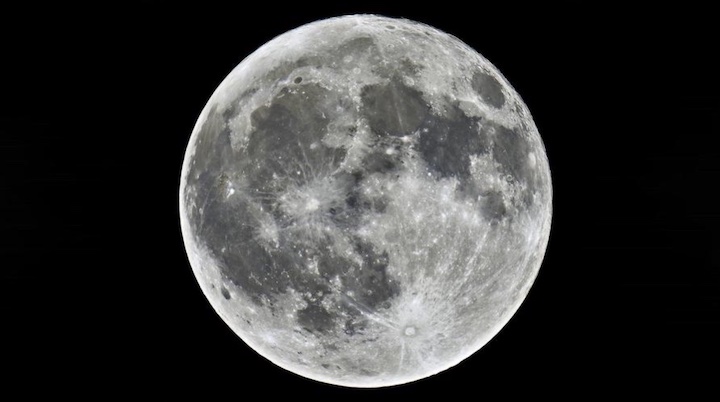
A striking celestial event is set to grace the skies over Alaska on Thursday, March 13, starting late in the evening and lasting into the early hours of Friday, March 14: a total lunar eclipse, commonly referred to as a “Blood Moon.”
The eclipse comes just as the moon is in its fullest phase.
The eclipse phenomenon occurs when the Earth aligns directly between the sun and the moon, casting Earth’s shadow over the moon and imparting a reddish-orange hue to its surface. This eclipse will be visible across much of the United States.
In Alaska, observers can anticipate the following approximate timeline for the eclipse:
Start of Penumbral Eclipse: 7:57 pm AKDT on Thursday, March 13
Start of Totality: 10:26 pm AKDT
End of Totality: 11:31 pm AKDT
End of Penumbral Eclipse: 2:00 pm AKDT on Friday, March 14
These times include Anchorage and Fairbanks posted at timeanddate.com.
For optimal viewing, it’s best to seek locations free from light pollution. In Alaska, weather conditions play a crucial role in visibility. Here’s the forecast for key regions in Alaska during the eclipse period:
Anchorage:
Thursday
38°24°
Partly cloudy
Friday
38°23°
Mostly cloudy
Fairbanks:
Thursday
26°1°
Times of clouds and sun
Friday
24°-1°
Partly sunny
Juneau:
Thursday
34°17°
Times of clouds and sun
Friday
33°16°
Clouds and sun
Given the forecasts, Fairbanks and Juneau may offer better viewing conditions than Anchorage, where cloudy skies could obstruct the view. Check out the interactive map at timeanddate.com.
For those unable to view the eclipse in person, several organizations and observatories will provide live streams of the event online, allowing enthusiasts worldwide to witness it without having to go outside in the middle of the night.
While many in the nation are marveling at Republican President Donald Trump’s whirlwind of activity and accomplishments in recent weeks, many Alaskans are equally impressed with their new congressman’s fast and furious start.
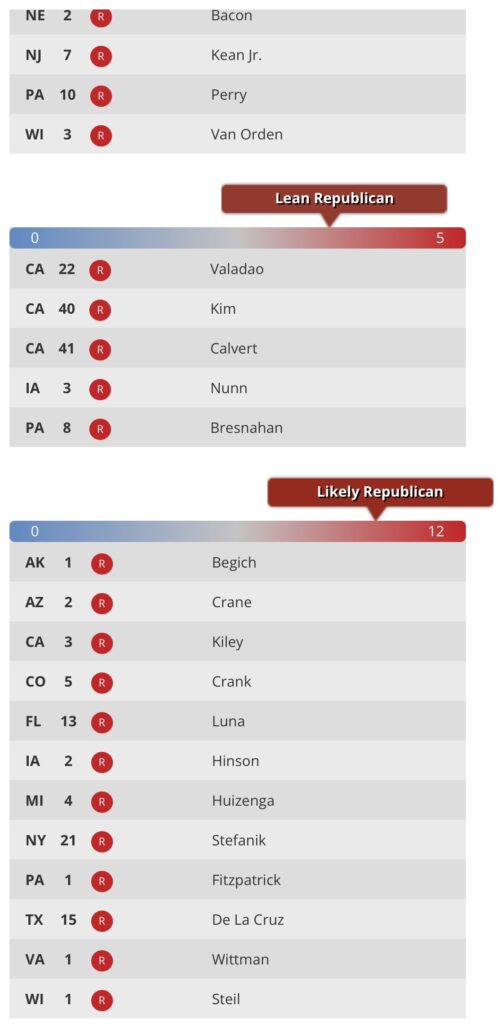
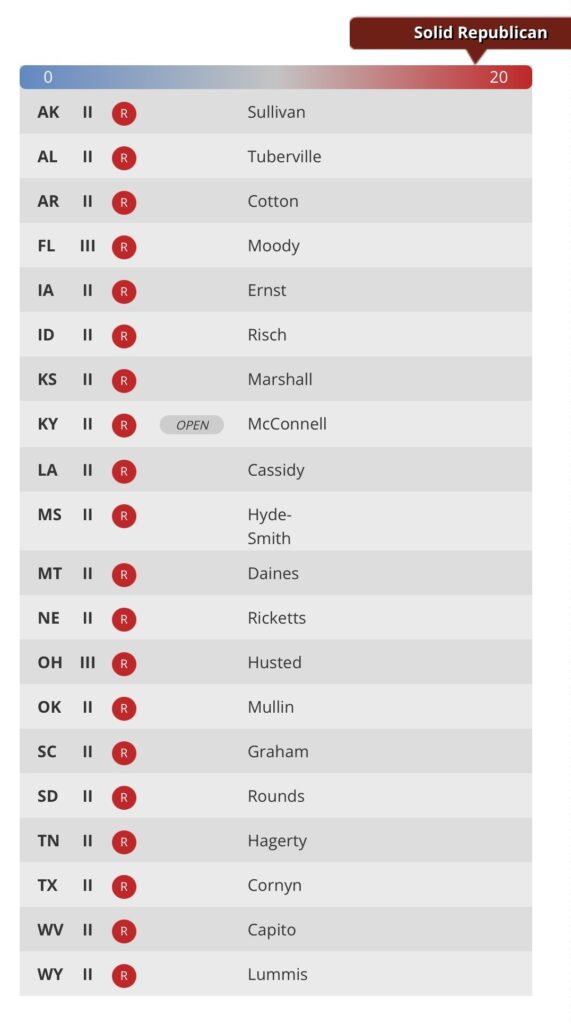
Election analyst Nathan Gonzales, publisher of Inside Elections, expects Republican Nick Begich to win reelection in 2026. Gonzales has moved Alaska’s congressional seat from toss up in 2024 to solid red in 2026.
This is the first House ratings of the 2026 cycle for the Inside Elections newsletter, a subsidiary of the Roll Call political publication. See all the rankings here.
Inside Edition rates 176 seats in the US House as going solidly Democrat, and 180 seats going solidly Republican in 2026, with 34 seats in play on the Democrat end and 30 seats in play on the Republican end. Gonzales ranks three Democrat seats as a tossup, and seven Republican seats as a tossup.
Begich is among the 12 seats that are ranked as “likely Republican.”
Even though incumbent Democrat Mary Peltola outspent her Republican challenger by a margin of 20 to 1 in 2024, Begich was able to edge out a victory by fewer than 8,000 votes. It wasn’t until the very end of the campaign season that Inside Elections moved Peltola to its “most endangered” list.
What changed? While Peltola was mostly a no-show in Congress and tied herself to President Joe Biden’s coattails, Begich has taken a very different approach during the early days of his first term.
He’s been appointed to several committees including Natural Resources. Subcommittee on Energy and Mineral Resources, Subcommittee on Oversight and Investigations, Committee on Transportation and Infrastructure, Subcommittee on Aviation, Committee on Science, Space, and Technology, and the Subcommittee on Energy.
The Republican congressman has been aggressive when it comes to promoting resource development in the state.
He co-sponsored HR 26 – Protecting American Energy Production Act: It would prevent any future president from unilaterally banning fracking.
Begich, along with Republican US Sen. Dan Sullivan and Republican Gov. Mike Dunleavy, has persistently lobbied Trump on the building of the 800-mile LNG pipeline to bring North Slope gas to market. That persistence is clearly beginning to pay off.
Begich voted for a resolution to overturn Biden’s rule that stifled offshore oil and gas development by employing redundant bureaucratic hurdles.
Begich has supported Trump’s efforts to open Alaska up for business again by voting for H.R. 77, the Midnight Rules Relief Act. It supports legislation to repeal more than 1,500 regulations rushed through in the final months of the Biden Administration, many of which disproportionately harm Alaska.
Begich has been proactive in promoting railroad infrastructure to connect Alaska to the Lower 48, unlocking new economic opportunities and strengthening supply chains.
Begich has served twice as Speaker Pro Tempore, an honor for any freshman member of Congress.
National cable news networks like Fox News and Business channels and Newsmax are clambering to feature him in live interviews on their broadcasts.
The freshman has proven himself to be an articulate communicator, unlike his predecessor, Peltola, who often was forced to read off of cards when answering questions. During one debate where she was given the questions in advance, Peltola picked the wrong card and began to answer a question that wasn’t asked. She finally realized her mistake and switched to the correct card.
In contrast, Begich rarely uses notes or a teleprompter. During his speech before the Alaska Legislature last month, he spoke directly from the heart.
Begich’s popularity with Alaskans could also be result of his alignment with Trump who easily carried the state by more than 44,000 votes.
Begich’s support of the Golden Age revolution is crucial for Alaska, considering one third of the state’s federal delegation, Sen. Lisa Murkowski, has mostly taken an adversarial approach to the president’s agenda.
Inside Elections also places Sen. Dan Sullivan in the win category for 2026, and in fact ranks him as a solid win, the highest category:
Sullivan’s first win was in 2014, when he challenged Sen. Mark Begich, the Democrat, for the seat that had been held by Sen. Ted Stevens for decades prior to his loss to Begich. But 2026 will be the first time he has faced the ranked-choice voting scenario that Alaska adopted in 2022.
Trump says he wants to reopen Alaska for business. He has three Alaska allies in Sullivan, Dunleavy, and Begich.
Dan Fagan reports and writes columns for Must Read Alaska. He’s covered Alaska politics for close to 30-years. He currently hosts a morning drive radio talk show on 1020 am 92.5 and 104.5 fm on KVNT. For news tips, email Dan at [email protected]
March 12 marks the five year anniversary of when Covid first entered our state. That case was a cargo jet pilot who was treated locally and then quarantined in a hotel in Anchorage.
Alaska was clearly aware that much like cockroaches, when there was one case of Covid, there would be others. We are a hub for air cargo shipments coming from Asia where the virus originated.
Alaskans watched nightly mainstream media news where deaths were being reported, increasing fear among its citizens. Little was known about how to treat or control this disease. Alaska medical facilities knew they lacked adequate personal protective equipment and ventilators for a potential surge of Covid.
In response to the threat, the Department of Health and Human services recommended people mask up if they were in public. But the governor never mandated masks even though most municipal leaders eventually did. In June of 2020, then-Mayor Ethan Berkowitz issued a mask mandate. The Mat-Su Borough, on the other hand, never did.
The differing approaches divided people with the “mask everyone” group gaslighting the “non-mask wearing” group.
By March 29, 2020, the legislature gave the governor the authority to do whatever was necessary to prevent a Covid crisis.
But the state’s recommendations for a commonsense approach of hand washing, cleaning and disinfecting surfaces, staying home when sick, and protecting the vulnerable fell short in the minds of Democrat legislators and activists from around the state. They wanted statewide mask mandates and mandatory business closures to “slow the spread”.
That didn’t happen under Governor Dunleavy’s leadership.
Dunleavy’s commonsense approach led to those on the far right being mad that he even made these recommendations. Things got ugly among friends and neighbors.
In October of 2021, the Alaska Covid Alliance (now Alaskans 4 Personal Freedom) held its first conference to provide Alaskans with information being withheld from them by the mainstream narrative.
At that time, recommendations for the Covid jab were out along with telling anyone who contracted Covid to stay home if sick. You were only to come to the hospital if you had difficulty breathing. Death rates were high for those hospitalized patients who were placed on a ventilator.
Over 1,200 people attended that first conference to learn about early treatment for Covid and the possible use of off-label drugs and other over-the-counter remedies.
The recommendations coming from the doctors who presented at the conference led to apoplexy. Some Alaska mainstream doctors tried to have several of our good doctors’ licenses revoked based on spreading “misinformation.”
Over 600 Alaskans wrote to the State Medical Board describing how the modalities recommended by our doctors had saved lives or helped with reducing the severity of Covid. Fortunately, the State Medical Board chose not to revoke their licenses. Kudos to them.
Doctors in other states weren’t so lucky. Several lost their license or board certifications.
What we have now learned is that social distancing was just a wag; lockdowns were never meant to be for just a few weeks; Covid jabs did not stop you from getting Covid; more side-effects occurred than initially admitted; masks had little effect on stopping transmission; and our children never were at great risk.
However, our children’s education was dramatically affected by school lockdowns.
Just like many pandemics, herd immunity led to the control of the Covid virus. And as the virus mutated, it became less and less lethal.
Surprisingly, our State Public Health Department is still pushing the Covid jab.
A lot of people who took the first set of jabs, aren’t taking anymore. There is a severe lack of trust in the medical community because of thelies told to us during the Covid years.
The Attorney General of Missouri, Andrew Bailey, in the U.S. District Court for The Eastern District of Missouri sued the Chinese Communist Party (CCP) for unleashing the Covid-19 pandemic that had terrible consequences for the State of Missouri and our country.
And he won the case with a $24 billion judgment.
“This is a landmark victory for Missouri and the United States in the fight to hold China accountable for unleashing COVID-19 on the world,”saidAttorney General Bailey. “China refused to show up to court, but that doesn’t mean they get away with causing untold suffering and economic devastation. We intend to collect every penny by seizing Chinese-owned assets, including Missouri farmland.”
More accountability is beginning to happen. The U.S. government through its Countermeasures Injury Compensation Program just awarded $2.5 million to an individual who developed thrombosis with Thrombocytopenia Syndrome (blood clots with low platelet count) from the Covid jab.There are still over 14,000 claimants waiting for their cases to be adjudicated.
It’s time to open the books. Tell the truth. Give people the information they deserve about the Covid years. Until then, we many will continue to not trust the medical community. Because of this lack of trust, people are putting their health at risk by not getting routine follow-up care.
The good news for me is my physician doesn’t even bother to ask me about the Covid jab. She provides me the care I need based on my desires and needs. I can trust her.
We need more healthcare providers that are honest with their patients.
We need to bring back trust in the medical profession.
Linda Boyle, RN, MSN, DM, was formerly the chief nurse for the 3rd Medical Group, JBER, and was the interim director of the Alaska VA. Most recently, she served as Director for Central Alabama VA Healthcare System. She is the director of the Alaska Covid Alliance/Alaskans 4 Personal Freedom.
Some Fairbanks North Star Borough Assembly members haven’t gotten the memo on DOGE — government efficiency, a priority for Americans who voted for the Trump Administration to reduce the size of government and make it more efficient.
The Assembly is considering granting yet another holiday to borough workers, which would bring the total number of holidays — in addition to personal leave days — to 15 per year, or three five-day work weeks.
ORDINANCE NO. 2025-03would add Juneteenth as a borough holiday, which means offices would close and government service would generally not be given. The ordinance is being sponsored by Assembly members Scott Crass, Kristan Kelly, and Liz Reeves-Ramos.
A public hearing is scheduled for Thursday in the Mona Lisa Drexler Assembly Chambers at the Juanita Helms Administration Center, 907 Terminal Street during the regular Assembly meeting, which starts at 6 pm.
Juneteenth recognizes June 19, 1865, when the news that the Civil War had ended reached Galveston, Texas. The word “Juneteenth” is Black English contraction, or portmanteau, of the month “June” and the date “Nineteenth.”
Already the State of Alaska has succumbed to the pressure to add another holiday, and so has the municipality of Anchorage (and Anchorage added another — Indigenous People’s Day). The Fairbanks Assembly trio of big-government wants to let workers off on Juneteenth.
The cost to the borough taxpayers is estimated to be between $193,000 and $218,000 for that one extra day, depending on whether the borough is as currently staffed or fully staffed. That is more than $2 per resident of the borough that taxpayers will have to shell out for the privilege of having access to borough services one day less.
Currently, borough workers get the following days paid, without working, of if they must work, they receive double pay:
1. New Year’s Day (January 1st);
2. Martin Luther King, Jr.’s Birthday (third Monday in January);
3. Presidents’ Day (third Monday in February);
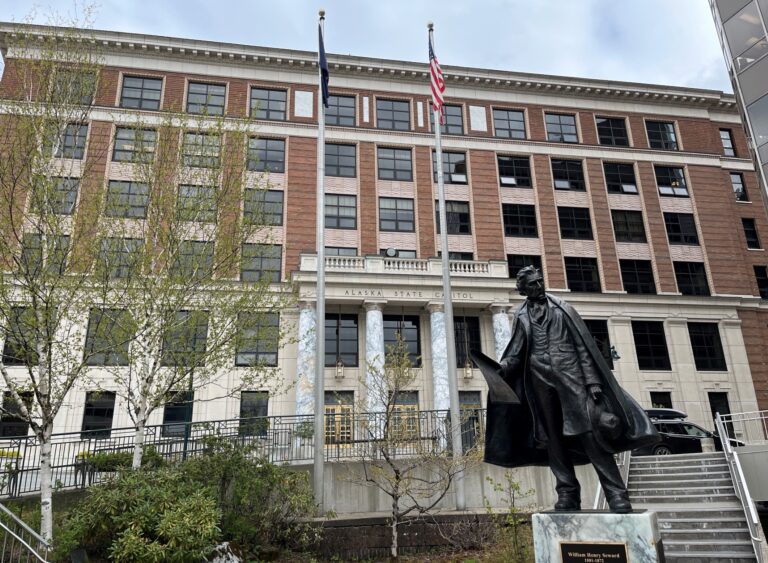
4. Seward’s Day (last Monday in March);
5. Memorial Day (last Monday in May);
6. Independence Day (July 4th);
7. Labor Day (first Monday in September);
8. Alaska Day (October 18th);
9. Veterans Day (November 11th);
10. Thanksgiving Days (fourth Thursday;
11. and following Friday after Thanksgiving in November);





 Thursday
 Friday
 Friday