A sudden squall that moved through Juneau and Upper Lynn Canal on Monday afternoon was so severe that a cruise ship broke free of its lines and drifted before the crew got the engines started and stabilized the ship. Visitors on the tram to the top of Mount Roberts found their cars swaying in the storm that passed through quickly.
The Celebrity Edge was tied up to the AJ dock, when the lines snapped.
The squall came up suddenly, taking the bright sunny day to dark clouds and hail — rarely seen in Juneau at any time of year.
The US Coast Guard has requested video from those who observed the ship adrift (contact them here: [email protected]).
Here are two videos that show the drama of the unusual weather event:
One commenter noted that this is the type of gale-force wind that is common in the fall and winter, but rarely seen in the summer. Another view, from a deck on Douglas Island:
In Sitka at the local US Forest Service office, the US flag was flown in the upside-down “distress” position on Monday, in violation of the US Flag Code.
The building, on Halibut Point Road, houses administrative offices of the Tongass National Forest and the Sitka Ranger District.
That Forest Service office isn’t the first federal office to do so. In February, upside-down flags were posted all over Sitka at federal sites, and at City Hall and the airpot.
That month, an upside-down flag was flown outside the State Department for a brief period, before it was reported and authorities corrected it.
Also in February, an upside-down flag was displayed at Yosemite National Park on El Capitan, protesting the Trump budget cuts that impacted some Park Service workers. The National Park Service acknowledged that it was unauthorized and the flag was removed, but that flag was not being flown next to the government offices, as it was in Sitka. The sudden appearance of these flags on federal buildings are likely an act of protest, but may also be the result of tampering, rather than a federal worker going rogue.
The US Flag Code says the flag should only be flown upside down as a signal of “dire distress in instances of extreme danger to life or property.”
President Donald Trump issued a dramatic warning on social media Monday afternoon, calling for the immediate evacuation of Tehran, as the conflict between Israel and Iran intensifies.
The statement, made during his attendance at the G7 Summit in Canada, punctuated the crisis surrounding the region’s nuclear tensions, as Iran, a terror-exporting country, seeks to develop nuclear weapons.
In a post on Truth Social, Trump wrote, “Iran should have signed the ‘deal’ I told them to sign. What a shame, and waste of human life. Simply stated, IRAN CAN NOT HAVE A NUCLEAR WEAPON. I said it over and over again! Everyone should immediately evacuate Tehran!”
Shortly afterwards, Trump abruptly departed the summit to return to Washington, DC, where he is expected to lead high-level discussions on the crisis. The White House confirmed his early departure, citing the need to respond to the escalating military exchanges between Iran and Israel, which resumed June 13, after months of relative peace.
A White House official, speaking to CNN, said Trump’s evacuation warning was meant to pressure Iran to re-engage in stalled nuclear negotiations. The administration has repeatedly asserted that preventing Iran from acquiring nuclear weapons is a non-negotiable Trump position.
Millions of people can be seen fleeing Tehran by car according to this social media video:
— Gunther Eagleman™ (@GuntherEagleman) June 16, 2025
The region has seen mounting violence in recent days, with Israel conducting airstrikes on Iranian nuclear sites and military infrastructure. Iran has responded with missile attacks on Israeli targets, sparking global concern over a broader regional war.
Trump has made clear that any resolution to the current crisis must ensure Iran is permanently barred from obtaining nuclear weapons.
On June 13, Sen. Dan Sullivan wrote of his support for Israel and opposition to terror-generator Iran: “The U.S. stands unequivocally with Israel. We must help Israel, and the hundreds of thousands of Americans there right now, defend themselves when Iran retaliates. The Iranian regime is the world’s largest state sponsor of terrorism and has the blood of thousands of American service members on its hands. Our strong ally, Israel, is defending its very existence by stopping Iran from obtaining a nuclear weapon. Iran has had more than a decade to give up its nuclear weapons ambitions. The Trump administration has gone the extra distance by pursuing a diplomatic solution. Iran’s response: cheating and hiding its nuclear weapons program; sprinting toward a bomb; and trying to assassinate senior American officials, including President Trump. The bold actions that Israel is taking today are not only necessary for the peace and security of the Middle East, but for the United States and the rest of the world. As Secretary Rubio stated, Iran should not retaliate against American citizens, service members or our interests. If they do, the consequences must be devastating.”
The situation remains fluid, with world leaders at the G7 watching closely from Canada and Americans watching closely from their computer screens.
Trump has requested the National Security Council convene in the White House Situation Room.
Alaska’s capital city is seeing a shift in its local journalism landscape as two well-known reporters head in new directions — one stepping away from the newsroom for a break, and the other forging a new path amid a shrinking local press corps.
Sean Maguire, a veteran Capitol reporter for the Anchorage Daily News, has announced his departure from the paper, where he has spent the past eight years covering legislative issues and politics from Juneau. In a brief statement, Maguire said he has no plans at the moment, but intends to explore new opportunities. Many who have left the ADN have ended up in political jobs for Democrats.
Maguire has been a recognizable presence in the Capitol press corps. In his announcement, he added a link where people could apply for the job he was vacating. Unionization at the Anchorage Daily News occurred after 2019, when editorial staff voted to form a union under the NewsGuild-CWA, saying better wages would keep people in the newsroom. But a steady exodus has continued.
Meanwhile, across town, Juneau Empire editor Mark Sabbatini is also moving on, but unlike Maguire, he is already charting his next course. Sabbatini’s last day at the Empire is Tuesday. He will be launching a new online publication called the Juneau Independent, with some financial backing already in place to support the project.
Sabbatini’s departure comes amid a wave of changes at the Juneau Empire, which recently changed ownership. The paper, which now prints only twice a week and is printed out of state, is undergoing what sources describe as financial restructuring. Sabbatini will not be replaced, a decision attributed to cost-cutting measures.
The Empire will instead be managed from the Kenai Peninsula Clarion office and out of the headquarters of its Canadian ownership group — Sound Publishing, a subsidiary of Black Press Media, which was sold last year to Carpenter Media Group.
Sabbatini first began reporting for the Empire in the 1990s, left the paper for a period, and returned in recent years, serving as both a reporter and its editor during the period when newspapers in general began suffering from competition.
His new publication, the Juneau Independent, is expected to focus on local and state government coverage, aiming to fill some of the vacuum left by the contraction of legacy media in Southeast Alaska. The Juneau Independent is a nonprofit that already has financial backing, the details of which have not yet been announced.
For now, both moves reflect broader challenges facing local journalism in Alaska — dwindling newsroom resources, consolidation, and the pressures of digital transition — even as independent voices look for ways to keep the public informed. Other groups, like the nonprofit Alaska Beacon (with Outside dark money), the Alaska Landmine, and Nat Herz’ Northern Journal, have joined the alternatives to legacy media. Must Read Alaska has been a leader and pioneer in the new media landscape and is now in its 11th year of operation.
A federal appeals court will hear arguments Tuesday in a politically charged legal battle over whether President Donald Trump can retain control over the California National Guard. A federal judge in Northern California recently ordered Trump to return authority to California Gov. Gavin Newsom.
Oral arguments are scheduled for noon in San Francisco.
The Trump administration filed an emergency appeal late last week after US District Judge Charles Breyer issued a temporary restraining order on Thursday, shifting control of the California National Guard back to Gov. Newsom. Hours later, the 9th Circuit granted a temporary stay, meaning Trump remains in control. The case will likely be heard all the way to the Supreme Court, either way the Ninth Circuit Court.
At the heart of the dispute is a clash over federal versus state authority in managing National Guard troops. Trump’s legal team argues that under Title 32 of the U.S. Code, the President may retain command of National Guard units for certain federal missions, even in peacetime. The Newsom administration contends the former president has overstepped constitutional boundaries by refusing to relinquish control after the expiration of a prior federal order.
The controversy stems from Trump’s reactivation of a 2020-era executive authority earlier this year, citing national security concerns and domestic readiness. Critics call the move a political power grab, especially in blue states like California.
The 9th Circuit, one of the most active appellate courts in the country due to the litigious nature of the left-leaning states, has historically leaned liberal.
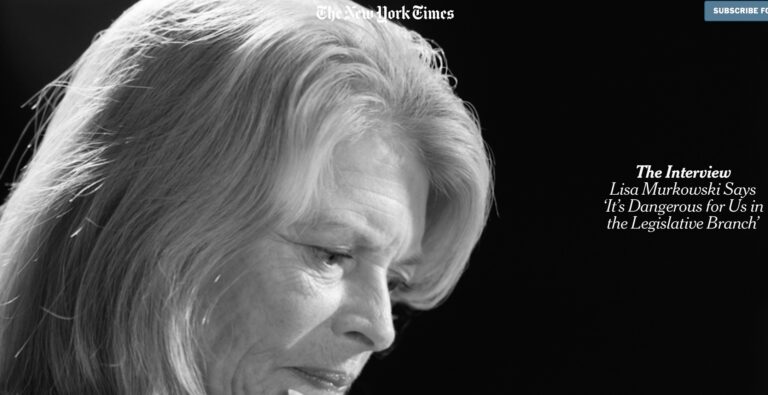
In an hour-long interview with The New York TimesMagazine, published on June 14, a fearful-sounding Sen. Lisa Murkowski of Alaska reflected on her decades-long career, her bleak view of the Republican Party, and the challenges facing Alaska.
“I’m oftentimes very anxious myself about using my voice, because retaliation is real,” she said, rephrasing comments she made earlier this year.
In April, during a conference with nonprofit leaders in Anchorage, she drew national headlines when she stated, “we are all afraid” and “retribution is real.”
Now it’s also perceived retaliation, which is an action driven by revenge or “getting even,” while retribution is considered a more formal, state-administered, response that is more proportional.
“It’s dangerous for us in the legislative branch,” she said to the interviewer.
The conversation with the newspaper comes just ahead of the release of her memoir, Far From Home, expected later this month. In recent months, after she announced her book would be published, she has been ever-present in the media, a tactic used by many authors to grow a readership for their books.
Murkowski reiterated that she has never voted for President Donald Trump and that she endorsed Nikki Haley during the 2024 Republican primaries. In the interview, she criticized the GOP’s continued alignment with Trump and pointed to a culture of fear within the party. She recalled moments where Republican lawmakers hesitated to speak out due to concerns about political retaliation.
She highlighted her record of bucking party leadership, including her vote against repealing the Affordable Care Act in 2017 and her opposition to Trump’s nomination of Pete Hegseth for secretary of Defense. She did vote for Biden’s pick for Defense, Lloyd Austin, and Trump’s first-term Defense Sec. James Mattis.
Murkowski used the interview to spotlight Alaska’s vulnerability to changes in federal funding. She said an estimated 37% of the state’s budget tied to federal programs, which makes her concerned about proposed cuts under Trump’s new budget plan, the Big Beautiful Bill, now in front of the US Senate for consideration.
According to Murkowski, those proposals have already resulted in funding freezes and layoffs, triggering protests in Alaska. These are protests she tacitly encouraged in April, when she spoke to the nonprofit conference, telling the audience, “Be affirmative in your protesting to support the programs you want to see preserved. I think it’s important the concerns continue to be raised rather than letting the fatigue of the chaos grind you down.”
Regarding the budget cuts, she told the newspaper, “I come from a state where we have, on a per capita basis, more federal workers than most any other state. So to come in and tell these people that have been helping us with everything from permitting a mine to the visitor’s center at the Mendenhall Glacier and telling them, sorry, your services are no longer warranted. That’s not how we operate here. So it’s been a rocky, rocky five months with dealing with some of what we saw with the DOGE effort,” she said.
Murkowski also discussed her opposition to elements of Trump’s proposed “Big, Beautiful Bill,” including Medicaid cuts and the phaseout of green energy tax credits. The bill attempts to make it harder to scam Medicaid, which is a program that is riddled with fraud, with estimates that the fraud costs taxpayers $22 billion to $73 billion a year.
She expressed alignment with fellow senators Josh Hawley and Susan Collins, who also support Medicaid fraud. Murkowski warned that the proposals could disproportionately impact Alaska, which she noted already face challenges in healthcare access and energy development. She did not explain the prevalence of very suspect invoices submitted to Medicaid by the Native medical providers in the state, nor the need for an overhaul of the Medicaid system.
Her forthcoming memoir, Far From Home, recounts key moments in her career, including her historic 2010 write-in campaign victory after losing the Republican primary to Joe Miller. The book covers her 23 years in the Senate and offers insight into navigating Washington.
American History has always been taught from a perspective that centralization and an increase of government power is good. Thus, the maligned Articles of Confederation have long been tossed into the dustbin as short-sighted, inefficient and merely a stepping stone towards improved “government efficiency”. Expansion, meaning the growth of the American nation into a coast-to-coast empire, has always been painted as the right thing to do.
“Just how were we to become powerful enough to win both world wars if we had not brought democracy to the Pacific coast?” is a frequent man-on-the-street response to the idea that perhaps the USA ought to have kept its western boundary at the Mississippi River.
We are taught that the misnamed American Civil War was a triumph not only over human slavery, but also the dangers of “Balkanization”, meaning the break-up into squabbling rivals of sovereign states, replete with trade wars, border disputes and cultural differences.
When we ran into the waters of the Pacific, our restlessness looked overseas for more expansion. Fascism, aka “national socialism”, may be defined as centralization of national power, extolling the virtues of a nation’s culture or race as to be somehow exceptional and above all others. It always means a reduction of individual freedom for the sake of a common good.
If you read the speeches of the war-monger Teddy Roosevelt, even before he became president, you will not hear merely the echoes of fascism, you will hear fascism. Mussolini, who pre-dated Hitler by more than a decade, seems to have borrowed his speeches.
All the great masterful races have been fighting races, and the minute that a race loses the hard fighting virtues, then, no matter what else it may retain, no matter how skilled in commerce and finance, in science or art, it has lost its proud right to stand as the equal of the best.
George Will, a conservative opinion columnist for decades, says that Teddy Roosevelt loved war, and set the table for America’s central participation into the “Century of War” that was the Twentieth. “We should look at Teddy’s legacy with dry eyes.”
Teddy’s speech was filled with contradiction. In it, he gave a tip of the hat to avoiding outright aggression, but was, along with others like William Randolph Hearst, the prime shaker that launched us into exactly that. Hearst’s syndicated newspapers were instrumental in warping American public opinion into diving headlong into it.
It did not come out of nowhere, but there were elements that have long resisted. We can start with one of the greatest of all “constitutional presidents” Grover Cleveland, whose 2nd term became quite unpopular as he refused to pander to demands from the industrial expansionists, demanding to annex Hawaii, then a sovereign nation with a queen.
According to the website Responsible Statecraft, the Marine Corps’ General Smedley Butler was haunted later in life by the role he played. As the author of War Is a Racket, Butler has been an inspiration to many antiwar and anti-imperialist Americans over the years. Twice awarded the Medal of Honor, he never believed he had done anything to deserve it, and the massacre that he took part in at Fort Rivière in Haiti haunted him.
The demonization of all-things-Spanish, inherited from British and Protestant prejudices, helped to create the Spanish-American War, a war that repudiated even our own much-vaunted Monroe Doctrine. Playing upon real and invented Spanish atrocities in Cuba, the United States became what John Quincy Adams had warned us to avoid:
Wherever the standard of freedom and Independence, has been or shall be unfurled, there will [America’s] heart, her benedictions and her prayers be. But she goes not abroad, in search of monsters to destroy. She is the well-wisher to the freedom and independence of all. She is the champion and vindicator only of her own.
And most of us have heard what Washington said in his Farewell Address, to avoid “entangling alliances.” But we have been told, and it requires no citations for proof, that the Globalists have always demonized such advice as unrealistic and “isolationist”.
Thus, the Span-Am War of 1898 is often ignored by supposedly “less-government conservatives” as to how it set the table for world war in the Pacific. With all the newspaper hype of poor-embattled Cuba needing a noble self-sacrifice of American military intervention, our first action was on the other side of the world in … the Philippines! And the “pacification” war that followed for years far outdid whatever Spanish misdeeds had been occurring in Cuba. It led to 4,000 American KIAs and perhaps 200,000 Filipino deaths, guerilla and civilian alike!
Thus, the outright annexation of Hawaii, Guam and Samoa necessarily followed as the needed chain-link to support a Pacific imperial presence.
In the parade of blame that historians ascribe to all wars, it is foolish to believe that Japan, Germany and Italy were entirely at fault. Any fair assessment of the American presence in the Pacific can see how Japan felt threatened, and could not understand why it was being punished for its own imperialist expansion. Their culture is famous for observing, imitating, and then improving upon those of others, and they were doing exactly that by the example of western culture.
“Less-government” conservatism has been captured by the so-called “neo-cons,” who are worse than being mere globalists. Foisting abortion, transgender madness, the pseudo-science of climate change, unproven vaccines and atheism, the neo-conservatives and globalists are — by any fair assessment — anti-humanity.
Donald Trump likely is not a willing participant in this, but he has his blind spots, which is natural for any patriotic American. The three-way mess of Ukraine, Israel and Asia are indeed the sort of “entangling alliances” that George Washington forewarned us about.
Conservatives need to awaken to this truth, shake off the sweet lies that have been fed to us for generations, and forge a new consensus based upon peace, not war.
Bob Bird is former chair of the Alaskan Independence Party and the host of a talk show on KSRM radio, Kenai.
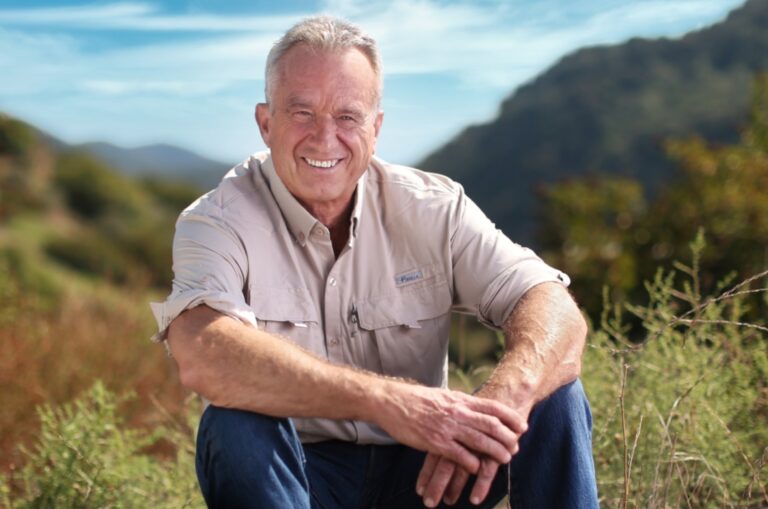
While I expected changes in the Advisory Committee on Immunization Practices with Robert F. Kennedy Jr. as the 26th secretary of Health and Human Services, I did not have him firing the entire board in one fell swoop on my bingo card.
There were 17 members of the committee — all of whom were appointed by Biden — with 13 taking their seats in 2024. With the expansion of the committee and the new additions just last year it would be 2028 before the current Trump Administration would have appointed the majority of the committee, RFK Jr. pointed out.
“A clean sweep is necessary to reestablish public confidence in vaccine science,” said Kennedy, adding that the new members “will prioritize public health and evidence-based medicine” and “no longer function as a rubber stamp for industry profit-taking agendas.”
Kennedy’s decision is a reversal to what he promised Senator Bill Cassidy (R, LA) who chairs the Committee on Health, Education, Labor, and Pensions, during his confirmation hearingsearlier this year.
“If confirmed, he will maintain the Centers for Disease Control and Prevention’s Advisory Committee on Immunization Practices without changes,” Cassidy said.
In a commentary published in the Wall Street Journal on the same day as the HHS press release, RFK Jr. highlighted ongoing conflicts of interest among ACIP members. Previous panelists have voted on products due to significant financial incentives from pharmaceutical companies, he wrote.
Several of the members of the Advisory Committee on Immunization Practices that were fired by RFK Jr. received tens of thousands of dollars from pharmaceutical companies in the past decade, according to HHS disclosure records.
Only one of ACIP’s most recent members, Dr. Yvonne Maldonado from Children’s Hospital at Stanford, had a conflict of interestlisted on the CDC website. Maldonado worked for Pfizer’s safety monitoring division and did not vote on the approval of COVID-19, pneumonia, influenza, or RSV vaccines during her tenure.
Maldonado received $33,500 between 2017 and 2023 from consulting work with Pfizer and Merck.
Kennedy cited a 2001 House investigation report that found four out of the eight members of the panel that approved a childhood rotavirus vaccine 1998 had financial ties to pharmaceutical companies in competition to produce different versions of a vaccine for that illness.
The vaccine waspulled from the marketin 1999 after reports about complications began attracting media attention. Shame we didn’t do the same for Covid vaccines known to harm people.
Kennedy also cited a 2009 HHS inspector general reportthat found 87% of members of CDC advisory panels had “more than one type of omission” in their conflict of interest reports as of 2007.
The American Medical Association has called on Senate Health Committee Chairman Bill Cassidy (R-LA) to open an investigation into Kennedy’s decision on firing the entire ACIP committee membership, citing the move violated Kennedy’s promise to Cassidy during his confirmation hearing.
Dr. Jason Goldman of the American College of Physicians introduced an emergency resolution during the AMA’s recent annual meeting to condemn Kennedy’s ACIP move and also demanded Cassidy look into the matter.
The American Pharmacists Association said it is withholding support for the CDC’s latest immunization schedule, citing “inconsistencies with scientific evidence.”
Reported by an HHS source, Senate Minority Leader Chuck Schumer said Kennedy and the Trump Administration are “taking a wrecking ball to the programs that keep Americans safe and healthy.”
The New York Democrat added that wiping out an entire ACIP “doesn’t build trust – it shatters it.”
Kennedy says he is working to rebuild Americans’ trust in the CDC and recommended vaccines. MSM and major medical groups are decrying this decision acting like it’s the worst thing that’s happened since the beginning of the pandemic.
We need to ensure conflicts of interest between those who approve vaccines and Big Pharma are either reduced or eliminated. Making money off Big Pharma while deciding what shots your kids should get is problematic at best. Especially when many seem to be approved with little thought.
For once, stop the politics. We need to do what is right for our health and our children.
Linda Boyle, RN, MSN, DM, was formerly the chief nurse for the 3rd Medical Group, JBER, and was the interim director of the Alaska VA. Most recently, she served as Director for Central Alabama VA Healthcare System. She is the director of the Alaska Covid Alliance/Alaskans 4 Personal Freedom.
Vance Boelter, the suspected assassin who was wanted in connection with the fatal shootings of Minnesota House Speaker Melissa Hortman and her husband, was arrested Sunday. Investigators received tips that Boelter was holed up in Sibley County, where they also found his vehicle and a hat believed to be his.
The assassination of the Democrat speaker and her husband happened in Brooklyn Park, near Minneapolis. Boelter is also the suspect in the non-fatal shooting of state Sen. John Hoffman and his wife at their residence about seven miles from the Hortman home.
Boelter is accused of showing up at the Hortman’s home disguised as a police officer and driving a vehicle that was outfitted to look like law enforcement. He had body armor on and was wearing full-head, hyper-realistic mask.
Boelter was arrested in Minnesota, but the “where and when” details have yet to be released.
“After relentless and determined police work, the killer is now in custody. Thanks to the dedication of multiple agencies working together along with support from the community, justice is one step closer,” the Ramsey County Sheriff’s Office said on Facebook on Sunday.
Earlier in the weekend, many rural areas in the search arena were put on high alert, as Boelter was considered armed, dangerous, and with nothing left to lose. People were told to stay indoors, keep doors locked and to lock their cars. Officials reported that Boelter had a stack of cardboard signs in his vehicle that read “No Kings,” a reference to anti-Trump rallies that took place across the country on Saturday.
Many on social media have reported that he changed his voter registration to Republican in 2022, but Minnesota does not register voters by party. It’s one of many falsehoods that has been passed around on social media over the past two days since the shootings.