Thursday, December 25, 2025
Home Blog Page 1701

Homer City Council backs away from ‘resist’ resolution

3
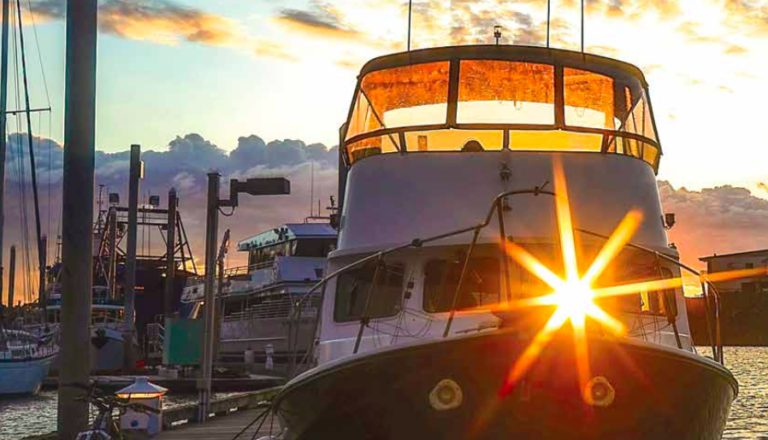
Homer, Alaska dock scene. (Photo: Homer Visitors Guide)

‘LIVE AND LET LIVE’ PRINCIPLES REMAIN

The coast is clear: People of all political opinions and social views may enter the town of Homer, where the tradition of “live and let live” is alive and well. The push by a few liberals to quash opposing political viewpoints has been quieted, at least for now.

It was standing room only Monday night as more than 100 people came through the Cowles Council Chambers at Homer City Hall to give the council a piece of their mind on a “resist Trump resolution” sponsored by three of the six council members.

In the end, most members of the Homer City Council said the resolution, which started as a statement of rebuke against the Trump presidency, was too divisive, even in its softened version. The vote was 5-1 against Resolution 17-09.

Testimony, which went about three to one against the resolution, ended at 9:40 pm. That’s when the council members took turns making comments and stating how they would be voting.

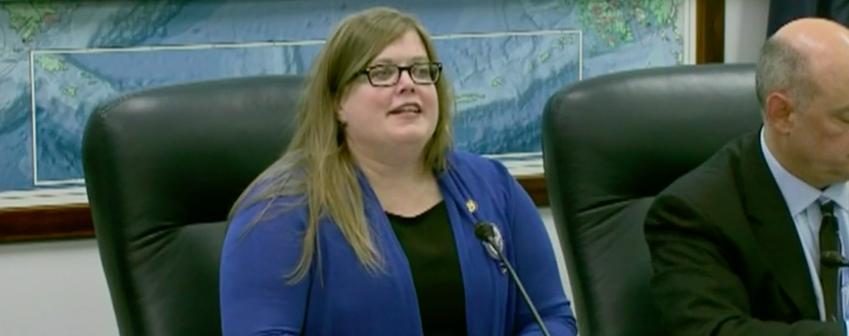
Council member Donna Aderhold, one of the sponsors of the resolution, thanked people for testifying and explained that a lot of their testimony was inaccurate. She felt the resolution had been misunderstood and added that it was her job to bring these types of issues to the council. In in the end she said she would be a “no” vote, because there was too much friction over it.

Council member David Lewis, another sponsor of the resolution, backed away from supporting it as well.

Council member Shelly Erickson expressed her sadness that the resolution had divided the community and caused hurt feelings and damage. She, too, would be a no vote.

Another who said he’d vote no was council member Tom Stroozas, who noted that with over 100 people giving testimony, not much was left to be said.

In the end, only council member Catriona Reynolds remained in favor of it, saying that “folks who were for the resolution were probably not able to come.”

Hal Spence, a former news reporter, is a Homer resident who had worked on the draft. It came as a result of unhappiness with the election of Trump, he told an AP reporter, and he intended it to create debate.

Some who testified said that, although the second version was much softer, they were not able to forget the origins of the resolution, which was a harsh rebuke of the Trump presidency. In the 2016 election, Homer had actually swung for Donald Trump over Hillary Clinton, 779 to 613.

The original version of Resolution 17-09 revealed the drafters’ deep antipathy toward President Trump, as shown here:

A RESOLUTION OF THE CITY COUNCIL OF HOMER, ALASKA, STATING THAT THE CITY OF HOMER ADHERES TO THE PRINCIPLE OF INCLUSION AND HEREIN COMMITTING THIS CITY TO RESISTING EFFORTS TO DIVIDE THIS COMMUNITY WITH REGARD TO RACE, RELIGION, ETHNICITY, GENDER, NATIONAL ORIGIN, PHYSICAL CAPABILITIES, OR SEXUAL ORIENTATION REGARDLESS OF THE ORIGIN OF THOSE EFFORTS, INCLUDING FROM LOCAL, STATE OR FEDERAL AGENCIES.

WHEREAS, A new administration is in power in Washington, D.C. without a popular mandate;

WHEREAS, During his campaign, President Donald Trump made statements offensive and harmful to the rights of women; immigrants; religious, racial, and ethnic minorities; veterans; the disabled; LGBTQ citizens; and the general public; and that such statements have continued since his election; and

WHEREAS, The President on numerous occasions has stated clearly his disregard for freedom of speech; freedom of the press; freedom of assembly; and freedom of religion, particularly with regard to Muslim Americans; and

WHEREAS, The President has not disavowed his intention to create a registry of Muslim Americans and now intends to ban Muslims from entering the United States; and

WHEREAS, The President now is following through on his promises to deport millions of undocumented immigrants, including millions brought here as children who have grown up to know no other life than that of an American; and

WHEREAS, The President now is following through on plans to build a wall on the border separating the United States from Mexico without apparent regard to its cost, its effects upon our nation’s economy, or its sociological ramifications, and to impose an ideological test for entry into our country; and

WHEREAS, The President has promised to repeal federal regulations protecting LGBTQ citizens; and

WHEREAS, The President already has issued executive orders to effect the repeal of the Affordable Care Act, which provides tens of millions of Americans with health care insurance coverage; and

WHEREAS, The President has issued executive orders to rescind certain women’s reproductive rights; and

WHEREAS, The President has promised to withdraw from the Paris Climate Agreement and to remove other environmental protections instituted under the previous administration, and has begun a process to dismantle the Environmental Protection Agency; and

WHEREAS, Before and especially since the election, some citizens have been emboldened to express overtly an intolerance of diversity that is opposed to the views of most Homer residents and most Americans; and

WHEREAS, The President’s cabinet nominees have expressed views similar to those laid out in the whereas clauses above and thus are largely out of step with the attitudes of most Homer residents; and

WHEREAS, The presidential election has exposed deep social and political divisions among Americans and these divisions threaten the general peace as expressions of intolerance rise; and

WHEREAS, The City of Homer recognizes that while the minority community here may be relatively small, it may be vulnerable, and that if those residents feel in any way threatened simply because they are minorities, the City should be on record as opposing all such intolerance; and

NOW, THEREFORE, BE IT RESOLVED that the City Council of the City of Homer unequivocally rejects expressions of fear and hate wherever they may exist, and specifically rejects harassment of women, immigrants, religious minorities, racial and ethnic minorities, and LGBTQ individuals.

BE IT FURTHER RESOLVED that the City of Homer embraces all people regardless of skin color, country of birth, faith, sex, gender, marital status, or abilities; and that the City of Homer will not waver in its commitment to inclusion and to continuing to create a village safe for a diverse population.

BE IT FURTHER RESOLVED that the City of Homer will resist any and all efforts to profile undocumented immigrants or any other vulnerable population.

BE IT FURTHER RESOLVED that the City of Homer will cooperate with federal agencies in detaining undocumented immigrants when court-issued federal warrants are delivered.

BE IT FURTHER RESOLVED that the City of Homer shall steadfastly defend the United States and Alaska constitutions, especially with regard to the former’s precedent-backed right of privacy and the latter’s specified right of privacy (Article 1, Section 22), and safeguard the rights declared in the Bill of Rights.

BE IT FURTHER RESOLVED that the City of Homer will continue its staunch support of our local police in their ongoing efforts to enforce law and protect our community and its visitors in a just, unbiased and transparent manner.

BE IT FURTHER RESOLVED that the City of Homer will declare itself a safety net for the most vulnerable members of and visitors to our community.

BE IT FURTHER RESOLVED that the City of Homer calls on all its citizens to stand against intolerance and resist expressions of hate toward any members of the community, and thus to set an example for the rest of the nation, demonstrating that Homer residents and Alaskans adhere to the principle of live-and-let-live.

The revised version, which failed passage, is here.

Must Read Monday’s newsletter for Feb. 27 – Subscribe today

0

Every Monday, 8,300 Alaskans receive the Must Read Alaska Monday newsletter in their inboxes before 8:30 am Alaska Time. It’s always a wild ride and rarely politically correct.

You can subscribe on the right side of this page and join in the fun. We publish about 51 weeks a year.

Here’s a sample of this week’s newsletter for Feb. 27:

JUNEAU, ALASKA – GOOD MORNING, Monday, Feb. 27, 2017…and no we didn’t watch Jimmy Kimmel troll Donald Trump during the Oscars…and as for PriceWaterhouse Coopers mixing up the envelopes? Same firm that lost the personal records of thousands of Alaska teachers back in 2010…But first…

WHAT MUST READ IS READING: Innovation is Everybody’s Business. As we ponder SB 14, the bill that would allow Uber, Lyft and other ride sharing programs to flourish in Alaska, we’re thinking about the importance of having an innovation mindset. Those who do will survive in the job market. Those who don’t? Not so much. Scroll to the bottom of the newsletter for our book review of the week.

WHAT ELSE WE’RE READING: Revenge of the Deep State. Can Trump survive the unseen, powerful intelligence community?

DEPARTMENT OF CORRECTIONS: Andy Holleman is a registered Republican. He is running for Anchorage School Board. An earlier Must Read edition listed him as a Democrat. We apologize. How could we! Holleman is the past president of the local Anchorage Education Association, which is the National Education Association affiliate.

DEM NEWS: The DNC elected Barack Obama’s Secretary of Labor Tom Perez as its new chair.

As Labor secretary, Perez visited Alaska in the summer of 2014 with then-Sen. Mark Begich. It was a trip bought and paid for by U.S. tax dollars, but was pure election politics by the Obama Administration to help incumbent Begich, who lost that fall.

Perez takes over for Debbie Wasserman Schultz, D-Florida, who resigned after a scandal-ridden 2016 primary process. Leaked emails showed how she and her staff put their thumbs on the scale to help Hillary Clinton win the Democratic nomination, rather than the more popular Bernie Sanders. Sanders won 80 percent of the Democrats’ caucus vote in Alaska, but the Alaska Democratic Party leadership was discovered all over those leaked emails, doing their best to anoint Hillary.

Democrat rank-and-file types are not enthused about Perez, as they view the party’s landslide losses as a referendum for change. But to calm them, Perez immediately went on CNN and called the president a fraud. Maybe that will help the Democrats?

But one Alaska Democrat had this so-true observation about Perez vs. Ellison, and he managed to show the cards:

WORSE FOR HILLARY THAN WE THOUGHT: National Review writer Jeremy Carl reminded a Juneau audience on Friday of this 2016 curiosity:

Take all the votes for Libertarian Gary Johnson and award them to Donald Trump, and take all the votes for Green Party Jill Stein and award them to Hillary Clinton. Trump wins the popular vote….An “alternative fact” to bring up when someone tells you that Clinton won the popular vote.

TRUMP TO PRESS CORPS: The president said he’s not going to the White House Correspondents’ Association dinner in DC on April 29. SAD!!!

TRUMP PRIME-TIME: On Tuesday evening, the president will give his first prime-time address to the nation and Congress. He’ll likely cover health care reform, infrastructure and defense spending, tax reductions,and immigration. But who knows?

MORNING FUNNIES: 


TROPHY FOR PARTICIPATION: When Health and Social Services Commissioner Valerie Davidson presented her budget to Senate Finance last week, she provided a rating of how each of her divisions perform. That drew skepticism from the committee: Why is nearly every division getting such a high self-rating? Are they all that good? Davidson dodged the question but it was a Lake Wobegon moment: “All divisions are above average.”

MEDICAID COSTS EXPLODE: Commissioner Davidson, testifying in the Senate, said that if nothing changes, general fund Medicaid spending will increase by $45 million in 2018. (That’s not what she said back in 2015, when she pushed for Medicaid expansion.) But we digress…

The state is undertaking five Medicaid reductions for 2018, for a $30.2 million paring of the $45 million cost explosion:

1. Reduce professional fees. Right now Alaska pays a rate of “Medicare plus 30 percent.” The department is proposing Medicare plus 15 percent. That means physicians, advanced nurse practitioners, and therapists. They will be paid less than they are now. Savings to the State: $8 million.
2. Hospital in patient and out patient, reduce the payment by 5 percent. Savings to the State: $6.2 million.
3. Rate freeze. Savings to the State: $600,000.
4. Reduce services, by scaling back rate code enhancements added since 2015. Example, reduced lab services. Savings to the State: $12.8 million. 
5. Reduce waiver services. Alaska Medicaid allows 15 hours a week for day rehab services, which would be scaled back to 8 hours a week. Savings to the State: $2.6 million. 

Davidson said she’ll likely need $15 million supplemental in FY18 budget and if the Trump Administration or Congress change Medicaid to be a block grant program, Alaska will not fare well as we will end up picking up more of the costs.

Who could have seen that coming?

ONE OUT OF FOUR: How many Alaskans are on Medicaid? 25 percent of our population, said Sen. Peter Micciche during the budget review.

RUMORS OF WALKER ENTERING GOP PRIMARY: The race for governor starts in earnest a year from now, but already political observers are weighing the potential candidates. They say Gov. Walker, who left the Republican Party to run as a nonpartisan because he knew he could not win in a GOP primary, is going to run as a Republican next time. That’s why he hired Scott Kendall as his chief of staff. Kendall, who worked on the Walker campaign in 2014, also worked on the Lisa Murkowski campaign in 2016.

We’re also hearing of a serious fissure between Walker and Lt. Gov. Byron Mallott. Evidently Mallott, Rep. Neal Foster, and House Speaker Bryce Edgemon have created a power base and they’re having side discussions. They’re all Democrats, and we mean that in the nicest way.

WALKER TO TRUMP: I’VE GOT A GASLINE TO SELL YOU: A drafted letter by Gov. Bill Walker to President Donald Trump, asks for a meeting. The topic?  Help me build the gasline.

Here’s a guy who would not say whom he supported for president, coming to the president with his pipe dream.

Alaska has a half dozen important projects languishing (opening ANWR, access to NPRA, King Cove Road, Knik Arm Crossing, Ambler Mining District Road, Juneau Access), the governor is fixated on the one project that most Alaskans think is fantasy: The gasline that he decided to “go it alone” on? He’s asking the president to go it alone with him.

At least Walker is consistent: He also asked President Obama to help him build the gasline. Obama’s response, according to Walker? “Governor Walker, you build that gas line for Alaska and don’t let anyone stand in your way of getting that done,” Walker wrote in a commentary for the Alaska Dispatch News. “The president offered to help,” Walker wrote. “And I told him I would be calling him soon.”

The problem for Walker is this: Every governor has a list of infrastructure project priorities: Dams that are breaking, bridges that are collapsing, interstate highways that are crumbling. Can the gasline compete for the $1 trillion Trump wants to spend on infrastructure? Governors have sent Trump 428 projects that are shovel-ready, and only need extra federal funds.

WHERE’S WALKER? Governor and the Mrs. dined at the White House on Sunday night with 46 other governors. It was the first big glitzy event at the White House since Trump became president and it coincided with the meeting of the National Governors Association. Attendance at the governors’ meeting set a record. Trump is slated to meet with the governors again this morning, but will Walker get a chance to slip the president his letter requesting a meeting?

GO ASK ALICE: Alice Rogoff, who owns the Alaska Dispatch News, also publishes a subscription-only, little-known online publication called Arctic Now.

Rogoff also serves on the Arctic Council. They flit hither and yon and talk about all-things Arctic.

So when Alice’s Arctic Now published a prominent opinion piece saying the Arctic Council she serves on should receive the Nobel Peace Prize, we thought Must Read Alaska readers would put two and two together.

Sen. Lisa Murkowski might have other thoughts. During her speech to the Alaska Legislature, she said the Arctic Council, under the chairmanship of the U.S. during the past two years, has not met her expectations for progress:

“In many ways we have accomplished less than I’d hoped. We still lack a blueprint that recognizes both our needs and our opportunities, a good plan for the development of telecom infrastructure, deep water ports, icebreakers, response capabilities — we can and should do more.”

But the council did focus on climate change, so there’s that, and Nobel Peace Prizes have been given for a lot less.

Finland gets the next whack at being chair for two years. Maybe the country that ranks highest in the world for coffee consumption will give the sleepy organization the jolt it needs.

HOMER CITY COUNCIL: Last week we reported on the transparently anti-Trump resolution that had been drafted by three members of the Homer City Council. Today, the council will take up the matter for consideration. The original wording of the resolution is here. There was a bit of a backlash. The revised wording is here. Check the Must Read Alaska blog for updates today on what happened after we published the original resolution.

JEREMY CARL : A writer for National Review, also a Hoover Institute fellow, had the audience at the Juneau Lincoln Day Dinner laughing throughout his tone-perfect speech on Friday. “We’re going to win so much you’re going to get tired of winning,” he said, quoting Donald Trump during his campaign. Indeed, the audience did have the vibe of being on the winning team.

Notes from Carl’s half-hour analysis of the 2016 political landscape, which never once mentioned Sarah Palin or Bill Walker:

  • We are lousy prognosticators. Almost nobody believed Trump could pull off a win.
  • Trump expanded the pie, brought in new Republicans, enlarged the tent.
  • The media lost badly. It was obvious they were all-in for Hillary.
  • Down-ballot conservatives won. Republicans control 67 legislative chambers, and there are 24 states with overall GOP control. Democrats have just six.
  • It’s going to be a wild ride for the next four years.
  • No one should ever underestimate Donald Trump.
  • Build the road to Juneau, already.

REPUBLICANS MEET IN JUNEAU: There was no drama during the February meeting of the GOP (Great Opportunity Party) in Juneau, where the biggest controversy was whether to hold a November meeting in Fairbanks. (No, but it took 30 minutes of debate).

Between the packed reception at the Amalga Distillery, across from the Baranof Hotel, and the overflow crowd at the Lincoln Day Dinner,with speakers U.S. Sen. Dan Sullivan and Jeremy Carl, Capital City Republicans raised money, had fun, and grew the party. The AKGOP will use the funds to unseat Democrats and the three turncoat Republicans — Louise Stutes (Kodiak), Gabrielle LeDoux (Muldoon), and Paul Seaton (Homer).

The takeaway is that the Alaska GOP is serious, spirited and united, with Republicans of all stripes working together.

SULLIVAN’S MONEY QUOTES: Sen. Dan Sullivan spoke to the Alaska Legislature last week and we jotted down these memorable quotes:

“Alaska is the super power of seafood.”
“When you make a commitment to (Sen.) Lyman Hoffman you never forget it, and neither does he.”
“It’s important that we put the honey bucket in a museum.”
“Last year I told you the Obama Administration moved forward to get rid of 5,000 soldiers [in the 4-25th] at JBER…I said it would be over my dead body. I’m happy to report I am still alive and the 4-25 is still at JBER.”
“I will be 100 percent focused on the economy in Alaska and throughout our country.”
“Let me be clear, relying on charity for our future is not something that the great state of Alaska should ever aspire to. It is beneath us.”
“The best social program has always been a meaningful job.”

DIFFERENCE BETWEEN LIBERALS, CONSERVATIVES, IN ONE QUESTION: Rep. Ivy Sponholz, D-Anchorage, posed a question to Sen. Dan Sullivan that revealed the difference between the liberal/fatalistic and conservative/optimistic mindset.

Sponholz prefaced her question by saying the increase in medical jobs is the only bright spot in the Alaska economy. Because Alaska is in a recession and people will suffer, she wanted to know if Sullivan would fight to preserve Medicaid expansion.

Sullivan politely responded that she was right, that there was an increase in spending for medical services due to expanded Medicaid funding.

But then he pivoted and addressed her fatalistic view that nothing could be done about it.

“We want to work with everyone to make sure that doesn’t happen,” he said. “There’s a lot of concern and we all have it, but I do think we have an opportunity to turn things around, with more infrastructure, tourism, fisheries. I really believe we can turn things around on the resource development side.”

MURKOWSKI INTERN DEADLINE IS MARCH 16: Sen. Murkowski offers internship opportunities in her Washington, D.C. office, as well as state office locations. Internship programs are available for recent high school graduates, current college students, and recent college graduates. The deadline for applying is March 16.

JEREMY CARL QUOTE 2.0: “I am surprised at how crazy the media has become. It is increasingly true that when I read the Washington Post and the New York Times, it’s like reading the comment thread on Elizabeth Warrens’ Facebook page.”

ACTION ITEM: HB 111 is a job-killing, economy-busting bill whose sponsors, Rep. Geran Tarr and Andy Josephson, run the House Resources Committee. Public testimony will be taken on Wednesday, March 1 at 6 pm. Greenies will be there in droves. You should go, too, because someone needs to stand up and defend SB 21 as a great piece of legislation, creating a fair and stable tax system for our oil industry. Oh, and jobs — help save our jobs, too.

Read what the Alaska Democrats have to say.

ANCHORAGE LEGISLATIVE CAUCUS=DEMOCRATIC CAUCUS: One thing liberals are a lot better at — going to town hall meetings. Maybe it’s because they have so much time on their hands, but whatever the reason, more of them showed up at the Anchorage Legislative Information Office for an Anchorage caucus appearance, and they spoke in favor of an income tax.

In fact, the meeting gave participants the chance to vote with green, yellow, and red dots on what they want the Legislature to do, and if this doesn’t convince you Democrats dominated the meeting, nothing will. Study their voting, as it’s what the House majority, Senate minority, and the governor will be pushing. GREEN=DO IT; RED=DON’T; YELLOW=USE CAUTION:

WAYBACK MACHINE 1: In 1987, Democrat Fran Ulmer (now former Lt. Gov. with Gov. Tony Knowles) penned an op-ed in which she argued that Alaska must — without a doubt, and quickly — reinstate an income tax:

“Resistance to imposing an income tax is natural. No one likes to give up a free lunch. I do not look forward to an income tax any more than anyone else, but it is clear to me that the income tax has many philosophical and practical advantages to any of the proposed alternatives. The choice of an income tax comes after realizing it is the best of the worst.”

WAYBACK MACHINE 2: This 1990 New York Times story on Alaska’s budget crisis could be dusted off, touched up a bit, and run again today.

POT, MEET KETTLE: A politician dubbed a Colorado newspaper story “fake news,” and the newspaper is threatening to sue for defamation.

WORDS WITH FRENEMIES: The Alaska Dispatch runs a column by Shannyn Moore, which is usually unreadable. But at least they edit her language.

Here’s the raw, unedited version of the ADN’s star columnist. Caution – language ahead not appropriate for children:

ON THE MUST READ ALASKA BLOG:

Tribal banishments and the challenges of frontier justice. Tribes can kick people out of villages and it’s probably not constitutional, but what else can they do when they have no law enforcement.

Squalling women show up at the State Capitol during Sen. Dan Sullivan’s speech at the Legislature. They chanted, “What does democracy look like? This is what democracy looks like.” They forgot that democracy is what we do on election day. But they shouted at the top of their lungs for pro-choice, and anti-Trump.

House Resources Committee is firmly under the control of anti-resource Democrats. What can possibly go wrong? Committee Co-Chair Geran Tarr scolds a witness, and then scolds a Republican member of the committee. What does democracy look like, Democrat style? Ugly.

Teddy Roosevelt built the Panama Canal. Guest writer Win Gruening wishes we had that spirit to build the Juneau Access Project. What it takes.

Uber and Lyft, and other ride sharing technologies may come to Alaska soon, if Sen. Mia Costello’s bill passes and is signed. We can dream.

SUPPORT THE MISSION OF MUST READ ALASKA: Like what we do? Silent underwriters may send a check to Must Read Alaska, 3201 C Street, Suite 308, Anchorage, Alaska 99508. Contact us for ad rates.


OUTRAGE OF THE WEEK: A high school girl changes her gender into a boy, then competes in a girls’ wrestling match, and wins. Liberals are astonished that Trump won.


CALENDAR – CHECK THE MUST READ ALASKA BLOG FOR UPDATES.

TODAY: Homer city council votes on contentious anti-Trump resolution.
TODAY: US Senate votes on Wilbur Ross’ nomination as Commerce secretary nomination, and Ryan Zinke for Interior secretary, 7 pm, Eastern.
MARCH 1: Public testimony on HB 111, at your local LIO at 6 pm.
MARCH 2: Mat-Su Public Testimony, at Mat-Su LIO – House Finance: Operating Budget, 1:30 pm.
MARCH 3: Anchorage Public Testimony, at Anchorage LIO – House Finance: Operating Budget, 1 pm

Innovation is Everybody’s Business
By Robert B. Tucker
The book on Sen. Mia Costello’s desk is: Innovation is Everybody’s Business, by Robert Tucker. The author argues that innovation skills are the hottest job skill in the market today, and as companies shed some jobs, they’re keen to hire people with the ability to think ahead of the curve, who can motivate coworkers, cut costs, and invent better ways of doing things. Companies are all over the world are shedding jobs in record numbers. The way to become an irreplaceable team member is to have a high innovation factor, or I-factor.

In a time of disruptive technologies, outsourcing and hyper-competitiveness in business, Tucker offers Americans a way to strengthen those job survival skills. The challenge, of course, is how to think outside the box when there are piles and piles of work in your in-basket. Simply working harder is not enough, Tucker says. Relying on your functional skills and your longevity is not enough. We’re all working for organizations that would dearly love to eliminate our jobs.

Because it’s a self-help, career-focused book, there is a quiz involved, a self-assessment. You can take it online and see how you score in the I-factor.

“Because half a dozen grasshoppers under a fern make the field ring with their importunate chink, whilst thousands of great cattle, reposed beneath the shadow of the British oak, chew the cud and are silent, pray do not imagine that those who make the noise are the only inhabitants of the field.”

 – Edmund Burke, as quoted by Jeremy Carl during the Juneau Lincoln Day Dinner.

Homer city council to consider ‘softened’ resolution after blowback

5
Homer, Alaska (Creative Commons photo, unknown photographer)

The Homer City Council will tonight consider Resolution 17-09, but not the original draft of 17-09.

Tonight, rather than take on President Donald Trump directly, the council will vote on a sanitized version, one that is more careful in its wording but may not satisfy its critics.

The council is split on the resolution offered by three of its members — David Lewis, Catriona Reynolds and Donna Aderhold.

But the loud left-wing of Homer is gearing up for a fight at City Hall to call on all the citizens of Homer to “stand against intolerance and resist expressions of hate toward any members of the community.”

The meeting begins at 6 pm and the matter is 16th on the agenda. It’s likely that Mayor Brian Zak will limit public comment to three minutes.

The original resolution began by rebuking President Donald Trump and his entire cabinet for high crimes and misdemeanors of political incorrectness.

The new resolution is about 50 lines shorter, but critics say that the original version tells the full story as to what is behind Resolution 17-09: Creating a sanctuary city for illegal immigrants, putting “resistance” language into a city resolution intended as thinly veiled common cause with the “Indivisible” movement of Democrats nationally who oppose Donald Trump.

The original resolution caused a furor in Homer and garnered nationwide attention when it was released on Must Read Alaska last week. Locals are predicting it will be a long meeting and Homer conservatives say the resolution may have done more to split the community than to bring it together.


Tribal banishments, and the complications of frontier justice

2
Community members of Sand Point, Alaska, confronted a man at the airport in 2013 and sent him back to Anchorage. They suspected him of being a drug dealer. (Carmen Dushkin photo from Facebook.)

In 2013, Sand Point residents became increasingly alarmed when a suspected drug dealer kept showing up in town. Whenever the angular stranger disembarked from a plane, young people started getting high on drugs.

In a small town in the Aleutian Islands, locals take note of such things. They observe small changes in the weather. And they know when kids are getting high.

Sand Point took charge, and a group of burly locals went to the airport, confronted the man as he entered the terminal and sent him back to Anchorage.

It could have gone very wrong. Mobs showing up at airports to block an arriving passenger is problematic in a republic that prides itself the rule of law.

But on the frontier, there is no law enforcement. The local decision, imperfect as it is, may be the only way to ensure safety.

Village of Allakaket. (US Fish and Wildlife photo)

Last week, the village of Allakaket took charge of its community when suspected meth dealers started showing up: They sent four people packing to Fairbanks.

No, there was not an arrest warrant, nor file of evidence. But the village council convened, discussed the problem, shared stories, heard from others, wept a bit, and finally took action.

PJ Simon, chief of the federally recognized Allakaket tribe, held the emergency meeting at the tribal office. About 25 people were reported to have attended — nearly one quarter of the village that lies on the south bank of the Koyukuk River, 190 miles northwest of Fairbanks.

Allakaket, largely Athabaskan, is still a dry village — it doesn’t allow alcohol in. People live by hunting and fishing, and collecting various checks from the government, their Native corporations, and the Alaska Permanent Fund dividend. There’s not much of a cash economy. In the last census, there were but 41 households in the village, and most of the inhabitants are related.

Chief Simon said he believed the newcomers had arrived in advance of Alaska Native Village Corporation shareholder dividends being distributed. The calendar of check distributions is something that wiley drug dealers take note of in Alaska. Last year, the K’oyitl’ots’ina Ltd. dividends were distributed in March.

In a place like Allakaket, four armed drug dealers stick out, but banishing them is also traumatic, due to the close familial relationships. In this case, two of the banished were residents of Allakaket, while two were not. One of the banished was given a lifetime banishment sentence.

The trend of dumping undesirables is a form of frontier justice that is an old-school Alaska way of cleaning up a community.

Villages like Allakaket are not practical locations for Alaska State Troopers. There is little housing, and outsiders are generally not welcomed. Even teachers posted in villages never stay long; some don’t even make it through a school year.

Although the village had a public safety officer in 2014, it’s without one now. Absent an officer, the solution appears to be the village tribal council.

Derek Adams set a fire that resulted in the deaths of three people in Nunam Iqua. (Bethel District Attorney photo)

MEANWHILE, IN NUNAM IQUA

Last year, 22-year-old Derek Adams was banished from his Yup-ik village of Nunam Iqua, after he had set a fire at a home a few years earlier. It resulted in the deaths of three people, including a child. In addition to banishment, he was sentenced to time served and put on parole.

Adams was also banned from Alakanuk and Emmonak before being arrested in Bethel for carrying large amounts of cash and what appeared to be heroin. He later tested positive for THC (marijuana) and opiates and was booked in September. A reopened hearing on his latest drug case is set for March 8 in Bethel.

While Nunam Iqua’s elders are likely feeling that they made the right decision, the Adams case is an example of how banishment from one village can result in banishment becoming a chain reaction, where communities pre-emptively prevent someone from entering a place where justice systems are not up to the task of dealing with them. The other villages that banished Adams didn’t want to be a dumping ground for Nunam Iqua’s bad boy.

FRONTIER JUSTICE

Banishment is a loose method of frontier justice outside of the law, generally a result of either no law enforcement presence or dissatisfaction with local lawmen.

In the wild West, frontier justice meant tar-and-feathering, gun duels, lynching, and putting people on a train out of town with the warning, “Don’t ever let us catch you in these parts again.” There wasn’t a lot of due process involved. Everything was left up to the judgment of the mob.

Today’s frontier justice in village Alaska is simple, non-violent, but has never faced a true court challenge: They put you on a plane and send you and your problems to the nearest city that has law enforcement. With villages too tiny to police, this appears to be the only way for locals to nip the drug epidemic in the bud.

In 2003, an Anchorage Superior Court judge upheld the right of the village of Perryville to eject a resident who had a history of alcohol-fueled violence. But that’s as far as the challenge went.

It’s not best-practice justice, but it’s the only solution that locals have the ability to enforce in places where there are no police, no courts, no bail bondsmen, and no jails.

Someday, the practice of banishment will run up against a legal challenge that might come from someone who convinces the American Civil Liberties Union to take his or her case.

But until then, banishment is a curious Alaska anachronism, a little bit wild West, and a little bit Native justice. The state’s legal system looks the other way and hopes for the best.

Squalling women for Planned Parenthood show up, but not in numbers

0
What do we want: Planned Parenthood supporters, and one lucky baby, protest at Alaska’s Capitol on Feb. 24, 2017.

Sen. Dan Sullivan had to know it was coming this week. But he probably didn’t know how underwhelming the turnout was when Planned Parenthood targeted him in Anchorage while he was meeting with the Alaska State Chamber of Commerce.

Anchorage protest was noisy but small this week when Sen. Dan Sullivan spoke to Chamber of Commerce members.

The protest group gathered at the door of the Petroleum Club to make him walk through their noisy gauntlet, but he simply walked in the entrance on the other side of the building. Evidently none of the protest organizers had ever been to the Petroleum Club of Anchorage.

Madeleine Grant, who identified herself as a doctor with the U.S. Department of Veterans Affairs, told the Alaska Dispatch News she was protesting because “she had seen the catastrophic damage that can occur when people are uninsured during her previous positions at community health centers.”

Using her official position to make a political statement may be a violation of the venerable Hatch Act, which prohibits federal employees from engaging in political action during work hours. Using their official status to engage in political activity is strictly prohibited by law.

On Friday, Sullivan was at the Alaska’s Capitol in Juneau to deliver his update on all-things-DC, and a group showed up with bullhorns, a baby and a few pre-printed signs supporting public funding of abortions and Planned Parenthood.

They were led by a professional-sounding chanter, “What does democracy look like?” “This is what democracy looks like,” they shouted.

The sun shone brightly on the new snow and the air was warm as protesters honked a horn repeatedly, demanding more from Sullivan for Medicaid, Obamacare, and Planned Parenthood.

There were a dozen of them, which by Alaska Capitol standards is barely enough to get media to say “meh.” One of the stations livestreamed the protest, just in case, but it did not make for particularly good television. In the end, the lack of attendance was the newsworthy item.

Earlier in the week, Sen. Lisa Murkowski had voiced her support for Planned Parenthood funding. She has been a consistent supporter of the organization, to the consternation of the more conservative Republicans in the state.

But when KTUU reporter Austin Baird asked Sen. Sullivan whether he, too, supported funding the abortion provider, he said he would rather see the funds distributed among the more than 150 health clinics statewide that provide general care for people, not for the four Planned Parenthood clinics that primarily serve urban people.

Outside the media availability, the Planned Parenthood protesters chanted on as their numbers began to dwindle: “We want a town hall,” and “Shame on you!”

When asked by a reporter why he didn’t hold a town hall as the protesters were demanding, Sullivan said — and we’re paraphrasing — he meets with people regularly, but he’s not interested in getting in the middle of a shoutfest.

Planned Parenthood is an openly partisan organization that pays people to go door-to-door every election, and use various methods to only support Democrat Party candidates. It’s protest organizers are also paid, and those paid organizers are funded, in one way or another, by taxpayer dollars.

Planned Parenthood received $553.7 million in funding in 2015 from the government, which is about 40 percent of its annual budget.

Medicaid is one of those funding streams that Republicans in Congress could affect through appropriation.  Medicaid represents  75% of the government support that Planned Parenthood gets for 650 clinics around the nation, four of them in urban centers in Alaska. The money helps the group test for sexually transmitted diseases and provide some reproductive health services, such as birth control. The money also enables the organization to use its other funds to provide abortions.

With a Republican majority in the House, Senate and White House, Planned Parenthood is mobilizing its grassroots base across the country, banking on the post-election discontent among Democrats to propel its message. Suddenly, Planned Parenthood protests are everywhere. Pink pussy hats are the new black.

‘PANNED’ PARENTHOOD?

But is fatigue setting in? A tiny protest at Alaska’s Capitol on a bluebird day, when organizers were hoping to see supporters out in force, must have been a disappointment. By 12:30 pm, when most state workers in the downtown core were available to picket with the small band of shouters, the support was embarrassingly small.  This was in spite of the efforts of paid organizers, the formidable political machinery of Planned Parenthood, and a setting amidst the most liberal city in Alaska.

All over but the shouting:Protesters at the Capitol today looked a bit tired.

House Resources, under anti-oil control, squelches industry leader

6
Rep. Geran Tarr opens a hearing on her bill, HB 111, which would raise taxes on oil.

FIREWORKS AS GERAN TARR SCOLDS WITNESS

An Alaska’s State House Resources Committee co-chair, already on the record against oil development, interrupted the testimony of Alaska’s spokesperson for the oil and gas industry during a Wednesday night hearing.

Rep. Geran Tarr cut off Kara Moriarty abruptly and then gave her a public scolding.

Moriarty, the CEO of the Alaska Oil and Gas Association, was the first person to testify during the hearing that started at 6:30 pm, and the rebuke from Tarr came within the first few minutes.

Tarr, D-Anchorage, lectured Moriarty about what would and would not be allowed in her testimony: “Ms. Moriarty, we are not going to make statements like that in this committee,” Tarr warned. “So you’re not going to impugn the motives of that individual. If you want to respond to anything that was said, that’s fine. But we’re not going to do that.”

GARBAGE IN, GARBAGE OUT

What drew Tarr’s ire is that Moriarty had firmly challenged old data presented by an invited speaker brought in by Tarr and co-chair Andy Josephson, D-Anchorage,  to shore up their argument for higher taxes.

The expert had provided bad information to the committee two days earlier, and Moriarty was calling him out on it.

Moriarty, between that Monday hearing and her opportunity to testify on Wednesday, had discovered that his company not only had access to new data, but the new information had already been provided to the State Competitiveness Review Board. He had denied the information was available.

Rich Ruggiero, Castle Gap Energy Partners

Rich Ruggiero of Castle Gap Energy Partners had simply chosen not to use the new data, but relied on an old slide from 2011, when oil was over $90 a barrel and tax policies were quite different across the globe.

And when asked on Monday by committee member Rep. Dave Talerico, R-Healy, for updated information, Ruggiero shrugged off the question by saying it would be pretty hard to get. That was not true.

Ruggiero, who helped the Palin administration craft the disastrous but now-defunct ACES tax plan, was paid $35,000 by House Democrats to give testimony favorable to raising oil taxes. He testified that Alaska raising its oil taxes often is not unusual, because it’s done all over the world all the time.

He also told the committee that they should expect to hear pushback from industry trade organizations like the Alaska Oil and Gas Association, which he said would bring out the same old “detracting themes” that industry brings up all over the world —  how stability, competition and jobs will be negatively impacted if Alaska enacts higher taxes on industry.

Kara Moriarty, Alaska Oil and Gas Association

When Moriarty had her turn to speak on Wednesday, she came roaring out of the gate, blasting the old data and Ruggiero’s implication that the oil industry would try to mislead the committee.

“Your consultant on Monday mentioned that Alaska is not the only government changing taxes. And he used the six-year-old slide to demonstrate that point. He was very direct and told you that industry, including the trade association — in fact, he called out AOGA directly — would deploy ‘detracting themes’ such as stability, competition, and jobs, as reasons why you should not increase government take,” Moriarty said.

“I just want to put it on the record that I personally take great exception to his choice of words, and frankly I find them insulting,” Moriarty said.

“He was insinuating that industry is not credible and that these themes should not be believed. The reason the industry does talk about stability, competition, and jobs across the globe is that they are real factors,” Moriarty continued.

Moriarty explained she had easily found Ruggiero’s company updates through 2016. She found them on the State’s own website. She continued: By using old data,  it appeared that Ruggiero was either ill-prepared or was trying to push an agenda.

That’s when Tarr snapped at Moriarty, and then abruptly cut off committee member Chris Birch, R-Anchorage: “You will not interrupt the chair!”

Moriarty didn’t back down; she was responding to the charts provided by Ruggiero, which were obviously inaccurate.

TERM OF THE DAY: ‘DETRACTING THEMES’

Curiously, during Ruggiero’s Monday testimony, he had also assigned motives to the oil industry,  with his prediction of “detracting themes” the committee should expect. But his impugning of the motives of the oil and gas association was allowed and then actually defended by the committee co-chairs.  When Moriarty made the very accurate and important observation that Ruggiero’s slides were either intentionally or unintentionally erroneous, Tarr leaped to his defense by inventing a new standard for testimony on the spur of the moment.  That new standard seems to be that testifiers are welcome to impugn the credibility of industry, but industry is not allowed to defend itself.

The co-chairs also showed favoritism to another testifier who was clearly in their corner on raising oil taxes. Earlier this session, the co-chairs allowed oil industry foe Robin Brena,  a political ally of Gov. Bill Walker, a full two hours to testify about the need for sharply higher oil taxes, during which time he showed over 50 slides and several times impugned the motives of Alaska’s oil producers.

Tarr and Josephson, both considered stridently anti-resource development, were recorded at a December 13 meeting of the Alaska Center (for the Environment), where Josephson told the members present, “Use my office and Rep. Tarr’s office as a virtual satellite office.” The Alaska Center for the Environment’s mission statement includes its political agenda: “We engage, empower and elect Alaskans to stand up for our clean air and water, healthy communities, and a strong democracy.” The group spends significant funds to elect anti-development Democrats.

As hearings continue, Tarr is making it clear the House Resources Committee is the Alaska Center’s satellite operation, and that the oil industry now must answer to her and can keep their “detractor themes” to themselves.

Teddy Roosevelt didn’t settle for less in Panama; we need that spirit now

0

The Rotterdam approaches a set of locks in the Panama Canal in early February.

THROUGH THE PANAMA CANAL

By WIN GRUENING

In my last column, while sailing nearly 5,000 miles between San Diego and Ft. Lauderdale, I discussed the history of the construction of the 48-mile long Panama Canal. Along with 1,300 cruise ship passengers, I then spent a full day transiting the Canal on our voyage from the Pacific to the Atlantic Ocean. Only then, can you truly appreciate the vast engineering feat accomplished there.

Following the failed French effort to build a canal, Americans, championed by President Teddy Roosevelt, successfully conquered deadly diseases, rebuilt Panama’s infrastructure and simplified the canal design using a series of locks that raised and lowered ships 88 feet between sea level and a man-made lake.

The engineering challenges were enormous.

The most daunting task facing engineers was how to carve the canal through a nine mile stretch known as the Culebra Cut — the highest point on the route where the Continental Divide bisected Panama — an elevation 333 feet above sea level.

Win Gruening

To create enough space for two ships to pass each other safely required a channel 300 feet wide. With the base of the canal no more than 40 feet above sea level, excavation in the Culebra Cut would need to reach almost 300 feet. Initial calculations estimated 54 million cubic yards of earth would need to be removed but after several revisions, the total reached 100 million cubic yards.

New equipment was needed to handle the volume of excavated material. Giant Bucyrus steam-shovels were put in place to load rail flat cars which were rebuilt to allow a special “unloader” plow to clear a 20-car train of the excavated soil in 10 minutes. Another American innovation — a giant dirt-spreader — was devised to spread and level the unloaded material. A special crane was invented to lift whole sections of track and move them 9 feet to allow trains to continually move excavated material to new locations.

Much of the excavated material was used to build the giant Gatun Dam — the largest earthen dam in the world — eventually creating the 164-square-mile Gatun Lake — the largest man-made lake in the world (at the time).

Then there were the concrete locks themselves. Each of the 12 locks were 1,000 feet long — with three pairs of locks (six total) required on each side of the canal to handle traffic side by side in both directions at the same time. The science of concrete was relatively new and, as a building material, had never been used in the quantity or scale required for this project.

The locks’ gates, varying in height from 47 to 82 feet, were 7 feet thick but their lower half was hollow and watertight making them buoyant. This allowed each of the two 64-foot wide double doors comprising a gate to be opened easily with just a 40 hp electric motor powered by hydropower from the dam.

No pumps were needed to operate the locks. Water from Gatun Lake was (and still is) fed by gravity into each lock as needed to lift vessels on one side of the canal and drained into the ocean to gently lower them on the other side.

Although a wider and longer set of locks was recently added for larger ships, it’s a tribute to the ingenuity of those original engineers that the same equipment and structures still function flawlessly today — over 100 years after the canal was completed in 1914.

IT TAKES SPIRIT AND IMAGINATION TO BUILD SOMETHING

Even more amazing, after 10 years of construction, the American effort was completed ahead of time and under budget.

It took spirit, imagination and determination to build the Panama Canal 100 years ago. And those very same traits built the Alaska Highway and the Trans-Alaska Pipeline. Can you imagine our state without either of those major projects? Would anyone suggest now they should not have been built?

Yet, here in Juneau, it’s taken ten years just to complete the permits and studies needed for a road the same length as the Panama Canal — a project that would also greatly benefit our state.

Gov. Bill Walker declined to move forward with the Juneau Access project even though, like the Panama Canal, it would lower transportation costs, increase employment, spur development, increase commerce, and make travel less expensive and more convenient.

In his day, Teddy Roosevelt could have settled for the perfectly serviceable — though longer and more costly — sea route between the Atlantic and the Pacific. Instead, he convinced the country there was a better way.

The Lynn Canal Highway can and should be built. Alaska’s workforce wants to build it. It makes sound economic sense.

What Alaska needs now are leaders willing to finish this project and reignite our traditional Alaskan can-do spirit that built our country and our state.

Win Gruening was born and raised in Juneau and retired as the senior vice president in charge of business banking for Key Bank in 2012. He is active in civic affairs at the local, state, and national level.


Juneau Assembly to homeless: No trespass-sleeping downtown

0
Juneau downtown businesses have started installing barricades to prevent homeless encampments in their entryways.

Juneau is home to about 32,000 people, 238 of whom are homeless, according to a recent “point in time” survey.

With the homeless population being less than one percent of Juneau’s whole, this generous community has 45 agencies devoted to providing them some type of service.

As the years roll by, the population of homeless people fluctuates, but never has it been so aggressive in the capital city, locals say. Juneauites have taken a soft-hearted, live-and-let-live stance, which unintentionally created a homeless and criminal magnet out of the small downtown district, where the Glory Hole homeless shelter serves meals and offers showers, a few beds and welcomes the homeless with a warm place to hang out during the day.

A homeless encampment in a downtown business tht had been broken into recently.

As the Glory Hole grew its services, downtown deteriorated with drug addicts and chronic inebriates camping in the doorways of businesses.

Anecdotes from business owners describe the homeless population as a changed one. “There are criminals that have infiltrated the homeless community,” one businessman described. “They can get their free meals, a shower, everything from the Glory Hole. And they’re breaking into places, shaking people down for money, especially unaccompanied women.”

The philosophy of the Glory Hole manager, Mariya Lovishchuk, has been that she wants the homeless to be visible. She doesn’t want them to be hidden away and forgotten.

She’s gotten her way. Women who go downtown are now arming themselves. Business owners are installing fencing in their entries, giving the downtown area the look of a business district under siege.

People who venture into the heart of the downtown district report having their cars accosted by aggressive panhandlers, or stepping in human excrement on the way to their offices.

Mayor Koelsch and the Juneau Assembly took an important step toward addressing the private property problem last week by passing Ordinance 2016–44, which bans unauthorized camping on private property in a defined downtown  zone. It was put forward at the urging of downtown business owners.

Speaking in support of the ordinance, Eric Forst, who manages the Red Dog Saloon, said that Juneau is seeing a “a younger, meaner, more aggressive element that does not want to be helped — and that’s what this is targeted at.” He points out that “this is a small group — not all of the homeless — but there is a segment that is  new, and it’s mean.”

Forst said that the new ordinance is simply an amendment to an existing ordinance that clearly defines the downtown zone.

KOELSCH RAN ON SAFETY

Juneau businesses are barricading their entryways against people who set up camps at night in them.

Mayor Ken Koelsch came into office one year ago with a strong public safety focus, and a commitment to downtown business owners. He’s not happy with the dangerously deteriorating conditions in the merchant area of downtown. He worries about how tourism could suffer if Juneau doesn’t clean up its ways.

Initially, he faced big challenges.  In spite of a strong voter mandate — nearly 60 percent of the vote — Koelsch faced an Assembly that had its own liberal spin on issues, and a city bureaucracy that leans decidedly left on most issues, including the homeless problem.

But the Assembly is slightly more moderate than it was at this time last year.  So Mayor Koelsch seized the opportunity to champion the new ordinance.

After hours of tearful testimony, it passed 5-4 with support from Koelsch, Jerry Nankervis, Debbie White, Mary Becker and Beth Weldon. Opposed were Norton Gregory, Jesse Kiehl, Loren Jones, and Maria Gladziszewski.

“This isn’t about the people who sleep on the sidewalk. This isn’t about people in Marine Park. This is about people who have invested in our downtown community, who employ our neighbors,” said Assembly member White.

The ordinance is about being able to keep trespassers off of private property.

But the left side of the Assembly did not let it pass without a fight and, of course, some choice theatrics.  Liberal Assembly member Kiehl was  in tears as he spoke against the ordinance: “Are people better off now in doorways? You bet they are because those abandoned mine buildings above Gastineau Avenue are scary places and there are no lights and [the police] doesn’t drive by and check.”

In other words, the problem is much more serious than Juneauites imagine. Even by Kiehl’s description, if you’re not within shouting distance of a police officer in Juneau, you’re not safe.

His castle: View from Assemblyman Jesse Kiehl’s house a few blocks from downtown, where he has a matching wrap-around chainlink fence to protect his private property. Photo from Kiehl’s social media page.

Kiehl, a legislative aide to Sen. Dennis Egan by day, minored in drama at Whitman College. His tearful testimony was a masterful performance.

But notably, he didn’t offer his own Harris Street home, with its sturdy chain link fence all around it, as a sanctuary for homeless people.

This is not over. The ACLU is threatening to sue the City and Borough of Juneau over the ordinance. It calls the no-trespassing ordinance an “anti-homelessness ordinance.”

“Homelessness is tragic, especially in Alaska,” said the ACLU’s Alaska Executive Director Joshua A. Decker in a statement. “But with over 200 homeless people in Juneau, Ordinance 2016–44 does nothing to fix the problem. Instead of trying to outlaw sleeping downtown when people have nowhere else to go, Juneau should refocus its efforts to ensure that everyone has a safe place to sleep at night.”

Decker may not be aware that Juneau is in the middle of the nation’s largest national forest, with 17 million acres of open land. And he seems willfully ignorant that this is a law that pertains to private property rights, not public space.

HOMELESS IN SEATTLE, PORTLAND, EUGENE…

Like Juneau, efforts to embrace the homeless have had similarly bad results in other cities across the Pacific Northwest.

Seattle faces a massive problem.  In 2015 its mayor declared homelessness an emergency on the heels of a much-publicized 10-year-plan to end homelessness. The plan failed miserably; homelessness spiraled.

The current mayor, in his state-of-the-city address yesterday, asked for $55 million in new property taxes to address the homeless problem, as the city now has more homeless than any other city its size. Only New York City, Los Angeles, and Las Vegas have bigger homeless populations than the greater Seattle area.

Portland began a sanctuary policy for homeless people, a decision that led to people putting up tents and living anywhere they chose to on public property, in doorways, and on sidewalks. The filth, destruction of property, and human waste has accumulated from freeway interchanges to downtown doorways.

Six months into the experiment, Mayor Charlie Hales not only had to end it, he too had to declare an emergency.

Eugene, Oregon’s downtown is now in crisis mode. A planning consultant hired by the city says the homeless problem there is the worst she’s ever seen. It’s unsafe to be downtown at any time. She probably hasn’t been to Juneau yet.

Juneau’s downtown business community is growing weary of bearing the brunt of the homeless culture. Now, it also is also feeling heat from some Juneau anti-private-property critics, who have threatened to stop spending their money in downtown businesses in retaliation for what they feel is harsh treatment of a vulnerable population.

These businesses owners appreciate that Mayor Koelsch and his supporters on the Assembly have taken a very important step in defending the concept of private property, while also reintroducing a refreshing element of sanity into the discussion.

Alaska Senate resolution supports Don Young, state fish and wildlife management

0


Sen. Cathy Giessel

JUNEAU – The Alaska Senate today approved a resolution supporting U.S. Rep. Don Young’s effort to overturn an 11th-hour rule by the U.S. Fish and Wildlife Service that took away fish and game management from the State of Alaska on 77 million acres of federal refuge lands.

The state resolution encourages Sens. Lisa Murkowski and Dan Sullivan to work effectively together to pass House Joint Resolution 69 in the U.S. Senate, so it can go to the president’s desk for signature.

Sen. Cathy Giessel’s resolution passed easily by a vote of 15 to 4. Senators Tom Begich, Bill Wielechowski, Berta Gardner and Dennis Egan, all Democrats, voted against it, while Republican David Wilson of District D had left the floor before the vote.

Wielechowski spoke against the resolution, bringing up his objections to predator control, which was the reason the Fish and Wildlife Service gave for developing a closed-door regulation with the cooperation of the Humane Society.

Alaska’s senators have been under intense pressure from PETA (People for the Ethical Treatment of Animals) and the Humane Society, both of which have made false claims that Alaska allows hunters to hunt grizzly bears from airplanes and kill wolf pups in their dens. Neither of these hunting practices are allowed in Alaska, but these “fake news” claims have received wide press coverage and have been promoted across social media.

SMOKING GUN:

After the federal agency in August took over fish and game management on lands traditionally managed by Alaska, its director sent a congratulatory note of thanks to the chief executive officer of the Humane Society:

The Humane Society’s defacto federal rule-making that Wielechowski, Gardner, Begich, and Egan clearly support was done without consultation with the State of Alaska, Alaska Natives, the hunting community or other stakeholders.  Yet, Wayne Pacelle of the Humane Society was on the inside of the rule-making process.

LIMITS ON BUREAUCRATS

Alaska’s Senate Resolution 4 gives full-throated support to U.S. Rep. Young’s H.J.Res. 69, which seized authority from the State to manage fish and wildlife for both recreational and subsistence uses on 77-million acres of federal lands in Alaska. H.J.Res. 69 passed the U.S. House of Representatives on a nearly partisan vote, and is on its way to the Senate.

“We sent a clear message today to the unelected bureaucrats in Washington D.C. — Congress writes laws, not you,” said Sen. Giessel .

“One of the iron-clad promises at statehood was the promise by the federal government that the state will be the primary authority for managing its fish and wildlife,” said Sen. John Coghill, R-North Pole. “The federal government – in direct violation of the statehood act, the Alaska Constitution and relevant precedent – is directly undermining that authority via unilateral rule-making. No more.”

Sen. Giessel’s resolution asks U.S. Sen. Dan Sullivan and U.S. Sen. Lisa Murkowski to make every possible effort to see that the resolution is also passed in the U.S. Senate.

“Unelected federal bureaucrats are not the ultimate power in Alaska, even if they’d like to be.” said Senate President Pete Kelly, R-Fairbanks. “Congressman Young deserves our support in his fight to restore local management over fish and game.”