Saturday, February 21, 2026
Home Blog Page 167

Hilcorp files application with NMFS for three Cook Inlet natural gas wells in coming five years

Hilcorp Alaska is seeking federal permits and authorizations as it works to stay ahead of the depletion of existing natural gas wells in Cook Inlet. The National Marine Fisheries Service recently announced that Hilcorp applied for authorization to incidentally harass certain species of marine mammals during oil and gas activities in the region. The request covers a five-year period starting this year and includes plans to drill three new natural gas wells.

The public comment period for the application ends on April 14.

Hilcorp has been investing more than $200 million annually to ensure a steady supply of natural gas for Southcentral Alaska. Despite holding leases that have been actively developed since the 1960s — many of which were considered near the end of their productivity by 2010 — the company has invested over $1 billion in Cook Inlet over the past decade.

The request covers a five-year period starting this year and includes plans to drill three new exploration natural gas wells utilizing their jack-up rig. This activity comes in addition to Hilcorp’s development wells they drill annually. The three planned wells are just a small part of its broader development strategy, which also includes thorough onshore leases on the Kenai Peninsula

The NMFS application is an expected stage in the larger $200 million investment for this year announced by Hilcorp in January, following similar investments in previous years.

As time goes on, extracting gas from Cook Inlet has become more challenging. The most accessible reserves have already been tapped, requiring Hilcorp to employ advanced technology and increased financial resources to access deeper or more complex reserves.

Hilcorp’s NMFS petition follows standard regulatory procedures and encompasses four stages of activity: exploration, development, production, and decommissioning within Cook Inlet. The proposed operations include:

  • Up to 54 days of tug operations for positioning a jack-up rig for production drilling at existing platforms.
  • Up to 70 days of pile driving for production well development at the Tyonek platform.
  • Up to six days of tug operations and 18 days of pile driving for exploration drilling at specific locations.
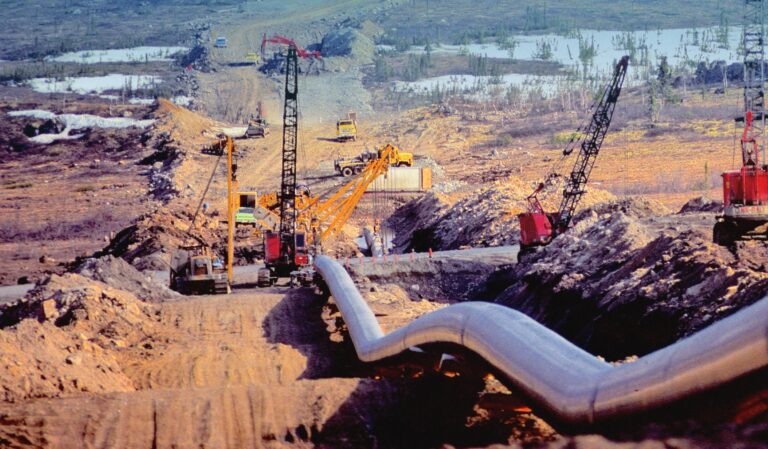
  • Up to 22 days of pipeline replacement or installation activities.

Hilcorp plans to drill one exploration well in 2026 between the platforms known as Anna and Bruce on the northern side of Trading Bay. It plans two exploration wells in the Middle Ground Shoal unit in 2028. But the drilling could come at any time during the five-year period.

The company has requested authorization for “Level B” harassment of 12 species, including the Cook Inlet beluga whale, and “Level A” harassment for nine additional species. The activities are expected to generate underwater noise that could bother marine mammals.

This petition follows a previous NMFS letter of authorization granted to Hilcorp in 2019, which permitted similar incidental harassment of marine mammals during oil and gas activities in Cook Inlet.

Trump tariffs on countries that buy Venezuelan oil may bump price of North Slope crude

5

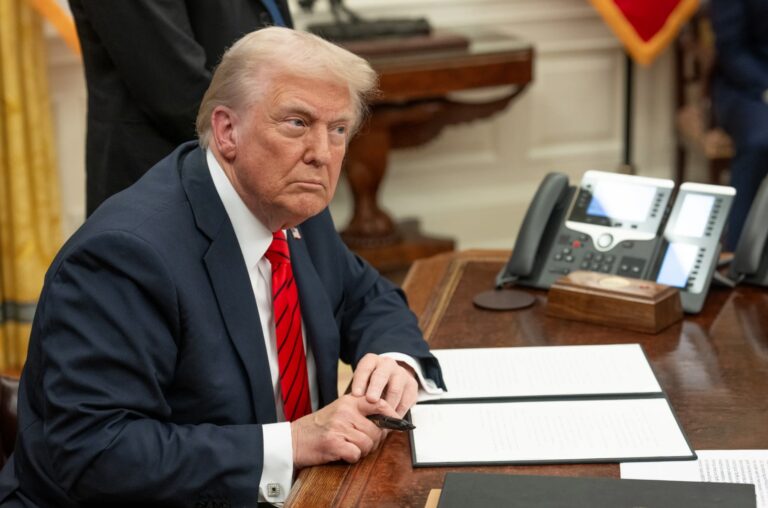
President Donald Trump signed a new executive order aimed at Venezuelan oil and the regime of Venezuelan President Nicolás Maduro.

The order expands previous sanctions and introduces even more tariffs in response to Venezuela’s ongoing destabilizing activities, including infiltration of U.S. borders by the murderous Venezuelan-based criminal gang Tren de Aragua.

This time, the tariffs are going into effect for countries that buy oil from Venezuela.

For Alaska, it may mean the price of Alaska crude oil increases as the threat of tariffs becomes clear to these countries. Alaska’s oil, primarily Alaska North Slope crude, is a medium-to-heavy, sour crude that is not dissimilar to Venezuela’s heavy Merey blend oil. Both compete in markets on the West Coast and Gulf of America Coast, where refineries are set up for heavier grades.

If Venezuelan supply tightens due to sanctions and tariffs, demand for substitutes from Prudhoe Bay could rise, potentially nudging Alaska oil prices upward.

When Trump sanctions first hit Venezuela in 2019, heavy crude prices spiked globally, and US Gulf Coast refiners scrambled for alternatives, briefly boosting demand for Alaska North Slope oil

Venezuela, through its state-owned oil company PDVSA and its subsidiary Citgo, has engaged in oil-related “charitable” shipments to the US. Between 2005 and 2016, under President Hugo Chávez, Citgo ran a heating oil donation program for low-income households in 25 US states, including Alaska, when Sarah Palin was governor. The Citgo program provided free heating fuel to rural Alaska villages, such as 100 gallons per household in Chevak. That initiative was then seen as a political move by Chávez to counter US trade policy.

Trump’s order maintains restrictions first outlined in Obama’s Executive Orders 13692, 13808, 13850, and 13884, all of which target key aspects of Venezuela’s economy, leadership, and financial networks.

The new Trump order authorizes a 25% tariff on all goods imported into the United States from any country that imports Venezuelan oil, directly or indirectly. This provision, to take effect on April 2, grants Secretary of State Marco Rubio the discretion to determine which countries will be subject to the tariff. The tariff would remain in place for a year following a country’s last recorded purchase of Venezuelan oil, unless lifted earlier by the Secretary of Commerce.

China is the largest buyer of Venezuelan oil, but other countries include India, Spain, Cuba, Brazil, and Turkey.

Fairbanks Savannah Fletcher was warned on ethics violations, but flouted the warning

Before Fairbanks former Assemblywoman (and failed state Senate candidate) Savannah Fletcher used a radio spot to promote her views on borough official business without proper disclaimers, she was officially warned that she was in likely violation of the borough’s ethics code.

Fletcher, now resigned from the Assembly, is a prominent attorney known for waging lawfare against Republicans and conservatives in her role as an attorney for the Northern Justice Project.

The borough’s ethics board found that Fletcher spoke in radio spots and offered implied opinions, not acknowledging they were personal opinions. She used phrases like “watered-down climate action plan,” and “do you support the schools?” in which she indicated that a vote against funding would lead to larger class sizes or closed schools.

A public records request shows that Fletcher had been warned by Borough Clerk April Trickey that her radio spots violated the borough’s ethics code, but she persisted in running these spots on KFAR throughout the summer of 2023.

Then-Presiding Officer Aaron Lojewski had made it clear that the radio spots were in no way sanctioned by the Assembly and were not authorized. The Assembly also did not authorize payment of the radio spots, nor were they on the KFAR FCC filings as public service announcements. They were funded by someone, presumably Fletcher herself.

Here’s an example of one of her spots, where she did not disclaim that this was her opinion:

Fletcher was presenting herself up as an Assembly spokesperson, in direct violation of code.This month, the ethics committee found Fletcher violated the ethics code three times. The penalty has not yet been announced.

Kevin McCabe: House resolution protects Alaska’s interests and is not anti-Trump

By KEVIN MCCABE

When House Joint Resolution 11 first came to the Alaska Legislature, it looked like a straightforward recognition of our long, important relationship with Canada — a relationship built on shared borders, economic ties, and mutual reliance. But as we dug into the resolution, two big problems jumped out.

First, why was the Alaska Legislature inserting itself into a federal trade dispute between Canada and the Trump administration?

Second, we were concerned that the resolution would be taken as a slap at the President’s trade policies — policies aimed at protecting American jobs and industries. Whether you agree with his approach or not, the President’s job was to fight for better deals for the country, and Alaska didn’t need to get in the way of that.

Still, HJR11 had momentum. It was clear the resolution would pass, and simply opposing it wouldn’t accomplish anything. So, we took a different route. We amended the resolution to protect Alaska’s interests and give President Trump more leverage in his negotiations with Canada. Two of our amendments passed unanimously — though some social media posts and news articles conveniently left those out of their reports.

HJR11 correctly pointed out Alaska’s deep economic ties to Canada: $596 million in annual exports, $753 million in imports, and over 20,000 Alaskan jobs connected to this partnership. It acknowledged the Alaska-Canada Highway, the Alaska Marine Highway, and cross-border communities like Stewart, BC, and Hyder, Alaska, as vital parts of that relationship. These are facts no one disputes.

But then the resolution veered off track. It acknowledged Canada’s high tariffs on U.S. goods, which led to counter-tariffs imposed by the Trump administration — but then warned these tariffs could “threaten this unique, mutually beneficial relationship.” Those Trump tariffs weren’t just random penalties — they were part of a larger strategy to renegotiate outdated trade deals that hurt American businesses and workers. That strategy worked. The North American Free Trade Agreement (NAFTA) was replaced with the United States-Mexico-Canada Agreement (USMCA), a better, fairer deal for the U.S.

The Alaska Legislature had no business taking a position against that strategy. Trade policy is a federal issue. By criticizing the President’s approach, HJR11 risked making Alaska look like it was siding with Canada over our own federal government. Worse, it could send the wrong message to Washington at a time when we need support for infrastructure, resource development, and other critical priorities.

Knowing HJR11 was going to pass, our idea was to flip the script and make it something Trump could use. We added an amendment that shifted the focus from criticizing tariffs to defending Alaska’s essential transportation links and economic interests. The amendment specifically highlighted the Alaska-Canada Highway’s role in connecting Alaskans to the Lower 48 and raised a critical concern: what happens if Canada retaliates by closing roads?

We didn’t pull this idea from thin air. Canada has a history of using road closures to make a political point, and the last thing Alaska needs is to be cut off from the rest of the country because of a trade fight we didn’t start. Our amendment also pointed to the Shakwak road project — a Canadian infrastructure project funded in part by Alaska. Millions of Alaskan dollars are still tied up in that project. We made it clear: if Canada blocks roads and hurts Alaska, we’re prepared to rethink that funding. Alaska’s money shouldn’t bankroll infrastructure in a country that’s willing to shut down our access for political leverage. Canada is our friend, but even friends occasionally need a reminder of your value.

The amendment passed without a single objection — a win for Alaska and Trump. But, predictably, some skipped over that part when they posted and wrote about the resolution later. They made it sound like the original version passed untouched. Maybe they didn’t understand what we did, maybe they didn’t want to acknowledge it, or maybe they just don’t see the strategy. Either way, the record speaks for itself. We turned a flawed resolution into one that protects Alaskans, strengthens our position in any future trade disputes, and takes Alaska away from Canada as a card they can use against President Trump.

Look, we all had our reasons for voting how we did. We’re not here to drag anyone through the mud. But we stand by our decision. Alaska’s Legislature shouldn’t be in the business of undermining the President while he’s working to secure better trade deals for the entire country.

In the end, HJR11 started as a feel-good resolution that wandered into anti-Trump territory. We rewrote it into something that defends Alaska’s economy, reminds Canada of our leverage, and supports the President’s efforts to negotiate a better deal. Alaska has always valued its partnership with Canada, and that won’t change. But our job — first and foremost — is to protect Alaskans. Our amendments to HJR11 ensure Alaska won’t be a bargaining chip in someone else’s trade war.

Rep. Kevin McCabe is a legislator from Big Lake, Alaska.

Cheryl Markwood: Elon Musk is the patriot Americans didn’t expect, but who we absolutely need

By CHERYL MARKWOOD

In a world of gridlock, waste, and empty promises, Elon Musk stands out, not just as a visionary entrepreneur, but as a patriot who’s taking action when others won’t.

Whether it’s putting Americans back in space, challenging government inefficiency, or defending free speech, Musk is helping restore the spirit of innovation, prosperity, and bold leadership that defines our country.

Through SpaceX, Musk reignited America’s presence in space. After years of relying on Russia to send astronauts to orbit, his company launched them from U.S. soil once again. When American astronauts were stuck aboard the International Space Station with no clear return plan, it was Musk’s reusable Dragon spacecraft that safely brought them home. He didn’t wait for Washington — he solved the problem himself.

As CEO of Tesla, Musk transformed electric vehicles from niche luxury items into mainstream transportation. His drive forced automakers worldwide to innovate, while creating American jobs in manufacturing and clean energy. Through Tesla’s solar and battery technology, he’s also reshaping how we power our homes and communities.

With Starlink, Musk is closing the digital divide by delivering satellite internet to rural and remote areas. In places where traditional providers fail, Starlink brings opportunity, access, and connection — especially for Alaska’s underserved communities.

But what truly sets Musk apart is his courage to take on issues no one else will. In purchasing Twitter (now X), he exposed censorship and bias in Big Tech, reigniting national debate about free speech and accountability. Whether you agree with all his moves or not, his commitment to open discourse reflects one of America’s most sacred values.

Musk has also stepped up where our elected leaders have fallen short — calling out bloated federal spending and supporting ideas like DOGE (Department of Government Efficiency) to tackle the staggering $36 trillion national deficit. He’s asking hard questions, demanding data-driven solutions, and using his platform to advocate for a smarter, leaner government.

And here’s the thing — Elon Musk has nothing to gain from this. He’s the wealthiest person in the world. He doesn’t need to stick his neck out for the American people. But he does it anyway. Not for power or profit, but because he believes in the country that gave him a chance to succeed.

He chose America. He built his life here. He’s giving back, not with platitudes, but with real results. That’s the kind of patriotism we need more of.

Elon Musk may not look like a traditional patriot, but his actions speak louder than any speech or slogan. He is the patriot we didn’t expect, but absolutely need. And it’s time we lead by his example.

Cheryl Markwood lives in Fairbanks, where she owns a small business.

Sen. Dan Sullivan: Another good week for Alaska, a very bad week for Chuck Schumer

By SEN. DAN SULLIVAN

In my address to the Alaska Legislature last week, I described two historic, competing visions for our state.

The first, which I strongly agree with, envisions unlocking the wealth of Alaska to create sustainable, private sector economic growth and good-paying jobs. The other sees our state more as a territory run by an absent federal landlord who protects us and occasionally gives us scraps from the wealth of America’s table to keep us happy. 

This arrogant federal landlord view of Alaska reached its zenith under President Joe Biden with his “Last Frontier Lock-Up”—an unprecedented 70 executive orders and actions exclusively focused on Alaska and shutting down our private sector economy, harming working families, and killing hundreds if not thousands of jobs.

Thankfully, it is a new day in Alaska. With the stroke of a pen, on his first day in office, President Donald Trump started to undo so much of the harmful Biden Lock-Up.

President Trump’s day-one, Alaska-specific executive order (EO) revived the optimistic vision for our state and sent an unmistakable message that unleashing Alaska’s extraordinary resources and creating Alaskan jobs is one of his administration’s top priorities.

This once-in-a-generation EO and the strong support we have from the new administration led to a very good week for Alaska.

Literally as I was delivering my speech, the Department of the Interior released another order—which implements key elements of President Trump’s day-one EO—to lift a decades-obsolete Public Land Order, PLO 5150, long used to hinder major resource projects in our state. This order not only puts ANWR and NPR-A back on the table for responsible development, it also enables the State of Alaska to select the lands along the Dalton Highway Corridor for conveyance, including the land beneath the Trans-Alaska Pipeline. This is huge.

Last week, we also saw important progress behind our massive Alaska LNG Project, which now has the full-throated backing of the President of the United States and his entire cabinet. On Thursday, Taiwan’s state-owned oil and gas company, CPC, signed a letter of intent with the Alaska Gasline Development Corporation to purchase large amounts of clean burning Alaska natural gas. My team and I have worked relentlessly with Governor Dunleavy and his team to achieve this momentum and support.

Finally, the Alaska Department of Natural Resources just recently announced its official North Slope oil production forecast, which estimates an official forecast of nearly 657,000 barrels per day and a high forecast of 931,000 barrels a day by 2034The renaissance on Alaska’s North Slope continues.

Needless to say, it was a very good week for Alaska.

At the same time, National Democrats and Senate Minority Leader Chuck Schumer recently experienced perhaps their worst week in years. Since the passage of the continuing resolution (CR) in the Senate, they have been at each other’s throats. Many House and Senate Democrats have been calling for Schumer to step down as Minority Leader. He even had to cancel his book tour because of security concerns. Was it because of right-wing agitators? No, these threats came from far-left radicals, if you can believe that. 

The Democrats have spent the whole week attacking the Senate Minority Leader, which gives him much less time to continue damaging our country—and, particularly, Alaska. Chuck Schumer is almost certainly the most anti-Alaska Senate Leader in U.S. history, with a particular disdain for Alaska Native people.

But none of this would’ve happened—good week for Republicans; chaos for the National Democrats—had the Senate passed ANY amendments to the CR we were debating on the floor, which ended up being the source of Schumer’s very bad week. In advancing the CR, Republicans showed unusual and critically-important unity. The House passed the CR with only one  Democrat supporting it and only one Republican defector.

Most Beltway prognosticators—and Chuck Schumer—didn’t believe House Speaker Mike Johnson could pull off this daunting task. But he did.

When that bill came over to the Senate, Chuck Schumer had one major goal in mind: bring amendments to the floor and get them to pass. Why? ANY amendment that passed would’ve required the CR to go back to the House. 

The federal government would have shut down, because the House had already recessed and left town; President Trump and congressional Republicans would’ve been blamed; and the Democrats’ complete disarray and civil war would not have happened over the past week.

So, Senate Republicans’ goal was to make sure no amendments were attached to the CR. That included an amendment offered by Senator Rand Paul to codify cuts made by Secretary of State Marco Rubio, in conjunction with DOGE, to USAID—America’s foreign aid agency. 

I agreed with the substance of the Paul amendment. We need to scrutinize waste that clearly exists in our foreign aid programs, and properly put USAID under the clear authority and oversight of the State Department. But the timing of this amendment would’ve been a disaster had it passed. It would have let Schumer off the hook, and put the blame and focus for a federal government shutdown on President Trump and House and Senate Republicans.

Thankfully, the amendment didn’t pass. Some have criticized me for voting against it, but the whole point of my vote had nothing to do with the policy, but everything to do with the practical consequences of it actually passing.

If the CR had not passed, not only would the government have shut down, this would have blocked the largest pay raise for junior enlisted troops in decades, major funding for the US Coast Guard, and other important priorities for Alaska. 

As Alaska’s Senator, I am firmly committed to right-sizing our federal government, tackling the national debt, and working with the Trump administration to unleash Alaska’s extraordinary resource potential. I am also committed to delivering as many “bad weeks” for Chuck Schumer as possible.

Sen. Dan Sullivan has served in the US Senate for Alaska since 2015.

Thirty-three Alaska House members raise white flag to Canada, turn their backs on President Trump

The Alaska House of Representatives passed a resolution on Monday that raised a white flag to Canada in the modest trade war that has developed between the United States and its neighbor to the north. They may have raised a red flag in the White House.

Although none of the House members has the inside track on how President Donald Trump is working the international relationship, House Joint Resolution 11 might be interpreted by the president as a direct rebuke to his efforts to balance trade.

The resolution affirms Alaska’s deep ties with its neighbor and opposes restrictive trade policies.

It is a symbolic surrender to Canada amid rising tensions fueled by Trump’s response to Canada’s high tariffs. The resolution, while meddling in international affairs, does not acknowledge the numerous executive orders that Trump has signed to help Alaska restore its economy.

Introduced by House Majority Leader Chuck Kopp, HJR 11 passed on a vote of 33-4, with two Republicans absent. Only four members voted against it: Rep. Jamie Allard, Rep. Mike Prax, Rep. Bill Elam and Rep. Cathy Tilton. All four are Republicans.

The resolution highlights the “mutually beneficial” relationship between Alaska and Canada, with their shared history, economic interdependence, and mutual defense efforts, such as last summer’s joint interception of Russian and Chinese warplanes near Alaskan airspace. It explicitly calls on the federal government to refrain from imposing measures that would “harm the unique relationship between Canada and Alaska or negatively affect our integrated economies.”

The timing of the resolution’s passage — on March 24 — comes just days before Trump’s 25% tariffs on Canadian goods are set to take effect on April 2.

The Trump Administration may take it as a slap in the face to the president and appears to be raising a white flag to Ottawa, prioritizing state concerns over federal policy.

The House members caved into the threats of British Columbia Premier David Eby, who has said he will impose additional tariffs for any trucks coming from Washington State to Alaska and passing through his province.

The resolution follows a similar measure, Senate Joint Resolution 9, sponsored by Senator Cathy Giessel of Anchorage, which was introduced to the Senate earlier this month.

Before the trade dispute escalated, Canada’s tariffs on U.S. goods varied. Some US goods were allowed into Canada tariff-free, while others, such as milk (up to 270% tariff on US milk), cheese (up to 245% tariff), butter (up to 298% tariff), and chicken (up to 237% tariff), have long had high tariffs.

The current 25% tariffs Canada has imposed on the US are a retaliatory measure that will be administered by the Canada Border Services Agency as a surtax on top of existing duties, targeting goods originating from the US.

Rep. Jamie Allard wrote about her decision to vote against the resolution:

“Today I voted NO on House Joint Resolution 11. President Donald Trump, immediately upon taking office, signed historic executive orders to help Alaska and undo the damage of the prior administration. He singled Alaska among all 50 states out for his help because he knows how much damage was done to us. His executive orders position Alaska and our nation for prosperity and greater national security. Alaska has never had such a president who was so pro-Alaska in all of our state’s history. Sadly, the House turned their back on him and passed HJR 11, which counters our president’s strategic policies. I consider this resolution to be misguided and anti-American, and I surely hope our president does not lose confidence in Alaska’s ability to be a strong and pro-American home of patriots who put America First,” Allard wrote.

In contrast to the white flag raised by the Alaska House, US Sen. Dan Sullivan wrote last week that the president needs to change the law that requires foreign-flagged cruise ships to stop in a Canadian port before continuing on to Alaska.

Congressman Begich’s third bill passes House

He’s been in office for less than three months, and Congressman Nick Begich has gotten his third bill passed by the House.

The US House of Representatives on Monday passed the “DOE and NASA Interagency Research Coordination Act.” Sponsored by Begich and co-sponsored by Congressman George Whitesides of California, who was former chief of staff at NASA, the legislation passed under the suspension calendar with strong support from both parties. It will not cost the taxpayers but it will improve space and energy research.

“With today’s passage of the DOE and NASA Interagency Research Coordination Act, we are solidifying a critical partnership that has powered America’s leadership in space and energy innovation for decades,” said Congressman Begich. “This legislation ensures that two of our nation’s most advanced research agencies work hand-in-hand, driving the next generation of space exploration technologies while also advancing energy and communication systems here at home.”

“As NASA’s former Chief of Staff, I know that research collaboration is critical to the overall goal of advancing America’s leadership in space,” said Rep. George Whitesides. “By formalizing NASA’s partnership with the Department of Energy through bipartisan legislation, we can ensure greater efficiency, oversight, and progress in space exploration and energy innovation.”

For over half a century, the Department of Energy and the National Aeronautics and Space Administration have routinely collaborated on groundbreaking technologies, including Radioisotope Power Systems, nuclear thermal propulsion, and surface power systems. The partnership had never been formally codified—until now.

Key Provisions of the Act:

  • Directs the Department of Energy and NASA to jointly pursue cross-cutting research and development initiatives.
  • Requires the two agencies to submit a report to Congress within two years detailing their collaborative work and future research plans.
  • Ensures that coordination efforts are achieved within existing agency budgets, without authorizing additional spending.

The formalization of this partnership is expected to streamline research efforts, enhance efficiency, and drive technological breakthroughs that benefit both space exploration and energy innovation on Earth. The bill now moves to the Senate for further consideration.

Alexander Dolitsky: Assimilation and acculturation take time and understanding

By ALEXANDER DOLITSKY

I was a presenter at the Juneau–Gastineau Rotary Club in January 2020, speaking on “Several Sanctioned Avenues for Immigration to the United States.” At the end of my presentation, an attendee asked a question: “Alexander, what was the most difficult area of your acculturation and assimilation in the United States?”

“My behavior,” I said without any hesitation. As I answered the question, I instantly observed the reaction of the audience; they expected a different, perhaps more obvious response, such as food, language, customs, economics, politics, appearance, etc.

True, for a newcomer’s adaptation, these socio-economic categories are essential for survival in a foreign environment. Nevertheless, people’s behavior (e.g., temperament, manners, demeanor, gestures, conduct, actions, bearing, comportment, preferences, motivation, ambition, etc.) is the most critical obstacle to acculturation and assimilation into new cultural traditions.

According to prominent American sociologist Joseph Eaton, “Acculturation is the adoption of cultural traits, norms, and customs by one society from another… There is no clear line that can be drawn between acculturation and assimilation processes. Assimilation is the end product of a process of acculturation, in which an individual has changed so much as to become dissociated from the value system of his group, or in which the entire group disappears as an autonomously functioning social system.”

All of us live within a culture. Most cultural descriptions have labels such as “middle class,” “American,” or “Yupik and Inupiat.” These labels often become associated in our minds with certain habitual features. One such attribute for “middle-class Americans,” for example, might be typical foods—hamburgers, hot dogs, and Coca-Cola. Of course, this is a very broad and superficial understanding of culture.

Culture is learned behavior passed from one generation to another—an ongoing process that changes gradually over time as a learned means of survival. In contrast, all animals adapt to their environment through biological evolution. If an animal was well adapted to its physical environment, it prospered. If it was not, it either evolved or became extinct.

As a result of biological evolution and adaptation to the northern environment, for example, the polar bear developed a thick coat and layers of fat to protect it from the Arctic cold. But the Yupik and Inupiat do not possess fur. They wear warm clothing, and in the past, made sod houses to protect themselves from the harsh environment. Their ancient tools and dwellings were part of their culture—their adaptive system that coincides with the polar bear’s fur.

In short, language, religion, education, economics, technology, social organization, art, and political structure are typical categories of culture. Culture is a uniquely human system of habits, moral values, and customs carried by society from one’s distant past to the present.

Acculturation and assimilation into a dominant culture by newcomers is a personal and self-determined process—the right to make one’s own decisions without interference from others. No one can force a newly arrived legal immigrant to accept the cultural traditions, lifestyle, and customs of his or her new country. The newcomer himself must see a socio-economic necessity and benefit in accepting new traditions and values in order ultimately to embrace and accept his or her new culture without external influence.

Normally, a dominant host culture determines and directs a process of acculturation and assimilation for new ethnic minorities. For example, it is expected that core Judeo-Christian values in the United States will be embraced and accepted by newcomers. However, a massive influx of foreign cultures may significantly influence an ethnic landscape, social programs, political dynamics, and core cultural values of a host country, as is evident today with a large and unvetted wave of illegal immigration from all directions to the United States.

In 1978, prior to my departure from Europe to the United States, the French lived in France, Italians in Italy, Austrians in Austria, and other nations, for the most part, in their own native countries. In the last 40 years, however, European countries, with the exception of a few (e.g., Poland, Hungary), have experienced and allowed massive immigration from deeply religious Muslim countries. As a result, it has created cultural chaos, degradation of Judeo-Christian traditions, and incited regional conflicts in Europe that are sadly beyond repair.

I first visited Alaska in 1981 while participating in archaeological field research for graduate school at Brown University. At that time, I was one of few, if not the only, Soviet-born people in Alaska since 1945 (Russian Old Believers arrived in Alaska in the 1960s from Oregon and South America).

In fact, from 1946 to 1986, during the Cold War between the U.S. and the Soviet Union, travel to Alaska was officially closed to Soviet citizens, just as Siberia was closed to American citizens. There was an exception for select scientists visiting both places for research-related purposes under the auspices of the International Research Exchange Board. In 1981, I was already a permanent resident of the United States, with the green light for traveling to Alaska.

Then, as a recent political refugee from the Soviet Union, my behavior was still typically Russian—direct, impulsive, critical, opinionated, and emotional (certainly, a very general stereotype of the Russian character). Fortunately, my sponsors and hosts in Alaska, Charles Holmes from Anchorage and Glenn Bacon from Fairbanks, were trained and professional anthropologists; they were able to understand my behavior and occasional awkward expressions cross-culturally and guide me through rough waters and unfamiliar landscapes.

After 40 years, Charles and Glenn are still my good and loyal friends. From the mid-1980s onward, Bill Ruddy, Robert Price, Wallace Olson, and Tom Hanley of Juneau played a similar role in my life.

On one occasion, a humorous cross-cultural incident took place in Fairbanks in the summer of 1981. Glenn’s in-laws invited me to their house for dinner. To experience Russian cuisine, they asked me to cook some traditional Russian meals. So, I managed to cook borshch (cabbage and beet soup) and authentic Salad Olivye (boiled potatoes cut in cubes, green peas, boiled eggs, cooked carrots cut into cubes, cubed ham, olives, onion, large pickles cut into cubes, and ½ cup of mayonnaise—all mixed together).

After dinner, I played the guitar and performed several Russian songs for everyone. At some point, Glenn’s mother-in-law approached me and confessed, “I had always envisioned Russians as tall, dark, with shaking hands. But you are different.” I only smiled in response and took her description of a “Russian man” without offense. After all, I was the first Russian she had ever met, except for the demonic Russian characters portrayed in Hollywood.

Indeed, the process of acculturation and assimilation can be long and turbulent for many legal newcomers. It is critical, therefore, for American society to be selective and yet inclusive, tolerant, and educated in cross-cultural communication in welcoming legal newcomers to our diverse and exceptional country.

Alexander B. Dolitsky was born and raised in Kiev in the former Soviet Union. He received an M.A. in history from Kiev Pedagogical Institute, Ukraine, in 1976; an M.A. in anthropology and archaeology from Brown University in 1983; and was enroled in the Ph.D. program in Anthropology at Bryn Mawr College from 1983 to 1985, where he was also a lecturer in the Russian Center. In the U.S.S.R., he was a social studies teacher for three years, and an archaeologist for five years for the Ukranian Academy of Sciences. In 1978, he settled in the United States. Dolitsky visited Alaska for the first time in 1981, while conducting field research for graduate school at Brown. He lived first in Sitka in 1985 and then settled in Juneau in 1986. From 1985 to 1987, he was a U.S. Forest Service archaeologist and social scientist. He was an Adjunct Assistant Professor of Russian Studies at the University of Alaska Southeast from 1985 to 1999; Social Studies Instructor at the Alyeska Central School, Alaska Department of Education from 1988 to 2006; and has been the Director of the Alaska-Siberia Research Center (see www.aksrc.homestead.com) from 1990 to present. He has conducted about 30 field studies in various areas of the former Soviet Union (including Siberia), Central Asia, South America, Eastern Europe and the United States (including Alaska). Dolitsky has been a lecturer on the World Discoverer, Spirit of Oceanus, and Clipper Odyssey vessels in the Arctic and sub-Arctic regions. He was the Project Manager for the WWII Alaska-Siberia Lend Lease Memorial, which was erected in Fairbanks in 2006. He has published extensively in the fields of anthropology, history, archaeology, and ethnography. His more recent publications include Fairy Tales and Myths of the Bering Strait Chukchi, Ancient Tales of Kamchatka; Tales and Legends of the Yupik Eskimos of Siberia; Old Russia in Modern America: Russian Old Believers in Alaska; Allies in Wartime: The Alaska-Siberia Airway During WWII; Spirit of the Siberian Tiger: Folktales of the Russian Far East; Living Wisdom of the Far North: Tales and Legends from Chukotka and Alaska; Pipeline to Russia; The Alaska-Siberia Air Route in WWII; and Old Russia in Modern America: Living Traditions of the Russian Old Believers; Ancient Tales of Chukotka, and Ancient Tales of Kamchatka.