Saturday, December 20, 2025
Home Blog Page 1650

‘They be going down at Barter Town’

12

PALMER RESIDENTS TAKE TO FACEBOOK TO FIGHT CRIME

Barter Town, Alaska.

It sounds like the latest Alaska-based reality show. It’s actually a compound not far behind a well-known mattress store on the Palmer-Wasilla Highway, and it’s behind 8-foot fences that patchwork their way down one side of Richmond Lane.

From the street it looks a bit unkempt, but not any more so than many other places in Alaska.

Screen shot from the movie Mad Max.

In the movie Mad Max, Barter Town is a remote commerce outpost situated in the midst of the wasteland of the future. The original script describes it as a crowded square where “blacksmiths and wheelwrights hammer away at their trade, merchants tout their wares and men are trading. Chickens for grain, grain for alcohol, alcohol for sex. Directly in front of Max is a signpost which directs traders to the various delights and services of Bartertown: PARADISE ALLEY, GARDEN OF PLEASURE, BLACKSMITH, SMALL ANIMALS.”

In Palmer, Alaska, Barter Town on Richmond Lane is the scene of a neighborhood uprising over crime that they say has gotten out of control. The locals have taken to Facebook to inform each other about the possible nefarious activities happening nearby.

Cars come and go late at night down Richmond Lane, it’s reported on the Facebook group Stop Valley Thieves. Trucks pulling trailers full of stuff idle up to the gate. Things get unloaded from duffle bags. Lots of duffle bags, especially between 1-3 a.m.

Drone footage accessed by Must Read Alaska shows the extent of materials strewn across the scruffy lot. Either someone has a hoarding problem or there’s a lot of miscellaneous stuff for sale. Maybe your stuff.

What was a quiet family neighborhood four years ago has spiraled into a place where nearby residents sweep their driveways for spent drug needles, keep their kids out of the front yards, and worry about the passed-out druggies who sometimes  slump over the wheel of a car in front of the gated compound on the corner. There are fights on the street over merchandise and shouted demands for payments that are evidently not being honored.

If you’re hoping to go recover your stolen stuff in the Valley, you might want to head to Barter Town. On the other hand, you might not. No one really knows what is happening behind those fences. But the neighbors don’t feel safe.

A person in handcuffs is escorted by State Troopers on Richmond Road in Palmer, in front of a fenced-compound known as Barter Town.


Barter Town is a company known to the State of Alaska under license number 1055789. The man who appears to own and operate it is known to the Alaska Courts system for a handful of misdemeanors and is out on bail for a June arrest. He will face trial in November for intent to commit burglary, a Class A misdemeanor. More likely, he’ll cop a plea at his Oct. 16 pretrial conference.

Stop Valley Thieves members have had an eye on the Richmond Lane situation for months. The group’s administrators say that State Troopers know about what’s happening, but are under-staffed to make a case that will stick.

But they’re not ignoring it either. Someone in the Facebook group, which has over 15,600 members, posted a video of a man they know as Nicholas T. White being hauled off in handcuffs on Oct. 4 after a group of Troopers swarmed the gates. No charges have been filed yet, according to court records.

The person in handcuffs may or may not be White.

Kyle Muslin, who lives across the street, says it is White. Muslin has been documenting him for months.

Richmond Lane a place where he and his family no longer feel safe. His daughter sleeps with him and his wife in their bedroom, because at night things get pretty sketchy on that part of Richmond.

One day last summer, 30-40 lawnmowers showed up at the site, he said. Four-wheelers come and go. Chainsaws. Tools. Welding equipment. Weed-wackers.

And “dufflebags and dufflebags and dufflebags,” he said.

“The troopers told us the only way we can do anything is if someone identifies their stolen stuff,” Muslin said.

Doing so would mean going inside the fence, however. That’s private property.

Muslin keeps his security cameras rolling. When Must Read Alaska reached him this week, he was finishing up the installation of yet another camera. He has started posting photos of the comings and goings on the Stop Valley Thieves page, at times using the hashtag #ShutDownBarterTown.

At this point, he’s on a mission, and where the Troopers once thought he was just a disgruntled neighbor, they now text him notes of encouragement to keep up the pressure.

Like many others in the Stop Valley Thieves group, Muslin doesn’t hide his identity under a pseudonym. He and the others say it’s time for the community to stand up to the thieves and drug dealers. They’re taking the Crime Stoppers model to the next level: Social media.

But they also worry that at some point, some law-abiding citizen is going to get hurt. Several in the Facebook group, including himself, have been threatened. A driver tried to run him over with a truck in June. Another threatened him by saying he and his family would not “wake up in the morning.”

“I’m afraid for our safety every day,” Muslin said. “We have sort of put ourselves in the crosshairs. But there’s either going to be a gun fight right outside our doors or someone is going to shoot me, so I’m stuck with this. We couldn’t even sell our house if we tried. Who would buy it, with that going on?”

Some members of the Facebook group keep track of specific people, said Vicki Wallner, one of the group administrators. They video and photograph them, sometimes in the act of what appears to be a crime, and post the scenes on Stop Valley Thieves.

The Facebook vigilantes just share information. But even Wallner worries that someone will take the law into their own hands as the frustration with crime grows.

It’s not just Richmond Lane. Other places in the Valley draw similar concern by neighbors, she said.

There’s the house on Fairview Loop with a lot of junk cars and junkie types, and there’s a place known to locals as “The Compound,” where scary stuff goes on – people sleeping in abandoned cars on the property. Another place is described by critics as the “drug compound gravel pit crap hole.”

Others identify a sketchy house on Homebuilt Circle. The group is naming names of people they say are dealing drugs, using drugs, breaking into houses and stealing cars. When one of the suspects is arrested, they celebrate it and post the details of the arrest, along with their unfiltered opinions.

“They be going down at Barter Town!” posted one member in response to recent activity on Richmond Lane.

Other crime-stopper groups have sprung up on Facebook include a similarly named “Stop Valley Thieves Uncensored.” It has over 4,100 members. “Stolen in Alaska” has nearly 26,000 members. “Stolen Vehicles of Alaska” is a more narrowly focused self-help group. And a search found a dozen other groups dedicated to stopping theft and returning stolen items.

Where law enforcement has fallen short in Alaska, the Facebook community is stepping in, and facing personal peril as they take on criminals in a war they feel like they’ve been losing for too long.


MEETINGS IN VALLEY FOCUS ON CRIME

Meetings in the Mat-Su Valley are scheduled for coming days to discuss crime in advance of the legislative special session on Oct. 23, which will take up some criminal justice reform measures:

Oct. 10, 7:30-9:30 pm Alaska Republican Assembly Forum hosts “SB 91/ SB 54 Crime for Dummies” at the MTA Building, 480 Commercial Drive, Palmer, Alaska, downstairs. Guest speakers include Rep. Lora Reinbold, Stop Valley Thieves Administrator Vicki Wallner, Candidate for Lieutenant Governor Edie Grunwald, AKRA President Justin Giles, and Steve St. Clair.

Oct. 17, 5:30-7 pm, Talkeetna listening session with Sen. Mike Dunleavy at Upper Susitna Seniors, 16463 E. Helena Drive, Talkeetna.

Oct 18, 6-8 pm Public safety listening session with Sen. Mike Dunleavy at Teeland Middle School, cohosted by Rep. Cathy Tilton.
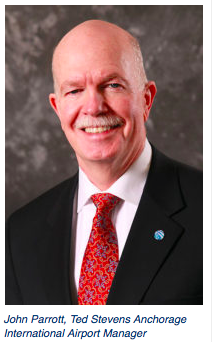
Parrott out at Ted Stevens Airport

3

The Governor has relieved John Parrott of his duties as the director of the Ted Stevens International Airport.

The announcement has not been made publicly, but has been sent to key individuals in the state. Must Read Alaska will update this news report when more information is available.

Deputy Commissioner John Binder will take over as Interim Executive Director until the governor and Transportation Commissioner Marc Luiken make a new appointment, according to our sources.

Parrott is well-regarded in the industry and has won many awards for his management of the airport. He was presented the Airport Executive of the Year award by the Northwest Chapter of the American Association of Airport Executives in 2014. Parrott had been with the Ted Stevens Anchorage International Airport since 1998, taking over the Airport Manager’s position in 2008.


What’s in Monday’s newsletter? A peek

2

Do you get the Must Read Alaska Monday newsletter in your inbox? Sign up at the right side of the home page for news that is written and curated for politicos.

Every few weeks we post some of the Monday newsletter here, and we welcome you to subscribe to it. It’s free. You can unsubscribe anytime.

Here’s a portion-control slice from the Oct. 9, 2017 newsletter:

Good morning Alaska … First big snow in Fairbanks tonight …6.6 magnitude quake in the Rat Islands area last night … Charlie Pierce and Linda Hutchings headed to an Oct. 24 runoff for Kenai Borough mayor … But first …

WHY, HARVEY!!!

Where to start with the Democrats and their little Harvey Weinstein problem?

Just a donor? Only an entertainment executive? And why didn’t Saturday Night Live even touch the subject? (SNL creator Lorne Michaels said they didn’t go after Weinstein because “It’s a New York thing,” he told the Daily Mail.)

It’s a Hollywood thing, too: A 2015 survey of Oscar acceptance speeches show that Weinstein was thanked more frequently than God.

As for the Democrats he donated to — including Hillary Clinton — as they re-gift his money to Emily’s List, isn’t that the same as keeping it?

The Dems can’t have it both ways. (They will always try.)


NATION

20-WEEK ABORTION BAN

The U.S. is one of just seven countries that allow abortions after 20 weeks, which is the midpoint of a child’s development in the womb. Currently, states can decide to ban abortions after a certain point in the pregnancy, usually 20 to 24 weeks. H.R. 36 would prevent states from approving abortions after 20 weeks. It is also called the “Pain-Capable Unborn Child Protection Act.” Exceptions are for rape, incest, life of mother. It seems to be an improvement.

After all, which senator wants unborn children to feel the pain of their abortion?

WAIT…WHAT? BIRTH CONTROL IS ONLY $9 A MONTH?

On Friday, the Trump administration cleared the way for all companies — profit or nonprofit — to stop paying for birth control through the insurance plans they offer.

The question the feminists are asking: Why are you taking away our right to birth control?

The question the rest of us ask is: When did it become an entitlement?

At Walmart, birth control costs $9 a month, the cost of two pumpkin spice lattes.

At Amazon you can get over a hundred condoms for less than $15. (We checked.)

Cheap birth control options to forward to your friends of childbearing years.

HAPPY INDIGENOUS TO THE PLANET DAY

Columbus was bad to the bone, as explorer-warriors were, but there have been plenty who were worse. Happy Historical Accuracy Day.

Must Read Alaska’s recommended reading is on slavery in pre-contact Americas by historian Tony Seybert.

STATE

BETTING OUR SUBARU ON THIS …

… That Tara Sweeney is named the head of the Bureau of Indian Affairs during the AFN annual convention, which is Oct. 19-21 at the Dena’ina Center in Anchorage.

Tara Sweeney is the Executive Vice President of External Affairs for Arctic Slope Regional Corporation, where she has been responsible for all facets of the corporation’s media and government relations and communications.

ASRC is the largest locally owned and operated business in Alaska, with revenues in excess of $2 billion and more than 10,000 employees worldwide, according to its website.

Sweeney lived most of her life in rural Alaska, graduating from Barrow High School in 1991. She attended Cornell University in Ithaca, New York and graduated with a Bachelor of Science degree in Industrial and Labor Relations. She and her husband have two children. Until recently, Kevin Sweeney was state director for Sen. Lisa Murkowski. He had served on and off the senator’s staff for many years.

Secretary of the Interior Ryan Zinke will speak by teleconference to AFN on Oct. 19 during the morning session. This might be the time at AFN to pay attention: Alaska has not had one of our own heading the BIA since Morris Thompson, 1973-76 (hat tip Jmark for the correction).

WHO HEADS GOVERNOR’S DC OFFICE?

Craig Fleener, who was once Gov. Bill Walker’s choice to replace Kip Knudson as the director of the DC office of the Governor, is now simply known in the cabinet as “Arctic Policy” on the governor’s cabinet page.

That is still a big portfolio, but it is not as big as the one he had last year.

Fleener has bounced around jobs in the administration since giving up his hopes of being Gov. Walker’s running mate back in September of 2014. The reward for allowing the Democrats to remove him from the ticket and replace him with Byron Mallott?  A job for four years, with no deliverables, no questions asked. Word is that he is still in D.C., but the Governor’s webpage says he lives in Anchorage.

WHO HEADS GOVERNOR’S CAMPAIGN? HIS AIDE JOHN-HENRY, OF COURSE

The governor’s office and Ship Creek Group are now fully integrated, as his aide John-Henry Heckendorn has a toehold in the official capacity, campaign capacity, and with the group that is managing the Walker-Mallott campaign. It all looks perfectly legal, the kind of arrangement that threads the ethics needle. We report.

SHIP CREEK GROUP GEARING UP CAMPAIGN FOR GENDER-FLUID BATHROOMS

Speaking of Ship Creek Group and the governor, the group has opened up a political action committee to push for gender-neutral bathrooms in Anchorage. That question — can anyone use any bathroom or locker room — will be on the April 3 municipal ballot.

The chair of the group “Fair Anchorage No On Prop 1” (FANOP-1) is Joshua Decker of the ACLU, and the treasurer is Paula DeLaiarro of Ship Creek Group, who is also treasurer for Walker-Mallott.

Others on the FANOP-1 bathroom brigade are deputy treasurers Laura Herman, Rashika Rakibullah, Casey Reynolds, and Andrea Zekis — all of ACLU, Grant Johnson of Yuit Communications, Samuel Ohana, a transgender activist, and Michael Burke, who is likely an Anchorage Episocopalian priest.

The group got early money from LGBTQ advocates Freedom for All Americans (nearly $27,000 including staff time and the fees for Blue State Digital, a Democrat-focused campaign software); former Anchorage School Superintendent Carol Comeau ($500); Planned Parenthood of Northwest & Hawaii ($1,200 staff and phone bank); National Center for Transgender Equality ($2,000); Human Rights Campaign ($2,000 in services); and the ACLU (over $17,000 that included money, lots of pizza, and other food). Who’d we miss on the FANOP-1 bathroom brigade?

NORTH KOREA FILLET?

The evidence is strong that North Korean forced labor is processing Alaska-caught seafood. Will lawmakers take on that problem or is it just too nuclear? We looked closer.

PEBBLE’S NEW PLAN IS…

Giving the EPA exactly what they asked for … we’ll see how that goes for Pebble.  Hope for the best but don’t hold your breath.

FORMER DISPATCH EDITOR NOW QUITE THE TWEETER

Twitter is just too easy for former ADN Editor Pat Dougherty, who is now blaming Trump for the Las Vegas massacre and approving of Shannyn Moore’s sick rants. These kind of tweets ought to make all current ADN reporters just cringe:

LOCAL

ANCHOR-CRIME REPORT

If you were not able to make the “crime-is-outta-control” meeting at Loussac Library on Saturday, you missed some lively public comments. Reps. Charisse Millett, Cathy Tilton and Geran Tarr attended as the Anchorage Assembly spent four hours listening to testimony from fed-up Anchorage residents. Gubernatorial hopeful Scott Hawkins was in the audience.

The Assembly will consider two resolutions on Tuesday: One in support of SB54, which would revise SB 91. The other would support the repeal of SB91, and encourage a new bill to heighten the penalties for murder, sex offenses, and expand the rights of victims.

Weigh in by emailing all Assembly members at [email protected]. But first, come up to speed by reviewing the agenda for the Oct. 10 meeting.

LOCAL ELECTION RESULTS

It looks like it’s Brower vs. Brower in Barrow, as the mayor of the North Slope Borough may be decided in a runoff. Back in June, voters went to the polls to decide on a replacement for Charlotte Brower, who was ousted by recall in April. Now it’s Harry vs. Frederick Brower.

Other results from around the state.

ELECTION WE MISSED

Skagway’s Dan Henry, in spite of a conviction for evading federal taxes, is back on the Skagway Assembly, winning by five votes. Henry had served for 19 years on the Assembly. Also, two-term mayor Mark Schaefer was beat by Monica Carlson, who is the director of tour operations for Skagway Street Car Co.

WILLIAM WEATHERBY IS BACK

Recent filings of letters of intent include Republican Sara Rasmussen for District 22 (now occupied by stealth Democrat Jason Grenn), and William Weatherby, who challenged Bryce Edgmon two years ago and appears to be ready to do so again. Edgmon won District 37 in 2016 with an 18 point advantage, 59 by 41 percent, but Weatherby ran a heck of a campaign and impressed many. Including this writer.

POLL IN THE FIELD

A pollster was calling this week asking opinions of about Jim Minnery, Jerry Prevo, Mayor Dan Sullivan, ACLU, Alaska Family Council, Mayor Ethan Berkowitz, former Sen. Mark Begich and the Anchorage municipal bathroom initiative. It was a long questionnaire.

MAYOR OF HOMER COMMENDS SEATON

Here’s what the mayor of Homer plans to sign tonight. It speaks for itself:


Quote of the Week: Attorney General gives thumbs up to banishment

9

“We recognize that it presents constitutional challenges. But I don’t think it’s the state’s place to approve or disapprove of anything.”

– Attorney General Jahna Lindemuth, relinquishing her authority as the State’s top law officer and allowing villages to eject people from communities as they choose in a practice known as banishment.

The State will stay out of the question of banishment, Lindemuth told the Alaska Dispatch News.

Tribal leaders who are coping with drug dealing and illegal alcohol are banishing people in record numbers from villages across rural Alaska, which violates the constitutional protections of due process, and has other constitutional problems.

Critics are wondering if Lindemuth has just sanctioned anarchy in rural Alaska.

[Read: Banishment in the name of tradition]

Region 10 EPA director candidates: Hladick or Rydell?

12

Alaskans watching how the Trump Administration populates key positions have been waiting to learn who the president’s pick is for the Region 10 director for the Environmental Protection Agency.

Region 10 covers the Northwest and Alaska.

The current names being considered are from Alaska, but they couldn’t be more different:

One is a career government official who works for Gov. Bill Walker, a Democrat-controlled governor who has never indicated support for the president but who has stayed safely on the fence.

The other is an author/radio show host/avid hunter and outdoorsman who has been on board with President Donald Trump from the beginning and who would support EPA Administrator Scott Pruitt.

CHRIS HLADICK

Commissioner of Commerce and Community and Economic Development Chris Hladick was recently spotted in Washington, D.C., where he traveled as part of Gov. Bill Walker’s healthcare policy team to work on preserving Obamacare.

While in D.C., he is said to have interviewed with the Presidential Personnel Office.

Hladick oversees six divisions and seven corporate agencies, and serves on the boards of the Alaska Housing Finance Corporation, Alaska Marine Pilots, Alaska Railroad Corporation, and Alaska Seafood Marketing Institute. Commissioner Hladick also serves on the National Marine Protected Areas Federal Advisory Committee’s Arctic Working Group and on the Arctic Council’s Arctic Marine Cooperation taskforce.

In 2011, Hladick was appointed by the Alaska Legislature to the Alaska Arctic Policy Commission. He is also active with the Alaska Municipal League and the Southwest Alaska Municipal Conference.

Commissioner Hladick came to the Department of Commerce, Community and Economic Development from Unalaska where he served as city manager for 14 years. He was directly responsible for the day-to-day operation of city services and for the city’s long-term planning goals. Under his leadership, the city built the Carl E. Moses Boat Harbor, renovated the Spit Dock, built the Coast Guard Dock and a new diesel powerhouse, laid asphalt on previously unpaved streets, and completed the elementary school. In 2011, he was selected by the Alaska Municipal League Board of Directors as the Municipal Employee of the Year.

Previously, Commissioner Hladick served as city manager in Dillingham, Alaska, and as the city manager and public works director in Galena, Alaska. He is not registered as either a Republican or Democrat, but as an “other” on his voter record.

RICK ‘RYDELL’ GREEN

The other candidate is Rick Green, also known to radio listeners at Rick Rydell for his popular morning drive-time radio show in Anchorage on KENI radio.

Green began his radio career in his teens and continued it after moving to Anchorage in 1990. He is an avid fisherman and hunter who fills a couple of freezers every fall with wild meat and fish that he has harvested himself.

He was named “Best Morning Show” by The Oregonian in 1988, “Best Comedy Series” in 1994, “Best Radio Show” in 2005, and “Most Uniquely Alaskan Radio Show” in 2006 by the Alaska Broadcasters Association.

Rydell-Green was named Alaska Republican Man of the Year for 2004 by the Republican Party of Alaska.

Updated: Rydell-Green was a project manager for Bristol Environmental and was actively involved with and employed by other environmental groups for many years, according to those who know him. He was elected to the Anchorage Fish and Game Advisory Committee, and served a three-year term.

Gov. Walker has pushed for Hladick’s appointment, and Sen. Lisa Murkowski is also said to be leaning toward the Hladick camp. Must Read Alaska has learned that Congressman Don Young would be happier with Rydell-Green and that Sen. Dan Sullivan is somewhere in the middle.

However, the leanings of our congressional delegation are likely to remain unofficial.  All three know and respect that it is ultimately the president’s call.

Job opening: Senate District ‘I’ seat in Anchorage

2

Sen. Berta Gardner announced she is retiring after the 2018 session.

Gardner represents District I, which is a stretch of liberalism in Anchorage that makes it likely that Elvi Gray-Jackson, who was on the Anchorage Municipal Assembly until her term ended this year, will make a bid for that Senate seat.

[Read: Elvi Gray-Jackson files, but Berta Gardner doesn’t]

Gray-Jackson filed earlier this year a letter of intent with the Alaska Public Offices Commission to run for an unspecified state seat. She lives in the east part of the Rogers Park neighborhood of Anchorage, an area also represented by Rep. Harriet Drummond.

Sen. Berta Gardner received an award from the Alaska Democrat Party during a gala on Saturday night, where she announced her retirement.

Gardner was first elected to the Senate in 2012, after serving in the House, representing District 24 from 2005 to 2013. A Democrat, she is the Senate minority leader.

Gray-Jackson is also a Democrat and has been chosen by the party to take Gardner’s place.

Who will take over as Senate Minority Leader after Gardner retires?

The choices are few: Sen. Bill Wielechowski comes to mind as the most experienced, although some say he has his eye on the governorship, if Mark Begich does not jump into that race.

Other members of the minority include Dennis Egan of Juneau, Tom Begich of Anchorage (who recently replaced Johnny Ellis), and Donny Olson, of the Seward Peninsula, who tends to join Republicans at times and is not the Democrats’ most reliable choice. Olson is, however, the only Native member of their caucus and is the most senior member.

Gardner was honored on Saturday night at the Democrat’s gala in Anchorage for her years of service. She has told her colleagues she wants to spend more time with her family.

Senators Berta Gardner and Dennis Egan in January, 2017.

The district was drawn as a solidly Democrat stronghold during the most recent redistricting effort after the 2010 U.S. Census. Why the Democrats did not ask Reps. Andy Josephson or Harriet Drummond to run is interesting. Drummond’s health is in question, and Josephson voted against SB 91, the only Democrat in the House to do so.

“The Democrats have replaced a doctrinaire liberal with a fanatic leftist, somewhere to the left of Che Guevera,” said Tuckerman Babcock, chairman of the Alaska Republican Party. But first, she has to win the election.

Cast off Columbus Day? Read all about it first

1

MUST READ ALASKA HAS A READING LIST

Columbus Day — Monday — is when we won’t be able to bank or visit our favorite federal bureaucrats.

Thanks a lot, Christopher Columbus.

The feds will close in honor of an explorer who did not actually discover the Americas so much as he bumped into some inhabited islands and lands already filled with people, some of whom had developed complicated cultures, languages, and even had a written record.

Leaving aside the unheralded accomplishments of Leif Ericsson and Polynesian explorers, readers know that Columbus Day is marked by sales fit for the bank accounts of the federal workforce. No one else marks the day but banks, which follow the feds.

In Alaska, Gov. Bill Walker went trendy a couple of years ago and signed a proclamation changing the recognition to “Indigenous People’s Day,” in honor of the folks roaming and abiding here long before Columbus made landfall.

Except that Christopher Columbus never made landfall in North America. He landed on Hispaniola, where today two countries coexist: Haiti and the Dominican Republic.

Columbus made four trips, beginning in 1492 with the three ships we know as the Nina, Pinta, and Santa Maria.

The brutish navigator explored the Central and South American coasts. His explorations were historic for a Spanish kingdom that celebrated exploration and expansion.

As with many of his time, Columbus was not a benevolent ruler of the islands he governed. In fact, Spain brought him up on cruelty charges and he lost his post when it became known what he was up to in the New World.

Columbus was, by today’s standards, a monster. But so was Genghis Khan and his Mongols, and Uganda’s Idi Amin, centuries later. So is Isis today (caution – graphic images).

History is replete with monsters not worth celebrating, but we remember them for a while as we pass along the lore of our time on earth.

Gov. Walker wrote, “Alaska is built upon the homelands and communities of the Indigenous Peoples of this region, without whom the building of the state would not be possible.”

Walker said in his word-salad proclamation that 16 percent of Alaskans have indigenous heritage, and that “the State opposes systematic racism toward Indigenous Peoples of Alaska or any Alaskans of any origin and promotes policies and practices that reflect the experiences of Indigenous Peoples, ensure greater access and opportunity, and honor our nation’s indigenous roots, history.”

There’s no consensus on what the “experiences of indigenous people” means, but tribes of the Pacific Northwest also engaged in slave trading and ownership, like Columbus did on Hispaniola. Tlingits were known to trade their daughters for blankets. Chief Sealth (Seattle), a legendary warrior and slave owner, wiped out the Chimakum tribe near Port Townsend around 1847. That was genocide.

History is full of inconvenient truths, but this one is unavoidable: The Americas were not a Garden of Equal Opportunity Eden before European stock arrived. When politicians pretend that pre-contact tribes were more noble than the European stock that followed, they bow to myth and legend and try to bend race politics into proclamations.

The historical record doesn’t support celebrating Columbus Day, nor does it support Indigenous People’s Day as a passive-aggressive snub of Columbus’ European ilk.

Better to call it “Historical Accuracy Day,” a day when all Americans can wag their fingers at each other as they correct the timeline of mankind’s hustle and bustle of discovery.


Must Read Alaska’s reading list for Columbus Day (suggestions welcome):
  • Seven Myths of the Spanish Conquest, by Mathew Restall.
  • Conquering Paradise: Christopher Columbus and the Columbian Legacy, by Kirkpatrick Sale
  • 1491: New Revelations of the Americas Before Columbus, by Charles Mann
  • 1493: Uncovering the World Columbus Created, also by Charles Mann
(Alaska Day, on Wednesday, Oct. 18, is a legal holiday for Alaska State workers, and marks the anniversary of the formal transfer of the Territory of Alaska from Russia to the United States in 1867. We’ll get to that later.)

Rogoff back on Arctic circuit as publisher of ‘Arctic Now’

4

HOW DID THE EAST COAST HEIRESS MAKE OFF WITH A PUBLICATION?

By CRAIG MEDRED
CRAIGMEDRED.NEWS

Less than a month after leaving Alaska’s largest news organization behind in federal bankruptcy court, the estranged wife of billionaire financier David Rubenstein is hard at work rebranding herself on the global stage.

Billed these days as “Publisher, Arctic Now,” Alice Rogoff Rubenstein is scheduled to be a major player at the Arctic Circle Assembly in Reykjavik, Iceland, Oct. 13-15. Originally on the agenda only to introduce Sen. Lisa Murkowksi, R-Alaska, Rogoff’s role has been significantly expanding in recent days.

All indications are that she is battling her way back into action with the gusto of “Yosemite Sam,” as she was known to the staff of AlaskaDispatch.com back in the day. For a brief period in time, Dispatch was Rogoff’s one, shining, business success even though it never managed to turn a profit.

Still,  Columbia Journalism Review in 2010 labeled the small, internet start-up a “regional reporting powerhouse.”

“Since its inception in 2008, Alaska Dispatch, the state’s sole online-only news organization, has been on the forefront of reporting on climate change, issues facing rural Alaska, politics and the oil industry, and its staff has won numerous awards for doing so,” The McClatchy Company of California echoed in an April 24, 2014 press release announcing it had sold the Anchorage Daily News/ADN.com to Rogoff for $34 million.

ADN was at that time the 49th state’s by-far dominant news source.  And Rogoff rode its influence to a peak when she hosted President Barrack Obama for dinner at her posh Campbell Lake home in the late summer of 2015. 

Less than two years later, the $34 million ADN was reporting losses of $500,000 a month, and Rogoff and her attorney were in bankruptcy court asking to leave about 200 creditors stuck with about $2 million in bad debt so she could escape from a major business fiasco. 

The courts eventually turned the ADN over to the Binkley Company, a Fairbanks family of long-time Alaskans who said their only goal was to save the state’s largest news organization. They paid $1 million. The money went to Northrim Bank, which Rogoff still owed $10 million on a loan that helped her buy the ADN.

Small creditors were left with nothing, and major job cuts soon came at ADN as the Binkleys took the painful but necessary steps to stabilize a company badly bleeding money. 

[Read more at CraigMedred.news]

Senate would serve Alaska well by repealing Obamacare

1

By JONATHAN INGRAM
COMMENTARY

Since its implementation, ObamaCare has wreaked havoc on Alaska, leading to higher premiums, worsening access to care, more dependency, and skyrocketing spending. The Graham-Cassidy-Heller-Johnson proposal in Congress would give Alaska a sensible way out of the ObamaCare mess, helping unwind a disastrous Medicaid expansion while lowering premiums for Alaskan families who buy insurance on their own in the individual market.

According to data provided by the U.S. Department of Health and Human Services, premiums in Alaska’s individual insurance market have more than tripled under ObamaCare, growing from $4,100 per year in 2013 to a whopping $12,500 per year in 2017, and eventually forcing the state to create a state-funded reinsurance program to keep the insurance market out of a death spiral.

Skyrocketing premiums have also led to declining enrollment.

In March 2015, more than 21,000 Alaskans had enrolled in plans through HealthCare.gov. But by February 2017, that enrollment had dropped by a third, dwindling to just 14,000 individuals.

According to state data, the number of Alaska Natives and American Indians enrolled in the individual insurance market have dropped by nearly 45 percent since 2015. And even those who sign up for plans have no real choices. In 2017, just one insurer sold health insurance plans in the state’s individual market.

But it’s not just families’ budgets that are busting—the state budget is at its breaking point as well. When Gov. Bill Walker unilaterally expanded Medicaid under ObamaCare, ignoring a clear statutory prohibition enacted by the legislature, he promised that no more than 27,000 able-bodied adults would ever sign up. But today, just two years after enrollment began, more than 36,000 able-bodied adults are enrolled in the expansion.

And taxpayers are having to deal with the repercussions. Data from the Alaska Department of Health and Social Services shows that Walker’s Medicaid expansion has cost taxpayers$593 million so far—more than 85 percent higher than the $320 million price tag that was initially promised. The state’s rising share of those costs mean fewer resources for education, public safety, and services for the truly needy.

The Graham-Cassidy-Heller-Johnson proposal pending in the U.S. Senate could alleviate some of the fiscal damage ObamaCare has caused Alaska. Recent analyses show Alaska will fare well under the new plan, despite slowed spending growth nationwide.

An earlier version of the proposal would have resulted in Alaska receiving $53 million in more federal funding over the next decade, after accounting for additional Disproportionate Share Hospital payments, with fewer strings attached.

The new funding would even allow Alaska to set aside up to 20 percent of its block grant to use on traditional Medicaid costs.

This is vital, given that the state’s Medicaid costs are projected to double over the next decade and the Walker administration has already announcing forthcoming cuts to hospitals and other providers. Instead, Alaska could redirect current ObamaCare spending back to traditional Medicaid services for the truly needy.

More than 500 Alaskans with intellectual or developmental disabilities are trapped on Medicaid waiting lists to receive desperately-needed home- and community-based services—most having languished there for years. In 2015, the Walker administration announced plans to reduce the number of people moved off the waiting list each year by up to 75 percent, and more recently, the Alaska Department of Health and Social Services proposed additional cuts to services for individuals with developmental disabilities who are already on the program. The Graham-Cassidy-Heller-Johnson plan would free up resources that could be used to help provide services to those currently enrolled as well as those trapped on waiting lists.

But the latest amendment would be even more generous to Alaska than the early analyses suggest.

The plan exempts large rural states — including Alaska — from the proposed caps on Medicaid spending growth. Although the caps will have only a modest effect in reducing Medicaid spending nationwide, Alaska would be exempt from those changes altogether.

The proposal also grandfathers Medicaid eligibility for Alaska Natives who are currently enrolled in ObamaCare’s Medicaid expansion and provides 100 percent federal funding for all Medicaid services delivered to Alaska Natives. And the plan goes even further, providing a permanent bump to the federal Medicaid matching rate in Alaska and Hawaii, which would save Alaska taxpayers nearly $250 million immediately in current Medicaid spending. Over the next decade, that funding boost would amount to an estimated $4 billion.

And finally, the plan reserves nearly $2 billion in short-term market stabilization funding for rural states like Alaska.

The Senate proposal would give state policymakers new flexibility to reduce premiums for Alaskan families and refocus the Medicaid program on the truly needy, making seniors, children, and individuals with disabilities a top priority once again. It would also give the state new tools to encourage able-bodied adults on Medicaid to work, train, or volunteer — what could be one of the biggest Medicaid reforms in a generation. And despite doomsday scenarios put out by welfare advocacy groups, estimates show that Alaska would fare well under the plan.

ObamaCare has created chaos in Alaska’s insurance market and Medicaid program. The Graham-Cassidy-Heller-Johnson proposal could finally begin to reverse that damage and put Alaska on a path to a brighter future.

Jonathan Ingram is vice president of research at the Foundation for Government Accountability, a non-profit research organization dedicated to replacing failed health and welfare programs nationwide.