Wednesday, April 29, 2026
Home Blog Page 154

Early stats don’t support school cell phone bans

By CHRISTOPHER FERGUSON | REAL CLEAR WIRE

Cell phone bans in schools are all the rage. Recently, New York became the fourth state to embark on one, as part of a budget deal for the coming school year. For many adults, the bans make intuitive sense: Who wants kids distracted on their phones while the teacher is teaching? Maybe getting rid of them could even reduce bullying or improve youth mental health? Phone Free New York founder Raj Goyle, while speaking of New York’s prospective ban, claimed, “If you look at the data in schools that have one … test scores rise, bullying decreases, depression decreases.” But is that true?

Given acclamations from the schools that have implemented them, you’d think so. Orange County schools in Florida made headlines for being one of the first and most restrictive districts to implement a ban on cell phones.  Florida passed a statewide ban in 2023, but Orange County, with Orlando as its seat, went further, banning phones for the entire school day, not just during classes.  

Within months of Orange County’s ban taking effect, educators claimed to see “remarkable change,” including fewer fights and better focus in class. But it’s rare to see any intervention have such a rapid effect. To examine whether school data supported these claims, I put in a public records request for the hard numbers.

The request was for numbers on serious bullying incidents, overall high school and middle school grade point averages, student mental health referrals, and suspensions due to cell phone use. 

Data was provided by the district’s manager of public records. The school district had data only on the most serious bullying incidents, which rose sharply during the year of the ban, from 2 to 12. Certainly, many more minor bullying incidents are missed in this data, but the schools apparently have no data to suggest they decreased. Unfortunately, the district did not have data on assaults, so it is unclear which data support the district’s public statements about fewer fights. Grade-point averages largely remained static (high school GPA improved slightly, going from 2.82 to 2.95, whereas middle school GPA barely budged from 2.84 to 2.88).

But mental health referrals increased rather than decreased. The number of screenings for mental health increased by one hundred, whereas referrals increased by nearly 1,500. Disciplinary offenses involving phones increased, perhaps not surprisingly, but – most worrying – this included 662 reported suspensions. Suspensions are well known to be harmful to youth, reducing academic engagement, and are even associated with adult arrests. 

Thus, taken together, these statistics suggest outcomes that are mainly static or negative, including real harm in the form of suspensions. The numbers contrast with the rosy picture portrayed by school officials.

A public-records comparison of Orange County’s ban with Rhode Island’s Providence County turned up similar numbers, with data here provided by City of Providence Public Records. Over the same two-year period, bullying got worse, GPAs remained static, mental health referrals increased, as did cell phone discipline incidents. A caveat is that Providence County school authorities could not pinpoint the start of the ban, so this shouldn’t be considered as neat a pre/post comparison as the internal comparison for Orange County alone.

Schools in Cranston, R.I, which do not have a cell phone ban, and where some schools encourage cell phone use in education, appeared to be a better comparison with Orange County. Records produced by Norma Cole, the assistant superintendent, showed the outcomes were more mixed. Bullying increased, as with the other schools. High school GPAs actually increased (an apparent reflection of the school’s encouragement of cell phone use in education) though middle school GPAs decreased slightly. There were more mental health referrals, but fewer students actually received services. Overall, Cranston schools had somewhat better outcomes.

This is just descriptive data taken from a small number of schools. From such data, it’s not possible to say that cell phone policies are increasing bullying or mental health issues. However, the figures do warn us that increased suspensions could cause harm. We can also see tantalizing clues that cellphone bans, at very least, do not appear to help, though it’s worth noting cell phones may have some value  in emergencies such as shootings or fires. Broad claims of success often made by teachers and school administrators don’t match the data. 

A recent study in Britain found that cell phone bans in schools, including the most restrictive variety, do not improve student grades, behavior, or mental health. A recently published research review from Queensland University of Technology likewise concluded that current evidence is unable to support the effectiveness of cellphone bans. One recent Florida study found that kids with smartphones are actually healthier than those without, albeit teaching kids how to use them wisely is also important. 

As noted two years ago in RealClearPolitics, the evidence linking new technology and smartphones to outcomes such as mental health is weak, so the failure of cell phone bans should not be a surprise. The current public records request data fits those other observations. The cellphone ban debate is a reminder that, often, what we think should be helpful to kids and what actually is helpful can be two very different things. The research review from the Queensland University of Technology ultimately concluded, “Our consolidated findings showed little to no conclusive evidence that ‘one-size-fits-all’ mobile phone bans in schools resulted in improved academic outcomes, mental health and wellbeing and reduced cyberbullying” and recommended media/digital literacy instead to help youth cultivate their online experiences.

 Christopher J. Ferguson is a professor of psychology at Stetson University in Florida and author of “Catastrophe! The Psychology of Why Good People Make Bad Situations Worse.”

Dunleavy urges lawmakers to separate ‘needs from wants’ amid falling oil revenues

With the state facing a sharp drop in oil revenue forecasts, Alaska Gov. Mike Dunleavy has asked legislative leaders to eliminate all but two of his proposed budget amendments for fiscal year 2026, as he prioritizes essential state needs over discretionary spending.

In a letter sent to House and Senate Finance Committee chairs, Dunleavy spoke to the fiscal urgency driven by declining oil prices. “We should only be focused on the most critical items to preserve our reduced cash flows and liquid reserves in this lower price environment,” he wrote.

The governor’s request leaves just two amendments on the table: capitalizations for the Disaster Relief Fund and the Fire Suppression Fund. He emphasized the need for these funds to maintain “operational integrity” and ensure readiness for natural disasters and wildfires statewide.

Alaska’s state budget relies on the most recent revenue forecast from the Department of Revenue. The FY 2024 budget was supported by an average Alaska North Slope oil price of over $85 per barrel. FY2025 projections were lowered to $78. But the department’s Spring 2025 forecast, released a few weeks ago, projects an FY2026 average of just $68 per barrel — a roughly 20% decline from the prior estimate. Right now, the price of North Slope crude is $65.53 per barrel.

That drop represents a loss of hundreds of millions of dollars in expected revenue. Dunleavy noted that recent decisions by the Organization of the Petroleum Exporting Countries to increase supply suggest prices may remain depressed in the near future.

“In this environment, we must separate our needs from our wants,” Dunleavy stated. He also pointed to ongoing uncertainty about future oil prices and federal funding levels, cautioning that the state must prepare for further volatility.

By withdrawing his other budget amendments, Dunleavy is seeking to reduce new spending commitments and safeguard Alaska’s limited financial reserves. His pared-down proposal puts the onus on lawmakers to keep the budget lean as they enter the final stretch of the legislative session.

Lawmakers in the House and Senate are dominated by Democrats and their enablers, and they may ignore the governor and challenge him to veto his own amendments, which he will likely do without political penalty, since he is term-limited.

Video: AFL-CIO sides with Democrats against America First blue-collar jobs plan

The Alaska AFL-CIO posted a video highlighting the May 5 rally in Anchorage, with images of people and their signs protesting the Trump Administration.

While they protested Trump creating more jobs in America, they were taking a stand for China, and for Joe Biden policies. Anchorage, one of the most diverse cities in the US, but this protest, as evidenced by the video below, was 99% white people, mostly older retirees.

In one clip from the video, a protester wearing a USAID vest is seen taking pictures or video of the protest.

What could be more Democrat than USAID “retiree” attending a protest against Trump, while misusing an official government vest?

USAID vests are issued for official use by employees, contractors, or partners conducting authorized activities, such as humanitarian aid or disaster relief. Using such a vest for personal purposes, like attending a protest in Anchorage, may violate federal regulations, including those governing the misuse of government property (18 U.S.C. § 641, which addresses theft or misuse of public property.)

USAID was one of the first agencies dissolved by President Trump, who folded its necessary functions in to the State Department under Secretary of State Marco Rubio, after it was discovered to be fostering terrorism abroad.

For the union bosses to highlight a discredited and dishonorable agency is odd. Here’s the video:

In internal polling released late last year by the Teamsters, which polled 1.3 million of its members, 59.6% favored endorsing Trump, compared to 34% for Harris. At the same time, the AFL-CIO never released its internal polling specifics, which may indicate they don’t want the public to know how the rank-and-file union members really feel about Trump.

Alaska State Chamber of Commerce opposes new Etsy Tax sailing quickly through Legislature

The Alaska Chamber of Commerce has issued a strong letter of opposition to Senate Bill 113, warning state lawmakers of what it calls “harmful” and unclear provisions in the proposed tax legislation. The bill, version 34-LS0564\A, is designed to alter how Alaska apportions corporate income and to impose taxes on what it describes as “highly digitized businesses.”

In a letter addressed to members of the Alaska House of Representatives, Alaska Chamber President and CEO Kati Capozzi expressed concern over both the content of the bill and the legislative process behind it. According to the letter, the House Finance Committee moved SB113 forward without public testimony, which is highly unusual, especially for a bill with “an indeterminate fiscal note” and significant implications for the state’s tax structure.

The Chamber, which represents over 700 businesses employing 58,000 workers statewide, warned that the bill creates new burdens for companies operating in Alaska, especially those engaged in digital commerce. It could increase costs for both consumers and local businesses.

“In the sections addressing highly digitized commerce, the bill throws away the long-held tenets of apportionment when it comes to corporate income tax for some companies while appearing to exempt others,” the letter states.

The Chamber pointed to last-minute changes that exempt public utilities and telecommunications companies as evidence of the bill’s vague language and poor vetting.

While proponents of SB113 have suggested it targets large e-commerce corporations, the Chamber contends that the bill will have far-reaching consequences beyond its intended scope.

“This bill will have a significant impact on Alaska businesses and other major Alaska business partners who do a large portion of their business transactions online,” the letter reads.

Over 60% of vendors using the Amazon platform are small businesses. With the platform Etsy, 88% of Etsy sellers run their businesses by themselves, and only 5% hire helpers. Some 95% of Etsy sellers run their businesses from home, and 89% are sole proprietorships, both hallmarks of small businesses. Over 90% of eBay sellers are independent small business owners or individuals.

One of the most pressing concerns raised is the potential for the bill to drive up costs across the state. By imposing corporate income taxes on out-of-state businesses that deliver goods to Alaska — businesses which may now fall under Alaska’s jurisdiction under the proposed rules — the Chamber argues the law would effectively raise prices on consumer goods and services.

“To say this has no impact on Alaskans is untrue and disingenuous,” the Chamber said. “These businesses will pass on the increased tax to both Alaska consumers and Alaska businesses.”

SB113 remains under consideration by the Alaska House of Representatives following its passage in the Senate. An effort to table the bill on Monday failed by a significant margin, with many Republicans unwilling to table the controversial bill.

Breaking: Supreme Court says Trump Administration can ban transgenders from military

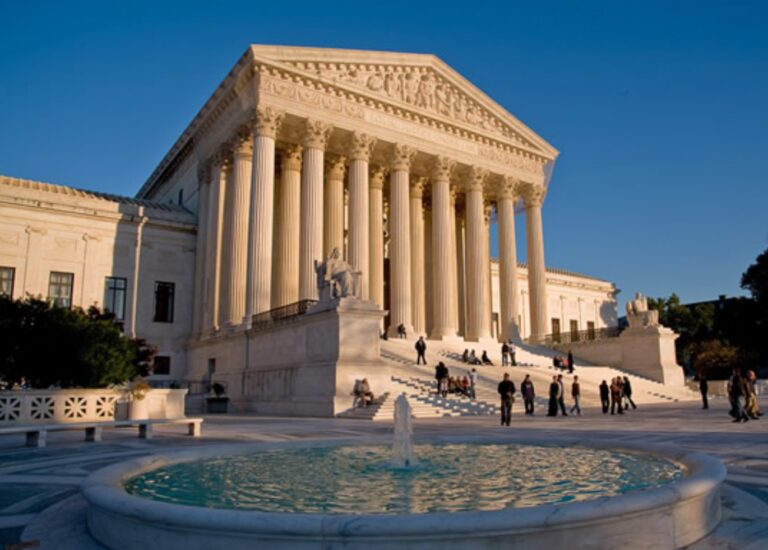
The US Supreme Court ruled on Tuesday that it will not block the Trump Administration’s enforcement of its ban on transgender individuals serving in the military, lifting a nationwide injunction previously issued by a federal judge in Washington state. The decision allows the policy to take effect while legal challenges proceed in lower courts.

The Court’s “short order” was issued without explanation, a common practice in emergency rulings. 

Justices Sonia Sotomayor, Elena Kagan, and Ketanji Brown Jackson, the liberals appointed by President Barack Obama and President Joe Biden, dissented.

The policy disqualifies individuals diagnosed with gender dysphoria or those who have undergone gender transition steps from military service, though waivers may be considered on a case-by-case basis. This reverses an Obama-era directive that had been reversed under Trump 1 and that was then reinstated by President Joe Biden, which permitted transgender individuals to serve openly.

The case at the center of the dispute, United States v. Shilling, involves Commander Emily Shilling. US District Judge Benjamin Settle had previously ruled that the ban likely violated the Fifth Amendment’s equal protection guarantee and lacked supporting evidence of harm caused by transgender service. 

The Trump Administration argued that the courts must defer to the commander in chief’s authority and military’s determinations about readiness, lethality, and unit cohesion.

This decision reflects the Supreme Court’s long-standing deference to military policy, allowing actions within the armed forces that might be deemed unconstitutional in civilian contexts. Past precedents, including Goldman v. Weinberger and Rostker v. Goldberg, have upheld similar military-specific restrictions.

The Supreme Court’s order is not a final decision on the policy’s legality but does clear the way for its enforcement while lawsuits proceed in the lower courts. There are at least seven transgender service members who are suing to remain in the military.

Congressman Begich bill would reauthorize volcano warning system through 2030

Congressman Nick Begich has introduced legislation to reauthorize the National Volcano Early Warning and Monitoring System through 2030, reinforcing efforts to protect communities and infrastructure from volcanic hazards across the country.

Alaska is home to over 130 volcanoes, many of which remain active. Notably, Mount Spurr, located 80 miles west of Anchorage, has recently shown signs of unrest. Increased seismic activity and minor ground deformation have raised alert levels at the volcano, prompting alerts from emergency management officials. Should an eruption occur, the nearby village of Tyonek could face heavy ashfall, while the Anchorage Bowl and Matanuska-Susitna region may also be impacted, depending on prevailing winds. Flight disruptions could be significant.

“Alaska is home to more than 130 volcanoes and many of them active. Their potential impact on aviation, energy, and communities in Alaska is significant,” Begich said. “Reauthorizing this critical system ensures that we remain prepared and proactive in protecting Alaskans and our infrastructure from future eruptions. This legislation is a smart investment in safety and commonsense governance.”

Originally established under the John D. Dingell, Jr. Conservation, Management, and Recreation Act of 2019, NVEWS provides the framework for improving volcano monitoring capabilities nationwide. It supports the US Geological Survey in upgrading equipment, enhancing data analysis, and coordinating emergency response with state and local agencies.

Begich’s proposed reauthorization would extend NVEWS through 2030 and it includes technical updates without changing the program’s original structure or funding levels.

Alaska Congressman Begich attends Western Caucus learning tour, with topics of mining, forestry, national security

Seven members of the Congressional Western Caucus convened in Colorado Springs over the weekend for a field tour and policy discussion focused on energy development, responsible mining, and land management in the West.

Among the participants was Alaska Congressman Nick Begich, who has been a vocal advocate for domestic mining and energy production.

The event, hosted by the Congressional Western Caucus Foundation, brought together key lawmakers and local leaders to examine the region’s diverse energy mix and its historical and ongoing contributions to US mining. Along with Begich, the delegation included Caucus Chairman Doug LaMalfa of California, Vice Chairs Harriet Hageman of Wyoming and Pete Stauber of Minnesota, Jeff Crank of Colorado, Troy Balderson of Ohio, and Lauren Boebert of Colorado.

“Leadership at the Cripple Creek & Victor Gold Mine provided members of Congress with a clear depiction of how we are securing America’s critical mineral future,” said Congressman Begich. “America first starts with American mining and American energy development.”

The field tour gave members a close-up look at mining operations and energy infrastructure, while policy discussions focused on active forest management to reduce the risk of catastrophic wildfires and address the growing threat of gray wolf populations to livestock in the West. Begich also visited the US Air Force Academy while in Colorado Springs. In his role in Congress, he nominates Alaskans to the Air Force Academy every year.

Congressional Western Caucus policy discussions in Colorado Springs.

Begich, who has consistently pushed for expanded domestic mineral production as a cornerstone of national security and energy independence, engaged with stakeholders across the region during the visit.

While former Alaska Rep. Mary Peltola had briefly joined the Congressional Western Caucus during her time in Congress, she was not an active participant, never attending a single meeting.

In contrast, Begich has emerged as a committed and engaged member, participating in field tours and contributing to policy formation.

The Congressional Western Caucus brings together lawmakers from across the country with a shared focus on issues facing rural and resource-rich regions, including public lands, agriculture, mining, and energy. This weekend’s gathering in Colorado Springs was part of the caucus’s ongoing efforts to inform federal policy with boots-on-the-ground insights from local communities.

Attempt to table the Etsy Tax fails in House

Rep. Mike Prax of North Pole made a motion on the House floor on Monday to table Sen. Bill Wielechowski’s SB 113, which levies corporate income taxes on businesses based outside the state but doing mail-order business or services in the state. His motion failed.

The controversial tax legislation has many confused because while it is not a sales tax, it will likely raise the cost of doing business in a highly digital age of Amazon, Etsy, eBay, and even online services such as LegalZoom. Taxes absorbed by companies will be passed along to customers.

Those voting to table the bill were: Jamie Allard, Bill Elam, DeLena Johnson, Kevin McCabe, Mike Prax, George Rauscher, Dan Saddler, Rebecca Schwanke, Cathy Tilton, Frank Tomaszewski, and Sarah Vance.

Those voting against tabling the bill were: Robyn Burke, Jeremy Bynum, Ashley Carrick, Mia Costello, Julie Coulombe, Maxine Dibert, Bryce Edgmon, Ted Eischeid, Zack Fields, Neal Foster, Alyse Galvin, Andrew Gray, Carolyn Hall, Sara Hannan, Rebecca Himschoot, Ky Holland, Nellie Jimmie, Andy Josephson, Chuck Kopp, Donna Mears, Genevieve Mina, Elexie Moore, David Nelson, Justin Ruffridge, Cal Schrage, Will Stapp, Andi Story, Louise Stutes, and Jubilee Underwood.

The vote total may be a good predictor of how the final vote will go on Wednesday when the bill is taken up for passage. The measure already passed the Senate and may end up on the governor’s desk, where he’ll have to decide whether to veto it.

Two Republicans — Nancy Dahlstrom and Click Bishop — file for governor

Lt. Gov. Nancy Dahlstrom made it official on Monday, filing for governor for the 2026 race. So did Click Bishop, the former senator from Fairbanks.

The two are the first to file since the official filing period opened on Monday morning.

Dahlstrom ran for Congress in 2024 and dropped out after coming in behind Nick Begich and Mary Peltola in the primary, when she got 19,252 votes.

She is the first of three of the Mike Dunleavy Cabinet to file; both Revenue Commissioner Adam Crum and Attorney General Treg Taylor are exploring filing. If all three do, it puts the governor in a bind as he tries to get the Alaska LNG gasline built, with some of his top cabinet members distracted by their political interests.

Click Bishop in 2022

Bishop left office in January, and has been rumored to be a candidate since deciding not run last year for reelection to the seat he had held since 2013 for Fairbanks. Like Dahlstrom, he is a Republican, but he is known as a friend of Big Labor.

Neither Dahlstrom or Bishop have announced running mates, and they have over a year to do so. The 2026 primary, which is going to be a jungle primary due to ranked-choice voting, is scheduled for Tuesday, Aug. 18, 2026.

In a reader poll last month, Must Read Alaska readers did not score Dahlstrom highly.