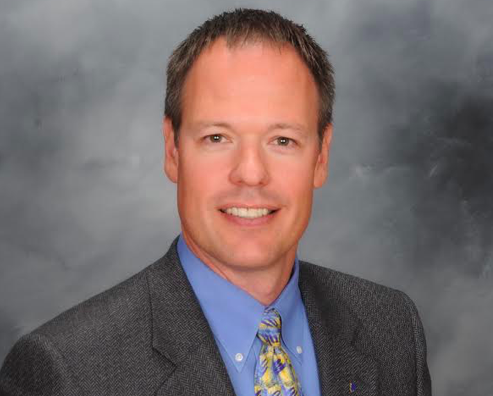
Bruce Tangeman is the incoming commissioner for the Alaska Department of Revenue. His appointment was announced by press release at noon.
Tangeman most recently was policy director for the Alaska Senate Majority, but before that he was the vice president and chief financial officer at the Alaska Gasline Development Corporation, leaving that post midway through the Walker Administration. During the Parnell Administration he was deputy commissioner of Revenue for four years under Commissioner Angela Rodell.
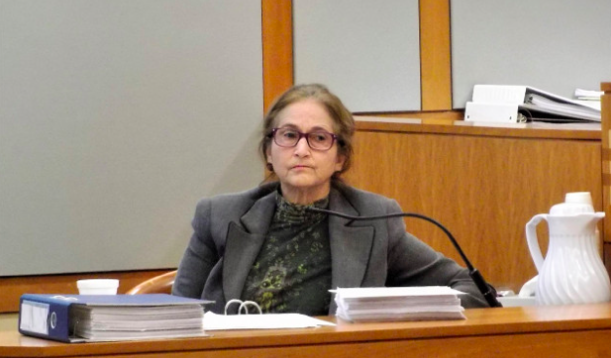
Julie Anderson
Julie Anderson, who was recently chair of the Anchorage Chamber of Commerce, is the new commissioner of the Department of Commerce. She is the owner of Denali Management Solutions.
Prior to that, she was a stakeholder manager at Alaska Energy Authority, and worked for many years at Alyeska Pipeline, including as a technical business strategy manager.
” Bruce and Julie are well known in Alaska for years of service in both the public and private sectors,” said Gov.-elect Mike Dunleavy. “Their talents and experience will provide crucial expertise to my administration as we move Alaska forward.”
THEY’RE UNEDUCATED, NON-INNOVATIVE, TOO RELIGIOUS, POOR, AND CARHARTT-CLAD
Oh the horrors. Conservatives wear Carhartts. We are being defined by them.
Anchorage Daily News columnist Michael Carey tore a page from Hillary Clinton’s “deplorables” playbook, when this week he wrote this stunning dismissal of conservative Alaska voters:
“Sadly, it takes a scandal crippling the other brand for the Democrats to win a statewide election. Alaska is not turning blue, except in occasional pockets. We don’t have enough highly educated, highly innovative, highly secular, affluent professionals of the stripe who dominate Portland and Seattle elections to change the outcome in statewide tundra contests. Snow City is a café, not a precinct.
“If you disagree with my pessimism, review the election returns for the Kenai Peninsula, the Matanuska Valley, Eagle River, North Pole and up and down Alaska’s highway system. Where Alaskans wear Carhartts, the Last Frontier is as red as fresh blood and reliably Republican as far as the eye can see.”
In fact, if you’re a Carhartt-wearing Alaskan, send MRAK a photo of you or your loved one in your Carhartts and I’ll put together a photo montage and publish it right here. Extra points for photos of working Alaskans and their kids wearing well-loved Carhartts.
Bonus: For the Carhartt Nation, everyone who sends a photo that is used in the montage will be entered to win this great Carhartt tote bag. It’s perfect for men or women, and best of all, it’s made in America:
COLUMNIST’S DOMINANCE SHOWS WHY ‘CITIZENS UNITED’ WAS NEEDED
By ARTHUR HACKNEY GUEST CONTRIBUTOR
Charles Wohlforth is a child of Alaska. So am I.
Unless I missed something, Wohlforth didn’t rescue the state’s biggest newspaper. But he’s like the kid whose Mom or Dad told him he could take the Cadillac out for a spin whenever he wanted.
Wohlforth’s columns, and his point of view, are a staple of the state’s biggest newspaper. Writing is hard, and one of the sad side effects of our 144 character culture is that we have a dearth of people who can engage on the battlefield of real dialogue. So Wohlforth gets a lot of ink.
There are many of Charles’ columns that I enjoy, but his political agenda, and his unfettered access to delivering it to readers, is the main reason why I believe Citizens United made perfect sense. Were it not for Citizens United, newspapers and TV stations would once again control what information people receive to make political decisions.
When President Obama made the audacious statementthat America’s small businesses didn’t deserve credit for their success – that government gave it to them – Citizens United was the only counter balance.
In an exchange on FOX News, Britt Hume lamented to Brett Baer that the mainstream media simply ignored President Obama’s statement.
Baer responded that, thanks to Citizens United, money could now be spent to tell Americans what the news media didn’t want them to hear.
Alaska’s fiscal problems have been to some extent caused, and to a great extent worsened, by the very people Wohlforth extols in his editorializing.
The election of Mike Dunleavy may dismay Charles Wohlforth, but it is the result of the public being given information that, in elections of yore, they would not have received. They would have only seen and heard Wohlforth promoting Begich and belittling Dunleavy.
No thinking person believes that a given politician is a savior. I have no doubt that Gov.-elect Dunleavy does not view himself that way. But he campaigned on turning Alaska’s economy around and that is a direct contrast to a state government that has seemed determined to drive resource industries out of a state that derives 95 percent of its revenue from resource extraction.
What Young has achieved for Alaska is historic. No Congressperson in history has gotten more bills passed to benefit their state than Don Young has – 81 bills signed into law by Presidents of both parties. Yet Wohlforth, and Rich Mauer of KTUU, back hand Young as though he was an incompetent boob, when the evidence is quite the opposite.
Wohlforth said that Alaskans vote for Don Young because “he’s conservative and that’s enough.” Don Young wins elections because he is recognized as being among the most bipartisan members of Congress. He gets things done for Alaska because he builds support across the aisle in a way few even try to do. Wohlforth should be praising Don as an example to be followed.
Wohlforth called Don Young’s opponent an “amazing person who ran an amazing campaign”. Any responsible journalistic analysis would show that she was only amazing in her lack of understanding of almost all of the tremendously complex issues that impact Alaska in Washington, DC. With no experience in governance to underpin her campaign promises, she was simply unprepared for the U.S. Congress.
Most shockingly, Wohlforth commented that having gone to events of both parties that he could figure out who was Republican simply by their haircut, their clothes, and their age. When I write an op-ed, I am told to tone down statements that may be deemed inappropriate. That clearly does not apply to Charles Wohlforth.
We all want the Anchorage Daily News to succeed. A daily newspaper is something that Alaskans want on their doorsteps. But they fairly expect it to reflect the hopes and dreams of the majority of Alaskans. Alaskans today are really not that different than those who, once upon a time – built roads, built bridges, built ports, and built a pipeline across Alaska.
If Gov.-elect Dunleavy does what he seems prepared to do, and Don Young continues to do what he has always done, Alaska will indeed be open for business – and most Alaskans will enthusiastically rise to embrace the opportunities that a booming economy will bring.
The schedule for Gov.-elect Mike Dunleavy’s swearing-in ceremony has been amended.
Previously, he was planning to arrive in Noorvik via snow machine from Kotzebue to Noorvik. The distance is about 42 miles, and he is an experienced Arctic snow machine operator. But there is a winter storm warning for the area that is in effect.
Now, he will arrive on a nonstop flight from Anchorage on Monday, and will be sworn in in the Aqqaluk High School and Noorvik Elementary School starting at 11:55 am. Public seating begins at 9:50 am.
The ceremony will end by 12:30 pm and then a community celebration will continue until 3 pm, when Dunleavy and his family will depart and head back to Anchorage.
On Friday, Dunleavy spent some of his day observing operations at State’s Emergency Operations Center on JBER, sitting in on briefings about the massive earthquake that struck Southcentral Alaska on Friday morning. A state disaster has been declared by Gov. Bill Walker after the 7.0 magnitude earthquake damaged roads, bridges, and other infrastructure across the most populated area of the state.
Children in Noorvik have been busy for the past two weeks making decorations and preparing their school to host the swearing-in ceremony, the first ever held above the Arctic Circle since Statehood.
Lt. Gov.-elect Kevin Meyer and his family will travel by separate plane to Noorvik, via Kotzebue.
Although we really, really want to believe Alaska’s elections are completely, totally and without a doubt on the up-and-up it is getting increasingly difficult to do so.
The Alaska Division of Elections has certified the 2018 general election results – including those from House District 1, which ended in a 2,661-2,661 tie between Republican Bart LeBon and Democrat Kathryn Dodge.
The eventual winner could tip control of the Alaska House of Representatives and may be picked Friday after a recount, or perhaps a coin toss or other means.
But one mystery ballot – cast for the Democrat in the race remains uncounted – a ballot discovered in a gray secrecy sleeve on election night and deposited in a ballot box normally used for absentee and questioned ballots. It had with it none of the customary supplementary materials that would allow Elections officials to determine whether it was legit, the Anchorage Daily News reports.
It was discovered after precinct workers counted 366 signatures in their voter register — but only 365 ballots. The ballot could be that 366th vote, or it could be something else, the newspaper reported.
In a statement, the Division of Elections said of the mystery ballot:
“The ballot has not been included in Monday’s results, but could still be counted during the recount depending on investigation findings.”
After eight days of sometimes rambling and regularly wandering testimony over the course of two weeks, the $1 million lawsuit former Alaska Dispatch News editor Tony Hopfinger filed against old boss Alice Rogoff is set to be handed to an Anchorage jury today.
Superior Court Judge Andrew Guidi set closing arguments in the so-called “napkin case” for 8:30 a.m. Tuesday. The jury should get the case by afternoon.
[Editor’s note: The jury has, on Tuesday, been given the case for judgment.]
Along the way she blew up what she summarized as a professional marriage to Hopfinger and now ex-wife Amanda Coyne, the co-founder of the Dispatch; helped get friend Bill Walker elected governor of Alaska; finally divorced Rubenstein; and left a trail of chaos in her wake.
A group of Democratic lawmakers and lawmakers-elect has sent a letter to Gov. Mike Dunleavy, asking him to rescind his letter that was sent to over 800 at-will State employees asking for their resignation.
Gov. Bill Walker has also objected to the letter sent to the exempt and partially exempt employees.
In their letter, the lawmakers said that asking employees to state their expressed “positive desire” to serve in the Dunleavy Administration is ill-considered, “and we call on you to reverse course on it immediately.”
“We certainly recognize your right to seek the resignations of those state employees whose positions are more policy-oriented in nature—department commissioners, directors, executive staff, and the like. However, your resignation demand goes far beyond that. The state employees whose resignations you have demanded are professionals with specialized education, training, and skill sets—and years of experience.”
The letter was signed by Sens. Bill Wielechowski, Donny Olson, and Tom Begich, and Reps. Matt Claman, David Guttenberg, Chris Tuck, Les Gara, Scott Kawasaki, and Sens.-elect Jesse Kiehl and Elvi Gray-Jackson.
Notably, several Democratic lawmakers did not sign the letter, and two who did are leaving office in January — Reps. Les Gara and David Guttenberg.
The Democrats signing the letter did not offer what number of resignations they would find acceptable, or which specific positions or employees they sought to protect from having to send in a letter that states they want to continue to work for the new administration.
The transition team had decided that rather than pick and choose, it was more fair to send the letter to all who are in the category of at-will employees.
Dunleavy won with 53 percent of the statewide vote, winning more votes than the other three candidates combined (Mark Begich, Billy Toien, and Gov. Bill Walker, who received just 2 percent).
Incoming Gov. Mike Dunleavy announced today he will retain Education Commissioner Michael Johnson.
In a statement, the incoming administration said:
“The State of Alaska’s constitution is unique in that the education commissioner’s authority is based in state statute, which establishes the commissioner as the principal executive officer of the Department of Education and Early Development. (AS Title 44, Chapter 27, Section 10).
“A governor may advocate for a new commissioner, or demand it by replacing the Board. Governor-elect Dunleavy plans instead to work with the existing commissioner to address Alaska’s education challenges.”
“I met with Commissioner Johnson to hear his assessment of where we are, and where we need to go,” said Dunleavy. “We had a healthy discussion about needed improvements, and shifting our focus to getting better results for students. In the end, our priorities aligned and we decided we could work together on changing how we deliver education in this state.”
Dunleavy spent 30 years in education as a former teacher, principal, and school administrator. In addition, Dunleavy was a Mat-Su school board member; education consultant; head of Mat-Su’s public homeschool program; and was a program manager for the University of Alaska’s statewide mentor project.
Throughout the campaign, Dunleavy pledged to change the state’s education system, which currently ranks dead last among the 50 states in certain achievement categories.
Dr. Johnson was appointed commissioner by the Board of Education in June of 2016.
Before that, he served in the Copper River School District as superintendent, school principal, district curriculum and staff development director, elementary teacher, and special education program assistant.
While he was principal of Glennallen Elementary School, the school was named a Blue Ribbon School by the U.S. Department of Education. Johnson also is a recipient of the prestigious Milken Educator Award.
He holds a bachelor of arts degree and a master of arts in teaching degree in elementary education from Columbia International University, and a doctorate of philosophy in education and intercultural studies from the University of Alaska Fairbanks.
With Democrats taking control of the U.S. House of Representatives, players will emerge in roles that may impact Alaska’s oil patch, the Arctic National Wildlife Refuge in particular.
California Democrat Rep. Nancy Pelosi is likely to return as House Speaker in the new year. She’s a foe of oil drilling in Alaska, and her California constituents see eye-to-eye with her on that.
The House Natural Resources Committee gavel will also change from Rep. Rob Bishop, a Utah Republican, in favor of the ranking minority member on that committee.
That person is Rep. Raúl Grijalvaof the Arizona area bordering Mexico, who is an opponent of oil drilling in ANWR, who will probably now chair the committee.
Raul Grijalva
Grijalva has introduced legislation time and again and signed letters to lock up the ANWR Coastal Plain. Grijalva’s aides are among the extreme environmentalist cause agents of liberal East Coast Democrats.
Congressman Don Young is the chair emeritus of Resources, but under the new regime, he’ll be in the minority.
Because of his seniority, he’ll retain a seat on the committee, but Republicans are likely to lose about six seats. Democrats will gain those seats and fill one additional vacant seat they now have on the committee.
Democrats like Grijalva could try to foil last year’s ANWR legislation, signed by President Trump on Dec. 20, 2017. They may attend to defund the related programs at the Department of Interior, or offer a “limitation amendment,” that says no funds may be used for lease sales in the ANWR 1002 area.
Over in the Senate, still under Republican control, such bills are not likely to pass, and the president wouldn’t sign the bill anyway — President Trump is very bullish on ANWR and considers last year’s legislation a signature accomplishment.
But Alaskans can expect national Democrats to use various nuisance tactics to shut down Alaska’s efforts to drill in a limited area of ANWR. They’ll try to make ANWR a toxic investment for companies through the public shaming process now honed to a science by the far Left.
In addition to a changing of the guard in the House Resources Committee, there are freshmen Democrats who helped flip the House who have, during their campaigns, signed a pledge to sponsor legislation to shut ANWR down.
From California to Florida, these eight members are on record: Gil Cisneros, Harley Rouda, and Mark Levin of California, Ann Kirkpatrick of Arizona, Jason Crow of Colorado, Debbie Mucarsel-Powell of Florida, Dean Phillips of Minnesota, and Kim Schrier of Washington.
WHAT ABOUT DON YOUNG?
Congressman Young currently serves as the most senior member of the House Natural Resources Committee and House Transportation and Infrastructure Committee.
As Alaska voters returned Congressman Young to the nation’s Capitol for his 24th term, Young used his legislative prowess as Dean of the House to offer a unique amendment just before Thanksgiving.
The amendment took place during an organizational meeting. It said that if there is a Republican Dean of the House, that member is automatically put on the House Steering Committee, which is the committee on committees.
It was ingenious. He is the Dean of the House. He is a Republican.
The amendment was read aloud. And although it was blatantly self-serving for Alaska, it passed. It was reported that one senior Republican advised freshmen: “Don’t go against Don Young. It’s just not worth it.”
Now, Young is going to be one of key members of Congress who is helping a pick the ranking member on the Appropriations Committee. He’s become among the chosen few who will pick all the leadership for the Republican Conference.
The move will matter on Thursday, when the House Republican Steering Committee decides who the next Republican leader is for the powerful House Appropriations Committee.
Four candidates are being discussed: Reps. Robert Aderholt (R-Ala.), Kay Granger (R-Texas), Tom Cole (R-Okla.) and Tom Graves(R-Ga.).
The process could take hours and will involve multiple balloting.
Young, through his clever amendment, made sure he’d be part of the key panel making that decision.
Alaska’s congressman served his first 22 years in the minority, from 1973-1995, and he has a knack of getting things done as a member of the minority. He can navigate the halls, and knows the procedures on the floor and off, as evidenced by his move to get on the committee on committees as soon as he saw he’d be in the minority again.
This insight and quick reaction time is important to Alaska, particularly when the two chambers are negotiating.
It’s hard to imagine how his opponent Alyse Galvin would have fared in this environment — or how Alaska would fare with Galvin, the woman who ran under the Democrats’ banner in the primary, but was actually registered without any party in the General Election, in Congress.
Galvin would have entered Congress with distinct disadvantages as a so-called independent.
Young, with his senior status and legislative prowess, does a good job fending off attacks on Alaska.
“Part of his effectiveness is that his colleagues don’t want to challenge him because they know he will fight tooth and nail for Alaska,” said one DC observer.
Although Alaska policy experts will want to keep an eye out for rogue attacks on the state’s resource-based economy, if Galvin had won, and if Mark Begich was being sworn in as governor, Alaskans would have a lot more to worry about concerning the reversal of the historic opening of ANWR.
After all, after 40 years of effort by the Alaska delegation, the House of Representatives voted 224-201 for that legislation in 2017, and it was largely along party lines.
With Democrats now in charge in the House, Young — Alaska’s only congressional representative — will have his work cut out for him as Alaska’s watchdog.