Saturday, October 10, 2026
Home Blog Page 1463

Kenai teachers unions run the healthcare plan, and want taxpayers to pay for it

24

By ART CHANCE

I have trouble taking teacher strikes seriously; they’re generally either the result of hysteria or they’re a charade, and sometimes there is some of both.   

You never know what the sentiments of the majority of the employees are; you hear the voices of the loudest malcontents and of the union leadership.   

The “strike vote” is conducted by the union without any outside verification so the union can and does say whatever it wants about the vote.   

In my time in labor relations I never saw a strike vote rejected and mostly the union said the support for the strike was “overwhelming.”  That said, try as we might at times, we never could get one of the State unions to strike in my 20 years of dealing with them.

Teachers, or their union, on the other hand, almost always own their employers, the School Board. The two entities that have no part in teacher negotiations are parents and taxpayers.  

All the school board elections are on an off-the-wall date rather than concurrent with the November General Election date.  Consequently, the only people who vote are “super voters,” school district employees, and people with their hooves in the school district trough.   

In the best of circumstances only a minority of the electorate pays property taxes and other than property taxpayers, nobody much cares what the “free babysitting” costs.

Back in the early 1990s, the Hickel Administration decided to fix the situation with teacher bargaining around the State.   There was a mixed bag of local ordinances either controlling or prohibiting teacher and other school employee bargaining, plus state law that set out the contours and limits of teacher bargaining, but didn’t apply to non-certificated employees of school districts.   

The Hickel Administration moved to put all certificated and non-certificated school employees under the Alaska Public Employment Relations Act (AS 23.40.070 – .260).  Of course, the National Extortion Association (officially known as the National Education Association) was only too happy to help the Legislature with the proposed amendments to PERA. The Administration and the Legislature were stupid enough to listen to the union.

First they stuck in a silly advisory arbitration provision that requires the the selected arbitrator to have local knowledge. It isn’t always honored, but since the union and the school board/management are generally on the same side, it is easy for them to select a favorite who’ll play the game the way they want it played.   

Then, when they assemble their offers to present to arbitration (and there are no rules for just how that is to be done), both the union and the school board put all sorts of “throw-aways” in their offer to make it look like management is doing its job and the union puts in stuff it doesn’t want and knows it won’t get so the arbitrator can make it look like s/he was being even-handed.  

When the opinion comes out, it looks like each party got something and each party didn’t get things it wanted.  

In reality, the union usually gets everything it really wanted and the things the employer got are worthless, meaningless, or both.

Then, more importantly, they put in a provision that says that a teacher strike can only be initiated after school has started.   

There must be one regular day of school before the union can give the required 72-hour notice of a strike, so the kiddies have four days of school, the parents have discontinued their summer childcare arrangements. Then the school takes the babysitters away by closing down because of the strike.

So, that is the environment of teacher strikes.   

We can now turn to the strike by Kenai Peninsula Borough School District teachers that appears inevitable on Tuesday.   

First, as is usually the case, there is a lot of smoke and noise about money and not much of it is true.  The Kenai school employees haven’t had much in the way of negotiated general increases in the last few years. Few employees in Alaska have, other than some that got in on Gov. Walker’s 11th hour largesse.  

What the teachers and their unions never talk about is the step and column pay schemes that guarantee them a significant raise every year just for continuing to breathe and show up for a step increase, and if they take continuing education classes that everybody passes, they move up the column system and get a raise for taking the class.  

If the Kenai Peninsula School District pay scheme is anything like the State of Alaska’s, the district needs a general personal services budget increase of over 3 percent every year just to maintain status quo and pay for step increases. Kenai is at least that much since they have both step and column increases.

But the real beef is health insurance costs.  

Kenai was already paying very high health insurance costs, some $1,700 and change back a year or so ago, and they had a provision that if the cost of the plan went over that, the increase would be shared equally between the district and the employee.   

Somewhere they changed that to a 70-30 split between the district and employee. The union wants relief from the cost sharing that will cost over $3,000 per employee and the plan cost is around $27,000 per employee per year, or about $2,250/employee/month.   

By way of comparison, the State pays $1,530/employee per month for the very generous General Government Unit plan, a contribution that will rise to $1,570/employee per month in Fiscal Year 2022.

The GGU plan is 80-20, State-employee, with a stop loss that is $3,000-$4,000.  I don’t know the details of the GGU plan, since the union runs it and isn’t very forthcoming about details, but all the other State plans get about the same contribution and all have at least some deductibles and co-pays, so the employee has to reach in their own pocket a bit for most healthcare.   There are some deductibles in the Kenai plan, but nothing particularly substantial even in the so-called “high deductible” plan.

Both the district and the union have made lots of noise about high costs in their service area, but the State plans also cover high cost, some of them very high cost, areas.   

So, here is what I think is the real issue: A union-bought-and-paid-for School Board gave the union/employees control of the plan.  

The plan has an elaborate Benefits Committee that has almost no management representation. That committee has the power to set the benefits and other provisions of the plan.   

In sum, the district has lost all control of health insurance costs because it gave the control away.  The union wants its gold-plated Cadillac plan, doesn’t want to pay anything for it, and wants the Kenai Peninsula’s taxpayers to pick up the tab.

I don’t see any way to get the toothpaste back in the tube.  A legitimate management would just ride out the strike, but there really is no downside for the teachers; Little Johnny is guaranteed his 180 days of “education” so if they strike for a week, a month, or whatever, the days they missed just get tacked on to the school year. The only people who are out anything are the taxpayers and parents who had to disrupt their life because of childcare issues.

Kenai Peninsula School District healthcare costs are obscene.  No sane management would have given away the right to control the plan, but the good people of Kenai elected a Board to run the schools, and now they get to pay for it.

Art Chance is a retired Director of Labor Relations for the State of Alaska, formerly of Juneau and now living in Anchorage. He is the author of the book, “Red on Blue, Establishing a Republican Governance,” available at Amazon. 

Military training labeled Alaska family advocacy group a ‘hate group’

15

A recent training at Joint Base Elmendorf Richardson, intended for new military members, identified the Alaska Family Council as a hate group.

The public affairs office has since apologized to the Alaska Family Council after the group’s President Jim Minnery sent a notice out to his membership and supporters, alerting them to the training class and objecting to the classification. Minnery runs a Christian-based organization that has been around since 2006.

In the training, the trainers used a list of hate groups provided by the Southern Poverty Law Center. The Alaska Family Council was listed by SPLC along with other groups such as the Ku Klux Klan, the Nation of Islam, and white nationalist clubs.

“We extend our deepest apologies to the Alaska Family Council members. We have addressed the issue and will ensure the Alaska Family Council is not referred to as a hate group during this training,” the apology stated. It was not signed with a name, but was from the Public Affairs Office.

“We have also removed—and will not include in future briefings—an infographic produced by the Southern Poverty Law Center that was included in the EO (equal opportunity) training slide deck,” the public affairs office wrote.

“Although we routinely disclosed that in displaying the infographic we did not endorse its findings as reflective of the Federal Government’s position on hate groups, we have concluded its inclusion in the briefing is not essential for understanding prohibitions on participation in dissident and protest activities stipulated in Department of Defense Directive 1325.6 and Air Force Instruction 51-903,” the note concluded.

Minnery was perplexed about the apology when reached on Saturday. “What about Eieilson and Fort Wainwright?” he asked. “How many other military units are training people with the SPLC list? This is not about me or Alaska Family Council, but that they made a purposeful decision to malign a massive number of people in the country and in our state state who are deeply supportive of nonviolent groups like Alaska Family Council. We’re anything but a hate group, so it’s scary to think about the huge number of people in the military who might be exposed to this training.”

Among groups included in the SPLC list of hate groups is Family Research Council, a group that is similar to Alaska Family Council. Both groups focus on family, abortion, religious liberty, and advising the public about LGBTQ+ evangelism.

In 2015, SPLC published a feature that targeted Alaska Family Council and the Alliance Defending Freedom over the issue of gender-assigned public restrooms, which AFC was active in defending in various formats, including ballot initiatives.

Family Research Council was targeted in 2012 by a man who had seen the group’s name on the SPLC hate group list, decided he disagreed with their politics, and came into the group’s Washington, D.C office shooting, hitting the building manager in the arm.

The shooter, Floyd Corkins, received a 25-year sentence in 2013 after pleading guilty.

It’s no small matter to be targeted by the SPLC, Minnery said, referring to the shooting inspired by the list. But he is especially concerned when the U.S. Military is accepting the SPLC’s list as gospel.

“This is not right, and I don’t feel we’ve heard the end of this, because it may be going on all across the country,” he said.

Kenai Peninsula teachers union sets strike for Tuesday

15

Teachers and staff of two public employee unions in the Kenai Peninsula School District have set a strike date for Tuesday. They have been without a contract for more than 400 days and are operating under the previous contract, which ended in 2018.

Their latest proposal to the school district would cost $27,076 per year for each employee who is in the district’s health care program. The district has offered to pay $24,068 for each employee’s Aetna health care plan.

The difference of $3,008 per year, per employee, would cost the district an additional $3.2 million this year, money that the district says it does not have.

The Kenai Peninsula Education Association and the Kenai Peninsula Education Support Association voted on Friday to strike starting at 7 am on Sept. 17.

The statement posted on the KPEA Facebook page advised:

“The failure of the KPBSD to adequately address the Association’s primary concern of affordable healthcare premiums for public school employees continues to hinder an acceptable agreement. In May, 75% of teachers and education support staff voted to strike if the District could not come to the table with an offer that would lower healthcare premium costs to a level commensurate to comparable districts in Alaska. The District has not met that demand.

“On Thursday, September 12, the Association’s bargaining team presented the District with an offer that would have given up a previously agreed to raise of 2% for all employees in FY21, pending the outcome of Alaska Legislative Council v. Dunleavy, if the District would agree to the most recent healthcare proposal offered by the Associations. This proposal was designed to acknowledge the District’s concerns regarding the uncertainty around one-time state funding while respecting the Association’s desire to prioritize affordable healthcare.”

“We have said since May that we don’t want to strike, but we will. We have been bargaining for 575 days, and the District still doesn’t seem to understand how incredibly important healthcare is to our members. If they won’t listen to us at the table, we’ll take our message to the community. Until the District is willing to accept our reasonable proposal, we will exercise our legal right to strike,” said KPEA President David Brighton.

Ann McCabe, KPESA president, added, “We understand the short-term impact a strike will have on students and families, but the long-term impacts of growing class sizes and shrinking communities because no one can afford to work here are far more serious. The district can end this strike before it even begins if they decide to value our public school employees and offer them a fair contract.”

[Read: Tense meetings, threats, strike date nigh, another day in Kenai]

Berkowitz tells university administration to break deal with governor

36

Anchorage Mayor Ethan Berkowitz, fresh off his trip to Japan, attended a meeting of the University Board of Regents in Anchorage on Thursday, where he told the regents and Administration to not accept the deal they had signed with the governor for budget cuts over the next two years.

The compact that Board of Regents Chairman John Davies and University of Alaska President Jim Johnsen signed with Dunleavy was for a $25 million cut to the university system’s budget this year, $25 million next year, and $20 million the following year.

Berkowitz was quoted by KTUU as saying the regents should push back agains the governor and Legislature on future cuts.

“Just because there are poorly considered decisions made in Juneau, there is no reason for us to accept that passively.”

The multi-year compact that preserved $110 million in state funding for the university for Fiscal Year 2020. The agreement also means that budgets submitted to the governor by the Board of Regents over the next two fiscal years will reflect $45 million in additional reductions.

The Mallott papers: Donna Walker weighed in on LG

16

The Associated Press dug deeper than any other news agency to find a gem of an email.

It was from Donna Walker, former First Lady of Alaska, to her husband, counseling him on how to handle the downfall of Lt. Gov. Byron Mallott last October.

“Does he explain the incident?” Donna Walker wrote to Gov. Bill Walker at his official state email account. She followed that with some wifely advice:

“I think that you describing it as ‘inappropriate comments’ is a huge understatement and you will be criticized for that. It was the conduct as well of inviting her to his room, and it sounds like there was some discrepancy as to how he greeted/touched her. I think you need to say inappropriate conduct.”

[Read the AP story here]

Although Must Read Alaska requested email exchanges from Donna Walker and Bill Walker for the same period of time, we didn’t receive this revealing exchange in the over 1,000 pages of emails we’ve obtained from the days surrounding Mallott’s resignation last October.

But among the interesting emails was one from the Mallott’s chief of staff. Claire Richardson advised others in the Governor’s Office of a story in Must Read Alaska, describing the various scenarios that were being talked about at the Alaska Federation of Natives conference. The cover was blown, and the story was out.

Richardson quoted directly from Must Read Alaska:

“But the rumors are flying: It happened at AFN Elders and Youth Conference. No, it happened at Tanana Chiefs Conference, and the person is in law enforcement. No, it was that Mallott told First Lady Donna Walker to go “F–” herself. No, it’s back to AFN and Mallott propositioned an underage girl, “If you were a bit older and I wasn’t married … “

But if a lieutenant governor makes an inappropriate overture to the daughter of his “close associate,” that’s another matter altogether.

“The young girl’s mother evidently had a close relationship with Mallott, who is 75. Must Read Alaska has learned that Mallott said something to the daughter — and the mother went ballistic.“

Those close to the matter have long said that Donna Walker was a key figure in demanding Mallott’s resignation after inappropriate comments were made to a teenage girl during the AFN conference.

But until the story by AP writer Mark Thiessen, the exact nature of Mallott’s transgressions have only been rumored.

In another email exchange, Deputy Chief of Staff Grace Jang demanded the search of emails for everyone who had access to Walker’s calendar.

Must Read Alaska has learned in recent months that Jang was trying to find out who in the Administration was leaking material to Must Read Alaska. At one point, she asked to see staff members’ cell phones so to examine their text message histories.

Touchy subjects tackled

3

At Brave Conversations, facilitator Leigh Sloan is cultivating a community of people who meet monthly to learn from those who think differently on a variety of topics.

“We believe that by leaning in to conversations that are controversial, we will become better thinkers and better communicators– ultimately creating a better community,” she explained.

At the Sept. 26 meeting, they’ll work on conversation sharpening, matching people with different views to help each other stretch their perspectives in one or more areas.

Come with a friend and an open mind. Learn to enjoy honing the art of this kind of constructive, face-to-face, rather than Facebook, conversation.

The event starts at 6 pm. Beverages and food are available for purchase until 7 pm. The group will be in the inner room of the Coffee and Communitas building, 12100 Old Seward Hwy, Anchorage, Alaska 99515.

More information at this link.

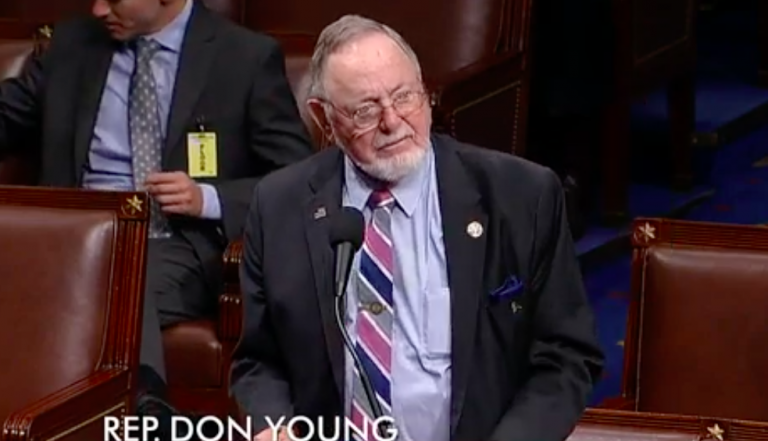
Watch Rep. Don Young being awesome on ANWR

9
https://www.youtube.com/watch?v=B_dZMLt3hr0&feature=youtu.be

The U.S. House on Thursday voted 225-193 to reinstate the ban on oil and gas drilling on the Coastal Plain of Alaska’s Arctic National Wildlife Refuge … the same day the Bureau of Land Management announced its decision to open up the entire Coastal Plain of ANWR.

The Democrat-controlled House’s vote was symbolic, but shows what can happen if a Democrat takes control of the White House and if the Democrats flip the Senate in 2020. That would be the end of Alaska’s energy economic rebound.

Trump says he will veto the legislation if it ever reaches his desk. Sens. Lisa Murkowski and Dan Sullivan will ensure that doesn’t happen as the legislation heads to the Senate.

Tense meetings, threats, strike date nigh: Another day in Kenai teacher union drama

9

Public school teachers on the Kenai Peninsula have been working without a contract for more than 400 days.

But it is going to be a few days more, it appears, although a strike that was authorized in May is looming on Sept. 16. That action could shut down the schools.

Monday’s meeting, held in Homer, was supposed to be when the Kenai Peninsula Borough School District Board of Education was going to come to an agreement with the unions.

Instead, the meeting was so tense, with such vitriol coming from a small-but-radicalized segment of Homer toward the School Board, that board members were clearly rattled, and emphasized in their closing statements the need for civility.

Most people in Homer do not agree with the group that showed up and told them “you should be ashamed of yourself.”

But it’s the same Recall Dunleavy people who attend various meetings and raise a ruckus in Homer on a regular basis.

“I didn’t laugh at your comments,” said board member Debra Hall after members of the audience started jeering her comments.

Meanwhile, the school district and union negotiations were cancelled on Wednesday until further notice because of alleged phoned-in threats against the National Education Association office in Anchorage.

 “This afternoon three calls were made threatening the National Education Association’s office in Anchorage. The phone number was a Kenai Peninsula phone number. The evening’s bargaining session scheduled at Soldotna High School for September 11th was canceled out of concern for safety and protocol. This is still an ongoing investigation so we cannot discuss details,” the district posted on its Facebook page.

The phone number was traced back to Seward; Anchorage police and Alaska State Troopers are said to be investigating.

The teachers union activists are the same “Red for Ed” contingency that protested the full Permanent Fund dividend during state budget talks, and are now asking for $3,000 for each of their members for their healthcare coverage.

[Read: Teachers turn out to oppose full PFD]

The the proposed contract would cost the district $3.2 million, which would deplete the general fund balance, yet still require more funds to be obtained from an unknown source.

Kenai educators may not yet realize that they do not have to be part of the unions. All they need to do is to send a letter to Human Resources, telling them to stop taking out dues from the employee’s paychecks. This right was established in the Supreme Court Janus decision.

[Read: A conversation with Mark Janus.]

BLM to offer entire coastal plain of ANWR for energy leases

16

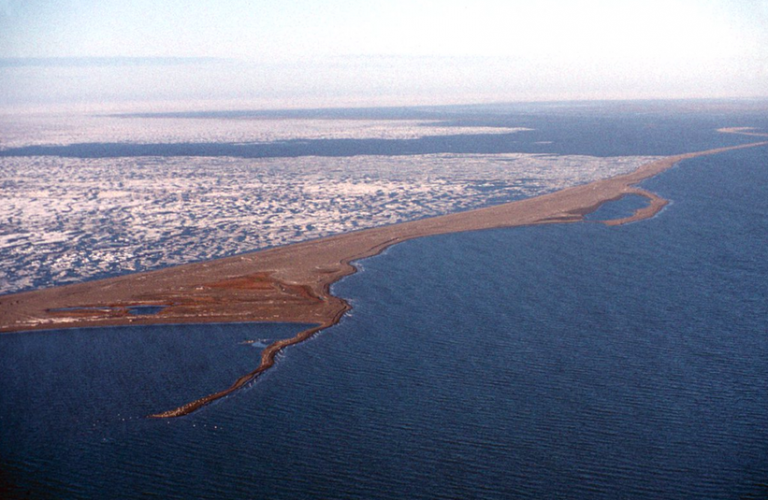
An 800,000-acre section of the Coastal Plain of the Arctic National Wildlife Refuge will be open to oil and gas leases, with the publishing of a final report from the Bureau of Land Management, it was announced today.

[View the final EIS documents at this link]

Today the Department of the Interior made available the Final Environmental Impact Statement for the Coastal Plain Oil and Gas Leasing Program.

The environmental analysis considers a range of alternatives in order to meet energy leasing provisions contained in Section 20001 of the Tax Cuts and Jobs Act of 2017 (P.L. 115-97), signed into law by President Trump on December 22, 2017. 

“Affordable energy and great paying energy jobs help power our nation’s economy, which is clearly thriving under President Trump’s policies,” said U.S. Secretary of the Interior David Bernhardt in a a statement.

“After rigorous review, robust public comment, and a consideration of a range of alternatives, today’s announcement is a big step to carry out the clear mandate we received from Congress to develop and implement a leasing program for the Coastal Plain, a program the people of Alaska have been seeking for over 40 years,” he said.

The Act directs the Secretary of the Interior, through BLM, to establish two area-wide leasing sales, not less than 400,000 acres each, along the Coastal Plain of the Arctic National Wildlife Refuge. It also authorizes up to 2,000 acres, or 0.01% of ANWR’s 19.3 million acres, for surface facilities.

“A large and diverse team including Tribes, partners, the state of Alaska and experts from across the Service worked with BLM on the range of alternatives contained in the EIS, as well as the protective mitigation measures that would apply to oil and gas activities in this unique area,” said Margaret Everson, Principal Deputy Director of the U.S. Fish and Wildlife Service.”The team’s work forms the scientific and conservation foundation that will protect high-value wildlife habitats and important uses in this area, while advancing the President’s agenda on energy independence.”

More than 70 employees (BLM, contract, other federal agencies and the State of Alaska) and at least 13,000 labor hours were dedicated to developing the EIS.

The analysis included staff from the U.S. Fish and Wildlife Service who were instrumental in developing the range of alternatives contained in the EIS as well as the protective mitigation measures. The EIS includes protections for species native to the area and any migrating species listed as threatened or endangered.

“Forty years after Congress selected the Arctic Coastal Plain for potential energy development, the Trump Administration is making good on that decades old potential,”said Alaska Governor Mike Dunleavy.  “I join with all Alaska Governors since 1980 in assuring the nation and the world that we develop our natural resources responsibly.  I look forward to the lease sale scheduled for later this year.” 

“This is a major step forward in our decades-long efforts to allow for responsible resource development in Alaska’s 1002 Area, and I thank Secretary Bernhardt and his team for their thousands of hours of hard work,” said Sen. Lisa Murkowski. “I’m hopeful we can now move to a lease sale in the very near future, just as Congress intended, so that we can continue to strengthen our economy, our energy security, and our long-term prosperity.”

“For decades, Alaskans have been urging their federal government to open the 1002 area of ANWR for exploration,”said Sen. Dan Sullivan. “At long last, Congress voted to allow it. Now, the administration is working diligently to fulfill Congress’s directions in a transparent and responsible process. I welcome today’s announcement— another critical step in the process to unleash Alaska’s energy and economic potential. As Alaska has shown time and again, we can responsibly develop our resources, under the highest environmental standards, to grow our state and significantly contribute toward the goal of energy dominance for our country.”

“The release of this final EIS to open the 1002 area of ANWR is the culmination of decades of work. I have fought for responsible oil and gas exploration on the Coastal Plain since ANWR was created, and I am immensely pleased that we have reached this stage,” said Rep. Don Young. “Alaskans are committed environmental stewards, and they know how to balance environmental protection and resource development — we did it in Prudhoe Bay and we’ll do it again in ANWR. I want to thank President Trump and his Administration, particularly Secretary of the Interior David Bernhardt, the former Assistant Secretary, and Alaska BLM State Director Chad Padgett for their tireless work in completing this EIS and getting us closer to fully-realized resource development in the 1002 area of ANWR.”