Saturday, October 10, 2026
Home Blog Page 1449

Road to the White House: Fun facts as Dem-debate roadshow heads to Ohio

WHY WESTERVILLE FOR DEMOCRATS? STRATEGY

The fourth Democratic presidential debate is planned for Otterbein University in Westerville, Ohio on Tuesday, Oct. 15, beginning at 4 pm Alaska Time.

For most of America, the event takes place on CNN; it is moderated by CNN and the New York Times.

If you haven’t heard of Westerville, here are the Cliffs Notes: It was founded in the 1800s, but is now a suburb of Columbus, the somewhat liberal capital of the state. In 1859, the city of Westerville became “dry,” with the passage of a law prohibiting the sale of alcohol. The Anti-Saloon League, a major player in the Prohibition movement, moved its headquarters there.

Today, it’s a city of 40,000 that boasts of a city-owned smart grid comprised of an underground fiber network connected to a city-owned data center and delivering 100 Gbps connectivity to municipal service providers, businesses, schools, the local university and research institutes.   

Democrats chose this community because they see it as a rising progressive area in a state that is a “must win” for presidential candidates. Plus, it’s a demographic they need — well-off, progressive whites. The town is over 86 percent white, families are stable, crime is low, and 69 percent of the people who live in Westerville were born in Ohio. The town has 26 Christian churches, so homogeneousness is a major characteristic.

Those characteristics would typically mean it’s Republican territory, but perhaps the Democrats have some polling to tell them otherwise. Donald Trump won Ohio with by 8 percentage points in 2016, but has a net negative job approval rating now in Ohio, according to a new poll from Emerson College. Three of the top Democratic candidates beat him in a the poll’s head-to-head matchup, although just within the margin of error.

[Read the Emerson poll results for Ohio here]

THIS DAY IN 2015

While this Tuesday, Democrats are on their fourth debate, jump back to Oct. 13, 2015, when the Democrat field of candidates had its first debate for the coming presidential election cycle, starring the eventual nominee Hillary Rodham Clinton, along with Bernie Sanders, Martin Oโ€™Malley, Jim Webb and Lincoln Chafee.

The debate among the five, held in Las Vegas, was sponsored by CNN/Facebook and most analysts gave the win to Clinton. Westerville, Ohio could not be more different from Las Vegas.

WHO HAS QUALIFIED FOR TUESDAY’S DEBATE?

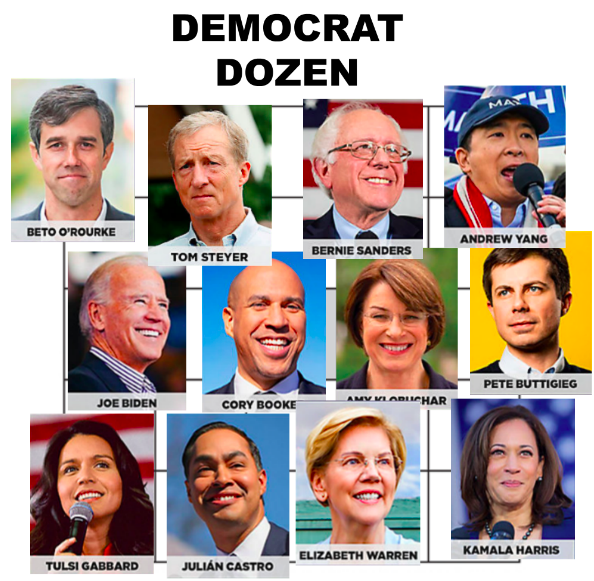
Candidates who met the Democratic National Committee’s threshold for the Tuesday debate include 10 who debated each other in September, plus the addition of billionaire Tom Steyer and Hawaii U.S. Rep. Tulsi Gabbard, who met fundraising and polling thresholds.

This means there will be the most ever candidates on stage for this debate series:

  • Former Vice President Joe Biden
  • U.S. Sen. Elizabeth Warren, of Massachusetts
  • U.S. Sen. Bernie Sanders, of Vermont
  • U.S. Sen. Kamala Harris, of California
  • South Bend, Indiana Mayor Pete Buttigieg
  • Businessman Andrew Yang
  • U.S. Sen. Cory Booker, of New Jersey
  • Former U.S. Rep. Beto O’Rourke, of Texas
  • U.S. Sen. Amy Klobuchar, of Minnesota
  • Former U.S. Secretary of Housing and Urban Development Julian Castro
  • Billionaire investor and activist Tom Steyer
  • Hawaii U.S. Rep. Tulsi Gabbard

AGE A FACTOR?

Pollster Nate Silver points out that the leading Democrats are old by presidential standards: Elizabeth Warren will be 71, Joe Biden 78, and Bernie Sanders 79 on Election Day, 2020. ย Sanders would be 83 years old at the end of his first term. President Reagan was 77 when he finished his second term. (Donald Trump will be 74 years old next June).

WHERE LEADING CANDIDATES STAND ON THE ISSUES

IMPEACHMENT:

Support impeachment – Joe Biden, Cory Booker, Pete Buttigieg, Julian Castro, Kamala Harris, Amy Klobuchar, Beto O’Rourke, Bernie Sanders, Tom Steyer, Elizabeth Warren, Andrew Yang.

Does not support impeachment: Tulsi Gabbard.


MEDICARE FOR ALL:

Support Medicare for all – Cory Booker, Julian Castro, Tulsi Gabbard, Kamala Harris, Bernie Sanders, Elizabeth Warren, Andrew Yang. Pete Buttigieg supports Medicare “For All Who Want It.”

Support reform of the Affordable Care Act: Joe Biden, Amy Klobuchar.

Support universal health care: Tom Steyer, Beto O’Rourke.


GUN CONTROL:

Support federal gun licensing: Cory Booker, Pete Buttigieg, Julian Castro, Kamala Harris, Beto O’Rourke, Tom Steyer, Elizabeth Warren, Andrew Yang.

Support ‘assault weapons’ ban: All 12 – Biden, Booker, Buttigieg, Castro, Gabbard, Harris, Klobuchar, O’Rourke, Sanders, Steyer, Warren, Yang.

Supports gun seizure: Beto O’Rourke, who in the last debate said: “Hell yes we’re gonna take your AR-15, your AK-47.”

Support federal universal background checks: All 12 – Biden, Booker, Buttigieg, Castro, Gabbard, Harris, Klobuchar, O’Rourke, Sanders, Steyer, Warren, Yang.


GREEN NEW DEAL:

Support Green New Deal: 11 of the 12 – Biden, Booker, Buttigieg, Castro, Harris, Klobuchar, O’Rourke, Sanders, Steyer, Warren, Yang.

Does not support Green New Deal: Tulsi Gabbard.

OFFSHORE DRILLING:

Support ban on offshore drilling, fracking, and ending oil/gas leases on public land: All 12 – Biden, Booker, Buttigieg, Castro, Gabbard, Harris, Klobuchar, O’Rourke, Sanders, Steyer, Warren, Yang.


IMMIGRATION

Support making illegal border crossing into a civil, rather than criminal violation: Booker, Buttigieg, Castro, Harris, Sanders, Steyer, Warren, Yang.

Support raising the current cap on refugees: All 12 – Biden, Booker, Buttigieg, Castro, Gabbard, Harris, Klobuchar, O’Rourke, Sanders, Steyer, Warren, Yang.

Support expanding the DREAM Act, and making easier pathways to citizenship: All 12- Biden, Booker, Buttigieg, Castro, Gabbard, Harris, Klobuchar, O’Rourke, Sanders, Steyer, Warren, Yang.


TAXES

Support higher taxes on wealthy: Booker, Buttigieg, Castro, O’Rourke, Sanders, Steyer, Warren.

Not committed to higher taxes on wealthy: Biden, Gabbard, Harris, Klobuchar, Yang.
Time to ratify U.S.-Mexico- Canada agreement

3

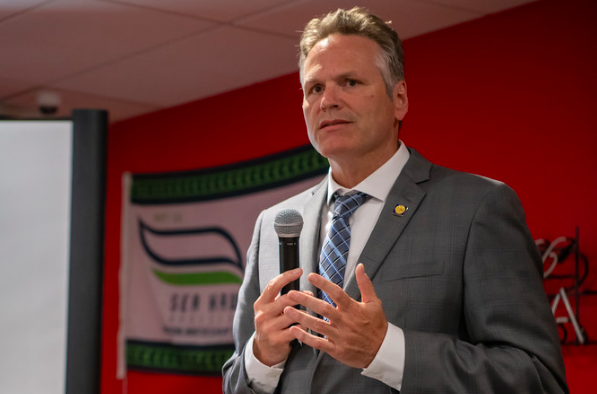
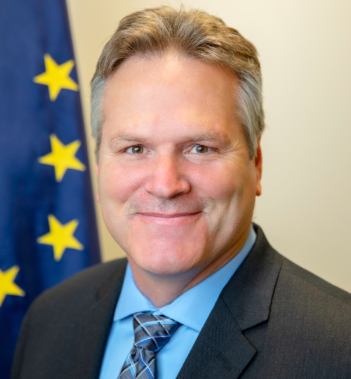
By GOV. MICHAEL DUNLEAVY

(This op-ed originally ran at FoxNews.com.)

As the governor of Alaska โ€“ a state with a flourishing international trade sector โ€“ I am pleased to stand with 27 of my fellow governorsย in calling on Congress to ratify the United States-Mexico-Canada Agreement negotiated byย President Trump.

Alaskansย export nearly $5 billion worth of commodities each year โ€“ enough goods to put the Last Frontier among our nationโ€™s largest exporters on a per capita basis. After factoring in an additional $2 billion of imports, trade accounts for over 12.5 percent of Alaskaโ€™s gross domestic product.

Of this trade activity, Alaskan businesses deliver $707 million worth of products to our Canadian neighbors, making a continental free trade agreement critical to our stateโ€™s economy. But the raw dollar values only tell half the story.

Over 70 percentย of Alaskaโ€™s goods exporters are small- toย medium-sized companies, and 37,100 jobsย depend on these exports. Many of these jobs are located at Ted Stevens Anchorage International Airport,ย which handles 87,000 landingsย and up to 6 millionย tons of snow each year.

Located within 9.5 hours of nearly all destinations in the industrialized world, Anchorage International is the fifth-busiest cargo hub in the world.

As a steward of this great state, I am committed to supporting Alaskaโ€™s trade sector.

This summer, the Alaska Department of Transportation announced hundreds of millions of dollars in infrastructure upgrades at Anchorage International Airport. My office is also in the early stages of negotiatingย a rail link with Alberta that would allow for the safe transportation of crude oil from landlocked Canadian oil fields to Alaskan refining centers.

But the harsh reality is that state governments are limited in their ability to promote international trade. Congress must act to ratify a new trade deal. To that end, President Trump successfully renegotiated the aging North American Free Trade Agreement (NAFTA) nearly a year ago.

While NAFTA served Alaska well for a number of years, there is no doubt the 25-year-old agreement is past its prime. It is increasingly hurting Alaskan businesses with lax enforcement of illegal, unreported and unregulated fishing; failure to police fishing subsidies; and outdated intellectual property and digital trade rules.

Trumpโ€™s USMCA makes historic improvements in these areas. Since the 1990s, the United States has worked to eliminate fishing subsidies, which often cause dangerous overfishing problems. Unfortunately, much of the world has not followed suit.

These subsidies allow foreign canneries to operate at a loss and market their products at discounted prices, giving them a market edge over U.S. fishermen and processors. While the largest offender is plainly China, the USMCA would ensure that our continental neighbors are not destroying our shared oceans or the economies of our Alaskan fishing communities.

The updated agreement also strengthens customs inspections, making it more difficult for bad actors to engage in unregulated fishing. Additionally, new rules on pollution from ships would help protect our fisheries by holding our trade allies to the same high standards we apply to ourselves.

Combined, these benchmarks would help guarantee the future viability of North Americaโ€™s commercial and sport fishing industries. And while fish may be Alaskaโ€™s largest export, many innovators would also benefit from the USMCAโ€™s new intellectual property protections.

The unique challenges presented by Alaskaโ€™s sheer size and rugged environment have long driven technological progress. Examples of Alaskanโ€™s pioneering spirit include GPS-based landings that were developed in the fjords of southeast Alaska; the 800-mile Trans-Alaska Pipeline, which features an assortment of groundbreaking safety features; and countless oil exploration breakthroughs.

The USMCA would protect advancements like these by requiring our continental trade partners to adopt our intellectual property laws. New measures include 15 years of protection for industrial designs, automatic patent extensions to mitigate bureaucratic delays, and further remedies when state-owned companies steal trade secrets.

Each of these protections requires no new legislation in the United States and would even the playing field across North America. Unfortunately, these commonsense measures are being blocked by House Speaker Nancy Pelosi, D-Calif., who refuses to bring the USMCA to the House floor.

Despite Mexicoโ€™s ratification of the deal in June, Democrats remain content to harm businesses in Alaska and other states by using the trade deal as a political pawn โ€“ a sharp contrast from when Republicans voted to give President Obama wide berth in negotiating the failed Trans-Pacific Partnership.

The good news is that Democrats may be ready to reverse their policy of economic obstruction, with Pelosi reporting that she is โ€œon a path to yes.โ€ After a nearly yearlong delay, letโ€™s hope her path is a brief one.

Itโ€™s past time for Congress to set aside political games and deliver American workers the economic victory they deserve.

The billion-dollar, high-speed internet scam

2

ELIZABETH PIERCE STARTED SERVING HER FIVE-YEAR SENTENCE LAST WEEK. A LOOK-BACK AT HOW SHE GOT THERE

By BLOOMBERG BUSINESSWEEK

When he discovered that the shipโ€™s underwater plow was stuck at the bottom of the Arctic Ocean, 50 miles off Alaskaโ€™s coast, Frank Cuccio thought of Ernest Shackleton. In October 1915, the British explorer was forced to make a desperate escape from the Antarctic after pack ice and floes crushed his ship, theย Endurance.

The vessel Cuccio was aboard, theย Ile de Batz, had been laying fiber-optic cable along the inhospitable route known as the Northwest Passage. But theย Ile de Batzโ€™s 55-ton excavator, which had been cutting a trench for the cable, had dug too deep in the hard-clay seabed. If they didnโ€™t unclench it fast, the ocean surrounding them would soon freeze. โ€œI realized we donโ€™t have time to fool around, or weโ€™re going to get trapped in a Shackleton situation,โ€ Cuccio recalls. โ€œThe weather was getting uglier, and other ships had been gone for weeks.โ€

Cuccio worked forย Quintillion Subsea Holdings LLC, a telecommunications startup in Anchorage that was trying to build a trans-Arctic data cable it said would improve web speeds for much of the planet. This idea captivated the public, but by the time theย Ile de Batzโ€™s plow got stuck, in September 2017, the company was struggling. Co-founder Elizabeth Pierce had resigned as chief executive officer a couple months earlier amid allegations of fraud.

[Read: Ambition above the law: Quintillion CEO sentenced]

Pierce had raised more than $270 million from investors, who had been impressed by her ability to rack up major telecom-services contracts. The problem was that the other people whose names were on those deals didnโ€™t remember agreeing to pay so muchโ€”or, in some cases, agreeing to anything at all. An internal investigation and subsequent federal court case would eventually reveal forged signatures on contracts worth more than $1 billion.

[Read this long-form story at Bloomberg Businessweek]

Alaska Democrats endorse another non-Democrat

THIS TIME, A NON-DEMOCRAT FOR U.S. SENATE

The Alaska Democratic Party has done it again: This time, the party has endorsed a nonpartisan, rather than a Democrat, as its candidate for U.S. Senate.

Al Gross received the State Central Committee’s endorsement on Thursday. It was announced Friday without details about how the endorsement was arrived at, who participated, or where the State Central Committee had its vote.

In the past, the party has endorsed no-party candidate Bill Walker for governor in 2014, and no-party candidate Alyse Galvin for U.S. House in 2018.

Gross is running against Sen. Dan Sullivan, and with the Democrats’ solid endorsement, that will likely clear the field for him of any serious primary challenges. He says he has raised over $1 million this quarter, which will give him a leg up on any other Democrat contenders.

“Dr. Grossโ€™s support from the party stems from his strong knowledge of and advocacy for accessible and affordable health care for all Alaskans, robust public education, responsible resource development of both our renewable and non-renewable resources, strong public safety, and the economic well-being and welfare of both rural and urban Alaska,” the party said in a statement.

No mention was made of why Gross refuses to simply register as a Democrat, rather than run as a quasi-Democrat.

In 2016, Alaska Democrats changed party rules to allow nonaffiliated and undeclared candidates to run in their primary and then proceed to the General Election, where they appear under the Democrats’ label, with a qualifier by their name to indicate they are confused.

Casey Steinau, Alaska Democratic Party chairwoman, called Sullivan a “yes-man for Donald Trump” in the announcement about the party’s support for Gross, who in his thank you to the Alaska Democratic Party said he will work hard to “flip the Senate” and get rid of Senate Majority Leader Mitch McConnell.

Governor vetoes HB 48, which would take away his hiring/pay authority

4

Alaska Gov. Michael Dunleavy has vetoed House Bill 48, legislation to reclassify state employees in temporary or special positions and take away authority given to commissioners and the governor to authorize higher pay for certain positions.

โ€œReaching this decision was difficult. I agree with the original intent of the bill that Representative [Tammie] Wilson brought forward. We both identified it as a change that needed to occur in our Personnel Act; I introduced the same provision in a bill I brought forward this past session.

โ€œWhat we struggled with, as we had departments look at the bill after passage, was the repeal of the valuable tool that the Executive branch may utilize in unique cases. There are certain positions in departments that require a significant amount of experience and professional qualifications, such as petroleum land managers and commercial analysts in the Department of Natural Resources, the Chief Financial Officer for Retirement and Benefits and the ChiefTechnology Officer in the Department of Administration, and the Tax Division Director in the Department of Revenue.

โ€œOn one hand, the bill fixed a significant problem. On the other hand, it eliminated a tool that is used to address the Stateโ€™s ability to recruit and retain employees of the highest level of qualifications and experience. As I am not able to partially veto a bill, I have committed to working with Rep. Wilson in the future to address the use or creation of temporary or special positions.โ€

“HB 48 as introduced by Rep. Wilson proposed to reclassify people employed in a temporary or special position, from the exempt service to the partially exempt service. This move would require the use of statutory salary schedule, enrollment in PERS and other healthcare benefits and entitle the individual to accrue leave.ย 

“HB 48 was amended through the committee process and a provision was added that repealed an important tool that allowed Commissioners and the Governor to authorize a higher level of pay for certain positions where the employee must possess exceptional qualifications and professional experience, and the department can verify that recruitment difficulties exist for a certain position and that an action is warranted due to competitive salaries in the labor market.ย “

ARP President Glenn Clary, Ivanka Trump, spotted in Kansas City airport

11

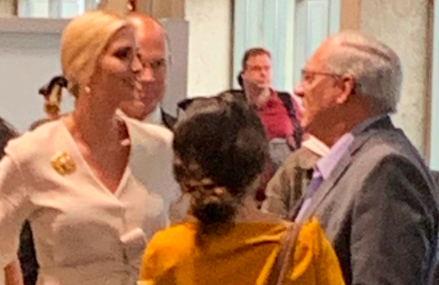
Alaska Republican Party Chairman Glenn Clary and Ivanka Trump were spotted in the Kansas City International Airport exchanging pleasantries today. A quick-thinking Must Read Alaska reader sent the photo.

Clary said he was sharing encouragement with Ivanka Trump, the daughter of President Donald Trump, and said he looks forward to the Republican National Convention in Charlotte next year, and that the Alaska Republican Party stands behind the president.

Sen. Sullivan has new regional director for Fairbanks, rural

1

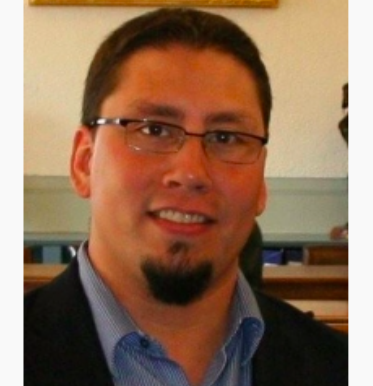
U.S. Senator Dan Sullivan announced that Greg Bringhurst has been hired as his Fairbanks regional directorย and rural advisor.

Bringhurst will replace Leslie Hajdukovich, who served in this position for the last four and a half years.ย 

โ€œI was so thankful to have Leslie representing the office in Fairbanks. Together with our fantastic constituent relations representative Lisa Harbo, Leslie provided excellent service to Interior residents and was a joy to work with. We are excited to bring Greg on board to maintain this high level of service,โ€ย Sullivan said in a statement.ย โ€œHis demonstrated leadership and the expertise heโ€™s gained through his previous experiences serving our state make him a welcome addition to our team. I am confident his experience and strong relationships in the community will be a major asset in serving Alaskans in the Interior.โ€

Born and raised in Fairbanks, Bringhurst was most recently the director of public policy and government affairs at Cook Inlet Housing Authority. He has also worked as a legislative assistant for U.S. Senator Lisa Murkowski in Washington, D.C., as a legislative aide in the Alaska Legislature, and for the Tanana Chiefs Conference.

ย He was a 2014ย Republicanย candidate forย District 1ย Fairbanks in theย Alaska House of Representatives. Scott Kawasaki won that seat for the Democrats.

Bringhurst has been an active volunteer with many organizations in the Interior and is a graduate of the University of Alaska Fairbanks.ย 

YouTube address: University President update on lessons learned, fractured unity

11

University of Alaska President Jim Johnsen took to social media to review the Board of Regents’ discussion with the accrediting agencyย and actions the Board took at its meetingย Monday. Heย reflects on how UA unity that he built during the budget debate, has now fractured and addressesย lessons learned:ย 

Casino in Eklutna is a gamble Berkowitz would take

By CRAIG MEDRED.NEWS

The Alaska Department of Law canโ€™t seem to make up its mind on whether the 49th state should favor or oppose the opening of a Native-owned casino near Anchorage, but city Mayor Ethan Berkowitz is down with the idea and has been for a long time.

โ€œThe Municipality of Anchorage supports the (Native Village of Eklutnaโ€™s) goals of economic determination and believes both the tribe and the surrounding community will benefit from the jobs and related economic development the project will bring,โ€ he wrote the U.S. Department of the Interior in January of last year.

His endorsement at the time went unreported and has for some reason never made the news.

In January of last year, Interior was considering whether a Native allotment near Birchwood belonging to Olga Ondola qualified as โ€œIndian Landsโ€ per the terms of theย  Indian Regulatory Gaming Act.

Six months after getting Berkowtizโ€™s letter, the Department of Interior ruled the parcel was not โ€œIndian Land,โ€ stymying the plans of the Village of Eklutna, which had contracted to lease the land from Ondola in hopes of opening a casino-style gaming business near the busy Glenn Highway between Anchorage, the stateโ€™s largest city, and the Matanuska-Susitna Borough, the largest cityโ€™s biggest bedroom community.

The tribe is now suing Interior in hopes of overturning the decision.ย 

Casino-style gambling is illegal in the 49th state. An โ€œIndian Landโ€ or โ€œIndian Countryโ€ designation for the Ondola property would, however, sidestep state restrictions by creating a mini-nation within the state with powers to govern itself free from some state laws.

Read the rest of this story at CraigMedred.news.