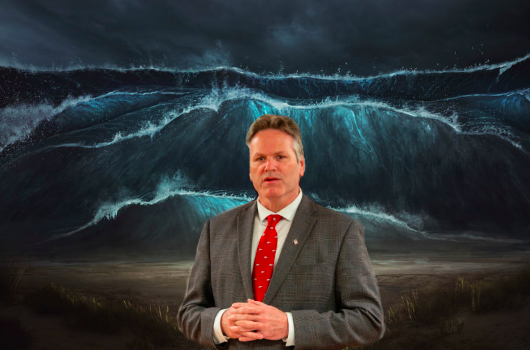
Mike Barnhill, who has been the director of Policy in the Office of Management and Budget, has been named acting commissioner of the Alaska Department of Revenue.
Barnhill assumes his new role with the Department of Revenue tomorrow, Dec. 3. Bruce Tangeman resigned last month, agreeing to stay on to make a transition to a new commissioner.
Barnhill has a long and distinguished record of public service with the State of Alaska spanning two decades, said Gov. Mike Dunleavy. He is a former deputy commissioner in both the Departments of Revenue and Administration, and served as an assistant attorney general in the Department of Law.
The announcement of Barnhill moving to Revenue comes just days before the governor’s Fiscal Year 2021 budget is due.
Barnhill is a graduate Cornell Law School, where he was editor of the Cornell International Law Journal. He earned his undergraduate degree in religious studies and history from the College of Wooster.
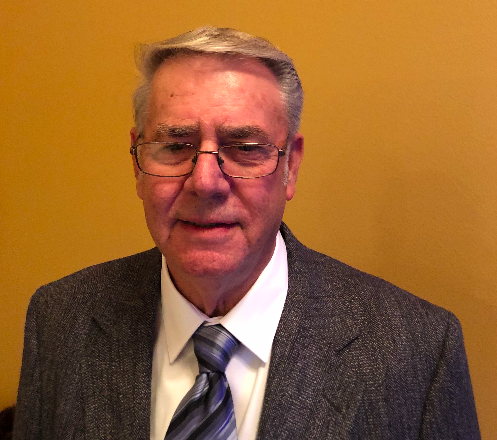
A plain-spoken Alaskan who started out 76 years ago in Kilgore, Texas as one of four boys raised by a single mom, is the newest member of the Alaska House of Representatives.
It’s a classic “only in Alaska” life story that began in a small town in East Texas, where Mel Gillis grew up hunting rabbits and squirrel, and where he left to seek his fortune in Alaska.
Gillis was sworn in by House Speaker Bryce Edgmon this afternoon after the Republican caucus met and approved him unanimously.
His rise to the House of Representatives occurred after a series of unforeseen events: Sen. Chris Birch died quite suddenly this summer, and Rep. Josh Revak moved to the Senate to represent Senate Seat M, opening up the District 25 seat.
Gillis, who is a hunting guide by trade, was on an elk hunt in Idaho when he decided to throw his name in the ring for consideration. He had to hustle into the nearest town and find a fax machine, write up his resume, and get everything back to the District 25 Republican Party officers before the deadline. There wasn’t a lot of wiggle room but he made the deadline.
He made it past the interview with his District, and was one of three interviewed by Gov. Michael Dunleavy, who forwarded his name to the Republicans in the House of Representatives. And yes, he had to come back from a hunting trip for that interview with the governor. Afterwards, he headed right back to his hunt.
Gillis has had little political experience in his long and storied life, except for the effort he put into getting Revak elected to the District 25 seat. That, and he donated to the campaign of Gov. Jay Hammond and Congressman Don Young. But other than that, he learned about how campaigns are won by wearing out his own boots for Revak.
And that was a prodigious effort, as it turned out. Gillis said he “walked the heck out of the district,” telling people why Revak was the right choice. It was a primary, and Revak was challenging Rep. Charisse Millett. Gillis thought it was time for a change.
Revak has thought of Gillis almost like family. The two met when Revak, who does a lot of volunteer work for wounded veterans, asked Gillis if he’d consider taking some wounded warriors out to his lodge at Sandy River for some fishing. Gillis made it happen. He says he has a hard time turning down a veteran.
“If a wounded warrior needs something, I’m all in,” he said. The two men formed a bond.
Gillis came to Alaska after dropping out of college in the mid 1960s. He found a job as a carpenter for the Bureau of Indian Affairs, rebuilding the school in Old Harbor on Kodiak Island, which had been destroyed by a tsunami that resulted from the 1964 Good Friday earthquake.
He joined the National Guard, and worked on platforms in Cook Inlet for a few years, before settling on construction — working concrete in the summers and being a hunting and fishing guide in the shoulder seasons. It’s a combination of work that supported him, his wife and son, until he retired out of Local 867 in the mid-80s and has just been guiding since then — moose, caribou, sheep, deer, and bear.
Gillis, who has retained his charming Texas drawl, has spent the last 50 years as an Alaskan, has been married to his wife Anne for nearly as long, and is the father of a grown son. He’s lived in the district for 30 years.
Now, however, it’s a new phase of life, a new landscape to learn. Instead of retirement, he’ll be heading to Juneau in January and learning the ropes of lawmaking, the protocols and how legislation is really made.
His friends describe Gillis as the kind of guy who can roll up his sleeves, and sit down with anyone to solve a problem. He’s a practical kind of person, they say, who will negotiate the political scene well.
So it’s no wonder that when asked what his favorite book is, he didn’t hesitate: It’s the one written by his nephew, Dr. John Gillis: “Powerhouse: 13 Teamwork Tactics that Build Excellence and Unrivaled Success,” which was published just this year. He’s hoping to use lessons from that book as he joins the 39 other House members who are sent to Juneau to fight for what they believe is best for their district.
“I am honored to have been selected to work on behalf of the wonderful people of District 25. We have a lot of complex issues to cover this year. I am looking forward to meeting the remainder of my colleagues, hearing from my friends and neighbors about the issues that matter most to them, and preparing for the upcoming legislative session,” Gillis said in a statement.
Anchorage police have taken Tylan Fely, age 34, into custody. He faces charges of Murder 1, Murder 1, Murder 2, Arson 3, Misconduct Involving a Weapon 3, Misconduct Involving a Corpse, Tampering with Evidence, Criminal Negligent Burning 2 and Criminal Mischief 3.
The victims, found in a burning car on Saturday in East Anchorage, are believed to be an adult female and juvenile female, according to police. The cause of death and identities of the two victims are still being investigated and haven’t been determined at this time, police said.
Detectives said they believe this is an isolated incident and family related.
Fely is listed as a North Slope worker on his Facebook page.
The White House is ready for Christmas, and the decorations were unveiled on Monday, Dec. 2.
This year’s theme, “The Spirit of America,” pays tribute to traditions, customs, and history that make America great. The displays were designed by First Lady Melania Trump, an immigrant who is the first First Lady to be a naturalized citizen. This is her third year of being in charge of decorating the White House for the holidays, which have returned to be called “Christmas,” in the Trump White House.
During the Obama era, the White House Christmas displays were known as “Holiday Displays.”
The White House decorations this year celebrate the courageous individuals who have shaped our country and kept the American spirit alive, the White House wrote in its description.
In the East Wing, the Gold Star Family Tree is a tribute to Gold Star families, those who lost loved ones in war. The tree was decorated by Gold Star families.
Around the corner, the East Colonnade is a timeline of American design, innovation, and architecture. Through the archways, the East Garden Room displays the First Family’s annual ornament and Christmas card. This year, both showcase the American flag.
Entering the Ground Floor Corridor, the Vermeil Room highlights the spirit of generosity of previous First Ladies. Two trees are illuminated with tones of blush and gold and pieces of historic vermeil. In the Library, the legacies of Presidents are celebrated with past and present White House Historical Association annual ornaments.
The 2019 ornament is featured on the center tree and honors President Dwight D. Eisenhower.
Upstairs in the East Room are four star-spangled trees, decorated with stars and cascading ribbons, and topped with gilded eagles, the national bird. Various features of the American flag are incorporated.
For the 52nd year, the White House Crèche is on display.
Moving into the Parlors, the Green Room features beloved and classic Christmas tales, the White House Advent calendar. A time-honored tradition, the official White House Christmas tree is in the Blue Room and measures 18 feet tall. It is decorated with floral emblems from every state and territory.
The Red Room is decorated with games.
The Gingerbread House features the South Portico of the White House and landmarks from across the country, including the Golden Gate Bridge, Space Needle, Mount Rushmore, the Alamo, Gateway Arch, Liberty Bell, and Statue of Liberty. It was made by the White House pastry team of 200 lbs. of gingerbread dough, 125 lbs. of pastillage dough, 35 lbs. of chocolate, and 25 lbs. of royal icing.
Ending in the Grand Foyer and Cross Hall, guests find themselves in a glistening winter garden, filled with 22 evergreens, 14 golden magnolia topiaries, 10 floral urns, and dusted with decorative snow.
“This Christmas season I want to honor those who have shaped our country and made it the place we are proud to call home, and I am excited to announce our White House holiday theme, ‘The Spirit of America’ ” said First Lady Melania Trump. “When I travel the country, I am inspired by the hard working people and families that I meet. No matter which state they call home, many Americans share a strong set of values and deep appreciation for the traditions and history of our great nation. Thank you to all of the staff and volunteers who worked to make sure the People’s House was ready for Christmas. Wishing everyone a very Merry Christmas and Happy New Year”.
Throughout the month of December, the White House welcomes guests to open houses, tours, and receptions.
Here we are, into December, and months since the Recall Dunleavy charade began collecting signatures to undo last year’s election, and Alaskans still have no idea who – or what – is picking up the tab for the effort.
Its Alaska Public Office Commission report is replete with zeros when it come to listing income or expenditures for the recall effort.
The recall’s financial backers, whoever they may be, are determined to run Republican Gov. Mike Dunleavy from office largely for his audacious rip-off-the-Band-Aid approach to curbing Alaska’s budget woes. Cutting the budget to the bone means a lot of those feeding at the government trough are getting short rations – and they are displeased.
They are so very displeased, in fact, they could barely wait to get started. Dunleavy had been in office only 241 days when the first recall signatures were gathered.
What mayhem had he visited on Alaska to spark the fervor? Recall backers say he refused to appoint a judge to the Palmer Superior Court within the required 45 days, even though the position was filled before the retiring judge had vacated the bench. They claimed he used state funds to buy ads containing partisan statements about political opponents; that he erroneously vetoed $18 million from state Medicaid funding; and, that he vetoed funds appropriated for the judiciary in retaliation for a court decision on abortion.
Is any of that grounds for a recall in a state that requires a lack of fitness, incompetence, neglect of duties, or corruption as grounds to remove officials? Hardly.
Face it, Dunleavy is in their sights because he committed the biggest sin anybody can when dealing with the Left: He did not bend to its will.
The fact that recall backers can do what they are doing in secret should bother all Alaskans. Recall Dunleavy can take in and spend unlimited, unspecified amounts of money from anybody, except foreign interests – until the question hits the ballot. Then, if they roll over any left-over signature-gathering money into the ensuing election campaign, backers would have to report every penny collected and spent since signature-gathering started Aug. 1.
If the group were to choose not to carry forward any leftover signature-gathering funding, Alaskans might never know who financed the effort to place the question on the ballot.
That seems wrong. Obviously, Alaska’s laws concerning disclosure for ballot initiative campaigns need to be fixed, but, in the meantime, Recall Dunleavy is attempting to remove a sitting governor without telling Alaskans who or what is funding the effort. It is, as we have pointed out, a ghost ship fueled by dark money.
You might think the group would, as a matter of course, want to get it out in the open, no matter the law, but you would be wrong.
Alaskans deserve better than a secretly financed effort to remove their governor. Much better, indeed.
The mayor of Anchorage declared a state of civil emergency due to pending state budget cuts this past summer and prolonged special sessions of the Legislature as it tried to find agreement on the State’s operating budget.
Now, one member of the Anchorage Assembly doesn’t want the State to balance its budgets going forward with private prisons — not in Anchorage’s backyard, anyway.
On Tuesday’s Assembly agenda is a resolution authored by Felix Rivera that would ban private prisons in Anchorage. It’s more of a statement, not unlike the mayor’s civil emergency was this summer, because there’s no evidence that the State of Alaska plans to convert any of its in-state prisons to privately managed facilities. The Anchorage Correctional Complex (850 prisoners) and Hiland Mountain women’s prison (400 prisoners) are the two that are within the municipality that could qualify for privatization.
The Department of Corrections has explored sending some prisoners out of state, rather than build new prisons in Alaska to house the flood of criminals that are crowding Alaska’s criminal justice system. The department is focusing on prisoners with multiple life sentences, those who are unlikely to ever mix with civil society again. Shipping the worst prisoners out of state was done for many years and is still an option. Some of those out-of-state prisons may be privately run.
But Rivera, who chairs the Assembly, wants to make sure that that, in addition to no private prisons in Anchorage, no prisoners get sent out of state, either. His resolution states that treatment and reformation of prisoners requires humane care and that prisoners in private prisons would not be likely to receive such care.
His resolution also articulates opposition to shipping prisoners out of state, where the costs of their “three hots and a cot” can be contained.
Rivera, who is running for reelection for District 4, Seat G on the Assembly, says that any underlying profit motive naturally undercuts the ability to prove a degree of custody and care expected by Alaskans.
He also states that family and friends need to have contact with their family members who are incarcerated. Rivera states that privately run prisons lack adequate oversight and put inmates and staff at risk.
Further, his resolution states, Alaska has shown a preference for in-state facilities, as evidenced by the construction of the Goose Creek Correctional Center in 2012.
The Anchorage Assembly will have a chance to discuss the Rivera resolution at its Tuesday meeting, which begins at 5 pm with a business meeting in the Assembly Chambers of the Loussac Library.
McGUIRE’S SB 114 WOULD HAVE SOLVED SO MANY PROBLEMS FOR ALASKA
As the Alaska Republican Party gets ready for a big Unity Gala on Dec. 6, it’s facing epic struggles from within — an argument between those who want the statutory Permanent Fund dividend paid, and those who are willing to pay out a dividend based on what downsized government programs don’t need.
A handful of hardline Republicans are even planning to picket the Unity Gala, calling those who attend compromisers and “rinos” — Republicans in Name Only. Among attendees? Gov. Michael Dunleavy and about 800 other Republicans who are trying to bring some harmony back to the party.
Those protesters risk marginalizing themselves and their message, falling on the sword of the Permanent Fund dividend, when so much more is at stake — including another $1 billion deficit faced by the Dunleavy Administration in the coming budget cycle, and dropping oil prices combined with flat production.
Far more things define Republicans than divide them. The Permanent Fund — as it’s currently paid — is problematic, in that it’s going to be a political football each and every year and lead to instability and division. Of course, Alaskans can thank former Gov. Bill Walker for making the dividend a political decision, but since he did so in 2016, the majority in Legislature has continued the “Political PFD” practice, rather than repair the formula itself.
Ultimately, this protracted argument over the statutory formula is one that didn’t have to occur. There was a solution offered in 2015 — an elegant solution.
SB 114 came from then-Sen. Lesil McGuire, who argued for a “Percent of Market Value” approach to tapping the earnings of the Permanent Fund. And a set formula for determining dividends going forward.
She fought for her legislation for two years, and in April, 2016, made one last valiant push for it in a commentary that ran in the Anchorage Daily News (then-Alaska Dispatch). Here’s what McGuire wrote in 2016:
By SEN. LESIL MCGUIRE
Hey, Alaska! Have you heard about a plan that would help stabilize government services, enhance our fiscal health, prevent a deficit-driven recession and ensure a dividend is still paid to every Alaskan?
By now almost everyone knows that the state is facing a very serious budget deficit. The Legislature has reduced spending by more than $1 billion over the last two years. We are currently looking for additional reductions and greater efficiencies. There have been tax proposals introduced. However, even a combination of taxes and budget reductions will never close the deficit. We have been saved before by rising oil prices. We will not be saved this time.
The word “petrichor” means the smell of rain. Many Alaskans believe the Alaska Permanent Fund was created as a rainy day fund — for when the revenue from our nonrenewable resources diminished. The volume in the trans-Alaska pipeline is so low oil would have to rebound to $110 per barrel to balance our budget. Does that mean it’s raining?
Einstein said, “You cannot solve a problem from the same consciousness that created it.” We need to find a new path. We will not raid the Permanent Fund.
Last April, I introduced Senate Bill 114. If enacted, the bill would cut the deficit in half. It would guarantee every eligible Alaskan at least a $1,000 dividend. Because it would not close the deficit entirely, it would maintain downward pressure on the size and spending of state government.
Here’s how SB 114 works: It would recalibrate where the dividend comes from by tying it directly to the royalties the state receives from mineral leases.
Responsible development means a bigger dividend.
Next, the bill would utilize part of the Earnings Reserve Account in a percent of market value calculation to yield a sustainable revenue stream for essential state services.
This is not a raid on the Permanent Fund. In fact, SB 114 would help protect the fund and the dividend program by restoring a measure of sustainability. This is not a way for government to increase its budget.
SB 114 connects Alaskans directly to our share of the natural resources, which belong to each of us. It protects the dividend into the future, because without a structural change the dividend will likely end in a few short years. This bill is a way to ensure essential services for Alaskans can be provided, such as: public safety, firefighters, roads, education, health and human services, the Alaska Marine Highway, parks and recreation, and fish and game management.
When I crafted SB 114 I had these principles in mind:
1) it must retain a dividend without making the dividend dependent on the size of government.
2) It must reduce the volatility in the state budget.
3) It must clearly expose the cost of government, and ensure Alaskans could begin an honest assessment of needs versus wants.
4) It must be enduring to allow the maximum use of our wealth over generations so the benefits and burdens are shared.
5) It must be simple and easy to implement.
This is a new path forward.
Without a new approach, our Constitutional Budget Reserve will be drained entirely in only two years. Once this happens, the single remaining source of funding for services will be the Earnings Reserve Account — the same one used to pay dividends. When that day comes, the state will have to make the difficult choice of paying out dividends or funding essential services for Alaskans.
Even if every new proposed tax was implemented immediately, the Earnings Reserve Account would still be in the financial crosshairs in just three years, placing the PFD in jeopardy.
If we take a new path, such as SB 114, the state will dramatically reduce income volatility and preserve the dividend program for future generations. There are two other proposals to re- engineer the use of the Earnings Reserve Account. Only SB 114 guarantees a dividend of $1,000 or more. The dividend has helped make Alaska a great place to live for decades. I remember the day when I received my first dividend check, and what it meant to me. I have a deep personal connection to the program, but if we don’t act soon to protect it, the dividend may go the way of the dinosaur.
If you like the dividend program, SB 114 is your bill. If you’d like to see reduced volatility in state budgeting, SB 114 delivers. If you’d like to see continued downward pressure on the spending of state government, then my bill make sense.
I can smell the petrichor in our path. At this critical juncture in Alaska history, SB 114 is a new path forward.
Sen. Lesil McGuire, R-Anchorage, served in the Alaska Legislature from 2001-2017.
It’s been a year since Gov. Mike Dunleavy was sworn into office on Dec. 3, 2018. Just five weeks after his taking the oath of office in Kotzebue, the first lawsuit landed.
It was from an angry Juneau lawyer who, as an “at will” state employee, was released from employment from the Department of Law last December. Libby Bakalar, who also runs a tart Twitter account and now represents pro bono anyone who wishes to sue the governor, has since called for a union for state lawyers like she was, to protect them from a governor who might wish to see them gone.
It didn’t take long for a tsunami of lawsuits to flood the Dunleavy administration, along with ballot initiatives that his political adversaries are using to either ensure he is not in office long, or make it impossible for him to downsize state government. Or deliver on his promise to pay a full Permanent Fund dividend to qualified Alaskans.
Here’s a list, to date, of what leftist have filed in the courts to ensure their vision of a big government, no accountability economy remains viable:
01/10/2019: Bakalar, Elizabeth vs. Dunleavy, Michael J. On Feb. 6, the case was moved to U.S. District Court. The presiding Judge is John W Sedwick, who was once a judge in the Bill Allen corruption trial. The last action in the court was Sept. 17, 2019, an answer to the complaint. This former assistant attorney general was one of the first to be released from the Dunleavy Administration and is suing the governor and his former Chief of Staff Tuckerman Babcock. Bakalar is represented by the ACLU.
The administration’s recent legal response to Bakalar’s lawsuit is linked here:
01/10/2019:Blanford, Anthony and Bellville, John et al vs. Dunleavy, Michael J. On Feb. 6, the case was moved to U.S. District Court, case number 3:2019cv00036. Assigned to Presiding Judge John W. Sedwick, moved to Judge H. Russel Holland. Discovery and other filings are not due until August, 2020, expert witness lists due in April, 2020. Blanford and Belleville, who were both psychiatrists at Alaska Psychiatric Institute, were released after they did not provide a letter saying they wanted to stay on with the administration. Blanford and Bellville are represented by the ACLU.
Blanford has since been hired back by the company brought in to manage API, which was on the verge of total chaos when the Dunleavy Administration assumed office.
05/01/2019:Coalition for Education Equity vs. Dunleavy, Michael; assigned to Judge Yvonne Lamoureux. This case involves an attempt by the Dunleavy Administration to cut funding for education. The case is in the discovery phase with cross motions. Attorneys for the coalition, headed up by the wife of Sen. Tom Begich, are Howard Trickey and Matt Singer. The group, which is funded by State funds that are sent to school districts, and are then given to the group as membership dues, also filed to intervene in a separate case involving school funding.
07/15/2019:Kevin McCoyand Mary Geddesvs. Dunleavy, Michael. These two Anchorage attorneys, self-represented, sued after Dunleavy called a special session in Wasilla. They claim only Juneau can be the site of a special session. The case was assigned to Judge Herman Walker, who recused himself. It was reassigned to Judge Josie Garton, who has ruled that the two have standing and the case may proceed.
07/17/2019: American Civil Liberties Union of Alaska on behalf of Bonnie Jack and John Kauffman vs. Dunleavy, Michael. They are suing over “punitive” cuts to the court system that were made by Dunleavy, which represented less than one percent of the court’s budget. Dunleavy’s rationale was that if the Supreme Court insisted on the State paying for elective abortions with Medicaid funds, then it should come from the court’s administrative budget. The case is assigned to Judge Jennifer Henderson.
07/16/2019:The Alaska Legislative Council vs. Dunleavy, Michael, regarding Fiscal Year 2020 forward funding for education and whether the Legislature can tie up state funds in future years without actually having those funds yet in the treasury, essentially check kiting programs. Assigned to Judge Daniel Schally, the attorney for the Legislative Council is Hillary Martin, and individual legislators against Dunleavy are represented by Gov. Walker Chief of Staff Scott Kendall. On Nov. 21, the final judgment went against the governor, and it was appealed to the State Supreme Court.
10/9/2019: Parker, Kelly S vs. Dunleavy, Michael. The case, assigned to Judge Jennifer Henderson, this involves yet another State attorney who feels she was wrongfully fired by the Dunleavy Administration after she refused to submit a resignation letter. Kelly is represented by the ACLU.
11/04/2019:Rider, Marion et al vs. Dunleavy, Michael. This case involves families of those with relatives in the Alaska Pioneer Home who don’t think the State should have increased the fees for those living in the state-funded homes. The case has been assigned to Judge Trevor Stephens. On Nov. 25, Vance Sanders and Elizabeth Bakalar, attorneys for the Riders, made a motion for a class action certification.
11/05/2019:Recall Dunleavy vs. State of Alaska Division of Elections. Initially assigned to Judge Una Gandbhir, it was reassigned to Judge Jennifer Henderson. Henderson recused herself and the case was reassigned to Judge Eric Aarseth. Attorneys for Recall Dunleavy are Scott Kendall, Jahna Lindemuth, Sam Gottstein, Jeffrey Feldman, and Susan Orlansky. Attorney for State of Alaska is Margaret Paton-Walsh. Attorneys for Stand Tall With Mike are Michael Bruce Baylous, Jamieson Brewster, and Craig Richards.
On Nov. 27, the Recall Dunleavy attorneys filed a motion for the court to accept an “over-length brief” regarding a motion for a summary judgment. The recall group cites 15 offenses that they believe show a recall election should proceed. They are likely betting that the judge will approve at least one of them as legally sufficient, enough to get it on a ballot this year. The Department of Law has until Dec. 16 to respond.
11/14/2019: Vote Yes for Alaska’s Fair Share vs. Meyer, Kevin (lieutenant governor) and the Division of Elections. (See ballot initiative below). The case is assigned to Judge William Morse. Although the pro-tax group was given the state Attorney General’s OK on initiative language, and the Division of Elections director’s approval to begin collecting signatures on the petition for a higher oil tax production, the group disputes a characterization by the Attorney General that the petition language is misleading. The lawsuit was filed by Robin Brena, who heads up the Vote Yes group, and who is the primary funder of the ballot initiative. Brena is former Gov. Bill Walker’s law partner and a long-time advocate for higher oil taxes.
11/20/2019: Denali Nicole Smith vs. Dunleavy, Michael J., Kevin Clarkson, Bruce Tangeman, Anne Weske. Smith is married to a woman in the military. She lives out of state with her wife. Smith claims she was denied a Permanent Fund dividend because of her marital status. The governor and Department of Law dispute that claim and say her check was in process, and that she knew it was in process when she filed the lawsuit. This appears to be a political lawsuit meant to teach the governor some kind of lesson. Caitlin Shortell and Heather Gardner are attorneys for Smith.
19OGTX – An act relating to the oil and gas production tax,tax payments, and tax credits. The group calls it the Fair Share Act, and it seeks to unwind Senate Bill 21, the current governing legislation that determines taxes on oil. Petition booklets have been distributed, and signatures are being gathered. Primary sponsors are Robin Brena, Jane R Angvik, and R Merrick Peirce. Brena is former Gov. Bill Walker’s law partner and Peirce is a Bill Walker colleague from the defunct Alaska Gasline Port Authority. Story here. The group is trying to get the signatures by Jan. 21, to make it onto the a ballot in 2020.
19SEBR – Alaska Students’ Educational Bill of Rights. Petition booklets have been distributed, signatures are being gathered. Amy Jo Meiners, Alexander Jorgensen and Rabbi Abram Goodstein are the primary sponsors.
19AKBE – Alaska’s Better Elections Initiative. Petition booklets not yet distributed. The group is seeking to upend Alaska’s election system by eliminating the party-specific primary, creating a “jungle primary,” with “instant runoff” and a ranked voting methodology, and eliminating the ability of citizens to create independently run campaign groups to support candidates or initiatives. This initiative is supported entirely by Outside funders from the East Coast targeting Alaskans to make it easier for Democrats to take control the state.
The lieutenant governor said no to the initiative because it violates the single-subject rule. The group sought to be allowed to collect signatures anyway, while the matter goes through the courts. An Alaskan filed a lawsuit against the lieutenant governor to prevent the distribution of the petition booklets for signatures. The petition books are now out and signatures are being collected.
Attorney for the Better Elections Initiative is former Walker Chief of Staff Scott Kendall and former Walker Attorney General Jahna Lindemuth.
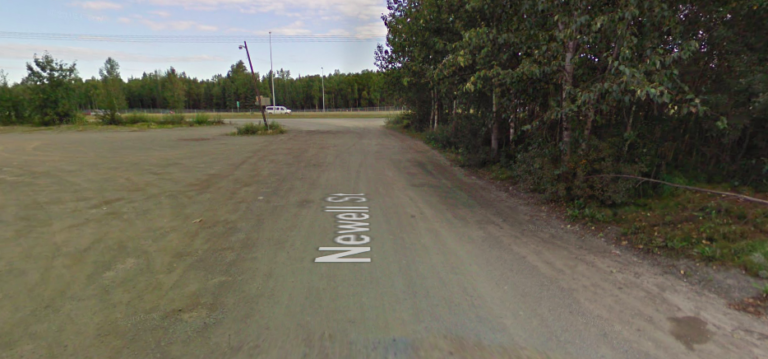
At 11:12 pm on Nov. 30, Anchorage police and fire personnel responded to the 200 block of Newell Street, where an SUV was fully engulfed in flames while parked in a vacant lot.
Police said two people were inside and the deaths are suspicious. The exact cause of death will be determined and identities of the victims will be confirmed by the medical examiner.
Newell Street is a dead end dirt street that meets up with Boundary Avenue. On the west side is a trailer park, and on the east side a vacant lot.
If these are determined to be homicides, they would be the 29th and 30th of 2019, topping last year’s 28 murders in Anchorage. The city set a record in 2017 with 37 homicides.
Just seven days earlier, a dead person was found in a burning SUV near E. 22nd Avenue and More Street, near Cheney Lake Park, which is east of Boniface Parkway.
The suspect in that homicide is Trevor Babcock, 42, who has a long string of prior contacts with the Alaska Court System.