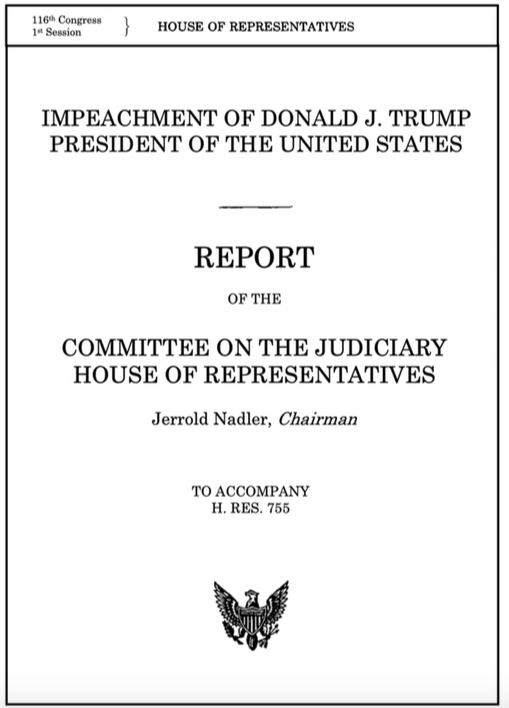
Here are the complete articles of impeachment of President Donald J. Trump, as released Sunday night by the House Judiciary Committee’s Democrat majority.
The committee approved two articles — abuse of power and obstruction of Congress. The committee vote went along party lines.
The House Rules Committee meets Tuesday to establish the rules for the debate on the House floor, preceding the full vote..
The House is scheduled to debate and vote on Wednesday. Debate on the issue is likely to consume the entire day, and Speaker Nancy Pelosi said she will not require Democrats to vote a certain way, but that this will be a matter of conscience. Democrats will try to get the vote accomplished for the evening news cycle.
Because Democrats control the House, the resolution will likely pass with a majority, although some Democrats are expected to vote against in, particularly those who serve districts where Trump is popular.
This will be the third impeachment of a president in U.S. history; Andrew Johnson and Bill Clinton were impeached, but no president has been removed from office through impeachment.
The charges will then go over to the Senate as a “privileged resolution,” which means the Senate must take it up immediately, with the senators serving as the jury. U.S. Supreme Court Chief Justice John Roberts will preside.
The prosecutors will come from the ranks of the House Democrats and the president will choose his own defense lawyers. The trial is expected to take place in January.
The Anchorage Assembly is getting ready to establish government-to-government relations with the Village of Eklutna, which is within the Municipality of Anchorage near Chugiak. The Tribal Council of Eklutna estimates the population of the tribe to be about 70, with members scattered across Alaska.
That’s about the size of a large family, with aunts, uncles and cousins in the mix.
A resolution to be voted on Tuesday recognizes the tribe as a sovereign entity, but does not describe what sovereignty means in this context.
In general terms, tribal sovereignty means there is an inherent authority of indigenous tribes to govern themselves within the borders of the United States. However, most tribes are deeply dependent on federal, state and local governments, and are unable to actually function as sovereign entities. Tribes are sometimes called “domestic dependent nations” inside the U.S., as wards of the government that operate a limited amount of their own affairs.
The Anchorage resolution “recognizes there are inherent rights, opportunities, protections, and obligations that come with self-governance,” yet fails to describe those inherent rights, opportunities, protections, and obligations. Are they Second Amendment rights? What inherent rights do some Americans have that others don’t?
The matter of tribal gaming looms large in this discussion. In October, the tribe sued the Department of Interior for blocking the tribe’s attempt to open a gaming operation along the Glenn Highway near the Birchwood Airport in Chugiak. Mayor Ethan Berkowitz has come out in support of tribal gambling enterprise, which he has described as modest. The initial plan is for electronic bingo games.
Last year, the Interior Department ruled that the tribe does not have governmental authority over the specific land earmarked for the gaming facility. The land does not constitute “tribal land” under the Indian Gaming Regulatory Act, according to DOI.
Currently, there is just one tribal gambling operation in Alaska at the sole sovereign Indian Reservation in the state. Metlakatla opted out of the Alaska Native Claims Settlement Act, and chose to retain rights to its land, which is in federal trust status. The tribe runs an electronic bingo hall in the village.
The government-to-government compact would help the municipality have a seat at the table to further the gambling plans, which the tribe has been working on for two decades.
While many Alaskans are concerned that this new interpretation of sovereignty could open the floodgates to the development of casinos, others see economic opportunity and jobs.
The Eklutna members are arguing that the plot of land in question is part of their ancestral homeland, and that the tribe is active in land management and protection. The lawsuit says that the Department of Interior has ruled in favor of tribes in other states that want to operate “Class II” gambling facilities on non-reservation allotments.
Eklutna as a tribal government was organized in 1961, long after Anchorage was a growing metropolis. At the time, its membership was about 50. It is a federally recognized tribe, and among the smallest.
Its mission is “to empower Idlughet Qayeht’ana (Eklutna Village Dena’ina) by promoting the history, culture and identity of our sovereign nation, and to assist in the education and well-being of our Tribe.”
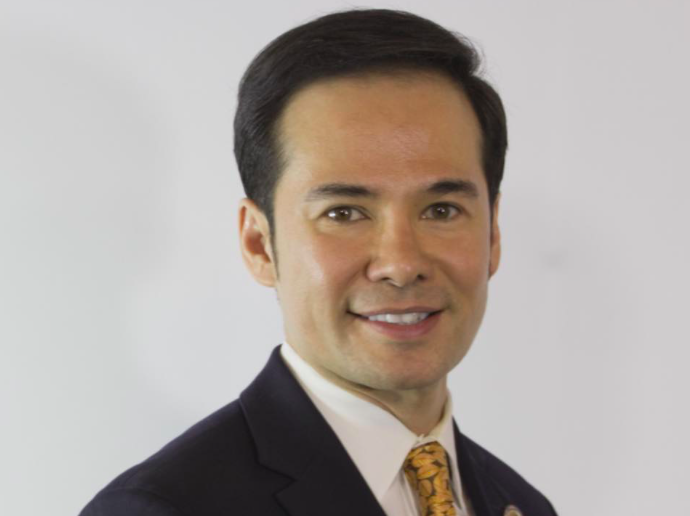
The resolution is sponsored by Assembly members Chris Constant, Kameron Perez-Verdia, and Forrest Dunbar, who is a declared candidate for mayor.
Gov. Mike Dunleavy is heading to Washington, D.C. this weekend; on Monday he will speak to an audience at the Heritage Foundation. His remarks on his commitment to transparency in budgeting, his approach to fiscal discipline, will take place at 11 am Eastern Time, 7 am Alaska time.
“Following years of deficit spending, in his first year in office and facing a $1.6 billion fiscal gap, Alaska Governor Mike Dunleavy proposed a budget that aligned expenditures with revenues,” the Heritage Foundation wrote in its introduction of the event.
UPDATE:Doyon is also out of AFN, Must Read Alaska has just learned.
The Alaska Native Corporation ASRC board of directors has voted unanimously to leave the Alaska Federation of Natives.
No explanation was given by the corporation, which is the largest of the 13 regional Native corporations set up after President Richard Nixon signed the Alaska Native Claims Settlement Act, or ANCSA, into law in December, 1971.
KTUU reported that AFN President Julie Kitka was putting a positive spin on the development, saying that AFN still hopes to work with ASRC.
But losing its wealthiest member has to be a setback for her increasingly radicalized organization; AFN was founded in 1966 but is a very different organization today under Kitka’s leadership. During the most recent convention, it became apparent that the radical elements had taken control. ASRC’s Chairman Crawford Patkotak (Ahkivgak) rose to speak against the climate change resolution during the convention in October, but his remarks were not heeded by AFN, which passed the resolution anyway.
ASRC has also recently joined forces with other business entities in Alaska under the banner of “One Alaska,” to fight the latest oil tax hike initiative called “Our Fair Share,” which is now in the signature-collecting stage. An increase in the oil tax would put a chill on the investment decisions still pending for major North Slope oil projects that are predicted to bring a renaissance of prosperity to Alaska.
During the recent AFN conference, the organization declared a climate change emergency that may have played poorly in the board rooms of the Native Corporations, some of which have businesses that intersect with Alaska’s oil patch. ASRC, based on the North Slope, has extensive financial ties with oil exploration and production, and is the largest Alaska-based corporation.
ASRC owns Petro Star Inc., the only Alaska-owned refining and fuel marketing operation in the state, with two refineries along the Trans-Alaska Pipeline that serve Alaska communities from the Interior all the way to Dutch Harbor. It’s one of its several successful lines of business that bring handsome dividends to shareholders.
Other Native Corporations could follow ASRC’s lead as they watch AFN use the youth from rural areas to push an anti-business agenda. AFN’s political focus now includes shutting down the oil industry due to climate change concerns.
ASRC is looking at how to grow jobs for shareholders and how to add value to Alaska’s economy, while defending whaling, which is an important quality of life issue for its shareholders, sustaining them for thousands of years.
ASRC endorsed Gov. Mike Dunleavy in 2018, while AFN endorsed Mark Begich after Gov. Bill Walker withdrew from the race. During the AFN conference in October, radicals disrupted Dunleavy’s remarks. He had been invited to speak but was shouted down by the radicals in the audience. It was an unprecedented act of disrespect to an invited guest, and occurred while First Lady Rose Dunleavy, who is Inupiaq, stood by her husband on the stage, in shock.
That may have been the turning point for Native Corporations, who are voting with their feet. It signals a marginalization of AFN if the companies that finance their conventions decide to withdraw.
In an internal letter, CEO and President Rex Rock said the decision was to reprioritize the company’s efforts toward its home region, to focus on the needs of Alaskans on the North Slope, stakeholders, and communities, and the people the company strives to serve. He said the company would continue to work with AFN on issues where there is alignment.
Calista and Doyon also own oil-related companies. Must Read Alaska learned this evening that Doyon has also decided to leave AFN.
A lawsuit by Planned Parenthood against the State of Alaska and State Board of Nursing claims the prohibition against nurses and midwives performing abortions is an illegal barrier for women seeking to end their pregnancies.
Planned Parenthood filed the lawsuit Thursday, saying that state law and the Board of Nursing provide no justification for barring nurse practitioners and midwives from performing abortions.
Planned Parenthood affiliates in other parts of the nation have filed 11 similar lawsuits against states that restrict abortion procedures to licensed physicians. It’s part of the Planned Parenthood attempt to expand abortion across the 50 states during a time when the U.S. Supreme Court is more balanced than it has been for years.
Gov. Mike Dunleavy has replaced all but one of the members of the Board of Nursing, and the executive director was replaced after the Legislature made a scathing report about the board’s poor performance.
The new Board of Nursing is decidedly more conservative than the board appointed by Gov. Bill Walker, who also had attempted to appoint a Planned Parenthood employee to the Board of Midwives. The entire Board of Nursing is named in the lawsuit.
Planned Parenthood says the rights of women are being violated because abortions can only be performed by physicians.
The abortion industry group wants others in the medical profession to be able to perform what they call “low-risk aspiration procedures,” which are, in fact, the most common type of abortion procedure.
Those procedures are generally done with a syringe or mechanical vacuum up to 12 weeks after the last menstrual cycle, when a baby has most of his or her vital organs and systems fully formed. The baby, which in its 12th week is about the size of a kiwi, cannot survive outside the womb. The basic brain structure is complete by week 12. The baby spends the rest of its gestation maturing those organs to be prepared for birth.
There were 1,283 abortions reported in Alaska in 2018, up from 1,255 reported the previous year. 98 percent of those abortions were performed by the 13th week of gestation, according to the annual report from the Department of Health and Social Services.
Planned Parenthood has an active training program in Washington and Hawaii to help non-doctors enter the field of abortion services, since fewer physicians are interested in entering the field.
Laws that allow for physician-only abortions were put in place across the nation after Roe v. Wade to protect the health of the surviving mother from untrained and unlicensed abortion providers. Now, a handful of states allow advanced nurse practitioners and others to perform early-stage abortions.
In Alaska, where there are so few abortions performed, having an out-of-practice nurse or midwife perform an abortion on occasion may actually introduce new risks, critics say.
The lawsuit joins a long list of others filed by those opposing the Dunleavy Administration and its conservative mandate from voters. Another lawsuit regarding abortion is claiming Gov. Dunleavy’s veto of funding to the court system over its abortion mandates is illegal.
The Alaska Department of Health and Social Services will reinstate Alaska’s Medicaid adult preventive dental program (the Adult Enhanced Dental Program), retroactive to Oct. 1, 2019, when it was discontinued due to the State’s budget problems.
DHSS Commissioner Adam Crum’s decision was based on a lengthy discussion between his department and the Centers for Medicare and Medicaid Services (CMS). The reversal of the State’s position comes because Obamacare is requiring Alaska to reinstate the program.
247,000 unduplicated enrollees were in Medicaid in the last fiscal year, one third of the state population. Over 37,000 Alaska are adults in the expanded Medicaid program that came with Obamacare, covering those with higher incomes — over 200 percent of the poverty level. Children are part of a different program.
Funding for the preventive dental program for adults – $8.3 million of state general funds with a federal match of $18.7 million – is part of Gov. Mike Dunleavy’s FY2021 budget that was released Wednesday.
Adult enhanced dental services include preventive and restorative dental care such as cleanings, fillings and restorative work. Those services were originally scheduled to be discontinued July 1, 2019, but were extended through Sept. 30, 2019, to allow time for recipients to receive notice about the Medicaid change and plan their care.
After the program ended on Oct. 1, dental services continued to be available to Medicaid recipients in Alaska through Medicaid’s “emergency dental” program.
The federal agency advised the State of Alaska that while the program is optional for states, most of the dental services included in the program were obligated to continue under federal law, according to the essential benefits plan of the Affordable Care Act’s Medicaid expansion.
Under federal law, preventive dental care services must be covered by Medicaid when provided at federally qualified health centers that offer preventive dental care.
“After many months of discussions and a full review of all of the options, DHSS determined the best way to meet our obligation to Medicaid recipients and to maintain the fiscal integrity of the program was to reinstate the Adult Enhanced Dental Program,” said Commissioner Crum. “Initially we thought eliminating the program would be best but, because of the program’s complex rules and federal requirements, this was the more prudent option to benefit the health and well-being of Alaskans and our state’s fiscal sustainability.”
Southcentral President and Chief Executive Officer Katherine Gottlieb said, “This reinstatement of adult dental services to the budget ensures the importance of preventative care in maintaining health, avoiding unnecessary pain and saving many dollars in the long term.”
DHSS will review all denied claims and prior authorizations from Oct. 1 until now and will provide benefits to recipients according to the original Adult Enhanced Dental Program. The same annual limit of $1,150 for services that was part of the original program will continue to apply.
Health care providers will receive notice of this change through a remittance advice message from Medicaid next week, the department said. Medicaid recipients will receive letters next week notifying them the dental program will be restored.
Brant Marshall, age 39, is now the suspect in the investigation into the Dec. 3 homicide at Black Angus Inn in Anchorage. He previously was a person-of-interest, but became a suspect after police rounded up another person; Brittney D. Johnson, age 40, was questioned Wednesday.
An arrest warrant has since been issued for Marshall on charges of Murder 2 and Manslaughter.
Marshall has a long string of offenses going back a decade or more in the Alaska Court system, including sexual abuse of a minor.
Two years ago, he was arrested after police responded to shots fired in the 200 block of 12th Avenue. Marshall was among three men who had forced their way into an apartment by saying they were there to rescue a dog that had been reported stolen. The three posed as police officers during that crime caper.
For that incident, Marshall was charged with Assault III, Robbery I, Burglary I, and Failure to Register as a Sex Offender.
Now, he’s wanted for murder after Grant Fowler, 34, was shot at the inn around 3:15 p.m. on Dec. 3. Fowler was declared dead shortly after arriving at the hospital. It was the fifth shooting at or near the establishment since January, 2018.
Members of Alaska House Democrat-led Majority released statements on the governor’s budget plan just hours after he had revealed his Fiscal Year 2021 spending plan on Wednesday, four days before the statutory deadline.
They didn’t thank him for bringing the plan to them early so they can get to work as appropriators. They didn’t applaud him for taking a different approach this year, after they crossed swords with him last year. Nor did they congratulate him on offering the Operating, Capital, Mental Health, and Supplemental budgets all at once, so they can see the gestalt of what they’re dealing with.
No, they didn’t have much nice to say about it, but at least the House Speaker was happy enough that the budget wasn’t as small as he expected it to be.
House Speaker Bryce Edgmon
“We agree with the governor’s decision to not further cut the budget. However, spending is only half of the budget, and the governor is deferring to the legislature on how to pay for it. Alaska cannot afford to delay tough decisions another year,” House Speaker Bryce Edgmon said.
Edgmon didn’t say what those tough decisions are, but he acknowledged the governor has given them a tough task in a year when the entire House is up for election. Presumably, Edgmon will favor taxes on income, oil, and Permanent Fund dividends.
Rep. Jennifer Johnston, co-chair Finance
“The governor’s proposal would drain the Constitutional Budget Reserve, leaving us unable to withstand any unforeseen financial emergencies. In the last year alone, we saw a record fire season and the largest earthquake since 1964. It would be reckless to drain our primary savings account for the largest PFD in history,” said Rep. Jennifer Johnston of Anchorage, who co-chairs House Finance. A Republican, she has joined the Democrat-led caucus. From her statement, it’s apparent she’ll propose a smaller draw from the Constitutional Budget Reserve, and half a Permanent Fund dividend for qualifying Alaskans.
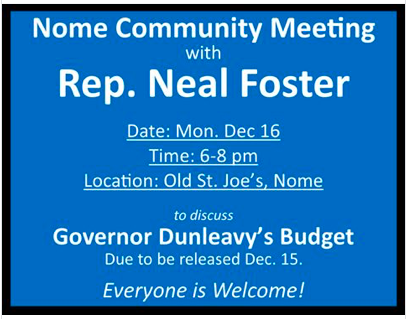
Rep. Neal Foster, co-chair Finance
“The governor’s budget takes a short-term view. He is detailed about what he wants to spend but is shortsighted in his plan to pay for it. The legislature will hit the ground running in January, and we will work diligently with the administration to complete our work within 90 days,” said Rep. Neal Foster, a Nome Democrat.
Why did Foster say they would complete their work in 90 days? That’s a curious remark that has little to do with the budget or its funding. Last year, the legislative leaders predicted that 90 days was not achievable.
After all, the Legislature has not completed its work in the statutory timeframe since 2014, and the 2019 legislative session didn’t even attempt to meet the deadline.
Foster has tipped the hand of the Democrats, who want to complete their work in 90 days so that they can help the Recall Dunleavy group get onto a special election ballot. If they do gavel out in 90 days, and that’s a big “if,” the recall group will benefit greatly. They have a better chance of taking out the governor via a special election, which is only possible if the Legislature gets out of Juneau on time.
Clarification: The length of the legislative session can benefit the recall committee, depending on how they want to play it. When the recall committee turns in their signatures determines whether it gets attached to the General, Primary or a special election.
This is about politics, left vs. right. If the session goes longer than 90 days, the recall petitioners have more time collect signatures.
Unlike an initiative, which has regimented dates associated with it, if the Legislature adjourns on Day 90, the timeframe becomes whenever the court is done with their decision, whenever the group gets the 78,000 signatures, and whenever they plan strategically to turn in those signatures, because that begins the 30-day signature verification, and the lieutenant governor’ decision to set the election between 60-90 days after that. That window could bump the recall onto the Primary ballot. Or if they delay turning in their signatures, the question could go to the General Election ballot, something the group seeks to avoid. Statute directs the lieutenant governor to put it on the next ballot, if it falls in that timeframe.
Democrats, who control much of what goes on in the Legislature these days, will make a mad dash to get their work done within those 90 days.
Republicans, whose votes are needed to fund the budget with the Constitutional Budget Reserve, are likely to drag their feet in an attempt to rob the Recall Dunleavy camp of that victory.
There’s another reason why Democrats will try to get the budget finished in 90 days: Every one of the 40 House seats are up for election. The incumbents who are running again will not be able to raise money or effectively campaign if they are stuck in special session after special session, as they were in 2019.
In 2019, the Legislature met for 177 days, from January 15 through May 14, 2019, May 16 through June 13 and July 8 through Aug. 6. The incumbents cannot afford to have another year like 2019 if they want to fend of challengers.
The Alaska Senate didn’t issue a statement about the budget, nor did the Republican House Minority.
Alaska Democrats echoed the sentiments of the House Majority, not criticizing the size of the budget but the funding source:
“Smashing the piggy bank rather than repeal oil tax credits. His priority is clear, and it’s not the people of Alaska,” the Democrats offered, pointing to the source of money they want to use for state service.
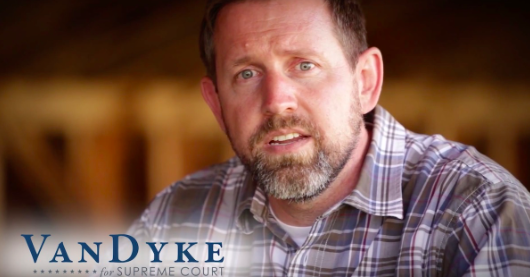
Although the Democrats savaged him and the American Bar Association called him “arrogant, lazy, an ideologue, and lacking in knowledge of the day-to-day practice including procedural rules,” Lawrence VanDyke was confirmed on Wednesday to the Ninth Circuit Court of Appeals, the most liberal appeals court in the nation.
Sen. Ted Cruz of Texas said the ABA “not qualified” rating for VanDyke, who has a Harvard law degree, amounted to finding the man guilty of “practicing law while conservative.” Others said the hit job on VanDyke was a drive-by shooting from the liberal elite.
VanDyke had suffered through a bitterly partisan confirmation process since his nomination was made by President Donald Trump in September.
The only Senate Republican voting against VanDyke was Sen. Susan Collins of Maine.
His confirmation means Trump has appointed nine members to the Ninth Circuit, nearly one third of the judges. Earlier this week, the Senate confirmed an openly gay prosecutor who Trump had nominated to the same court. Patrick Bumatay, who is also of Filipino origins, had a much easier confirmation process.
The Republican-led Senate is confirming plenty of judges these days, including eight last week. VanDyke brings the confirmations to 171 Trump appointments to district and circuit courts. Trump set a goal of having 183 federal judges in place by the end of 2019.
Sarah Pitlyk, who was also confirmed just last week, also received the “Not Qualified” rating from the American Bar Association.
Sen. Mike Lee of Utah has been critical of the American Bar Association’s partisan vetting process, and has asked the White House and Senate Judiciary Committee to remove the ABA from further involvement in the nomination process.
VanDyke, the former solicitor general of Montana, now has a lifetime appointment to the 29-judge panel that is the largest appeals court in the nation, covering issues that matter in the entire west, including Alaska. It is based in San Francisco and has been dominated by liberal judges for years, prompting many to call for a new court to be established for the Northwest.