Sunday, April 26, 2026
Home Blog Page 1412

Touchy subjects tackled

3

At Brave Conversations, facilitator Leigh Sloan is cultivating a community of people who meet monthly to learn from those who think differently on a variety of topics.

“We believe that by leaning in to conversations that are controversial, we will become better thinkers and better communicators– ultimately creating a better community,” she explained.

At the Sept. 26 meeting, they’ll work on conversation sharpening, matching people with different views to help each other stretch their perspectives in one or more areas.

Come with a friend and an open mind. Learn to enjoy honing the art of this kind of constructive, face-to-face, rather than Facebook, conversation.

The event starts at 6 pm. Beverages and food are available for purchase until 7 pm. The group will be in the inner room of the Coffee and Communitas building, 12100 Old Seward Hwy, Anchorage, Alaska 99515.

More information at this link.

Watch Rep. Don Young being awesome on ANWR

9
https://www.youtube.com/watch?v=B_dZMLt3hr0&feature=youtu.be

The U.S. House on Thursday voted 225-193 to reinstate the ban on oil and gas drilling on the Coastal Plain of Alaska’s Arctic National Wildlife Refuge … the same day the Bureau of Land Management announced its decision to open up the entire Coastal Plain of ANWR.

The Democrat-controlled House’s vote was symbolic, but shows what can happen if a Democrat takes control of the White House and if the Democrats flip the Senate in 2020. That would be the end of Alaska’s energy economic rebound.

Trump says he will veto the legislation if it ever reaches his desk. Sens. Lisa Murkowski and Dan Sullivan will ensure that doesn’t happen as the legislation heads to the Senate.

Tense meetings, threats, strike date nigh: Another day in Kenai teacher union drama

9

Public school teachers on the Kenai Peninsula have been working without a contract for more than 400 days.

But it is going to be a few days more, it appears, although a strike that was authorized in May is looming on Sept. 16. That action could shut down the schools.

Monday’s meeting, held in Homer, was supposed to be when the Kenai Peninsula Borough School District Board of Education was going to come to an agreement with the unions.

Instead, the meeting was so tense, with such vitriol coming from a small-but-radicalized segment of Homer toward the School Board, that board members were clearly rattled, and emphasized in their closing statements the need for civility.

Most people in Homer do not agree with the group that showed up and told them “you should be ashamed of yourself.”

But it’s the same Recall Dunleavy people who attend various meetings and raise a ruckus in Homer on a regular basis.

“I didn’t laugh at your comments,” said board member Debra Hall after members of the audience started jeering her comments.

Meanwhile, the school district and union negotiations were cancelled on Wednesday until further notice because of alleged phoned-in threats against the National Education Association office in Anchorage.

 “This afternoon three calls were made threatening the National Education Association’s office in Anchorage. The phone number was a Kenai Peninsula phone number. The evening’s bargaining session scheduled at Soldotna High School for September 11th was canceled out of concern for safety and protocol. This is still an ongoing investigation so we cannot discuss details,” the district posted on its Facebook page.

The phone number was traced back to Seward; Anchorage police and Alaska State Troopers are said to be investigating.

The teachers union activists are the same “Red for Ed” contingency that protested the full Permanent Fund dividend during state budget talks, and are now asking for $3,000 for each of their members for their healthcare coverage.

[Read: Teachers turn out to oppose full PFD]

The the proposed contract would cost the district $3.2 million, which would deplete the general fund balance, yet still require more funds to be obtained from an unknown source.

Kenai educators may not yet realize that they do not have to be part of the unions. All they need to do is to send a letter to Human Resources, telling them to stop taking out dues from the employee’s paychecks. This right was established in the Supreme Court Janus decision.

[Read: A conversation with Mark Janus.]

BLM to offer entire coastal plain of ANWR for energy leases

16

An 800,000-acre section of the Coastal Plain of the Arctic National Wildlife Refuge will be open to oil and gas leases, with the publishing of a final report from the Bureau of Land Management, it was announced today.

[View the final EIS documents at this link]

Today the Department of the Interior made available the Final Environmental Impact Statement for the Coastal Plain Oil and Gas Leasing Program.

The environmental analysis considers a range of alternatives in order to meet energy leasing provisions contained in Section 20001 of the Tax Cuts and Jobs Act of 2017 (P.L. 115-97), signed into law by President Trump on December 22, 2017. 

“Affordable energy and great paying energy jobs help power our nation’s economy, which is clearly thriving under President Trump’s policies,” said U.S. Secretary of the Interior David Bernhardt in a a statement.

“After rigorous review, robust public comment, and a consideration of a range of alternatives, today’s announcement is a big step to carry out the clear mandate we received from Congress to develop and implement a leasing program for the Coastal Plain, a program the people of Alaska have been seeking for over 40 years,” he said.

The Act directs the Secretary of the Interior, through BLM, to establish two area-wide leasing sales, not less than 400,000 acres each, along the Coastal Plain of the Arctic National Wildlife Refuge. It also authorizes up to 2,000 acres, or 0.01% of ANWR’s 19.3 million acres, for surface facilities.

“A large and diverse team including Tribes, partners, the state of Alaska and experts from across the Service worked with BLM on the range of alternatives contained in the EIS, as well as the protective mitigation measures that would apply to oil and gas activities in this unique area,” said Margaret Everson, Principal Deputy Director of the U.S. Fish and Wildlife Service.”The team’s work forms the scientific and conservation foundation that will protect high-value wildlife habitats and important uses in this area, while advancing the President’s agenda on energy independence.”

More than 70 employees (BLM, contract, other federal agencies and the State of Alaska) and at least 13,000 labor hours were dedicated to developing the EIS.

The analysis included staff from the U.S. Fish and Wildlife Service who were instrumental in developing the range of alternatives contained in the EIS as well as the protective mitigation measures. The EIS includes protections for species native to the area and any migrating species listed as threatened or endangered.

“Forty years after Congress selected the Arctic Coastal Plain for potential energy development, the Trump Administration is making good on that decades old potential,”said Alaska Governor Mike Dunleavy.  “I join with all Alaska Governors since 1980 in assuring the nation and the world that we develop our natural resources responsibly.  I look forward to the lease sale scheduled for later this year.” 

“This is a major step forward in our decades-long efforts to allow for responsible resource development in Alaska’s 1002 Area, and I thank Secretary Bernhardt and his team for their thousands of hours of hard work,” said Sen. Lisa Murkowski. “I’m hopeful we can now move to a lease sale in the very near future, just as Congress intended, so that we can continue to strengthen our economy, our energy security, and our long-term prosperity.”

“For decades, Alaskans have been urging their federal government to open the 1002 area of ANWR for exploration,”said Sen. Dan Sullivan. “At long last, Congress voted to allow it. Now, the administration is working diligently to fulfill Congress’s directions in a transparent and responsible process. I welcome today’s announcement— another critical step in the process to unleash Alaska’s energy and economic potential. As Alaska has shown time and again, we can responsibly develop our resources, under the highest environmental standards, to grow our state and significantly contribute toward the goal of energy dominance for our country.”

“The release of this final EIS to open the 1002 area of ANWR is the culmination of decades of work. I have fought for responsible oil and gas exploration on the Coastal Plain since ANWR was created, and I am immensely pleased that we have reached this stage,” said Rep. Don Young. “Alaskans are committed environmental stewards, and they know how to balance environmental protection and resource development — we did it in Prudhoe Bay and we’ll do it again in ANWR. I want to thank President Trump and his Administration, particularly Secretary of the Interior David Bernhardt, the former Assistant Secretary, and Alaska BLM State Director Chad Padgett for their tireless work in completing this EIS and getting us closer to fully-realized resource development in the 1002 area of ANWR.” 

Famed stunt pilot with Alaska roots OK after plane flips on runway

1

Patty Wagstaff, an aviation aerobatic champion who learned how to fly in Alaska, is OK after her plane flipped on the runway in St. Augustine, Fla. on Wednesday.

Wagstaff took flying lessons in Dillingham while she was working for the Bristol Bay Native Corporation starting in 1978. She began her career as a pilot in the Alaska bush. After a career in flying, she was inducted into the National Aviation Hall of Fame.

On Wednesday, the 68-year-old Wagstaff and two passengers were in a 1958 Beech K35 airplane that ran off the runway in St. Johns County, Fla., and flipped. She suffered minor injuries but was not taken to the hospital, and the others on board were also able to walk away from the wreck, according to the Florida Highway Patrol.

Wagstaff said the plane suffered a mechanical problem.

Photo: St. Johns County Sheriff’s Office

According to Wikipedia:

Wagstaff grew up in aviation, as her father was a pilot for Japan Airlines. She moved to Australia after high school, where she travelled up the coast in a single-engine boat wit no radio. Her next stop was Alaska, where she took her first flying lesson in a Cessna 185. After earning her single and multi-engine land, single engine sea and commercial and instrument ratings, she became a certified flight and instrument instructor.

Since then, she has ratings in the TBM Avenger, T-28, L-39 and Tucano.

In 1985, Wagstaff qualified for the US National Aerobatic Team and competed both nationally and internationally until 1996. She was the top U.S. medal winner, winning gold, silver, and bronze medals in international competitions for several years. In 1991, she won her first of three US National Aerobatic Championships, the first woman to win that competition. 

She was the International Aerobatic Club champion in 1993. In 1994, her Goodrich-sponsored Extra 260 airplane was put on display next to Amelia Earhart’s Lockheed Vega at the Smithsonian Institution’s National Air and Space Museum.

From 1988 to 1994, she won the Betty Skelton First Lady of Aerobatics award six times in a row.

In 1996, Wagstaff was the top-scoring US pilot at the World Aerobatics Championship. That year, she was also the first person to win the  Charlie Hillard Trophy, awarded to the highest scoring U.S. pilot at the World Aerobatic Championships.

In 1997, Wagstaff received her first Hall of Fame inductions, becoming inducted into both the Arizona Aviation Hall of Fame and the International Women’s Aviation Hall of Fame. She was awarded the National Aeronautic Association Paul Tissandier Diploma in 1997 and won the Bill Barber Award for sportsmanship in 1998.

In 2001, Wagstaff began training pilots of the Kenya Wildlife Service in Kenya. In 2002, she won the Katherine and Marjorie Stinson Award, and in 2004, was elected into what is arguably aviation’s most prestigious hall, the National Aviation Hall of Fame. In December 2006, she was inducted into the International Council of Air Shows Foundation Hall of Fame and in 2007, the International Air and Space Hall of Fame at the San Diego Air and Space Museum.

Based in St. Augustine, Florida, Patty Wagstaff Aviation Safety, LLC trains pilots from all over the world in aerobatics, airmanship and upset training. She continues working in the aviation field as an airshow pilot, stunt pilot for films, consultant, flight instructor, and writer.

Will patriotism die in Anchorage schools?

0

By DAVE DONLEY

On Tuesday, Sept. 17, the Anchorage School Board will vote on whether the Star Spangled Banner and Alaska Flag Song should be played at least once a month in Anchorage schools.

It will probably fail. 

To be clear, the same as with the Pledge of Allegiance, nothing in the proposed policy forces any student to sing or even stand for the playing of the National Anthem.

I believe some of our public schools are failing to adequately prioritize our teaching the history, culture, and traditions that unify us as citizens of the United States of America.  

Unlike most homogeneous countries around the world that have a single ethnic culture; there are surprisingly few things that unite and hold Americans together as a people. 

Most obvious of these cultural foundations are the U.S. Constitution, the Declaration of Independence, our flag, our firm belief in democracy, our republican form of government, and our unique American culture that includes patriotic and historical music.  

For a country to be successful national unity is a necessity.  Unity does not preclude diversity.  But diversity without unity has been the downfall of nations throughout human history.   

Our founding leaders knew this when they adopted “E Pluribus Unum” or “From Many One” as a national motto.  It recognizes that a group of diverse people, bringing the strengths of many cultures and uniting them into one culture, produced the greatest and strongest nation in the history of human kind. 

Anchorage School Board policy BP 0210 states that a quality education includes among other important lessons: “An awareness and understanding of our country’s history and ideals and its diverse ethnic, racial and cultural heritage.”  

In early 2018, as a newly elected member of the Anchorage School Board, parents of Anchorage School District students contacted me to complain that their childrens’ school was not saying the Pledge of Allegiance.  I investigated the district policy and found saying the Pledge daily was a district mandate. 

I also discovered that the existing policy called for the School Board to designate other patriotic activities for all schools.  I reported the failure to comply with district policy Pledge policy to the Superintendent and the failure was confirmed and corrected.

It was also confirmed that the School Board had never followed the policy calling for the Board to designate other patriotic activities to happen on a “regular basis.” 

It occurred to me that playing the National Anthem and the Alaska Flag Song once a week would be a great patriotic activity to have schools do on a “regular basis.”  

I knew that at least three schools in the district already played the National Anthem and the Alaska Flag Song every morning.  Those three schools also happen to be top 10 performing schools.

I let my patriotism get away with me and thought “Who could be against playing the National Anthem and the Flag Song?’ So I sponsored a new Board policy to require weekly playing of these patriotic songs.  

I was so wrong to expect support from my fellow board members.

What followed was multiple committee and board meetings on the proposal at which some Board Members and others stated on the record that the Star Spangled Banner was offensive to some minorities, was already taught in music classes, was too militaristic, was already in schools enough, and we should not have to teach students patriotism. 

School surveys however indicated some schools never played the National Anthem and some music teachers were not teaching it (in violation of District music curriculum).  

The first School Board meeting when scheduled for a vote, a majority voted to return the proposal to committee and not even allow a vote on the proposal.  

This was despite overwhelming public testimony in support. 

The President of the Teachers union spoke against the proposal, questioning the appropriateness of the proposed policy. He seemed particularly concerned with the third verse of the Star Spangled Banner.  

Board Member Margo Bellamy also has expressed concern with the third verse at the last Board meeting, but the proposal is just to play the National Anthem, not to require the singing of it and certainly not all four verses.  However, I am a fan of the fourth verse and in particular: “And this be our motto – “In God is our trust,” And the star-spangled banner in triumph shall wave O’er the land of the free and the home of the brave.’

Months and multiple committee meetings went by and another survey of school principals indicated that although a majority of principals did not support playing these patriotic songs once a week the majority was not opposed to having the songs played once a month.  

I amended my proposal to require the playing once a month and it moved from committee back to the full Board on a two-to-one vote.  At those committee meetings and in subsequent Board meetings, four of the seven current Board members clearly stated their opposition to the monthly proposal.  

Board President Starr Marsett, and; Members Margo Bellamy, Alicia Hilde, and Denna Mitchell have all clearly stated their opposition on the record.  Those four votes are a majority.  

The monthly proposal is on the Tuesday meeting agenda for a final vote, and unless something changes it will not pass.  Anyone can testify at a School Board meeting on any matter before the Board for three minutes. The School Board meetings start at 6 pm at the Anchorage Education Center at 5530 E. Northern Lights Blvd.

Are there more pressing problems with our schools?  Possibly, but we and our schools certainly have the time for this also.  Those top performing Anchorage schools playing the National Anthem every morning to start the school day prove that.  

As our nation becomes more diverse, some widely shared traditions are starting to fade, including the playing and singing of patriotic songs.  Harvard ethnomusicologist Kay Kaufman Shelemay has explained that music and “singing can be transformative,” and can help create a unified community from diverse individuals.  

So as we celebrate and recognize the new American diversity, I hope Americans will not give up on those parts of our American culture that help hold us together as a nation. 

Dave Donley is a parent of children in the Anchorage School District and individual member of the Anchorage School Board and this opinion does not represent the position of the Anchorage School Board or the Anchorage School District.

The mountain has labored and brought forth a mouse

22

By ART CHANCE

The mountain that labored and brought forth a mouse is an old Greek proverb that goes back to Aesop.  

It refers to great promises and great labors that produce little result; in most of the Latin versions it says produces ridiculous results.  

I think the old proverb applies to the government of Alaska right now.

The Dunleavy Administration has labored mightily.  They demanded the resignations of 900 employees.  I’ve long advocated that any Republican following a Democrat into office, (and the Walker Administration was a Democrat administration), should fire everyone s/he has a legal right to fire, but s/he should be prepared for the firestorm.  

The Administration got the firestorm of opposition, though it only ultimately took a handful of the demanded resignations. Not only did Gov. Michael Dunleavy not fire a lot of the people he should have fired, he earned the enmity of those who remained; he’ll be thwarted, leaked, and sabotaged for the rest of the term.  

The Administration dramatically cut both the Operating and Capital Budgets. It can be done, though not as dramatically as they proposed, but it takes a very good communications program and a very good relationship with the Legislature.  

And again, the Administration has to be prepared for the firestorm. When the Legislature proved recalcitrant and adjourned with nothing accomplished, the governor did an in-your-face and called them into Special Session in a middle school in Wasilla, rather than the friendly confines of Juneau.   

The governor can do that, but he has to be prepared to send the State Troopers to bring any recalcitrant legislators to the session in handcuffs.   He didn’t force the Wasilla session and all other legislative business was conducted in Juneau, despite the fact that there is almost no housing or lodging available in Juneau in summer, and what can be had is very expensive.  

If you let yourself lose, you will keep losing until you figure out how to win.  The Dunleavy Administration has some figuring to do.

The governor promised the full statutory Permanent Fund dividend and hinted, without really saying so, that he was in favor of restoring previous dividends to the full statutory amount. There is a good argument that the Permanent Fund dividend promise is what got him elected.  The Legislature went through a whole Regular Session and Special Sessions and only a few hardcore conservatives even mentioned a full statutory PFD.

As the Legislature developed an Operating Budget that swelled at the behest of the union racket, the healthcare racket, and the education racket – and even the seniors chimed in, the governor promised the use of his red pen for line item vetoes.  

The Legislature used the Capital Budget, which contains most of the State match for federal revenue, to largely thwart the Governor’s much-touted red pen. I predicted in this column. months ago that the Legislature would use the Capital Budget as the vehicle to restore any of the governor’s line item vetoes. If I can figure it out, somebody on the Third Floor should have as well.

Along the way, the Administration got the first State employee strike in 42 years, a strike that was easily foreseen and should have been easily prevented, yet the State got blindsided.   

The union set a time for the strike and as that time passed the vessels stopped at the next port, and the unlicensed employees struck, leaving their passengers and their vehicles stranded away from their intended destination.  

I’ve seen no evidence nor heard any reports of the State even trying to negotiate a completion of the voyage agreement before the strike. That cost the State the better part of $10 Million for ticket refunds and cancelled reservations and other strike associated costs.  That money can be made up either with reduced operations next year or by getting the Legislature to make up the money; good luck with that.

The Administration and the Republicans in the Legislature have squandered any opportunity to get any operating or wage concessions from the unions. Every one of the unions is sitting happily under contracts that they negotiated with the Walker Administration, many of them at the 11th hour after Bill Walker had already been defeated.  

The Republican “controlled” Senate could have disapproved any or all of the 11th hour sweetheart deals Walker gave away, but they did nothing.  

The Administration let the licensed marine unions run for cover with new agreements even before the Inlandboatmen’s Union strike. Then, even after they had endured all the damage from the blatantly illegal strike with which they were blindsided, the Administration let the union surrender on relatively favorable terms.  The season was lost; who that supported this Administration needs the ferry system after September? From September to May, a strike saves money.

Gov. Dunleavy ran principally on criminal law reform, a sustainable budget, and a statutory PFD.  He got criminal law reform that gave him some of what he wanted.  The budget will have real dollar cuts for the first time in State history, but it is nothing like a sustainable budget matching our recurring revenue.  We’re all supposed to be happy with about half of a statutory PFD and no mention of past takings.

The Administration’s labors produced an intractable Legislature, the majority of which flatly rejected the governor’s program.   

The unions got what they’ve wanted and what they have rearranged Alaska politics to get, not losing one dime in union dues revenue and thwarting as much of the Janus decision as possible.   

It didn’t help that the Dunleavy Administration’s tough talk and actions they couldn’t back up gave the employees every reason in the world to run to the safety of the unions.  Now, none of the unions will have to face negotiations with the Dunleavy Administration until very near the end of the first term.   

I’ve never seen the governor who had the guts to confront even one of the unions, and certainly not all of them, anywhere near a gubernatorial election. 

There was a message to be communicated and the Administration failed.   I’ll give them that it is almost impossible for a Republican governor to be heard in Alaska’s leftist dominated media, but they hardly tried.   

The governor submitted a budget that could be paid for out of recurring revenue and proposed a full statutory PFD paid for from the Earnings Reserve Account. The message should have been loud and clear that if anyone or any group wanted more in the Operating or Capital Budget, the funds had to be taken from the PFD and the ERA. 

At best, that message was muffled and even the muffled message was drowned out by the bleating and wailing of the moochers and looters.

Instead, the Administration’s great labors were portrayed as an attack on the people of Alaska and that message stuck.  The real attack was on the People of Alaska to whom the Permanent Fund Dividend belongs and for whom it is vitally important to either have necessities or to provide amenities that others expect.  State employees and educators making $100,000 a year did fine.  Million-dollar-a-year health care administrators did just fine. Neither class sees a PFD as anything more than mad money.   

Great labors and much sound and fury produced only the status quo and a mouse of a PFD.   

The only play left on the board is an attempt to use operating budget cuts to get spending to a sustainable level.  The Administration has already demonstrated that its management team simply doesn’t know enough about Executive Branch operations to be able to cut the budget with a sharp pencil rather than a dull axe.   

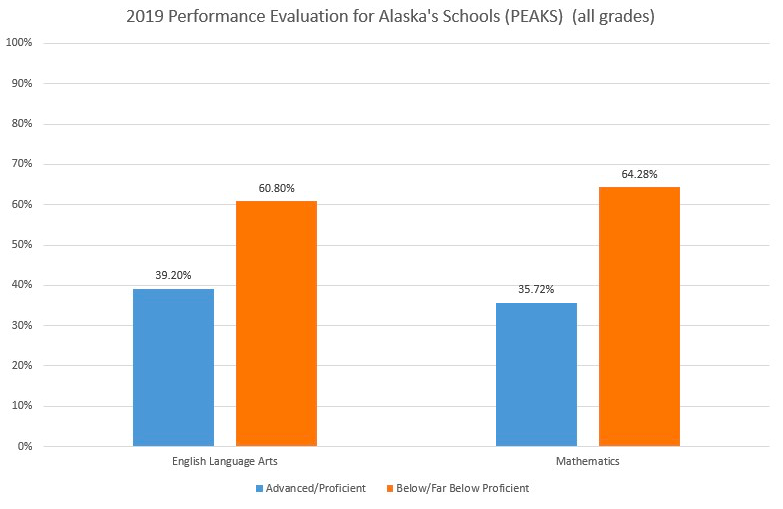
The current Legislature has already demonstrated that it doesn’t have the guts for any real cuts and especially any cuts that affect the union racket, the healthcare racket, and the education racket.   If after one look at the recently published test scores from our schools, any one, and certainly anyone with Senator or Representative in front of their name, wants to give the education racket any more money s/he is just a paid hack for the National Extortion, excuse me, Education Association.  The Medicaid largesse is still pouring out and the healthcare administrator types are still cutting their fat hog.   

Unionized public employees are enjoying nice raises and most of them have 3-4 percent step increases every year as well.  The rest of us get to suck hind teat while the dog that caught the car it was chasing tries to figure out what to do with it.

 Art Chance is a retired Director of Labor Relations for the State of Alaska, formerly of Juneau and now living in Anchorage. He is the author of the book, “Red on Blue, Establishing a Republican Governance,” available at Amazon. 

Irony: ‘Better Elections’ files complaint, uses Outside $$

19

Alaskans for Better Elections, which was denied its ballot initiative because it was found to be illegal, filed an immediate lawsuit in Superior Court to appeal the decision of the lieutenant governor.

From the looks of it, the Better Elections group has the advantage in court; it’s getting friendly treatment from a liberal judge.

Judge Yvonne Lamoureaux, who was appointed by Gov. Bill Walker, has ordered the State to begin printing petition booklets so the Better Elections group can continue progress toward its attempt at overhauling the Alaska election system.

Jason Grenn of West Anchorage, who is the front man for the national groups behind the ballot initiative, issued a press release saying the group believes its initiative is lawful.

“We strongly disagree with the opinion of Attorney General Clarkson, and we are confident that we can resolve this issue quickly,” Grenn said. “Ultimately, we’re fighting for Alaskan voters to have the right to decide whether or not they favor the improvements made to our elections through this initiative.”

The improvements he references have to do with open primaries, which would rob political parties from being able to control their own primaries; ranked voting, which would allow people to vote for a first, second, and third choice; the initiative would also ban Outside money in campaigns.

Unless there’s a legal intervention by some unknown entity, the State of Alaska will print petition booklets and allow signature gathering during the litigation. The state and Grenn’s group have also agreed to an expedited litigation schedule, including a court hearing on Sept. 30 and oral arguments on Nov. 1 in Anchorage Superior Court.

No group has come forward to fight the ballot initiative, which is a creature of liberal Outside groups that are trying to change Alaska from a red to a blue state. They’ll be paying for signature gatherers to get the 28,000+ signatures they need to get onto the 2020 ballot.

At issue is whether the ballot initiative violates the single-subject rule. The initiative was written by former Attorney General Bruce Botelho with the help of former Gov. Bill Walker’s Chief of Staff Scott Kendall. They say it’s perfectly legal.

Alaskans for Better Elections is underwritten and advised by Outside special interest groups, including Represent.Us, of Massachusetts; Voters’ Right to Know, of California; and Fair Vote Action Fund, of Maryland.

According to Grenn, “The initiative would put an end to secret “dark money”—much of which comes from outside Alaska—that anonymous, big-money spenders use to influence our elections. It would also open Alaska’s primary elections to all Alaskans, regardless of political party, and ensure majority winner elections. The measure gives voters the option to rank candidates in general elections, or, if they choose, voters can vote for just one candidate as they do now.

The speed at which Judge Lamoureaux made her decision and the decision itself bodes well for the Better Elections group, which may rightfully see it as an outcome that portends a speedy reversal of the decision by Lt. Gov. Kevin Meyer.

Ambler Road concerns include booze, village women, and environment

3

The Ambler Mining District Industrial Access Project had its first public hearing on the draft environmental impact statement on Tuesday and although the room wasn’t packed, a steady stream of people testified before the 8 pm close of business.

Most who testified at the Bureau of Land Management’s hearing were against the road.

They cited various reasons, including fears that Native women from villages in the region might be abused in the “man camps” of any proposed mines, and that truckers going through the region may float bottles of booze down river to villages that are dry, a form of bootlegging.

The limited-access road would link the Dalton Highway to the Ambler Mining District and cross approximately 200 miles of currently roadless area. Some 20 miles of the road would cross National Park Service land, but federal law dictates that the NPS must allow access for this road, which would not be open to the public.

The Ambler Mining District has been explored for decades, but it wasn’t until the Parnell Administration was a serious effort made to begin access. In 2009, the Alaska Department of Transportation and Public Facilities began evaluating multiple road and railroad routes, and ultimately a potential corridor was identified as the preferred route from the Dalton Highway to the Ambler Mining District, through Gates of the Arctic National Preserve. In 2013, the project was transferred from DOT&PF to AIDEA.

Many of the two dozen comments related to preservation and a desire to keep the area undisturbed. Neither the Alaska Mining Association nor the Alaska Chamber of Commerce had representatives, possibly because the time for the hearing was changed earlier in the day and the organizations were not able to have representatives during the later hour.

Other public hearings will be held in Alatna, Allakaket, Ambler, Anaktuvuk Pass, Bettles, Coldfoot, Evansville, Fairbanks, Hughes, Huslia, Kiana, Kobuk, Kotzebue, Noatak, Noorvik, Selawik, Shungnak, Stevens Village, Tanana, Wiseman and Washington, D.C. The dates, times and locations of the meetings will be announced in advance through public releases and the BLM Alaska website and social media.

Marleanna Hall, executive director of the Resource Development Council, spoke for the full three minutes she was allotted with a well-developed presentation. Other groups testifying included the Wilderness Society, Alaska Wildlife Alliance, Trilogy Metals, Alaska Audubon Society, the National Parks Conservation Association and representatives from “Defend the Sacred,” a nonprofit project of an organization called Native Movement.

Three people did not oppose the road but wanted public access.  A few wanted the comment period extended, and a few others said it should not take place during hunting season.  The comment period actually goes through Oct. 15.

More than one person complained that the Alaska Industrial Development and Export Authority does not have any Alaska Natives on its board. But they evidently forgot about Julie Anderson, commissioner of Commerce, who is a Doyon shareholder.

Comments will be accepted through OCTOBER 15, 2019.

Comments for the Draft EIS should be directed to BLM.  The EIS and contact links can be found at https://www.blm.gov/programs/planning-and-nepa/plans-in-development/alaska/AmblerRoadEIS

The most direct way is to submit comments through their online comment form.

Other options include email: [email protected]

Or traditional mail to: 

Ambler Road DEIS Comments
BLM Fairbanks District Office
222 University Avenue, Fairbanks AK  99709