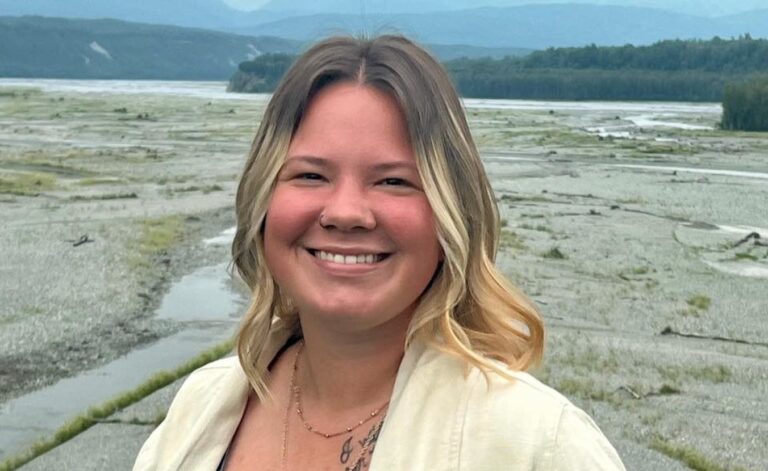
Palmer City Council Member Victoria Hudson has officially entered the race for Mayor, pledging to lead with steady, honest, and results-driven leadership grounded in conservative principles and strong community values.
Incumbent Mayor Steve Carrington, who survived a recall election this spring, is also running, as is Deputy Mayor Joshua Tudor and council member John Alcantra.
Hudson, who was elected to the Palmer City Council in October 2024, said her campaign will focus on fiscal responsibility, transparency, infrastructure investment, and preserving the city’s small-town character.
“In the time I’ve served on the City Council, I’ve worked hard to rebuild trust, improve communication, and help move our city in a more effective, accountable direction,” Hudson said. “Now, I’m ready to take that work to the next level as mayor.”
During her tenure on the council, Hudson played a leading role in the hiring of a new city manager and city clerk, positions critical to restoring stability in local government after the city’s unfortunate experience with hiring a city manager who was soon discovered to be an ill fit for Palmer.
As mayor, Hudson plans to keep building on that progress by prioritizing key projects such as road paving, downtown revitalization, and economic growth, without raising taxes. A centerpiece of her platform includes advancing a new public safety building for the Palmer Police Department and completing the new Palmer Public Library.
“My family moved to Palmer three years ago to raise our two sons in a place rooted in strong values and opportunity,” Hudson said. “I believe this city deserves leadership that reflects those same values — someone who will work with everyone, listen to good ideas, and never back down from doing what’s right for Palmer.”
Hudson added: “Palmer needs a mayor who shows up, listens closely, speaks honestly, and works with everyone to get the job done. That’s exactly the kind of leader I intend to be.”
Her campaign launch signals an early and energetic start to what is expected to be a closely watched race in Palmer. Hudson said she intends to center her campaign on community engagement, disciplined spending, and practical, forward-looking solutions.
The Anchorage Assembly will convene tonight at 5 pm in the Assembly Chambers of the Loussac Library, with an agenda heavily focused on the city’s vagrant and unsheltered population, particularly those with untreated mental illness, drug and alcohol addiction, or behavioral health conditions.
Among the new business items are two major grant awards for congregate shelter services, totaling over $18 million, that were previewed during a recent work session.
Assembly Memorandum No. AM 567-2025 recommends awarding a contract of up to $7.1 million to Henning, Inc. for congregate shelter services under the Anchorage Health Department’s oversight. A similar but larger award — Assembly Memorandum No. AM 562-2025 — proposes a contract of up to $11.1 million to MASH Property Management, LLC for the same type of services. A revised version of the MASH contract (AM 562-2025(A)) notes a not-to-exceed amount of $9.2 million, but indicates the full $11.1 million is possible if all contract options are exercised.
These contracts are part of the Municipality’s ongoing response to the Anchorage vagrancy crisis and are intended to address shelter needs for individuals who are unable to be housed in other settings.
Under unfinished business, the Assembly will revisit Resolution No. AR 2025-192, which urges the LaFrance Administration and the Anchorage Health Department to establish a targeted strategy for engaging individuals living unsheltered who also suffer from untreated serious mental illness or behavioral health issues. The resolution has been postponed twice — on June 10 and July 15 — and no motion is currently pending.
Also up for consideration is Resolution No. AR 2025-222, which expresses support for maintaining the current expanded capacity of 200 individuals at the shelter located at 1111 E. 56th Avenue. The full agenda is at this link.
The Anchorage Police Department has expanded its drone program, with 11 officers now certified drone pilots, equipped with drones capable of both indoor and outdoor use. The department’s investment in unmanned aerial systems is part of a growing national trend of drone technology being used by law enforcement both for situational awareness and officer safety.
On July 18, an APD-operated drone was instrumental in managing a dangerous situation involving an armed suspect who fled into a wooded area near Mulcahy Stadium. The drone provided a live overhead view of the suspect’s movements, assisting patrol officers, SWAT, and K-9 units in coordinating their approach, Police Chief Sean Case said. The suspect, 49-year-old Liperial Alford, was taken into custody after a police operation involving drones, SWAT, and a K9 unit. The man had an active warrant out of Kotzebue, and is charged with multiple offenses, including Assault 2, Assault 3, Assault 4, Resisting/Interfering with Arrest, Tampering with Evidence, and Misconduct Involving Weapons. With assistance from the drone overhead, he was apprehended with a K9 bite to the leg and taken to a hospital before being booked into custody.
“This incident is a good example of how technology is helping to transform public safety. We were able to resolve the incident safely, and that’s always the goal,” said Case.
In recent months, APD has released footage highlighting the role drones have played in a variety of high-risk scenarios, from using thermal imaging to locate suspects at night to providing aerial visuals during barricade situations and hostage standoffs. Drones have also been used to monitor suspect activity during felony arrests in wooded areas, where visibility is otherwise limited.
The expansion aligns with a national movement. Law enforcement agencies have ramped up drone usage in recent years, citing benefits such as faster deployment times, improved de-escalation strategies, and reduced risk to officers and civilians.
Privacy advocates have raised concerns about the potential for misuse. Anchorage police say all drone deployments are governed by departmental policy, state and federal law, and require a search warrant when appropriate; the manhunt for the shooter at the wooded area near Mulcahy Stadium did not require a search warrant, for example.
The US Army recently marked its 250th birthday — a quarter-millennium of defending the nation since it was formed by the Continental Congress on June 14, 1775. Today, on July 29 marks the 250th anniversary of the Army Chaplain Corps, established July 29, 1775.
At Joint Base Elmendorf Richardson, a gathering of chaplains and spiritual support personnel and family marked the occasion on July 25.
The Chaplain Corps has stood alongside America’s soldiers through every war, conflict, and peacetime mission in the nation’s history. From the Revolution to Iraq and Afghanistan, chaplains have provided spiritual care, moral guidance, and support for soldiers of all faiths, and for those with no faith.
The Corps today includes clergy from more than 130 faith groups serving in every component of the force, including active duty, Reserves, and National Guard. They are ere embedded with units around the world, often in some of the most remote or dangerous locations.
In addition to leading worship services and offering pastoral care, modern chaplains play a critical role in crisis response, ethical advisement to commanders, and suicide prevention. Their mission is to care for the soul of the Army.
With the clock ticking before the start of a special session called by the governor, Gov. Mike Dunleavy is pressing the Alaska Legislature to return to Juneau this Saturday and focus on a package of education reforms.
The governor’s announcement Monday sharpened the focus of the Aug. 2 session, laying out a reform agenda he says is rooted in years of legislative discussion, public input, and a pressing need to address Alaska’s ongoing crisis in student performance.
The governor released a video explaining his proposals:
It’s imperative that Alaska improves its public education system. I look forward to working toward this during the special session starting this weekend. pic.twitter.com/aIpVPY8BsH
— Governor Mike Dunleavy (@GovDunleavy) July 28, 2025
Among the key proposals:
Creation of a Department of Agriculture, via executive order, to strengthen Alaska’s food security and support its agricultural economy.
Tribal compacting with the Department of Education, allowing for more culturally responsive and effective schooling in tribal communities.
Expansion of the corporate tax credit program that allows businesses to support education through donations.
Authorization for the Department of Education to act as a charter school authorizer, in addition to local districts.
Open enrollment allowing students to attend any public school with available space, regardless of home district.
Targeted reading grants and a state-run after-school tutoring program focused on literacy.
Recruitment and retention bonuses for classroom teachers in hard-to-staff areas.
Along-term, predictable funding structure for Alaska’s K-12 schools, but only if lawmakers approve the associated reforms.
Many of these proposals were policy pieces the governor had wanted during the regular session. If he gets them, he’s willing to give back the $50 million that he vetoed from the education budget.
Dunleavy stressed the urgency of legislative action now, so districts, parents, and teachers can plan ahead without waiting for the next regular session in January. If passed, the legislation could be signed into law immediately.
“This is an opportunity to address Alaska’s performance issues and funding issues in K-12 education well into the future,” the governor said in his announcement. “By addressing this now, school districts, students, parents, teachers, and policymakers will have certainty.”
Education Commissioner Deena Bishop, who helped craft the proposal, pointed to the Alaska Reads Act as proof that targeted policy changes paired with stable funding can move the needle on student achievement. She said the current package would increase engagement, empower families, and help districts with long-term planning.
But will the Legislature go along?
Lawmakers are returning to Juneau under a narrow call that focuses on education reform. That means they can’t introduce unrelated legislation or take up other issues. Some legislators, particularly in the Democrat-led House coalition and soft Republicans, have clashed with Dunleavy in the past over vetoes and funding strategies.
Earlier this year, the Legislature passed a bipartisan education bill with a significant increase to the base student allocation. Dunleavy vetoed a small portion of that bill, saying it didn’t do enough to address systemic performance problems. His action left Democrats and soft Republicans frustrated, and some now question whether this special session will simply end in a repeat — with the Legislature overriding any new vetoes and adjourning. Several legislators, including retiring Sen. Gary Stevens, want to get to Boston in time for the National Conference of State Legislatures’ Legislative Summit in Boston, Aug. 4-6, a gathering for legislators and staff.
The question now is: Will lawmakers seize this opportunity to advance reform, or override the governor’s efforts and go to Boston to party?
The bills are set to be introduced on the first day of the special session, with hearings requested to begin as early as Sunday, August 3.
What do you think? Will the Legislature act on these reforms or override and adjourn? Let us know in the comments what you think.
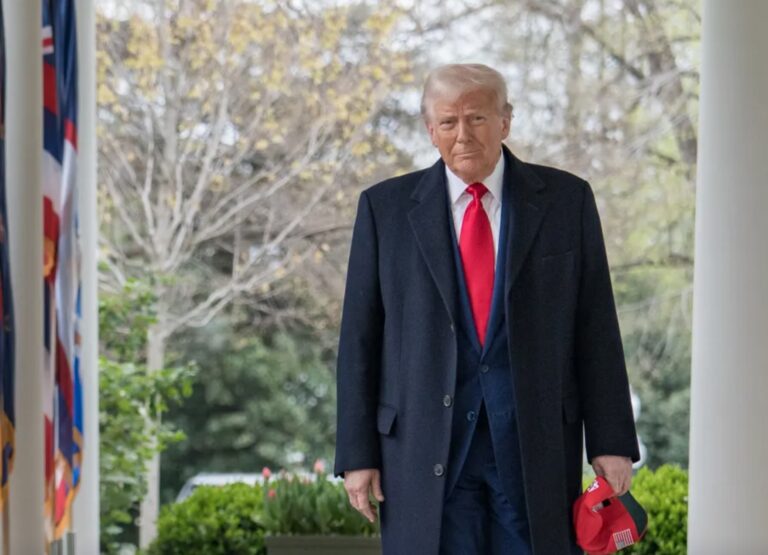
Within hours of being sworn in, President Trump issued an executive order directing the United States to withdraw from the World Health Organization (WHO).
In that executive order, Trump cites the WHO’s “mishandling of the COVID-19 pandemic that originated from Wuhan, China, and other global health crises, its failure to adopt urgently needed reforms, and its inability to demonstrate independence from the inappropriate political influence of WHO member states.” Trump faulted WHO for not holding China accountable for its slow response to WHO’s investigation of Covid-19 origins.
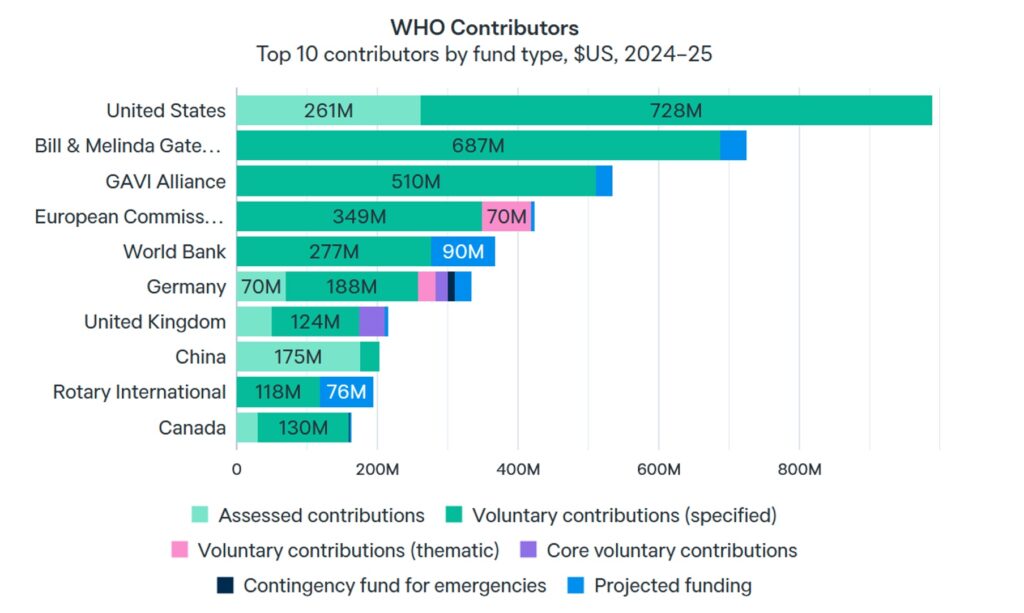
This withdrawal will undoubtably have an effect on the WHO’s finances. The US provides more money to the organization than any other member state. The US also provides funding above the assessed dues which is designated to be spent on specific issues.
At this time, about 70% of WHO’s budget is from voluntary contributions, making it difficult for the WHO to set its own public health priorities. In 2022, WHO member countries agreed to reform its financing model, aiming to make countries’ membership fees about half of its budget by 2030, AP reported.
Of the 2024-25 budget for WHO, “US funding comprises 22% of its assessed contributions ($261 million) and more than 14% of its voluntary contributions (nearly $728 million). That funds 20% of WHO’s emergency response work, and 25% of its core program.” Privately, WHO doesn’t know how to would make up the loss of US funding and would be faced with a “hand-to-mouth type situation” in early 2026.
The graph below highlights the disparity in funding.
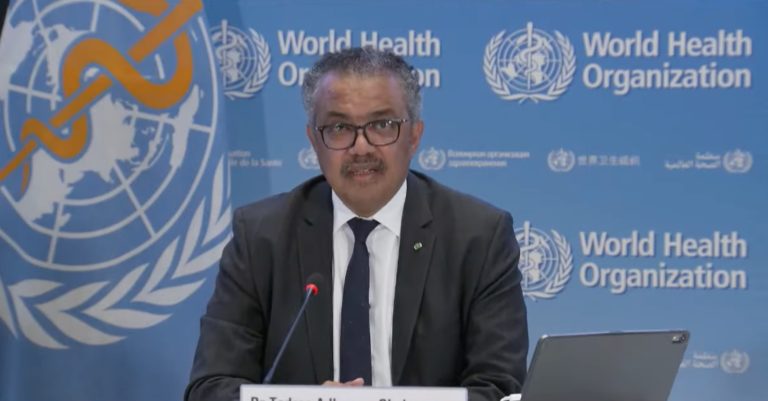
The world order is concerned by our withdrawal as our absence (and money) would likely exacerbate global health inequities. And therefore hinder “progress” towards global health equity. Tedros Adhanom Ghebreyesus, the Director-General of WHO, regrets America’s decision. His concern is equity and seeing health as a basic human right.
As pointed out in an MRAK article entitled, “Trump Administration rejects WHO pandemic rules, citing sovereignty concerns,” such thought process “would ultimately lead to the United States and wealthier nations being responsible for the health of 8.2 billion people, regardless of their location, lifestyle choices, or medical history.”
As part of the IHR recommendations, on May 20, the 78th World Health Assembly (decision making body of WHO) agreed to a Pandemic Agreement. The adoption occurred with a vote of 124 in favor, 0 objections, and 11 abstentions.
The amended IHR would give the WHO the ability to evaluate and do risk assessments of future possible public health emergencies and order global lockdowns, travel restrictions, or any other measures it sees fit to respond to that emergency. While the WHO specifically states it cannot interfere with the sovereignty of a nation, that would seem to contradict the IHR Pandemic Agreement wording. The WHO would become the “central coordinating authority”.
Prior to the passage of the 2024 International Health Recommendations amendments by WHO, US Health and Human Services Secretary Robert F. Kennedy, Jr. andSecretary of State Marco Rubio provided a joint statement stating that the US rejects those amendments.
In discussing why the IHR amendments were rejected, Secretary Kennedy said he was concerned about provisions for a global health ID system and vaccine passports. Kennedy stated this would lay the groundwork for “surveillance of every person on the planet”.
Secretary Kennedy also said, “the agreement is an official treaty that bypasses the US Senate” and the senate “plays a key role in assuring international commitments receive democratic oversight.”
The proposed amendments to the International Health Regulations open the door to the kind of narrative management, propaganda, and censorship that we saw during the COVID pandemic, Kennedy said.
Secretary Kennedy also released a video explaining the action to the American people. He went on to state, “The United States can cooperate with other nations without jeopardizing our civil liberties, without undermining our Constitution, and without ceding away America’s treasured sovereignty.”
In the joint statement with Kennedy, Secretary of State Marco Rubio said “this administration will never cede control over American public health decisions to unelected international bureaucrats. We will always defend the rights of the American people to self-determination.”
Shortly after the EO was announced, a group of Democrat Congressmen and women asked President Trump to reconsider pulling out of the WHO. Shortly after that, Trump stated he was possibly open to negotiating with the WHO if they would clean up their act.
Lawrence Gostin, professor and chair of global health law at Georgetown University and director of the O’Neill Institute, stated Trump’s decision to withdraw from the WHO may leave him open to legal actions. Goslin wrote on X that because it was an act of Congress that we joined WHO in 1948, Trump would need congressional approval to withdraw. Goslin is contemplating a lawsuit against this action.
If you read the specifics of the resolution, you will note it states “In adopting this joint resolution, the Congress does so with the understanding that, in the absence of any provision in the World Health Organization Constitution for withdrawal from the Organization, the United States reserves its right to withdraw from the Organization on a one-year notice: Provided, however, That the financial obligations of the United States to the Organization shall be met in full for the Organization’s current fiscal year. (62 Stat. 441, 442 (1948).)”
It doesn’t state that withdrawal notice has to be by Congress. President Ronald Reagan withdrew from UNESCO without Congressional approval and then President George W. Bush rejoined.
I am sure there will be more to follow.
There is always more to the story when money and power are involved.
Get your popcorn and stay tune for episode two.
Linda Boyle, RN, MSN, DM, was formerly the chief nurse for the 3rd Medical Group, JBER, and was the interim director of the Alaska VA. Most recently, she served as Director for Central Alabama VA Healthcare System. She is the director of the Alaska Covid Alliance/Alaskans 4 Personal Freedom.
The Department of the Interior announced Monday that it has rescinded three policy documents that placed new restrictions on development within the National Petroleum Reserve in Alaska.
The decision, issued by the Bureau of Land Management, reverses guidance from the Biden administration that sought to expand protections for “special areas” of the NPR-A. The Trump administration characterized those previous efforts as overly restrictive and inconsistent with the intent of Congress.
The rescinded documents include:
A 2024 Request for Information titled Special Areas within the National Petroleum Reserve in Alaska,
A January 2025 report titled Maximizing Protection in the National Petroleum Reserve – Alaska, and
A BLM memorandum issued the same month titled Interim Management of Special Areas within the National Petroleum Reserve – Alaska.
According to the Interior Department, those documents were developed without proper consideration for statutory mandates, economic conditions, or the concerns of Alaskans. The administration said the previous approach risked undermining the core purpose of the NPR-A, which Congress designated as a strategic energy reserve.
“Alaska’s resource potential has been held hostage for years by anti-development ideologues,” said Interior Secretary Doug Burgum. “The Trump administration is delivering certainty for industry, opportunity for Alaskans, and real energy security for the American people.”
The decision follows directives outlined in Executive Order 14153 and Secretary’s Order 3422, both titled “Unleashing Alaska’s Extraordinary Resource Potential.” The administration said the move is consistent with broader energy policies that seek to reduce U.S. dependence on foreign oil and prioritize the responsible use of domestic resources.
Alaska’s North Slope communities, where the NPR-A is located, have been vocal in their opposition to expanding special management areas that limit oil and gas development. According to the BLM, the public comments received in response to the 2024 request for information reflected a strong desire to maintain access to economic opportunities tied to resource development.
The Naval Petroleum Reserves Production Act of 1976 directs the Interior Secretary to implement an “expeditious program” of leasing in the reserve, while balancing surface protections. Interior officials argued that the previous administration’s approach undermined that statutory purpose by elevating preservation goals over development.
The policy change is also tied to the Interior Department’s broader push to modernize land management practices in Alaska. In addition to the rescinded documents, the administration is rolling back a 2024 rule that had curtailed leasing in the NPR-A. Officials also pointed to progress on a new Integrated Activity Plan, which they say better reflects the needs of Alaska and the nation’s energy goals.
The NPR-A, spanning 23 million acres on Alaska’s North Slope, is believed to contain significant untapped oil and gas reserves. While some areas have long been designated for conservation, others have been open to leasing, subject to environmental safeguards.
The Alaska Supreme Court has upheld the inclusion of federal prisoner Eric Hafner on the 2024 general election ballot for US House of Representatives, affirming a lower court ruling that the state Division of Elections acted lawfully in placing him as a replacement candidate under Alaska’s bizarre ranked-choice voting system.
In a 4-1 decision issued Friday, the court ruled that state law permits the Division to replace multiple candidates who withdraw from the general election ballot, provided the replacements come from the next-highest vote-getters in the primary. The decision clarifies the interpretation of Alaska Statute 15.25.100(c), which was amended as part of Ballot Measure 2 in 2020; that ballot measure creased the ranked-choice voting for general elections and jungle (no-party) primaries.
The Democrats were livid when two of the top four candidates in the August 2024 open primary — Republicans Nancy Dahlstrom and Matthew Salisbury — withdrew their candidacies. That moved AIP candidate John Wayne Howe, who finished fifth, and Eric Hafner, who finished sixth, to the general election ballot alongside then-incumbent Rep. Mary Peltola and Republican Nick Begich.
The Alaska Democratic Party and Democrat Anita Thorne sued to block Hafner’s inclusion, arguing that the law only allows one replacement — the fifth-place finisher. The party also objected to Hafner’s presence on the ballot because he is serving a federal prison sentence out of state and may not be released until 2036.
The Alaska Republican Party intervened in the case in support of the Division’s decision.
The Supreme Court, echoing the findings of Anchorage Superior Court Judge Ian Wheeles, ruled that the statute is ambiguous but must be interpreted in a way that fulfills the intent of Ballot Measure 2, namely, to ensure voters have four choices on the general election ballot whenever possible.
“Both interpretations of the statute are reasonable,” the majority opinion stated, “but the purpose and structure of Ballot Measure 2 favor an interpretation that ensures four candidates appear on the general election ballot.” The court also noted that Alaska precedent leans toward resolving ambiguities in favor of broader ballot access for voters.
Justice Susan Carney dissented, writing that the law’s plain language refers only to the fifth-place finisher as a permissible replacement and does not authorize a sixth-place candidate to be elevated. She criticized the majority for reading additional meaning into what she saw as unambiguous statutory text.
Democrats had also argued that Hafner’s incarceration made him ineligible for office, but the court noted that constitutional requirements regarding inhabitancy apply only upon election and not at the time of candidacy.
Dozens of major hospitals and health systems have halted the provision of gender-related medical interventions for minors, actions that are likely a result of President Donald Trump’s executive order banning the chemical and surgical mutilation of children.
During his campaign and throughout the first months of his second term, Trump has made stopping so-called “gender-affirming care” for minors a cornerstone issue, repeatedly stating, “We are not going to allow child sexual mutilation.” While politicians have discussed the issue over the years, Trump is now being credited by supporters with delivering concrete results.
This week, Yale New Haven Health and Connecticut Children’s Medical Center joined the growing list of institutions that have ended such services. Though their official statements have not explicitly cited the president’s order, their actions come amid a wave of compliance following the federal directive.
The following health systems have either paused or permanently ended gender-related medical interventions for patients under 18 or 19:
Phoenix Children’s Hospital: Stopped prescribing puberty blockers and hormone therapy to minors.
Stanford Medicine: Ended sex-change surgeries for minors.
Children’s Hospital Los Angeles: Closed its Center for Transyouth Health and Development.
Denver Health: Suspended sex-change surgeries for patients under 19.
UCHealth (Colorado): Ceased gender-related services for minors.
Lurie Children’s Hospital of Chicago: Ended sex-change surgeries for patients under 19.
University of Chicago Medicine: Suspended gender-related care for minors.
Northwestern Memorial Hospital: Halted gender surgeries for minors.
Rush Medical Center (Chicago): Stopped offering new gender-related services to patients under 18.
Mount Sinai Health System (New York) and New York-Presbyterian: Curbed gender-related services for minors.
Penn State Health, University of Pittsburgh Medical Center, and University of Pennsylvania Health System: Ended services for patients under 19.
Children’s Hospital of The King’s Daughters (Virginia): Suspended hormone therapy and puberty blockers for minors.
Seattle Children’s Hospital: Discontinued gender-related surgeries for patients under 19.
Children’s National Hospital (Washington, D.C.): “Paused” puberty blockers and hormone therapies.
Kaiser Permanente: Paused surgeries for patients under 19 at all affiliated hospitals and surgical centers.
The executive action, signed earlier this year, threatens the withdrawal of federal funding from medical centers that provide puberty blockers, cross-sex hormones, or surgical procedures to minors for the purposes of gender transition. The White House says the policy is a necessary step to “protect children from irreversible harm,” citing growing political, ethical, and medical scrutiny.
Trump’s action comes at a time when the debate over transgender issues has turned the corner in schools, sports, and medicine. His administration is expected to pursue further restrictions, including bans on federal funding for research related to pediatric gender transition and tighter oversight of professional licensing boards.