Elijah Verhagen, a legislative aide from Nenana, has file a letter of intent to run for House District 6. The seat is currently served by Rep. Dave Talerico of Healy.
District 6 is considered a safe seat for Republicans, and Verhagen was a Republican up until today, when he changed to Undeclared. He is a conservative.
Verhagen earned a bachelor’s degree in political science at the University of Alaska Fairbanks. He has worked as a legislative staff member for seven sessions and has staffed Rep. Talerico, whom he considers a lifelong friend, mentor, employer, “and a fantastic representative.” This is Talerico’s third term. Verhagen was an aide to Rep. Sharon Jackson, but has gone on layoff status so he can run for office. His brother is the current mayor of Nenana.
“Others and I have tried to get him [Talerico] to run again this next session, but to no avail,” Verhagen said. “I’ve carried several of his bills through the process while working for him. If elected, I will continue to carry some of his great bills that ran out of time to pass this session due to COVID-19.”
Although he will run as an undeclared candidate, he said he will caucus with the Republicans. Today, Republicans have a bipartisan caucus in the House, and a more conservative smaller wing of Republicans make up the House minority.
A jump in cases in the past 24 hours brought the total cases of COVID-19 in Alaska to 213. On Monday, only six new cases had been reported, but also there had been a slight drop in testing. Today’s number is one of the largest reported since the first case of COVID-19 was diagnosed in Alaska on March 12.
No additional hospitalizations were reported in the past 24 hours; that number still stands at 23 — and some of those have been released from the hospital. No additional deaths due to the Wuhan coronavirus were reported since the ones announced over the weekend. The total of COVID-19- related deaths in Alaska is still six.
Alaska, as of April 6, had the smallest number of COVID-19 cases in the nation, followed by Wyoming.
The new cases are mainly in Anchorage and Fairbanks, but the Bethel area has reported its first diagnosis.
The current count:
Anchorage area: 98, a gain of 10
Kenai Peninsula: 13, no change
Fairbanks/North Pole: 65, a gain of 11
Southeast Fairbanks Census Area: 1, no change
Yukon-Koyukuk Census Area: 1, no change.
Palmer/Wasilla: 4, no change
Juneau: 14, no change
Ketchikan: 14, no change
Petersburg: 2, no change
Bethel Census Area: 1, first case reported
Across Alaska, 6,913 Alaskans have been tested for COVID-19, less than one percent of the population.
Gov. Mike Dunleavy today announced he is signing a budget that is about the same size as the one he proposed in mid-December.
He trimmed back two-thirds of the $314 million in additions that the bipartisan Senate and Democrat-led House put in for things like school bond debt reimbursement, community assistance, the university system, and public broadcasting.
With these vetoes, the FY 2021 operating, mental health, and capital budget, including previously enacted legislation, is $4.5 billion, which will be paid, in part, with $3.85 billion in federal funds.
Most of entities will qualify for federal funds through money that is coming in through the CARES Act, which is the major stimulus package requested of Congress by President Donald Trump to address the COVID-19 crisis. School bond debt reimbursement, for example, had $30 million added by the Legislature, but was cut in the final budget. However, the state can use the anticipated CARES Act money to shore up that line item.
The governor also vetoed the $1.5 billion that the Legislature had moved from the Permanent Fund’s Earnings Reserve Account to the corpus of the fund, where it would not be able to be tapped for spending this year. Dunleavy said that with so much uncertainty due to the COVID-19 crisis, it was more prudent to keep that money available to meet the needs of the state operations.
Gov. Dunleavy also called on the Legislature to come back out of recess and pass an additional PFD or stimulus check for Alaskans, who he said are reeling from the effects of a government-imposed economic crisis due to the COVID-19 virus response.
The current budget is predicated on oil prices that could remain in the mid $30s per barrel, far from what is needed to run state government. This, most analysts agree, will force a very difficult budget conversation next year.
The Permanent Fund is expected to transfer $2.9 billion to the general fund in FY 2020 and $3.1 billion in FY 2021, according to the Department of Revenue. These amounts include funds for both payment of dividends and general government spending.
Key programs and services funded in the operating budget, HB 205:
$99M to COVID-19 response and relief
$135.6M to Alaska State Troopers
$14M to Village Public Safety Officer Program
$5M to Disaster Relief Fund
$5M to Fire Risk Reduction Funding
$34.8M to Pioneer Homes
$54M to the Alaska Marine Highway System
$1.26B to fully fund Education Foundation Formula
$28.5M to Behavioral Health Programs
$7.2M to Homeless Assistance Program
$65M for Capital Federal Match Program to Highways and Aviation
Line-item vetoes include:
The reduction of debt payments on behalf of other entities, which are not a core function of the State while facing fiscal uncertainty;
A reduction in funding to the University of Alaska to the level agreed to in the 2019 compact between the University of Alaska Board of Regents and the Office of the Governor; and
The elimination of one-time State general funds for programs that may qualify for funding under the Federal CARES Act.
Elimination of the Alaska Marine Highway funding to install crew quarters on two of the ferries day boats.
Public broadcasting: Radio $2,036,600, TV $633,300.
MAYOR’SESSENTIAL SERVICE: GETTING OUT THE BLUE VOTE
On Monday, one day before the end of the Anchorage municipal election, MRAK counted 14 trucks and cars parked in front of the IBEW hall on Denali Street. That’s an unusual number of vehicles for a Monday.
It was time for the phone banks, and the union wasn’t going to miss the opportunity to turn out the base.
Unions like IBEW have conquered the art of turning out the vote. They pay their members to come in and work the phone banks and typically right before the election is when they’re busiest. Right now, during a work slow down, there appeared to be plenty of help.
On Tuesday, the number of cars at the union hall had returned to normal, about seven. Today is the last day to get that ballot into the mail or a drop box in the Anchorage bowl.
So far, over 50,000 ballots have been received, and election workers had verified over 43,000 of them by late yesterday.
(Readers who wonder if their ballots have been received by the Muni can send a note to [email protected] and she’ll try to respond quickly. Her list goes through Monday morning.)
The only place to vote in person today is at City Hall until 8 pm.
If voters have questions about voting or the election, call the Voter Hotline at 243-VOTE(8683).
Drop boxes can be found at:
Anchorage Police Department Elmore Facility, 4501 Elmore
Anchorage School District Education Center, 5530 E. Northern Lights Blvd.
Bartlett High School, 1101 Golden Bear Drive
City Hall, 632 West 6th Ave.
Clark Middle School, 150 Bragaw Street
Dimond High School, 2909 West 88th Ave.
Eagle River Town Center, 12002 Business Blvd.
Fairview Community Recreation Center, 1121 East 10th Ave.
Girdwood Community Center, 250 Egloff Drive
Loussac Library, 3600 Denali Street
Municipal Election Center, 619 East Ship Creek Avenue
O’Malley’s on the Green, 3651 O’Malley Road
Service High School, 5577 Abbott Road
Spenard Community Recreation Center, 2020 West 48th AVe.
South Anchorage High School, 13400 Elmore Road
UAA Alaska Airlines Center, 3550 Providence Drive
West High School, 1700 Hillcrest Drive
The Alaska Family Council voter guide has recommendations for candidates and ballot initiatives appearing on the ballot, which must be delivered or postmarked by 8 pm.
VILLAGE LEADERS TRY TO KEEP VILLAGES SAFE — THEIR OWN WAY
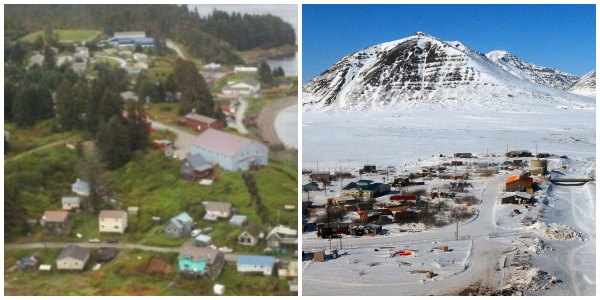
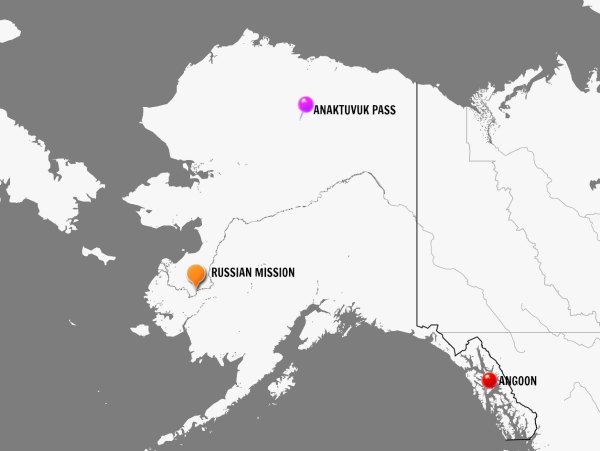
When Michael Pitka came back to be with family in the Tlingit village of Angoon on Admiralty Island, the city published a press release to let the community know he had violated its local travel restriction and wasn’t welcome.
“This traveler does NOT qualify as a resident as they have not physically lived in Angoon for 10 of the last 12 months. Also, this traveler has passed through at least two Alaskan ‘Hot Zones’ on their way to Angoon,” the city wrote and posted on its Facebook page. Pitka had been in Russian Mission, 70 air miles north of Bethel.
Pitka, according to the City of Angoon EOC, was informed that he wasn’t welcome since he is not an Angoon resident, but came to Angoon anyway by plane. He would have had to pass through Anchorage and Juneau.
“Please do everything you can do to avoid any contact whatsoever with this individual. A code violation citation will be issued for the violation of our local travel mandate, punishable by a fine of $500,” the city wrote.
In addition, Pitka would have to be quarantined somewhere for 14 days and any violations will mean a year in jail and up to a $25,000 fine, according to the City of Angoon.
The city asked for the community’s help in reporting Pitka to Alaska State Troopers if he was seen violating any mandates.
The story is more complicated by the fact that Pitka has a list of prior criminal offenses dating back years, and the village of Angoon might not have wanted him around for other reasons.
Angoon has issued earlier community messages via Facebook about whether people belong in the village during its COVID-19 shutdown. A couple had been anchored in a nearby bay over the winter and had brought their sailboat to the dock at the ferry terminal. After investigation, the city determined the couple was practicing self-quarantining. In another case, a college student was returning home, and the city provided an explanation that the student would be allowed back into the village.
In a third case, an on-and-off resident of Angoon was granted permission to return to the village to take up permanent residency.
“As this person has sold their Juneau residence, they have no place to go except for their permanent residence in Angoon. As such, this person has been issued a travel waiver by the Angoon EOC and will be coming to their new permanent residence on tomorrows ferry,” the Angoon EOC wrote on Facebook.
Angoon, it appears, it taking it on a case by case basis, but adopting a fairly aggressive stance to whether people are permitted in the village.
ANAKTUVUK PASS MAYOR REMINDS PEOPLE TO DO WHAT THEY ALREADY DO — STAY AT HOME
Mayor Charles Hugo of Anaktuvuk Pass, had a gentler message for his far-north Inupiat village, reminding members that since they all stay home anyway, they should “keep doing that.”
His letter to the village is one for the ages:
“Morning Anaktuvuk Pass:
It is time to stay home in our mountains but we can go out hunting or fishing; and we need facilities to be open. Try not to panic though, life still functions and we just need to stay home, we’ve been staying home from each other for years anyhow. Since we never visit each other we should be safe, but all our kids need to be home too for the time being, we love seeing them but sometime in life we have to teach them to obey parents. We recommend no outside travel unless you really have to go such as medical travel, loss of loved one travel, medevac and also family emergency. We ask returning residents from traveling outside to go home and stay home like we always do anyways. Just count 14 days so those that are iksi will not be affected … young folks be safe, you’re not superman or wonder woman yeah ok, but you need alone time for the moment … a long moment, go hunting fishing … just do it for the elders from the old ways … your young and most likely to fend this virus off, but you may affect little baby infant bro or sis or your dear old grandparents, and common sense in you should be practiced. Everything else has been said a million times and it is very stressful also we get tired of hearing it, so just do those above things we ask, that’s all and I have no other words but stay home like you always do anyways … you’re doing good already.”
Anaktuvuk Pass, population 282, is in the North Slope Borough and is remote, while Angoon, population 452, can only be accessed by boat or seaplane.
Carl Brady, a longtime trustee of the Alaska Permanent Fund Corporation and community and political activist, has passed. He died at Providence Hospital today.
Brady was an insurance executive from 1967 through 2008. He served on the Board of Trustees of Alaska Pacific University, and was a community advisory board member for Wells Fargo Bank Alaska and the Alaska Command Civilian Advisory Board. Earlier, he was the Honorary Consul of Belgium and served as a National Trustee of Boys & Girls Clubs of America.
Brady was reappointed in 2015 to a four-year public seat by then-Gov. Bill Walker; he had already served three times on the Board: from 1991-1995, from 2003-2009, and from 2011 to present. Brady chaired the APFC Board of Trustees from 1992-1993 and from 2003-2007; and had served as the vice chair for many years. He was reappointed by Gov. Mike Dunleavy in 2019.
Gov. Dunleavy and First Lady Rose Dunleavy mourned his passing:
“Rose and I want to express our deepest condolences to Carl’s family during this difficult time,” Dunleavy said. “Carl was an admired leader in both the business sector and the public policy arena. He was always willing to serve his fellow Alaskans – his contributions as a member of the Alaska Permanent Fund Board across three decades can’t be overstated. Carl was a great Alaskan whose void will be felt by many.”
Ben Anderson-Agimuk was a rising star in the Yukon-Kuskokwim Delta. He got a job working for former Rep. Zach Fansler, who resigned in disgrace after sexual escapades in Juneau went badly for him.
Anderson-Agimuk was then chosen by the Yukon-Kuskokwim Delta Democrats to come up with a replacement for Fansler, and that person was Tiffany Zulkosky, who now serves district 38 as a state representative.
Anderson-Agimuk worked for Zulkosky until December of 2018. That year, the Alaska Federation of Natives awarded Anderson-Agimuk the Roger Lang Youth Leadership Award. He’s got a long history with the Alaska Democratic Party, for someone who is just 27.
Now, he’s charged with rape of an 11-year-old girl. The allegations against him include giving the girl alcohol before penetrating her.
Anderson-Agimuk was arraigned in a Bethel courthouse on April 3 for two counts of furnishing alcohol to a minor and one court of sexual assault of a minor, with penetration, an unclassified felony.
Anderson-Agimuk’s first court date is set for May 14. He is being represented by a public defender.
Gov. Mike Dunleavy met a DC-8 aircraft belonging to Samaritan’s Purse, as it landed at Ted Stevens International Airport with 18,000 pounds of medical supplies for Alaska.
Dunleavy had put in a request for the supplies from Samaritan’s Purse President Franklin Graham as Alaska battles the COVID-19 coronavirus.
Samaritan’s Purse is a Christian mission group that responds to disasters around the world, but also has done a provided service in Alaska, such as the Samaritan’s Purse Lodge that is the location of the Operation Heal Our Patriots program for veterans and their spouses.
The supplies — hospital beds, masks, gloves, towels, and drapes — will be headed to rural Alaska hub communities to support rural Alaskan health providers.
In addition to those supplies, the state took delivery of 50 Abbott Laboratory testing machines. Alaska Native Tribal Health Consortium also received about 40 of the testing machines.
“We’re looking for resources where we can find them,” Dunleavy said. “Any and all are welcome to work with us so we can make sure our frontline defenders, out health care folks, have what they need to combat this virus.”
The governor said today that Friday will be a day of prayer in Alaska to pray for all the people of the state, the nation, and the world.
North Slope Borough Mayor Harry Brower, Jr. acted quickly upon learning that RavnAir Group had grounded all of its flights Sunday and will file for reorganization under Chapter 11 bankruptcy rules.
Brower issued an emergency order Sunday commandeering the hangar and associated assets of RavnAir Group that are located in the borough.
The mayor is acting under the authority of his emergency declaration for the COVID-19 coronavirus pandemic that he issued in March.
Since Ravn has provided vital freight and passenger services to North Slope villages of Atqasuk, Point Lay, Wainwright, Nuiqsut, and Kaktovik, Brower doesn’t want those communities to be stranded.
“The North Slope Borough immediately takes possession of all assets controlled by Ravn within the boundaries of the North Slope Borough. This order includes, but is not limited to buildings — including hangars, equipment, operations manuals, parts, supplies, vehicles, airplanes. It includes intangible assets such as leases and security access codes,” Brower’s order says.
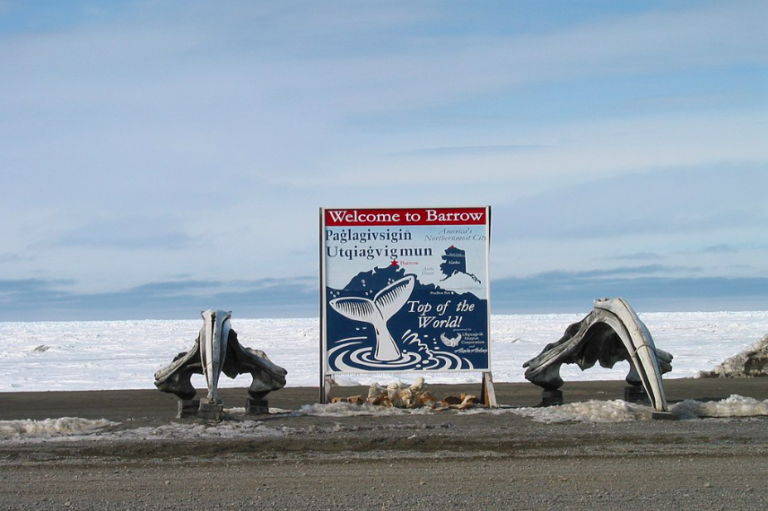
The order applies to RavnAir assets in Utqiagvik and Deadhorse.
The borough is also reserving the right to request and receive immediate cooperation from any current or former employee or contractor of Ravn to help set up freight and passenger airline service using the assets of Ravn for North Slope Borough communities.