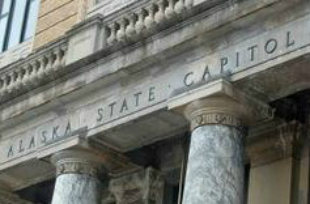
As legislators consider whether they will have to return to Juneau to ratify the CARES Act expenditures approved by the Legislative Budget and Audit Committee, they are receiving rules from their leadership.
Part of those includes mandatory screening before they are allowed in the Capitol, and they will be required to wear a compliance sticker while in the Capitol.
Not everyone is wild about those rules. Rep. Ben Carpenter of Kenai, replied to a memo from Bryce Edgmon’s office, saying that he wanted to know what would be involved in the screening and, sarcastically, if the stickers would be in the shape of a Yellow Star of David. He was making a point about constitutional rights.
Rep. Grier Hopkins of Fairbanks was not amused. He scolded on a group email.
Rep. Sarah Vance responded that it’s not a joke. “we should all be concerned about the implications of being labeled noncompliant or wearing a badge of compliance.”
Is forcing people to wear stickers a violation of civil rights or people’s medical privacy? Readers are invited to respond.
Now that the Alaska Supreme Court has cleared the way for signature-gathering to set a special election to unseat Gov. Mike Dunleavy for sins real and imagined, backers of the effort are absolutely giddy.
Letters to the editor, breathless pronouncements in the press and headlines such as “After a Supreme Court win, Alaskans have a right and responsibility to recall,” all attest to the fervor stirred by the Dunleavy recall effort in some quarters.
With all due respect, these folks are shielding their true financial backers by the sin of omission – and playing the rest of us for chumps.
They have yet to tell us who is underwriting the recall effort that started nine months ago, on Aug. 1. They have not said who is paying the legal bills stretching from Superior Court to the Alaska Supreme Court. Who is paying for signature gatherers? Who is paying for the myriad incidental costs associated with a statewide effort? Who is paying?
Without knowing whose checkbook is being used to unseat a sitting governor, how can Alaskans know their motives, their hearts? Is it a political hit-job by the unions? Outside liberal interests? Misguided leftists simply seeking to undo a Republican’s election? Who knows? The news media are avoiding the question like the plague.
Right now, all that information remains a deep, dark secret. The group Recall Dunleavy dutifully has filed with the Alaska Public Offices Commission, but its income and expenditure reports show noting. No income. No outgo. Nada. A kink in state law actually allows that, allows Recall Dunleavy to take in and spend unlimited, undocumented amounts of money from anybody, except foreign interests – until the question reaches the ballot.
Then, and only if signature-gathering money is rolled over into the ensuing election campaign, backers would have to report every penny collected and spent since signature-gathering began. That is unlikely to happen based on the secrecy so far.
Recall Dunleavy’s effort, now blessed by the Supreme Court’s impeach-for-anything ruling, is no more than a we-don’t-like-you effort paid for by shadowy figures Alaskans may never be able to identify. And the group wants the rest of us to play along?
We all should be demanding truth for signatures. The absolute and complete truth. Who are you? seems a reasonable question to ask those skulking in the political shadows to undo our will, all the while claiming a halo.
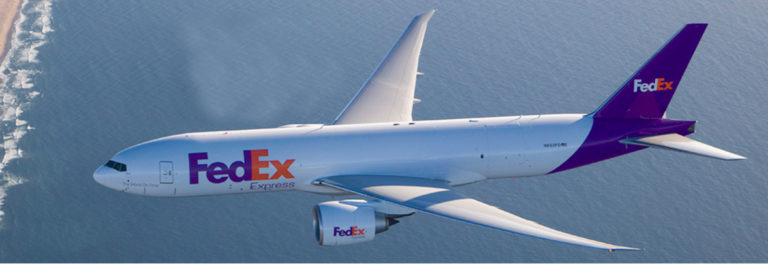
An American cargo pilot from Alaska is said to be the first foreigner imprisoned in Singapore for breaking COVID-19 quarantine rules, after he left his hotel room in order to buy masks and a thermometer.
FedEx pilot Brian Dugan Yeargan, 44, of Eagle River, was sentenced to four weeks in jail on Wednesday, according to several news reports. The incident occurred after officials checked his hotel room and found him missing. He was supposed to be on a 14-day quarantine after arriving from Sydney, Australia on April 3. In the two weeks before he landed in Singapore, he had flown to China, Hong Kong, Macau, Japan and the United States, according to Yeargan’s attorney.
Sen. Dan Sullivan’s office said they are aware of the situation and are looking into it.
Yeargan’s attorney told reporters that the pilot needed the items because they were in short supply back home and his wife had been ill.
There are 19 people with COVID-19 in FedEx’s workforce, according to Must Read Alaska sources. The company has over 5,000 pilots who fly all over the world.
Yeargan is a captain in the Alaska Air National Guard, and is a C-17 pilot with the 517th AS.
Singapore has had 26,000 cases of the Wuhan coronavirus, known as COVID-19. More than 90% of those infected are foreign wage-workers who live in crowded dormitory conditions, according to reports.
Singapore is known for having extremely harsh penalties, such as caning, hanging, and imprisonment. Among things that are illegal in the nation are buying or selling chewing gum, feeding pigeons, and singing songs that have obscene lyrics.
“Neither surgical nor cotton masks effectively filtered SARS–CoV-2 during coughs by infected patients.”
But that wasn’t the most important finding. The most important finding was arguably this:
“Of note, we found greater contamination on the outer than the inner mask surfaces…. The consistent finding of virus on the outer mask surface is unlikely to have been caused by experimental error or artifact. The mask’s aerodynamic features may explain this finding. A turbulent jet due to air leakage around the mask edge could contaminate the outer surface. Alternatively, the small aerosols of SARS–CoV-2 generated during a high-velocity cough might penetrate the masks.”
The outsides of the masks ended up carrying significant viral loads. In possibly the most understated sentence in the entire study, the South Korean researchers wrote that “these observations support the importance of hand hygiene after touching the outer surface of masks.”
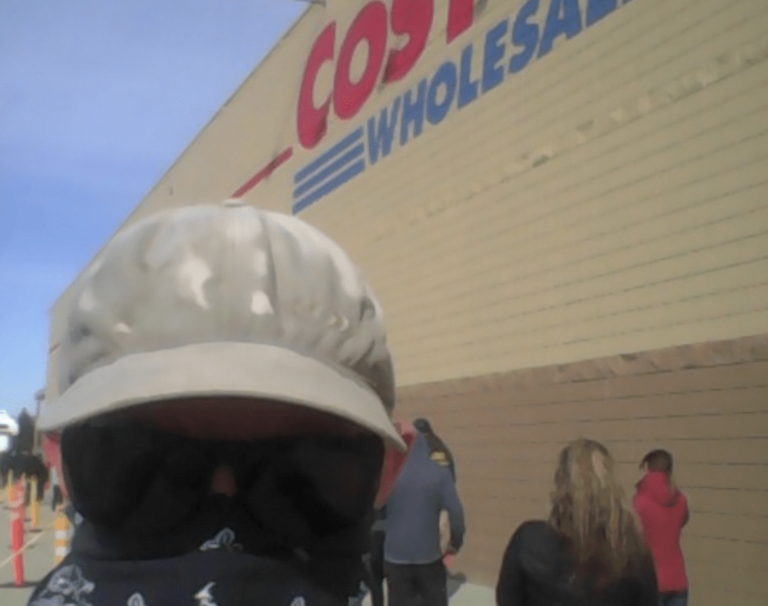
How many people do you see in Alaska thoroughly washing their hands after any touching of the outer surface of a mask versus those pulling the mask up and pulling the mask down with no thought to the germs on the surface, or just pulling their bandana off their face and stuffing it in their pocket?
What are they doing when they do this? They’re coating their hands with those spiky, sticky, but invisible SARS-CoV-2 pathogen of which everyone has now seen hugely blown-up photos. When those hands touch things, they create what are called “fomites,” virus-coated inanimate objects just waiting to spread disease.
There is still debate as to how exactly SARS-CoV-2 is most easily transmitted, but fomites were years ago identified as playing a big role in the transmission of viral diseases long thought to be spread by aerial transmission or direct contact with the infected.
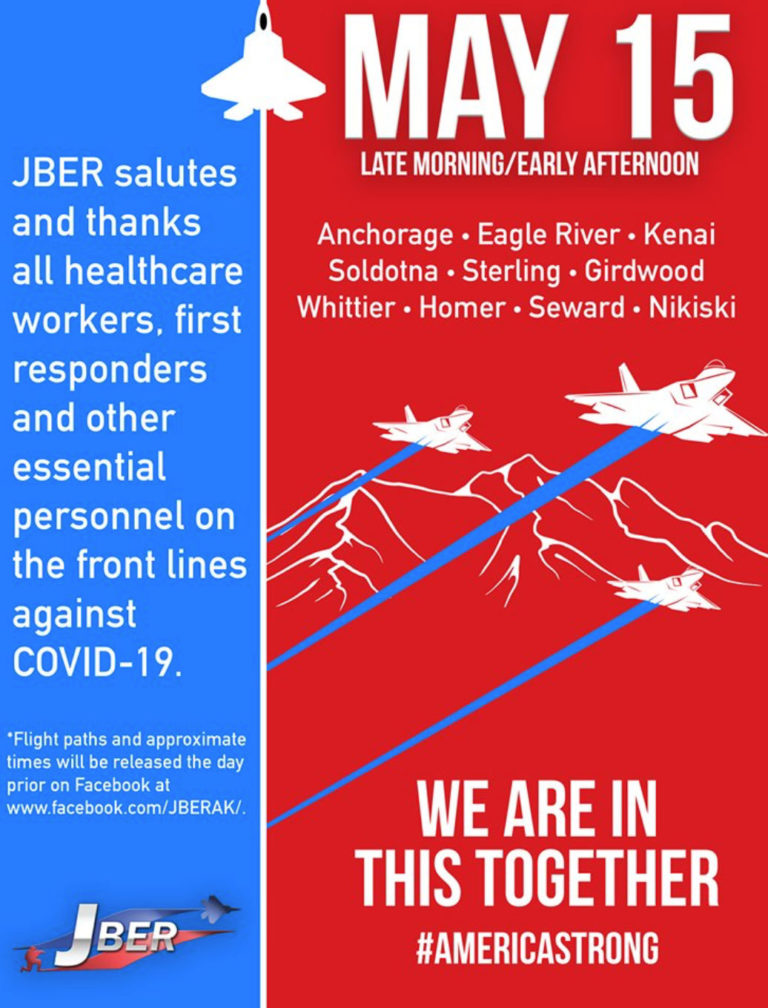
C-17 jets from Joint Base Elmendorf Richardson will take part in a flyover in many Southcentral communities on Friday to thank health care workers, first responders, and other essential personnel. The flight times and the routes were revealed today:
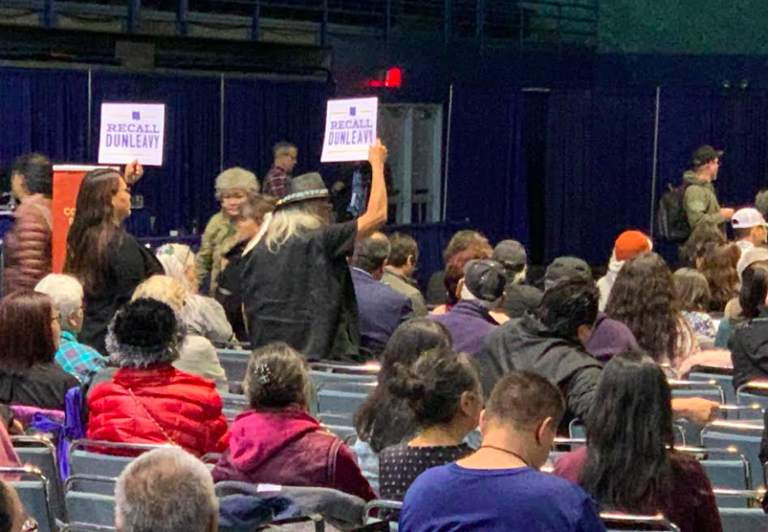
The Recall Dunleavy Committee mailed petition booklets to more than 20,000 Alaskans on Wednesday, and launched an aggressive advertising campaign on TV and radio throughout the state to get people to mail in their signatures on the petition.
The recall committee has collected nearly 35,000 signatures so far to put the recall of Gov. Mike Dunleavy on a ballot.
“Winning in Alaska Supreme Court has energized Alaskans to sign the petition at home as soon as possible,” said Aaron Welterlen, Steering Committee Member, in an email to supporters. “When we collect another 40,000 signatures this summer, Alaskans will send one unified message together: we deserve a competent governor who respects the constitution and is equipped to lead us through a full economic recovery.”
Each of the petition booklets that were mailed contain room for up to 15 signatures, a prepaid return envelope, and an “I signed” sticker.
Mailed petition booklets contain an instructions sheet, a petition booklet containing a signature page for up to 15 signers, a prepaid envelope for convenient return, and an “I Signed” sticker. Such a recall campaign has never before been seen anywhere in the U.S., because the signature gatherers have been prevented from having direct contact with potential signers due to the Wuhan coronavirus.
Recall Dunleavy needs a minimum of 71,252 Alaska voters to sign the petition, and will deliver those signatures to the Division of Elections. Then, the division has 30 days to certify the signatures, and must set a date for an election.
Although the group has paid staff and has clearly spent well over $100,000 in the effort, it has not disclosed its donors or how much it has raised.
The recent mailer to 20,000 is likely to have cost them more than $50,000, all to rekindle a dead fire. The radio and TV ad buy is likely in the tens of thousands of dollars.
According to Mouhcine Guettabi, an economist with the UAA Institute of Social and Economic Research, it’s very unlikely the Alaska economy will experience a “V-shaped” recovery, where the economy rebounds as quickly as it crashed.
“It was unrealistic to start with, and we are starting to see we have not completely contained the virus and spending patterns are not just going to rebound,” he said.
Win Gruening
Rather, most Alaskan communities are probably looking at either a “U-shaped” recovery where the economy comes back slowly, or an “L-shaped” recovery.
“The scenario we don’t want to see is an ‘L,’ where we drop in terms of economic activity and basically find a ‘new normal’ at the bottom,” Guettabi said.
That’s why municipalities and state government must preserve and even increase their capital project budgets – to avoid sinking their economies to a level from which they cannot recover. Now more than ever, Alaska must consider significant infrastructure projects, but especially ones that have already been vetted, like the Ambler Road up north and Juneau Access in Southeast.
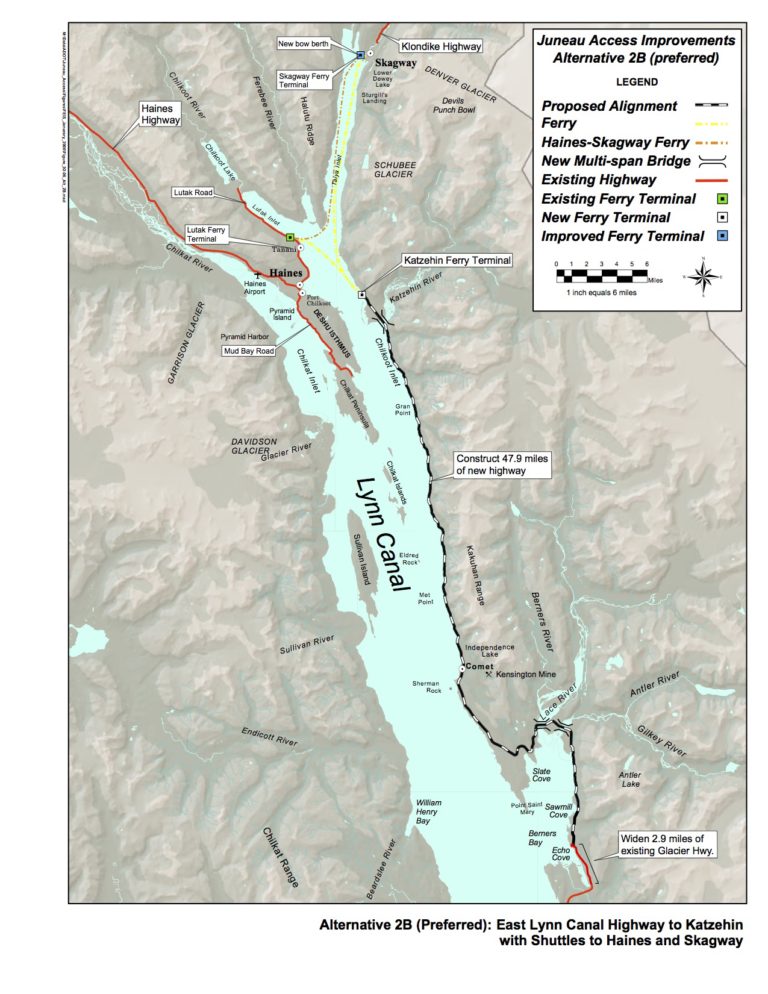
Improving surface transportation to and from Juneau has been studied for decades. DOT’s 1986 “Southeast Alaska Transportation Plan,” established northern Lynn Canal as the area most suitable for improvements. This area extends from Juneau (situated on the mainland) to Haines and Skagway, both connected to the continental highway network.
A 1997 Environmental Impact Study documented the inability of the state ferry system to accommodate travel demand.
In late March 1999, a DOT review team evaluated project information and rated transportation alternatives based on purpose and need. Alternative 2B, a highway up East Lynn Canal with a shuttle ferry at Katzehin, was the highest rated alternative.
In a baffling decision devoid of public input, the process was halted in 2000 by former governor Tony Knowles who instead built two high-speed ferries. This political stunt proved to be calamitous. The ships were mechanically unsound, unsuited for Southeast Alaska waters, and extremely expensive to operate. They were eventually scrapped in an attempt to stem the red ink flowing from the ferry system caused by overly-generous union pay and benefits, declining ridership, and ballooning operating expenses.
The next governor, Frank Murkowski, re-started the process resulting in a finalized EIS in January 2006. In April 2006, Alternative 2B was reaffirmed as the preferred alternative in the federal Record of Decision.
Predictably, environmental lawsuits seriously delayed implementation and forced DOT through another scoping study and supplemental EIS, finally completed in September 2014. The EIS once again selected Alternative 2B (a road) as the preferred alternative.
Despite increasing public pressure to improve transportation in Lynn Canal, in 2016, the Walker Administration recommended Alternative 1, No-Action – effectively suspending the project. Although the reason cited was cost, 90% of the construction would have been federally funded, and the state matching portion had already been appropriated several years before.
Fast forward to today. We can see where caving to anti-growth ideologues has left us. 23 years of resisting Juneau Access hasn’t improved anything – in fact, just the opposite.
Hobbled by aging vessels, cumbersome contract work rules, the effects of a destructive union strike, and inefficiencies, our ferry system is struggling. This has led to unaffordable fares, unreliable schedules, and unsustainable state subsidies. While a task force is studying new methods of operation, the ferry system will never function with the frequency, convenience, and low fares that it did 30 years ago.
Alaska’s island communities from Ketchikan to Kodiak rely on ferry service – there’s no more affordable alternative. But Northern Lynn Canal remains perfectly suited to a surface access solution.
The pandemic has amply demonstrated the need for a low cost, efficient way to move people and goods safely around the region. A road connection would dramatically reduce freight costs and allow Alaskans and non-cruise visitors to travel independently on their own schedules in their own vehicles at an affordable cost.
Putting hundreds of Alaskans to work building 48 miles of new roadwould give our struggling economy a much-needed boost.
Projects like the Lynn Canal Highway will help Alaska get back on its feet.
Restarting this project should be an absolute priority for our Congressional delegation, the Dunleavy Administration, and our region.
Win Gruening retired as the senior vice president in charge of business banking for Key Bank in 2012. He was born and raised in Juneau and graduated from the U.S. Air Force Academy in 1970. He is active in community affairs as a 30-plus year member of Juneau Downtown Rotary Club and has been involved in various local and statewide organizations.
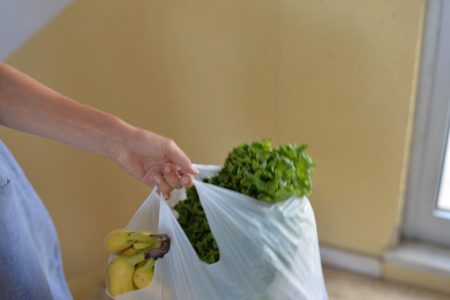
A proposed ordinance sponsored by three Anchorage Assembly members would permanently remove the current 10-cent-per-bag fee now required to be paid by shoppers who use paper or plastic bags provided by stores.
Crystal Kennedy, Jamie Allard, and Meg Zalatel are offering AO No. 2020-49 for consideration at the May 19 Anchorage Assembly meeting.
The bag fee was implemented as part of the plastic bag ban that went into effect Sept. 15, 2019. The ordinance forced retailers to stop providing plastic bags to shoppers, and also forced them to charge 10 cents for every paper bag that shoppers use, up to 50 cents per transaction. Some retailers have charged 50 cents for a paper bag under the ordinance.
After the coronavirus swept across the world, Mayor Ethan Berkowitz temporarily suspended the bag fee on March 25, evidently because of fears that people who were bringing their own reusable shopping bags into stores were more likely to carry “fomites” — items that had particles of the COVID-19 coronavirus — with them into the stores. Bags directly from the manufacturer were less likely to have sticky virus particles on them. The bag fee, for now, is optional.
Since the coronavirus hit Alaska’s biggest cities, many of the major grocery stores found the plastic bags that they must have had in storage and have moved those to the checkout stands. Technically, the stores are out of compliance with the city ordinance, but while code enforcers have shut down stores during the emergency order, they turned a blind eye to the plastic bag purveyors.
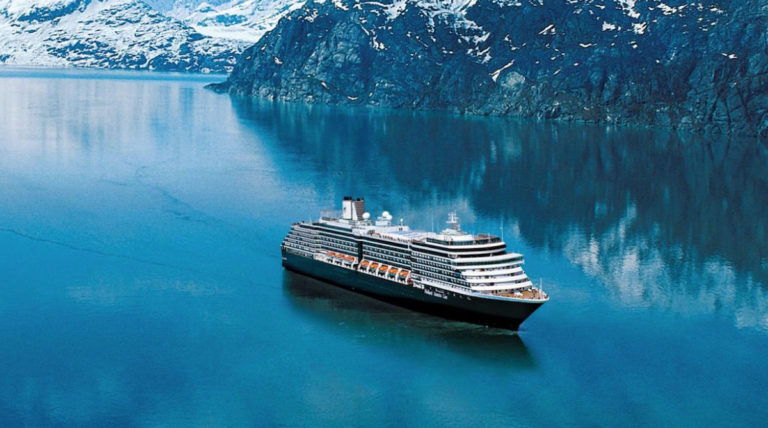
Updated: Almost 50 percent of land-based employees are either being laid off or furloughed for Holland/Princess/Seabourn. Alaska numbers are said to be far higher. All remaining employees will take a pay cut.
Carnival Corporation, the world’s largest cruise company, operating Carnival Cruise, Holland America and Princess Cruises, announced layoffs and furloughs this morning. The company will also cut pay of senior management.
Two of the brands owned by Carnival announced changes in leadership, as the companies reel in light of the impact of the coronavirus pandemic on the entire cruise industry.
Holland America Line President Orlando Ashford will leave at the end of May. Seabourn Cruise Line, which is part of the Carnival Corporation, said its president Richard Meadows is also retiring.
Carnival wasn’t eligible for a federal bailout because it is incorporated in Panama.
The company didn’t say which divisions would take the cuts. Insiders say as many as 1,400 furloughs will occur and 1,100 layoffs throughout the Holland America and Princess companies. These are land-based layoffs, not the seagoing cruise.
The company announced last week that it would phase into cruises starting Aug. 1, with ships sailing from Port Canaveral and Miami in Florida and Galveston, Texas.