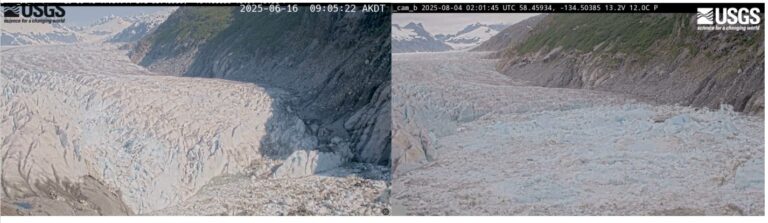
Suicide Basin, a glacial side basin of icy water along the Mendenhall Glacier near Juneau, is rapidly filling and is expected to reach capacity by mid-August, prompting heightened monitoring and flood preparedness by local and state officials and families in the Mendenhall Valley areas prone to flooding.
According to the latest update from Aug. 4, the basin’s water level has risen nearly 27 feet in the past week, climbing at an average rate of about 3 feet per day. The current water elevation stands at 1,340 feet — 28 feet below its estimated spillover point of 1,368 feet. The water elevation was 1,337 on Sunday.
The spillway threshold has been recalculated this summer due to a change in ice conditions. A recent drone survey conducted by the University of Alaska Southeast revealed that the elevation of the basin’s natural ice dam that holds the water back is 3 feet lower than it was last year.
Suicide Basin has produced annual glacier lake outburst floods since 2011, sending torrents of water down the Mendenhall River. The most destructive flood occurred on Aug. 6, 2024, damaging homes, parks, and infrastructure in the Mendenhall Valley. That historic event happened when the basin reached its capacity at 1,357 feet.
The last release event from Suicide Basin occurred on Oct. 20, 2024.
The timing and intensity of the next outburst flood depend on several dynamic factors, including temperature fluctuations over the Juneau Icefield and precipitation from possible late-summer storm systems. If current trends continue, an overflow event could begin as early as the second week of August.
Residents in flood-prone areas near Mendenhall Lake and River have been urged to stay informed through updates from the National Weather Service and the City and Borough of Juneau. Emergency managers are preparing early-warning protocols and updating response plans in anticipation of another potential flood.
Alaska has always been a state of enormous potential. But potential alone doesn’t power homes, create jobs, build roads, or fund schools. For decades, Alaskans have looked to the vast natural gas reserves on the North Slope as a game-changing opportunity. Today, that opportunity is no longer theoretical; it’s real, it’s permitted, and it’s ready.
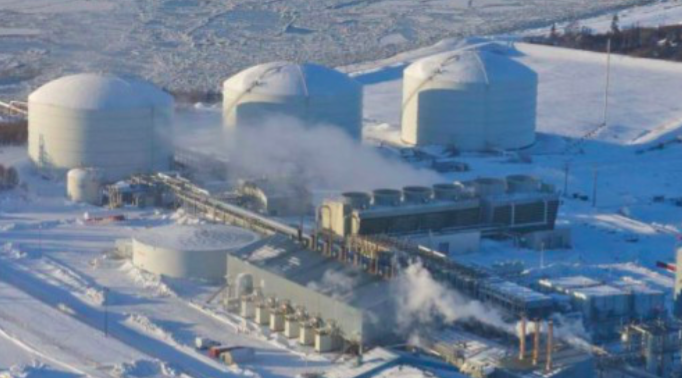
The Alaska LNG Project (AKLNG) is now one of the most strategically important infrastructure efforts in the United States. It’s fully permitted, shovel-ready, and attracting growing international interest. The project includes an 807-mile pipeline from the North Slope to Nikiski, capable of transporting 3.3 billion cubic feet of natural gas per day, representing a volume large enough to meet the annual residential needs of more than 15 million U.S. households. With federal approvals in place and global demand rising, the conditions for success have never been stronger.
President Donald Trump recently issued an executive order designating Alaska LNG as a national strategic priority. He underscored its significance not just for Alaska’s economy, but for America’s energy independence and national security. In 2024, the U.S. Department of Energy extended Alaska LNG’s export authorization through 2050, reaffirming federal commitment and enabling long-term contracts with key Asian markets like Japan and South Korea. In his March address to Congress, President Trump reiterated this support, sending a clear message: Alaska’s gas matters on the global stage.
And the world is listening. Asian nations are actively seeking long-term, stable LNG supply contracts. Alaska offers a unique advantage: secure, U.S.-produced energy with a shorter shipping route and higher environmental standards than competitors. From Nikiski, it’s only 8 to 10 days to Tokyo by sea, less than half the time it takes from the Gulf Coast. Alaska LNG also has one of the lowest upstream carbon footprints in the world. We’ve got a clear advantage, and now is the time to act.
The Alaska Gasline Development Corporation (AGDC) continues to advance the project, building commercial partnerships and progressing toward a final investment decision (FID) expected by year’s end. The next phase is execution: securing financing, finalizing offtake agreements, and putting Alaskans to work. Once it’s built, AKLNG means good-paying jobs for Alaskans, billions in new revenue, and reliable energy for the future. The project is expected to create more than 10,000 construction jobs at its peak and support over 1,000 permanent positions once operational. Independent studies estimate that AKLNG could generate up to $26 billion in direct and indirect economic activity during construction and operation phases.
The LNG export terminal planned for Nikiski — right in the heart of District 8 on the Kenai Peninsula — represents a once-in-a-generation opportunity for Alaskans. It will create construction jobs, long-term pipeline and plant operational jobs, and economic growth that will ripple throughout our communities. According to AGDC, the Nikiski facility alone could contribute more than $300 million annually in wages and local economic output, which would significantly bolster our tax base, fund infrastructure, and support local schools. But its impact doesn’t stop here. This project will benefit all of Alaska, sending our energy to the world while bringing revenue and reliability back home.
But this project is about more than just economics. It’s about strengthening America’s energy posture, reducing global dependence on authoritarian regimes for energy, and delivering cleaner-burning fuel to our allies. It’s about ensuring Alaska plays a central role in a more stable, secure, and sustainable energy future.
That window, however, won’t stay open forever. LNG markets are competitive. Other nations are moving forward with their own projects. If Alaska hesitates, we risk falling behind and losing this opportunity entirely. We’ve spent decades getting to this point. The permits are in place. The world needs our resources and energy, and our communities are ready to work, to lead, and to be part of something that powers Alaska’s future.
Now is the time to deliver. This isn’t just a pipeline. It’s our shot at putting Alaska on the map, leading in energy, and building lasting prosperity for the next generation. And to be clear, one of the few things that could still derail this project is political interference. The state legislature must resist the urge to meddle. This project has momentum, private sector backing, and federal support. Let’s not throw up roadblocks. Let’s get out of the way and let Alaska succeed.
Rep. Bill Elam serves District 8, Nikiski, on the Kenai Peninsula.
A decade from now, Alaska may look very different. Not in its natural grandeur, its mountains, waters, and wilderness will endure, but in its governance, its culture of independence, and the fate of the people who once defined its frontier spirit for all of America.
The political dynamics unfolding in Juneau during the special session are not just procedural skirmishes between a governor and a legislature. They are the early contours of a much larger transformation: the quiet, cumulative centralization of authority under an increasingly bureaucratic state. And unless deliberately reversed, this transformation will define the next generation’s prospects and the twilight years of today’s elders.
In the 2025 special session, the Alaska Legislature’s swift override of Gov. Mike Dunleavy’s vetoes signaled more than a policy disagreement. It was an outright dismissal of structural reform in education. The $200 Base Student Allocation increase, passed without any concurrent policy changes, entrenched the status quo. Gov. Dunleavy had offered a compromise: increased funding in exchange for movement on school choice, charter school expansion, and tribal compacting. These were forward-looking ideas meant to diversify education pathways and empower communities. Instead, they were ignored.
A decade from now, the children educated under this system will face its full consequences. Locked into rigid public structures with little incentive to innovate or improve, Alaska’s education system may fall further behind. The next generation, especially in rural and Native communities, will be less prepared for a modern workforce, less equipped with civic understanding, and less capable of resisting the pull of dependence on state welfare systems. The iron curtain of educational bureaucracy will have succeeded in building a generation that trusts the system not because it works, but because it’s all they’ve known.
For Alaska’s senior population, this political moment is a betrayal. These are the same men and women who carved lives from the tundra, built businesses, worked the pipelines, and governed their families and communities with grit and integrity. They came to Alaska or were born here for the promise of autonomy, economic, personal, and political. But today, that promise is dissolving.
The denial or dilution of the Permanent Fund dividend is more than a fiscal decision. It represents the state’s gradual breach of an unspoken social contract. At the same time, healthcare and welfare systems have expanded not with reform or innovation, but with blind inertia. A slow, administrative creep replaces real care with red tape, and real freedom with institutional compliance. Seniors, already overburdened by complex healthcare systems and increasing costs of living, find themselves surrendering, not through choice, but through exhaustion.
As Thomas Hobbes foresaw in Leviathan, a massive, unresponsive state does not have to arrive through violence. It can come through complacency, convenience, and unchecked authority. In Alaska, this shift has emerged through:
Judicial Imposition – Courts increasingly set policy that supersedes legislative intent and local self-governance.
Popular Surrender – Through ranked-choice voting and limited civic engagement, the public has voted (often unknowingly) for systems that erode their own influence, freedom and future.
Administrative Bloat – Agencies and bureaucrats now hold more practical power than elected officials, crafting rules that evade democratic accountability.
Together, these forces construct a quiet Leviathan, against which resistance feels futile and reform nearly impossible.
By 2035, the results of this centralization will be clear:
Local government will have less say in critical areas like education, zoning, and economic development, as state agencies expand their regulatory over-reach.
Young Alaskans who remain in the state will be less mobile, both economically and intellectually, trained to navigate bureaucracy rather than to challenge or improve it. While those many who leave will not return.
Seniors will be increasingly marginalized, their once-central voices muted in policy conversations, their benefits eroded, and their wealth transferred through inflationary policy and tax creep.
The Alaska of tomorrow will still boast its wild beauty, but without decisive action, its people risk losing something far more vital: the belief that they are sovereign over their own lives and communities. For decades, statutes like Title 29 and Title 14 have steadily undermined the constitutional vision of strong, locally accountable governments, replacing autonomy with top-down mandates and bureaucratic sprawl.
Education has become a machine serving special interests rather than students; the Permanent Fund Dividend, once a symbol of shared wealth, has been hijacked by political gamesmanship; and overlapping regulations stifle development while growing welfare programs consume the state’s budget. Reform is no longer optional. It is survival.
The 2026 election is a pivotal moment. Alaska can either align with a potential national conservative resurgence that favors deregulation, constitutional integrity, and energy development or it will be left behind by its Leftist political establishment content with stagnation and the death of sovereignty.
Alaskans must seize this moment to demand bold changes: repeal ranked-choice voting, unleash true school choice, enshrine and restore the PFD, overhaul permitting laws, and return power to local governments as Article X intended. Most of all, voters must reject the comfort of bureaucracy and rediscover the courage that built this state through participation, awareness, and an unshakable insistence on transparency, accountability, and self-governance.
The surface argument between the Federal Reserve and the president appears to revolve around whether we should keep the current fed rate to reduce demand, free up supply, and thereby keep inflation in check.
Like a cancer treatment, we administer “rate poison” to the economy, the inflation cells consume the poisonous Fed rates, the economy gets a little sick, but the patient lives after the recession. Dramatic Federal Reserve rate rises are followed by recessions when they are a response to bad policies, like in the housing crisis of 2008 and the monetary crisis in 2022/3. The Fed believes tariffs are a policy crisis in 2025 and is moving the US into recession to prove it.
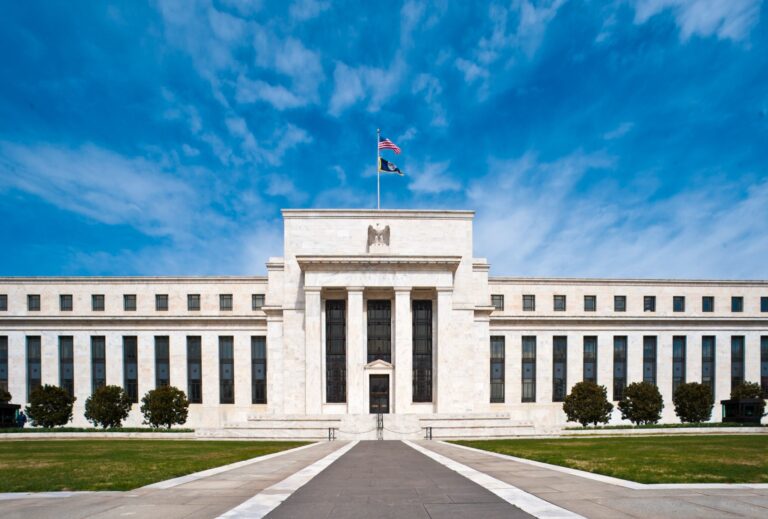
This is a fair review of the current standoff between Fed Chairman Jerome Powell and President Donald Trump, but there are much larger forces at work and much more at stake in the Powell/Trump rate scuffle.
Is the Federal Open Market Committee independent?
No. The Federal Open Market Committee’s independence cannot be maintained if it stands against policy. If you are for one policy and against another, then you are a de facto partisan actor in that policy fight. The Fed has labeled potential inflation resulting from tariffs as something that requires monetary policy to address, or, more accurately, undermine, and is therefore not independent of the tariff policy issue.
Can the Fed affect tariff inflation through monetary policy?
No. Businesses will adjust to higher costs or move supply chains to rebalance the cost of materials. Consumers will shift demand to account for the higher prices. Nothing in the Fed’s tools can affect that process. Since nothing can affect the higher costs of materials or goods from tariffs, the Fed has no business including tariff costs regardless of whether they do or don’t register in overall CPI or PPI inflation.
Let’s review the Federal Open Market Committee tariff monetary policy from two vantage points, one where tariff inflation is offset by other larger factors like energy or AI. In other words, tariffs always cause inflation but is it likely that other policy decisions can offset the costs of tariffs, also known as consumption taxes on foreign goods and materials. The other scenario is where tariffs register measurable, one-time (aka transitory) inflation in the economy.
In the first case, if tariffs are offset by other cost factors like energy, transportation or AI, then they will not register as topline inflation and they are not a policy that the Fed needs to try to offset with higher rates, especially rates high enough to force a recession.
If tariffs are a transitory, one-time cost of doing business that is likely to moderate as supply chains and efficiencies are found, then they are also not something the Fed should try to offset with higher rates, especially rates high enough to force a recession.
Can the Federal Open Market Committee’s models accommodate the growth agenda of Trump?
Maybe, but not currently. Since Trump’s trade negotiations require trillions in new investment, production and new projects in the US to provide energy, production capacity and military support for countries around the world, the FOMC policy must be recalibrated to accommodate a 4 to 5% annual growth in the US economy for the next several years. FOMC models appear to be calibrated to 1% to 1.5% growth.
Can the models be changed, and who would lead them to do that? The EPA regulatory changes alone can result in a .3% increase in GDP each year. How will building, energy and mining projects happen with borrowing rates sky high? The agreement to spend 5% of GDP by NATO countries would also yield an almost 2% increase in GDP for the US.
What’s really going on between Powell and Trump?
Underlying the Trump/Powell clash of titans is a deeper debate about Federal Reserve Rate orthodoxy. Specifically, are increases in the fed rate in and of themselves inflationary or deflationary. Orthodoxy says that the economy requires high rates to force a reduction in inflation. The economy will not self-correct with lowered rates.
The conundrum is this: If the Fed reduces rates now, while inflation is above 2%, and inflation decreases, it will call into question decades of scripture about the tightening and loosening of monetary policy by the Fed and may force a rewrite of every textbookin print for economics.
The concern is simply this: If the Federal Open Market Committee did lower rates and inflation came down, it would destroy the guiding principles of the Fed that they have doggedly followed for 50 years. At stake in the current fed decision is something much more essential than the argument between Powell and Trump, even more important than the independence of the Fed.
What is at stake if inflation falls as they lower the Fed rate is nothing less than orthodoxy, and that is why the Fed is resisting the clear indicators that their crisis rates are leading the US into recession and preventing the massive growth needed to fulfill Trump’s trade and America-First agenda.
Glen Biegel is a technology security professional, Catholic father of nine, husband to a saint, and politically active conservative.
After just three months, Dr. Vinay Prasad stepped down as the head of Food and Drug Administration (FDA) Center for Biologics Evaluation and Research (CBER). CBER is a “responsible for assuring the safety, purity, potency, and effectiveness of biologicsand related products (such as vaccines, live biotherapeutics (probiotics), blood products, and cell, tissue, and genetherapies.”
Whenever anyone steps down after just three months on the job, it makes me wonder what happened. What is the real reason for him leaving? Who or what was behind his demise?
That answer is simple. Big Pharma, Laura Loomer, (right wing conservative social media influencer,) and the New York Times seemed to be very effective in helping to get rid of him. Big Pharma was losing money, as were their stockholders.
Parents who desperately wish for a cure or the slowdown of a horrible disease also joined in the takedown.
And President Trump wanted to fire Dr. Prasad even though Secretary Kennedy and Dr. Marty Makary of the FDA objected. Word is they attempted to contact Trump who refused to pick up the phone.
Let’s start at the beginning.
Prasad’s initial selection was met with controversy, as he was a vocal critic of the government’s response to Covid and its vaccine policies, especially with the warp speed development of the Covid jabs.
Just after the announcement he was the new head of CBER, Biotech’s stock fell more than 5% due to the concern Dr. Prasad was “anti-establishment” in his approach.
In his three months at the head of CBER, Prasad went against the team of researchers that told him they needed to fully approve Moderna’s Spike Vax for all children six months to 11 years old. Prasad overruled them and only approved it for children six months to 11 years who had underlying disease or risk factors stating, “We do not have substantial certainty benefits outweigh risks for healthy children based on the totality of data in this submission, and a careful consideration of the biomedical literature.”
In 2023 Sarepta requested approval for a gene therapy for DMD called Elevidys. This drug was approved with the following caveat, “clinical studies conducted to date do not provide unambiguous evidence that [the drug] is likely beneficial… Additionally, FDA has safety concerns related to the possibility of administering an ineffective gene therapy.”
But the FDA caved under pressure and approved it. Sadly, the concerns became reality with two children dying from acute liver failure caused by the drug. One other person died from a similar Sarepta gene therapy in clinical trials.
In July, Prasad cracked down on Sarepta Therapeutics, a company that makes gene therapy medication for Duchenne Muscular Dystrophy (DMD) which predominantly affects boys. Because three people died of liver complications after using these drugs, Prasad thought it prudent to step down its shipments until further research could be done.
Prasad and the FDA asked Sarepta to voluntarily withdraw Elevidys due to deaths and the insufficient evidence of effectiveness, not its $3.2 million price per patient cost. Sarepta refused to do that initially and finally backed down to halt shipments.
Two days after Prasad resigned, the FDA approved Elevidys for ambulatory DMD patients. Sarepta was allowed to resume shipments, and that caused its stock to soar.
Enter blogger Laura Loomer, who has the ear of the president. She has been looking for dirt on anyone who might not be able to “pass” the loyalty test she thinks anyone working for the Trump Administration must pass.
Loomer accused Dr. Prasad of being a “self-proclaimed progressive liberal” and a “card-carrying member of the Elizabeth Warren/Bernie Sanders fan club.” She uneartheda 2021 audio clip of Prasad at a conference giving a talk where he used a picture of stabbing a voodoo doll to “curse” Trump over Covid-19 decisions. Loomer posted on X, “Prasad needs to be fired.”
On July 27, The Wall Street Journalran an op-ed titled, “Vinay Prasad Is a Bernie Sanders Acolyte in MAHA Drag,” which claimed Prasad “doesn’t think patients can be trusted to make their own healthcare decisions.”
So, Dr. Prasad stepped down to stop the drama which gave a win to extreme right wing activists and Big Pharma.
Dr. Prasad is a good doctor. He evaluates the risk of complications of vaccines against their benefit which should always be done before a vaccine is approved and distributed.
But such an approach makes Big Pharma stocks fall.
When Dr. Prasad was selected for his position, Alex Berenson (a former New York Times reporter) cheered his hire, stating Prasad knew “the games Big Pharma plays to win approvals for expensive new drugs that all-too-often have little benefit — and hidden risks.”
Perhaps Dr. Prasad knew the games too well.
The character assassination by all involved led to his demise. And we are worse off for that.
Linda Boyle, RN, MSN, DM, was formerly the chief nurse for the 3rd Medical Group, JBER, and was the interim director of the Alaska VA. Most recently, she served as Director for Central Alabama VA Healthcare System. She is the director of the Alaska Covid Alliance/Alaskans 4 Personal Freedom.
Gov. Mike Dunleavy has once again issued an executive order to carve out a standalone Alaska Department of Agriculture, bypassing legislative inertia and aiming to consolidate agricultural policy under a single agency.
In a letter dated Aug. 1 to House Speaker Bryce Edgmon and Senate President Gary Stevens, the governor said he was exercising his authority under Article III, Section 18 of the Alaska Constitution to reorganize the executive branch. The order transfers agricultural duties currently housed within the Department of Natural Resources to the newly proposed Department of Agriculture. He already issued an executive order doing this on the first day of regular session in January, but by March the Legislature had met in joint session and disapproved it. Now he is at it again.
“The Executive Order will encourage the development of expertise, eliminate duplication of functions, and establish a single point of responsibility for state agriculture policy,” Dunleavy wrote.
The order moves key responsibilities — including those under Title 3 of Alaska Statutes — from DNR to the new department. The Alaska Board of Agriculture and Conservation would also shift to the new agency. Coordination between the DNR and the new Department of Agriculture would continue for land management, with both commissioners required to work jointly on classification, leasing, and sale of state agricultural lands.
The order also renames the Alaska Natural Resource Conservation and Development Board and adds the Agriculture commissioner as an ex-officio member.
When the governor resubmitted the order during the current special session, lawmakers refused to even accept it, sending a letter asserting that executive orders can’t be submitted during a special session focused on a separate topic. They did not even post his EO to the BASIS website.
Despite the pushback, there is no explicit prohibition in the Alaska Constitution preventing the governor from submitting such orders during a special session. And because the Legislature has recessed until August 19 — without officially rejecting the order — the 60-day review clock is ticking.
With no committee meetings scheduled during the window of August 19–29 and at least five senators excused for that period, it remains unclear whether the Legislature will act in time. If no disapproval vote is taken within 60 days of transmission, the executive order goes into effect automatically.
That opens the door for Dunleavy to move forward with the creation of the department unilaterally.
There is no clear purpose for the Legislature’s planned return on August 19. No bills are scheduled, no committee hearings are posted, and absent lawmakers are going to be a problem. In essence, Dunleavy appears poised to push forward with a significant reorganization of state government — not by legislative action, but by legislative inaction.
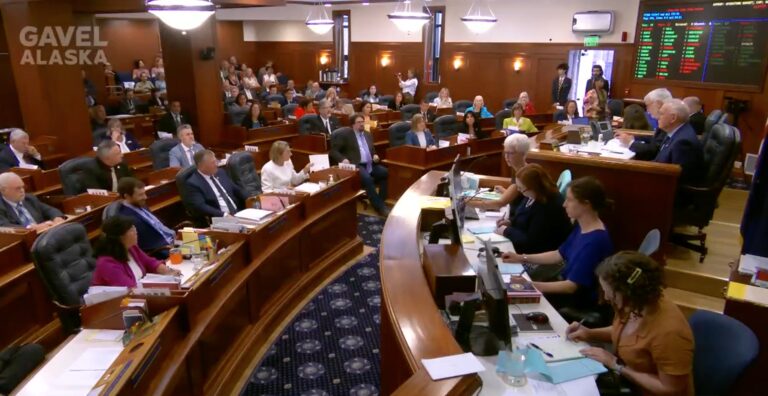
If you have the votes, vote. If you don’t have the votes, talk. The Legislature didn’t talk much and moved swiftly Saturday, overriding two of Gov. Mike Dunleavy’s vetoes in a special session that lasted less than 30 minutes. They knew they had the votes.
Lawmakers restored a $200 increase to the Base Student Allocation, a key component of state education funding. The override required 45 votes from the combined House and Senate and passed with exactly that number. Only 59 lawmakers were present, with Sen. Mike Shower excused.
Several Republicans became the “Overriders Caucus,” joining Democrats in the vote to dismiss the governor’s education spending veto. In the House, Republican Reps. Jeremy Bynum, Bill Elam, Chuck Kopp, David Nelson, Justin Ruffridge, Dan Saddler, Will Stapp, Julie Coulombe, and Louise Stutes supported the override. In the Senate, Republican Sens. Rob Yundt, Mike Cronk, James Kaufman, Cathy Giessel, Jesse Bjorkman, Kelly Merrick, Bert Stedman, and Gary Stevens also voted in favor.
In further defiance of the governor, none of his education policy legislative items were even addressed. The governor had even offered to withdraw his veto of the part of the extra funding if he could get movement on charter schools and tribal compacting.
Evidently the Democrats and enabling Republicans were not interested.
The second override concerned Senate Bill 183, which addresses how the executive branch delivers reports to the Legislative Budget and Audit Committee. Lawmakers have expressed frustration over receiving reports in formats they find difficult to work with. The override may lead to a legal challenge, as it touches on the balance of power between the legislative and executive branches.
Again, several Republicans voted to override their Republican governor. They were: Jeremy Bynum, Chuck Kopp, David Nelson, Justin Ruffridge, Dan Saddler, and Louise Stutes. In the Senate, the overrider Republicans were Jesse Bjorkman, Cathy Giessel, James Kaufman, Kelly Merrick, Bert Stedman, Gary Stevens, and Rob Yundt.
Many legislators had predicted a brief “override and out” session—and that’s exactly what they delivered.
Pedestrian fatalities in Anchorage jumped by 150% in 2024, a surge that follows the Assembly’s decision to eliminate penalties for jaywalking. In October of 2023, the Anchorage Assembly ordinance went into effect, removing fines for crossing streets outside of marked or unmarked crosswalks. In the year that followed, the Anchorage Police Department’s inaugural annual report shows a sharp rise in deadly pedestrian-involved car crashes and deaths, part of a broader increase in fatal collisions across the city.
The 2024 Annual Report by the Anchorage Police Department details public safety operations, crime statistics, officer activity, and internal affairs and is a snapshot of law enforcement trends in the state’s largest city, covering violent crime, arrests, traffic incidents, and complaints about officers. The report does not link Assembly policy with the increase in pedestrian deaths.
Below is a breakdown of the major findings highlighted in the 2024 report:
A Cessna 208 carrying eight people made a harrowing landing Friday afternoon at Merrill Field Airport, dodging busy rush-hour traffic near the start of the Glenn Highway, and crashing through the airport’s perimeter fence before finally coming to a stop in a vacant field.
The incident occurred just before 4 pm, prompting an immediate dispatch of Anchorage Fire Department and Anchorage Police. However, many emergency crews were cleared before they even arrived on scene, the fire department reported, as it quickly became clear that no one on board had sustained serious injuries.
The aircraft is registered to Hinterland Holdings LLC, an Anchorage-based company that owns Alaska Air Transit, a regional charter service operating in Alaska since the 1990s and owned by Alaskans. The company specializes in passenger charter and cargo service across the state.
Miraculously, all eight occupants of the aircraft walked away without the need for medical treatment, aside from what fire officials described as a “courtesy ride” from the scene. The Anchorage Fire Department remarked that “the best calls are the ones where our technical services aren’t needed.”
Merrill Field, located just east of downtown Anchorage, is one of the most active general aviation airports in Alaska and plays a crucial role in connecting the city with remote villages and bush communities. The airport is home to over 800 aircraft, including 786 single-engine planes, 41 multi-engine planes, 16 helicopters, and even a glider.
Where the plane touched down is near where East 5th Avenue becomes the Glenn Highway — one of the most congested traffic spots in Alaska.