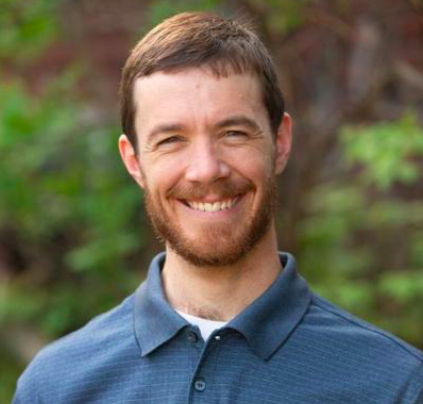
Rep. Zack Fields will likely sail to victory in November, having faced neither primary nor general election challenger for the House District 20 seat he won in 2018.
But even without any work to do to get reelected, Fields has not taken the time to file his required financial disclosure form with the Alaska Public Offices Commission.
That form was due on March 15, and it’s how Alaskans know where Fields and other lawmakers are getting their money, or where they may have conflicts of interest with their family investments.
Fields filed the form properly in 2019, when he showed that he had worked for the Bill Walker Administration the previous year, and had also worked for a labor union. He was a freelance writer for the Anchorage Press, his report shows.
He also filled out a financial disclosure as a candidate before he filed for reelection in 2019. That is required by the Division of Elections before it can certify him as a candidate.
But in 2020, he filed no disclosure as a state legislator — a serious APOC violation that comes with penalties. It’s also breaking the law.
The Sand Lake Community Council has lodged a written complaint against the chairman of the Anchorage Assembly over a social media post in which Assembly Chairman Felix Rivera posted a job opportunity to the Facebook page of the Alaska Young Democrats, and asked the group to not share it outside the group.
In the posting, Rivera said, “ANCHORAGE JOB OPPORTUNITY — please don’t share publicly. The Anchorage Assembly will be hiring 6 full time (40 hour) aides from mid-September to December 30 to assist us with our COVID-19 response. Duties will be varied, including constituent outreach, policy research, to policy development and more. All focused on COVID-19. It will be contract job (so pa attention to this for tax purposes) and will be a $11,200 contract for these approximately 3.5 months. Please message me if your (sic) interested or know others who might be interested. I’m trying to get these positions filled ASAP. Thanks all!”
Must Read Alaska was alerted by several readers about the posting, which was making the rounds on social media today. And the Sand Lake Community Council sprang into action:
“By law, all elected positions to the Municipality are nonpartisan positions; how is it legal (or ethical) to solicit applicants for Assembly Aide positions from a limited and certain subset of Alaskans?! Why did Chairman Rivera only solicit applicants from the Alaskan Young Democrats Facebook group??” wrote Parker Haymans, Sand Lake Community Council president.
It appears the Anchorage Assembly intends to use about $70,000 of the municipality’s federal CARES Act money to hire a political crew that can help it through the end of the CARES Act spending cycle, which ends Dec. 30, and that Rivera wants to make sure the new hires have the right Democrat credentials to serve the Assembly. There is every indication that this crew of six will be assigned political tasks.
The Municipality’s code of ethics prohibit such activity:
D. Limitations on Political and Partisan Activity:
1. Elected officials and board members may use their titles when engaging in political or partisan activity, but shall not state or imply that they are acting on behalf of the assembly or the municipality.
“The SLCC is outraged to learn that during a pandemic, where hundreds if not thousands of people in Anchorage have lost their livelihoods, Chairman Rivera has the audacity to attempt to limit a pool of applicants for well-paid municipal positions to a politically aligned Facebook group. Again, isn’t the municipality supposed to be nonpartisan?! How in the world is this legal?! Or better yet, how is this ethical? Why did Chairman Rivera attempt to limit his pool of applicants to just Young Democrats? “
The Sand Lake Community Council has asked that the positions be filled through a nonpartisan hiring process.
“We are shocked, appalled, saddened, and disappointed by Chairman Rivera’s action. Shame on the Assembly for letting their Chairman attempt to fill much needed employment positions through a partisan hiring process.
We respectfully request your due consideration to this email and welcome any input or response you may provide.
The chair of the Kenai Borough Assembly has offered a resolution to request that this year’s school funding be based on last year’s enrollment numbers, rather than this year’s. The annual student count takes place between Sept. 28 and Oct. 23.
Many districts in the state are reporting drastic drop in enrollments, as parents decide not to have their children enroll in the various districts’ distance learning programs, but choose instead to homeschool. Parents are engaging in choice — they see the homeschool programs as superior to the district online learning, for whatever reason.
On the Kenai Peninsula, some civic leaders are estimating that one-third of the students have gone to the homeschool model, while according to other sources, it could be as high as half of the overall enrollment.
Homeschool students typically are not enrolled in the local school district but sign up with homeschool programs, such as Denali PEAK, Fairbanks B.E.S.T., or one of a dozen other choices in the state or, in some cases, out of state. This means the district doesn’t get funding for them.
During the last student count last year, Kenai had 8,881 students. A drop of enrollment of one-third could mean over 2,900 students may be already enrolled in homeschool programs, leaving around 5,981 students in the district.
The Kenai Borough budget passed in the spring gave $50 million to the Kenai School District. But funding from the state is always predicated on enrollment.
Voting on the resolution at the next Borough meeting on Sept. 15 will require two Assembly members to decide if they have conflicts of interest: Jesse Bjorkman and Tyson Cox.
Bjorkman is a teacher in the district and Cox’ wife is a part-time teacher. Any reduction in the budget could impact their family budgets, critics have warned.
Both of those Assembly members have already voted on the $50 million school budget in a decision earlier this year, putting them in an awkward position if they now recuse themselves from voting on the Kelly Cooper resolution, which is asking the State for more money than the student count would allow.
Those who view America as a vile racist and oppressive nation are not interested in hearing otherwise. Challenge them. Go ahead and try. You’ll see what I mean.
They demand you see it their way. If you don’t? You become the problem. You become racist and oppressor.
It’s an arrogant posture. Agree or you’re evil. But that’s how the cultural Marxists roll. They’re opinion tyrants. And if they gain power, they become more than opinion tyrants, they become full-blown tyrants.
Kimberly Waller’s an opinion tyrant. She works in the nonprofit sector and is currently director of Sultana, the Foraker Group’s fiscal sponsorship program. According to Waller’s LinkedIn page, she’s also the CEO of an organization, Women’s Power League of Alaska.
She posted a 1,752 worded open angry letter to me on her Facebook page on Wednesday. Waller didn’t like my recent Must Read Alaska column: “Saying America is systemically racist is a destructive lie.”
My column challenged the take of most speakers at the “March on Anchorage” Labor Day rally at Townsquare. One after another made the case that Alaska is a deeply racist state. I disagree.
“Your claim that racism fundamentally doesn’t exist in our state is an area in which I simply must enlighten you,” wrote Waller.
The most common denominator among social justice warriors is the confidence they hold in their beliefs. They own the truth. If you’re lucky, they’ll enlighten you. But don’t ask questions or challenge their ideas in any way. Just listen, accept their truth. Otherwise, you’re a racist.
“Your piece was so over the top that I had to take the time out of my night to share a few truths with you. Yes, truth! I know you are one who believes in the concept,” wrote Waller.
I do believe in truth and it’s my contention the truth is America is not the deeply racist country Waller and her fellow social justice warriors claim it is.
“You attacked the speakers, who – in your words “complained repeatedly about America’s embedded systematic and structural racism”. Sharing = complaining for you?” wrote Waller.
She then goes onto complain about the widespread racism in Alaska.
“Racism lives on running trails, on playgrounds, in schools, in downtown Anchorage, in the MatSu, online, in our damn private driveways, on the job – right here in the beautiful state I call home,” wrote Waller.
Waller also challenged my belief the only way to reach true equality where all have the same is to redistribute wealth, take away freedom, reward bad decisions and punish good ones.
“You show your true face, writing ‘equality for all…is impossible without stripping us of our freedoms.’ Who is ‘us’? Are you speaking in code? You should know, “we” (aka “other”) can read code,” wrote Waller.
And there it is. The accusation you knew was coming. Challenging Marxist wealth redistribution is a racist act in and of itself. But it’s undeniable different decisions produce different results leading to inequality. Good decisions – good consequences. Bad decisions – bad consequences.
“Are you saying only wealthy (do you really want to say white??) people make “good choices” – and have rightly acquired their fortune through all of their “good choices”?” wrote Waller.
And there’s the “racist under every bush” prism in full display that typically drives social justice warriors like Waller.
Waller received glowing reviews from her followers praising her for having the courage to write such a thing. The bubble Waller lives in was secure as she enjoyed accolades from her like-minded Leftists.
But then I shared her open letter Facebook post on my page with the caption: Thoughts.. Some took issue with Waller. Social justice warriors don’t cope well with resistance.
“Dan you’re soliciting thoughts in regard to this? Do you have your own thoughts, formulated on your own?” posted Waller.
As the day rolled on Waller grew increasingly impatient with my lack of response to her open letter.
“Dan Fagan you’re a coward – hiding behind your computer, from a land far far away, sending random folks from your page to mine to post hate / conspiracies. You need backup? Do you need a lifeline? Aren’t you a writer, a journalist? You have your First Amendment rights but your words don’t come without a consequence. How does someone like You, residing in New Orleans, as I’m told, come to have a platform where you’re marginalizing the very feelings experiences of ALASKANS?! How do you feel it’s in any way conducive to the art of your craft (using “craft” loosely) to “report” so negatively and with such ease on an event in which you were not present, and target the peaceful people who were there – but leave out the fact that those same people were subject to intimidation for gatherings peacefully. WITH THEIR CHILDREN. Is this world we’re supposed to just swallow and accept. How can you justify? You cannot! And neither can your employer. You’re sharing “news” which is inaccurate, hurtful and wildly biased – about a place you don’t even live. Do you have children? Do you care? Enjoy your paycheck hope it’s worth it,” wrote Waller.
Such is the life of an enlightened, joyless, angry leftist, full of rage, indignation, judgment, and utter contempt for anyone willing to challenge their view that America is a deeply racist nation.
The woke mob will settle for nothing less than silence, compliance, and obedience. It’s why they’re winning. People are afraid to stand up to them, challenge their rhetoric.
It’s time to stop being intimidated.
Dan Fagan hosts the number one rated morning drive radio show, weekdays between 5:30 to 8 am on Newsradio 650 KENI. He splits his time between Anchorage and New Orleans.
Civil liberties and representative government are dying in Anchorage, being taken away by despotic elitists determined to ruin our city by instituting progressive laws destructive to a healthy and safe community.
I submit as evidence Assembly member Meg Zaletel’s Ordinance #2020-80. Her ordinance proposed a series of restrictions on the Anchorage Police Department (APD) to provide “restrictions and limitations on APD Officers use of force in response to resistance in the Anchorage Municipal Code”, blah…blah…blah.
As my grand-dad would have said “Suffer’n cats…What blather.”
As a result of public outcry and a strong Back the Blue demonstration at the assembly chambers on Aug. 25th, the ordinance was postponed indefinitely.
Don’t for a minute think she has backed off on regulating our law enforcement officers from the political diose. This is just a bait-and-switch approach by the Assembly to get the same results using a different method. In fact, her next attack has an even more onerous objective.
Word is, Zaletel is going to introduce a resolution that directs proposed changes to APD policies and procedures be reviewed by the Public Safety Advisory Commission (PSAC).
Any PSAC recommendations would then go to the Assembly Public Safety Committee for adoption. Take a guess. Yes, Zaletel is on the Assembly Public Safety Committee.
Bingo, in fact it is a “committee of the whole.” I guess this just makes it easier for the Assembly to erode any opposition by having drawn out day meetings by the “committee” and wear down any opposition, before bringing to the Assembly for approval. I’ve seen this trick used before when I served on the Assembly.
But you say, it’s just a resolution, not an ordinance, so no big deal.
Hogwash! Under the municipal code resolutions can be directive. This resolution is just a backdoor approach to reaching the same goal that was offered in AO 202-80 to set up a process for the Anchorage Assembly to control changes to the APD Policy and Procedures manual.
And to rub salt in the wound, under municipal code, a resolution does not need a public hearing. Our comrades on the Assembly can implement this process without hearing from you.
Anchorage has one of the finest police departments in the nation, with the least amount of corruption and fewest number of bad-actor officers. It is one of the most transparent in existence, dedicated to protecting our community from bad stuff. If you don’t believe me, go to the APD web site and check it out yourself. Their Policy and Procedures Manual is available on-line.
As I have previously asked…What problem are you trying to fix, Assembly member Zaletel?
Zaletel has provided zero examples of excessive use of force by APD. As a person who has never served in the military or in law enforcement, she wants to regulate a well-run department with imprudent restrictions after having “community conversations in recent months about law enforcement in Anchorage.”
Let’s honestly discuss what she is trying to accomplish with her past ordinance and forthcoming resolution. She is dog-whistling to the progressive Left that Anchorage can be taken over by Marxists, starting with constraining law enforcement.
Anchorage must never become Portland, Oregon north.
If you don’t believe me, go back and look at the news from Aug. 25, 2020 where protesters against the police (wink, wink), in red shirts, with red flags (sort of reminds me of the Communist red of the Chinese and former USSR flags) demonstrated at the Loussac Library supporting her ordinance. Her sinister actions are clear and must be defeated!
“Political power, properly so called, is merely the organized power of one class for oppressing another.” ― Karl Marx
This is no game, folks. The radical Left is trying to fundamentally change our government. Hand-cuff the police, restrict the Second Amendment, curtail Freedom of Speech to only speech the Left approves, and finally establish a “one think” autocracy based solely on their values, not the collective values of the community.
Local elections are as important as state and national elections. Assembly members seriously interested in improving law enforcement should ride with the police during routine patrols (I did), listen to the officers on the street, and open a conversation with APD Chief Doll and the senior leadership of APD to learn ways they can positively contribute to improving our community by supporting our police officers.
Please stop trying to fix something that ain’t broke. This shameful attempt to over-regulate and micro-manage APD by the Assembly must be stopped and those Assembly members supporting it should be removed, either by recall or at their next election.
Craig E. Campbell served on the Anchorage Assembly from 1986 to 1995 and as lieutenant governor in 2009-2010. He was chief executive officer of the Alaska Aerospace Corporation and achieved the rank of lieutenant general (Alaska Department of Military and Veterans Affairs), major general (Air National Guard).
Democratic candidate Sue Levi, running for House District 24, is campaigning on a platform that says Alaska’s oil industry “has to pay its share.”
If it sounds familiar, it is. Her words parrot the Our Fair Share campaign, which is trying to jack up taxes on oil through a voter initiative, Ballot Measure One.
“To survive the current fiscal crisis everyone is going to have to sacrifice and work together for a stable economic future, Levi writes.
Levi has run for the seat before and was endorsed by the leftwing Alaska Center (for the Environment), which touted her commitment to “advocating for policies that would provide solutions to problems created by climate change.”
Problems facing Alaska this year are not so much related to climate change, which was the Left’s calling card in 2018, but to the fiscal viability of a state that has built its economy on energy development. This may mean Levi is out of touch with her district, where many voters are part of the oil industry in Alaska, and where Ballot Measure One is likely to lose by a landslide.
In contrast, Tom McKay, the Republican in District 24, will host a fundraiser on Thursday sponsored by some of the biggest name in the Alaska business community: Jim Jansen, Joe Marushack, Mayor Dan Sullivan, Rebecca Logan, and a couple dozen more. A retired petroleum engineer, McKay stands in sharp contrast to Levi, who is pushing the “tax them until they hurt” agenda.
JUNEAU, ALASKA – Al Gross, an orthopedic surgeon from the rainy capital city, has been running for U.S. Senate since last year, self-funding his race with over $1 million early in the election cycle.
He had the money, having worked in Alaska as a surgeon for years. Juneau is a town where surgeons can charge what they want, and the State of Alaska health insurance plan pays. It’s a lucrative living. Gross’ fortune and penchant for tall tales have launched him further politically than his small-town roots might have predicted.
This year liberal operatives around the country have decided his race against Alaska U.S. Sen. Dan Sullivan, the Republican, is competitive.
It doesn’t look competitive on paper: During the Alaska primary, Sullivan won 65,257 votes to Gross’ 50,047 votes, in an election that saw a 19.5 percent voter turnout.
Sullivan is well-liked by the conservative voters and the business community, and he’s also a U.S. Marine, earning the respect of military families, all of whom tend to turn out higher during general elections in presidential election years. They’ll come out in November, and they’ll vote for the Marine who served in Afghanistan, rather than the liberal doctor who went to the private Phillips Academy Andover, and Amherst College, and who LARPs at being an independent.
The calculation for Gross also does not look good when compared to 2014, when Democrat Sen. Mark Begich got over 58,000 votes in the primary. Gross is nearly 14 percent below that number in his primary this year, and he faced no real competition.
Why have East Coast groups like the Lincoln Project targeted this supposedly safe Alaska Republican seat?
Call it the “Palin effect.” Al Gross is the Democrats’ Sarah Palin, an empty vessel into which all kinds of fantastical, romantic notions of Alaska are poured and fed to the head-nodding mainstream media and willing donors.
Those liberal donors have been enchanted by Gross’ “killed a grizzly” story; and his marketing team has used his fishing boat as a prop to great success.
Gross is just the kind of Alaskan who Americans love. The story of being a doctor-fisherman appeals to city folks with fat wallets and a longing for the larger-than-life experience of Alaskans. He is the mythical creature conjured up by consultants who know what buttons to push on the donors.
Palin, of course, was marketed to American conservatives in much the same way: The beautiful, Alaska-born, moose-hunting mama with a quick wit and a gift for public speaking. She spoke to people’s values and she minced no words. The pencil skirts and stilettos were a plus. Millions of Americans voted for Sarah Palin.
“If Sarah Palin could do this to a moose, think of what she can do to a donkey,” the t-shirt read in 2008. It was irresistible.
But this year, even Newsweek found the campaign ads for Gross a bit incredulous, labeling them a “mix between a reality T.V. commercial and Dos Equis’ ‘Most Interesting Man in the World.'”
Gross says he was born in the “wake of an avalanche” and killed a grizzly in self-defense, prospected for gold, and then he promised donors they might win the prize of joining him for an Alaskan adventure, if they were the lucky number.
Gross had a choice. He chose not to run as a Democrat, because that’s increasingly a bad label in Alaska, where Democrats and now the false-flag independents are held in lower regard. The Democrats have endorsed him, however, and that means the state party and the Democrat National Campaign Committee are on board and won’t support any other Democrat on the ticket.
“Alaska allows Independents in the Democratic Primary, and I suppose because people believe I’m a strong candidate, Alaska Democrats have chosen not to field a candidate against me, to endorse me and when I win I will caucus with the Democrats because Democrats seem the most interested in promoting policies geared toward economic development in Alaska,” he told a reporter.
Recently, Gross appealed to the DC-based grassroots fundraising group called 31st Street Swing Left.
It is one of countless grass-roots fundraising groups pouring cash and energy into potential swing races across the country this election cycle, Meagan Flynn wrote in The Washington Post. The group’s leader Lisa Herrick explained that the group usually targets local and state candidates, and that Gross is the only congressional candidate that 31st Street is supporting this year.
During a Zoom fundraising call last month that raised $118,000 for Gross, liberal check-writers from all over America heard from the fisherman doctor, and from a Native staff member who wove the scene for them of rural Alaska, where her people rule the very blue ballot. She sealed the deal as the group exceeded its fundraising goal by 18 percent.
The myth-making has been a strategic success for fundraising, but in Alaska the bear stories feel cheap, and even people in his home town of Juneau chuckle into their sleeves when he says he was born in the wake of an avalanche. Locals here know far too much about his family history; his father, Avrum Gross, was a swashbuckling Democrat attorney general who had many proclivities that the mainstream media refuses to probe.
Al Gross will get their vote in the capital city, where Democrats rule the roost. It’s a government town and he’s their man, even if he makes the inappropriate “toxic masculinity” comments in his ads about having the “cojones” to do the job. All is forgiven for the stealth Democrat in a town ruled by Democrats.
But in the Railbelt, where private sector jobs are more common and where people actually have to work hard for a living, Gross is going to be a tough sell, as evidenced by his weaker-than-expected performance in the primary. The Railbelt will come out for Trump, and they’ll vote for Sullivan.
Of course, this is Alaska politics, and no one can say with certainty how much things will change in 50 days and these are strange days, indeed. We do know this much: Candidates from Southeast Alaska rarely do well on the statewide political stage. And by rarely, we really mean never in Alaska history have they succeeded for U.S. House or Senate.
Defend Alaska Elections—Vote No on 2 announced 25 co-chairs to lead the campaign to defeat Ballot Measure 2.
The community leaders who have lent their names to the defeat of the rigging of Alaska’s elections include Chairman John Sturgeon.
“Alaskans already know how to vote; they have been doing it since statehood!” said Tim Navarre, a Democrat, lifelong Alaskan, Kenai City Council member, and former president of the Alaska Municipal League.
“I believe outside interests are trying to change Alaska’s voting laws to suit their own interest. Presently my vote counts today, and that is the way it should be,” said Bob Sivertsen, a Republican and lifelong resident of Southeast Alaska, mayor of Ketchikan, and advocate for seniors.
The group has the backing of Libertarian Dick Randolph, who said, “The billionaires supporting Ballot Measure 2 say it will give voters ‘more choice and more voice. This is utter nonsense. It will actually take away voters’ choices, by discriminating against small political parties.”
“Erecting new barriers to voting by increasing ballot complexity and throwing out votes is a recipe for disaster,” said Susie Linford (Non Partisan), award-winning chef and longtime community pillar in Anchorage. “Our current system is fair and simple, and most importantly, every vote counts!”
Dark money is fueling Ballot Measure 2, and it’s from out of state. Defend Alaska Elections reports its top three contributors are Alaskans John Sturgeon, former Governor Sean Parnell (R), and former Senator Mark Begich (D).
The full current list of co-chairs includes:
Bernie Karl, business owner, entrepreneur, and lifelong Fairbanksan
Anna MacKinnon, former state senator, former Executive Director of STAR
Bob Candopoulos, captain and president of the Saltwater Safari Company
Carol Fraser, Alaska Chamber board member, businesswoman, and travel industry advocate
Johnny Ellis, former state senator of some 30 years
Mead Treadwell, former lieutenant governor and current Arctic advocate
Kristin Mellinger, businesswoman and former executive VP of the Arctic Slope Regional Corp
Dick Randolph, statesman and lifelong Alaskan
Lei Tupou, Alaska Parole Board member and longtime public servant
Cheryl Markwood, owner of Markwood Realty and local political activist
Tim Navarre, Kenai City Council member, and lifelong Alaskan
Stanley Wright, veteran, father, and longtime Alaskan
Leslie Becker, former E.D. of Ketchikan Chamber, candidate for Alaska Legislature
David Pruhs, Fairbanks City Council member, small business owner, and lifelong Alaskan
Pete Zuyus, former chief information officer for the State of Alaska and advocate for seniors
Brittani Clancey, mother of four, Advisory Board member for Northern Lights ABC School
Thomas Baker, City of Kotzebue Vice-Mayor, candidate for the Alaska Legislature
Bob Sivertsen, lifelong resident of Ketchikan, mayor, and advocate for seniors
Portia Noble, lifelong Alaskan and political activist
Mark Chryson, former chair, Alaskan Independence Party; sponsor of original ranked choice ballot initiative
Mike Prax, Alaska state representative
Susie Linford, award-winning chef and community volunteer in Anchorage
Steve Colligan, businessman, former member Mat-Su Borough Assembly
Paulette Simpson, longtime Juneauite and community volunteer
Dave Talerico, Alaska state representative, former coal miner
Cynthia Erickson, Athabaskan from Tanana, business leader and rural advocate
The Alaskans for Better Elections group trying to pass Ballot Measure 2 is led by Scott Kendall, the former chief of staff to Gov. Bill Walker and a leader in the Recall Dunleavy Committee.
Candidate Al Gross has a new communication director who has “been there, done that” for New York City Mayor Bill DeBlasio.
Julia Savel cut her teeth with the Bill DeBlasio for Mayor campaign in New York City, where she was a communications operative.
Savel, who was briefly the communication director for Democrat Rep. Elaine Luria of Virginia, joins another out-of-stater — Campaign Manager David Keith, who brought baggage with him to Alaska when he signed on with the Gross campaign last year.
Keith had come to the Gross campaign after working for, and getting in trouble at, the Congressional Progressive Caucus.
Clearly it was time to bring on a different communications professional for Gross, especially after his remarks on a recent ad, in which he said he has the testicles to do the job in Washington (using the Spanish word “cojones.” Gross has since been counseled by his supporters about his toxic masculinity.
Gross has embraced East Coast leftists in his quest to unseat U.S. Sen. Dan Sullivan. But with East Coast fundraising from Swing Left, he also has plans to hire 60 rural Native Alaska coordinators to work his rural get-out-the-vote strategy this fall. Rural Alaska is the key to his strategy, as it was for Sen. Mark Begich, who lost to Dan Sullivan in 2014.
Gross has strong East Coast ties, having completed high school at the fashionable Phillips Academy in Andover, Massachusetts (tuition $57,000 per year) before attending Amherst College in Massachusetts for his undergraduate degree (tuition $58,000 per year).