Congressman Don Young announced today he has tested positive for COVID-19. He is working from his home in Alaska and says he is feeling strong and following protocols.
Young’s wife Ann is a nurse.
Several people associated with the campaign have also tested positive, Must Read Alaska has learned. All are doing well and are working from their homes.
Young, who is 87 years old, is in generally good health, although he has had some bouts of sciatica, a pain in the lower back. He just won his 25th term in Congress and has served for Alaska since 1973.
In past years, he has stayed healthy throughout his campaigns, and sometimes has gotten a head cold right after the campaign ends.
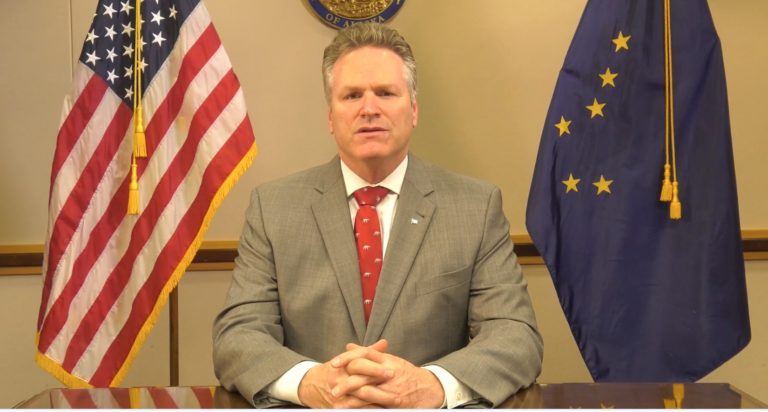
“That didn’t go over all that well,” wrote one Alaskan to Must Read Alaska this morning, after Gov. Mike Dunleavy used the Emergency Alert System on Thursday to plead with Alaskans to stay home if at all possible due to a rising number of COVID-19 cases in the state.
That Alaskan wasn’t alone. Other Alaskans reacting to the Emergency Alert System message said they were not amused. They thought an earthquake had hit or a bomb was on the way.
Instead, Dunleavy is ordering all of the State workforce who can work from home to do so, and asking the public to voluntarily hunker down for three weeks.
In the past seven days, 2,791 Alaskans have tested positive for COVID-19. Dunleavy warned today that the health care system in Alaska, including the medical workers caring for COVID and non-COVID patients, are at risk of being overloaded.
When possible, private businesses should ask employees to work from home, he said. People should return to curbside pickup, where possible. They should rethink how they are going to do Thanksgiving celebrations, he said.
His request was not a demand, but generally the Emergency Alert system, which sends an alarm to people’s smart phones, is only used for imminent threats.
Yet it’s an example of how officials are having to deal with COVID fatigue. Dunleavy is facing a growing segment of Alaskans who have become numb to all the orders and lockdowns, and he is having a harder time getting through to them about how important it is for them to keep a physical distance from those not in their immediate households. They’ve been doing this for months, with lockdowns and changing emergency orders that are crushing many private businesses in Alaska.
Since March, 20,207 cases of COVID-19 have been diagnosed among Alaska residents, and 96 deaths have been reported associated with the highly contagious virus.
Some Must Read Alaska readers were apoplectic about getting the emergency alert in their phones at 10 am, and reached out to this publication with their immediate, unvarnished comments.
“What the EFF?” wrote one reader.
“Final nail in his coffin,” wrote another.
“People are upset. They’ve lived through wars and are swearing about this,” wrote another.
“Holy crap he just gave me a heart attack with that emergency cell phone message,” wrote one Alaskan. Another said that it gave her a panic attack.
Of the hundreds of messages written on the response panel on YouTube, none were favorable. Many said they thought they were going to have a heart attack.
The message was also broadcast on YouTube and has been viewed by over 17,000 people as of this writing.
“My job as governor is not to tell you how to live your life. My job is to ensure the security and safety of Alaska. I can’t do that without your help,”he said. “I’m asking you to reach deep for the next three weeks. If we can buy time for our critical workers – if we can keep our systems operational – we can avoid being forced to take further action. But if we cannot reduce the spread of this virus, we reduce our future options for how to proceed. No matter what you believe about the virus, the facts are the facts. Hospitalizations and sick healthcare workers are reaching untenable levels. We must act together now while we still have choices.”
Dunleavy announced the following executive actions:
On Monday, November 16, the new 30-day COVID-19 disaster declaration takes effect.
Effective immediately all State employees are to work from home whenever feasible.
Face masks and social distancing are mandatory at State work sites for both employees and visitors.
Earlier this year, the Municipality of Anchorage used the Nixle alert system in a similar way, and it was poorly received by many who believed it was a misuse of the Nixle subscription service, which is supposed to relate to emergencies or to get the public’s help in locating missing vulnerable individuals.
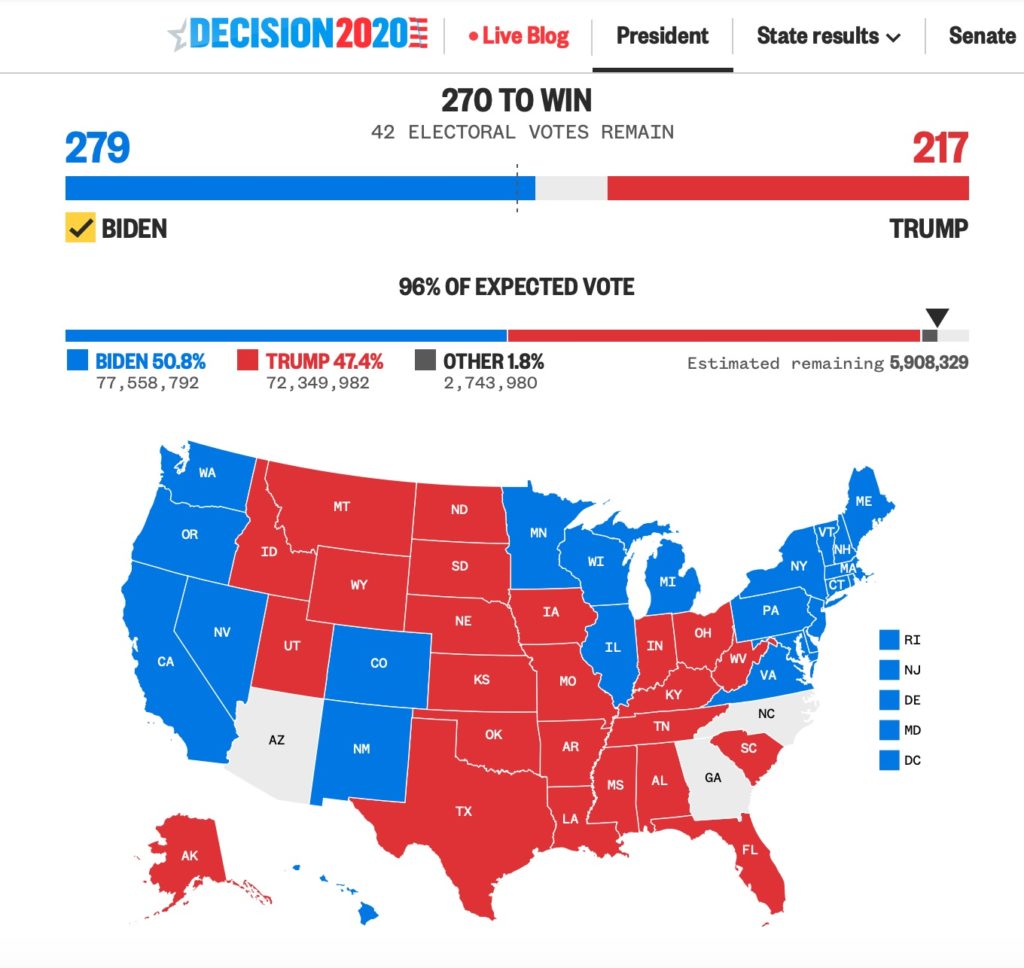
According to the latest count published by media giants Google, New York Times and NBC, candidate Joe Biden now has over 77.1 million votes, and President Donald Trump lags at 72 million votes in the race for the White House.
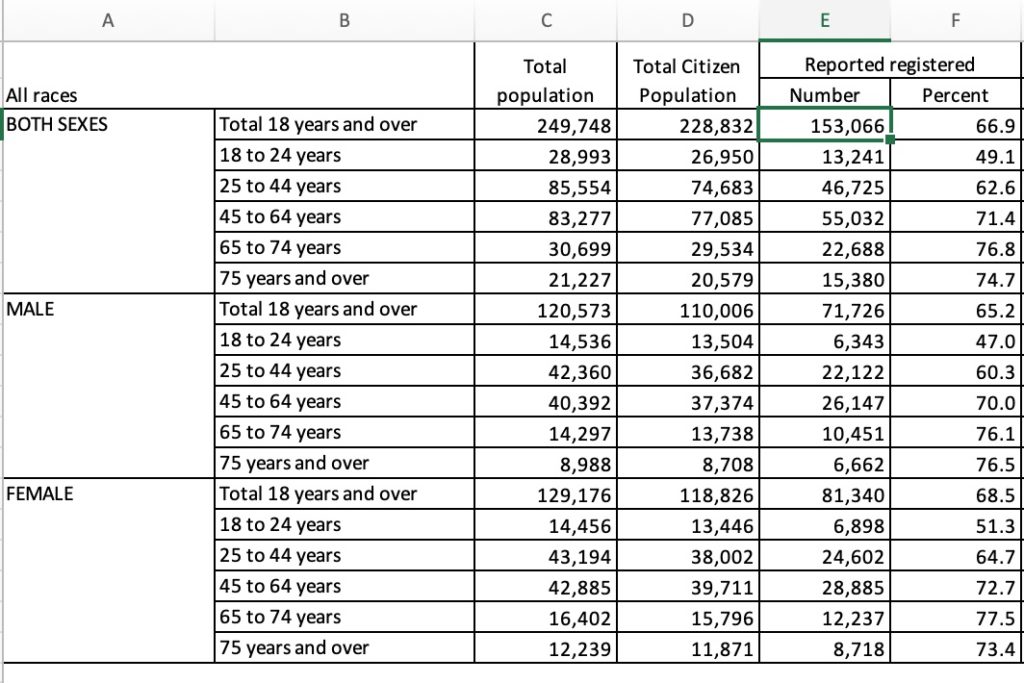
NBC tally shows over 158 million people voted in this election — more than are registered to vote, according to the U.S. Census.
If the Big Tech/Big Media reporting is correct, that means more than 149 million citizens — or 97 percent of eligible voters — cast their ballots in the presidential election.
The U.S. Census reported that in 2018, there were 153 million registered voters who were eligible to cast ballots. If that number is still accurate after two years, 149 million of them voting is either a remarkable sign of civic engagement or fraud.
Other media are reporting that the number who voted this year is is even higher. According to Bloomberg, 161 million voted in the presidential election, putting the turnout at 105 percent of the 2018 number of eligible voters.
Looking back in time, Pew Research reported that in the last General Election, November 2016, about 157.6 million were registered to vote, citing to Census Bureau estimates.
The Associated Press that year reported Hillary Clinton received 65.8 million votes, and Donald Trump received 62.9 million votes. Other votes were spread among third party candidates. The Election Projectreports that 136,753,936 ballots were cast that year for the nation’s highest office.
Over the years, they have marched in peace and in war – shoulder to shoulder, their uniforms reflecting different branches of the armed forces, all committed to defending America. We call them veterans, men and women who have sacrificed part of their lives to serve in defense of liberty.
On this day, we pause to salute them – from wars gone by and wars still being fought. The struggle to keep this nation free is unending. The need for soldiers, sailors, Marines, airmen and Coast Guardsmen is one that continues and will continue.
We are reminded of the unending call to service on Veterans Day because this national holiday no longer is one that calls to mind only heroes of the past – those who served and fought and died in wars that to many seem a part of ancient history. Now, as we honor and remember those who wore the uniform of our nation many years ago, we also raise a salute to a younger generation that proudly serves today – in Afghanistan and other trouble spots around the globe, manning bases and posts here and in far-flung corners of the world.
Sadly, with the advancing years, the number of World War II veterans is declining rapidly, and even the ranks of those who served during the Korean War is growing thin. We stand today on their shoulders, able to be proudly free because of their sacrifices.
The long line of those who bravely and honorably have risked it all to serve this nation in its military extends far into its distant past. But it is a line that marches forward, too, as brave new young people step forward to carry freedom’s banner.
One of the most misguided political campaigns in Alaska state history was drawing to a close today with Dr. Al Gross still holding out hope for a miracle upset of incumbent Republican Sen. Dan Sullivan.
A Gross victory remained statistically possible as this was written. He needed only about two-thirds of approximately 83,000 outstanding votes to oust Sullivan if, of course, Sullivan got no more votes.
Given the monstrous amount of money Gross and Gross-minded interests spent on the election, the candidate’s reluctance to throw in the towel is probably understandable.
Nearly $35 million is a staggering amount of money to pay for about 100,000 votes. But then there were pre-race indications that Gross, born and reared in the Alaska state capital as the son of an attorney general for a Republican governor, had a solid chance of beating an immigrant Sullivan, the interloper from “Outside” as Alaskans commonly refer to the Lower 48 states.
Aside from being a Marine, Sullivan’s Alaska cred isn’t great. He comes from a wealthy family who saw to his prep school education. From there it was on to Harvard, Georgetown and a political appointment as a U.S. Assistant Secretary of Statebefore being tapped as Alaska Attorney General in 2009 when then Gov. Sarah Palin wasin the midst of a minor scandal called “Troopergate”and needed a lawyer far removed from Alaska politics; and finally Alaska Commissioner of Natural Resources under former Gov. Sean Parnell.
Clearly the Gross campaign looked at Sullivan’s resume and tried to make the election a contest between a real Alaskan – grizzly bear slayer, commercial fisherman, outdoorsman, big-mountain skier, teenage entrepreneur and independent thinker – and an Outside product of privilege willing to kowtow to the Trump administration.
The pitch was a mistake that underlined how badly out-of-touch with average Alaskans the state’s Democratic party.
Three words
The reality here is that Gross had a realistic chance of unseating Sullivan if he’d stolen an idea from President Donald Trump (God forbid) and listened to the decade’s old advice of political consultant James Carville, the man largely responsible for the election of Democrat Bill Clinton as the nation’s 42nd president in 1992.
Rep. Lance Pruitt of East Anchorage leads challenger Liz Snyder by just 56 votes, after absentee ballots were counted for District 27 on Wednesday by the Division of Elections.
“The district is a cliff-hanger. It has been in the four of the last five elections, and nothing is new, it’s all a matter who got the last three people to show up to vote,” said Randy Ruedrich, who analyzes Alaska elections from a Republican perspective.
Must Read Alaska has learned there are fewer than 400 full-count absentee ballots and 50 questioned ballots to be counted for that district.
Several groups of ballots were counted from different areas of the state today. But no results were more interesting than District 27, where House Minority Leader Pruitt is fending off a second attempt by hardline Democrat Snyder.
Looking at the whole ballot, Pruitt is significantly outperforming the top of the ticket. Pruitt won more votes than Donald Trump Trump-3,975, and only 86 votes less than Biden-4,386. Pruitt did better than Democrat for Senate Al Gross-4,185, and Republican Sen. Dan Sullivan-4,171. Pruitt also did better than Congressman Don Young.
Snyder now has 4,244 votes to Pruitt’s 4,300 votes.
The last batch to be counted in the district is thought to lean Republican, which may give Pruitt a few more votes. MRAK analysts believe he will win by about 70 votes.
In District 15, Republican David Nelson gained one vote in today’s count. All of his absentee ballots and questioned ballots are counted, although some may come in until the close of business on Nov. 13. Those are thought to lean Republican. Nelson is 116 votes ahead of Democrat Lyn Franks.
Statewide, in Congressman Don Young’s race, Democrat challenger Alyse Galvin needs 86% percent of remaining votes to win Alaska’s only congressional seat, after some 20,000 votes were counted today.
In the Senate race, Sen. Dan Sullivan race, Democrat Al Gross needs about 90 percent of the remaining votes to win.
With about 56,373 votes left to be counted, the gap that Gross would need to close is 51,222.
As of 8:20 pm on Wednesday, 289,185 ballots have been counted in the 2020 General Election.
A CALL FOR A PRUDENT PAUSE BEFORE DECLARING A WINNER
By KELLY TSHIBAKA
A house divided cannot stand. Today, our nation’s deep divisions threaten the integrity of the house our founding fathers risked their lives, fortunes, and sacred honor to design and build.
Months of violence, riots and destruction have ravaged our national house, which beltway pundits and politicians have characterized as a noble pursuit of social justice.
Even Kamala Harris and Joe Biden campaign staffers were complicit in the carnage by helping bail out rioters who had been arrested for the destruction and looting of minority-owned businesses in Minneapolis and St. Paul.
Now, after our national election, Biden is encouraging peace and unity, but many of his supporters are continuing their divisive and destructive campaign.
Brandon Friedman, a columnist for the New York Daily News, called Trump supporters “deplorables” and discouraged reconciling with them. Michael Simon, who previously served in President Obama’s administration, is leading an effort to catalog all Trump supporters and hold them accountable. Wajahat Ali, a columnist for the New York Times, tweeted, “[The GOP] have to be broken, burned down and rebuilt. When Biden is in power treat them like the active threats to democracy they are. If those who committed crimes aren’t punished then they will be more emboldened.”
The foundations of our national house are imperiled by the divisive path Biden’s supporters continue to pursue.
As of Tuesday, Nov. 10, some 48% of Americans had voted for President Trump, and the counting continues. That is a substantial number of “deplorable” Americans to “break,” “burn down,” “punish” and “catalog” for exercising their right to vote.
The percentage of Americans voting for Trump also is not the substantial Biden victory many pollsters predicted. In fact, as of Tuesday night, in the 4 swing states of Arizona, Wisconsin, Pennsylvania, and Georgia, there were less than 91,000 votes separating Biden and Trump. Indeed, the numbers are so close that even the political news site Real Clear Politics has retracted its decision that Biden is the president-elect.
In short, at this juncture, the election officially (and legally) remains undetermined. Tensions are high, tempers are flaring, and our political fault lines run deep.
But both Biden and Trump supporters can change the narrative; they still can restore a sense of national unity in which diversity of thought and differences of opinion result in healthy dialogues and debates, not in division and discord. As a starting point, Biden supporters can join Trump supporters in calling for election integrity.
Americans in both major parties are willing to accept the outcome of elections, if they believe the process was fair and election laws were followed.
Unfortunately, because of the many credible allegations and documented incidents of fraud, voter oppression, and voting irregularities, half the country is skeptical of the media’s premature announcement that Biden is our president-elect.
The sad reality is that whether Biden or Trump is officially declared the winner of this election, half the American people will never accept the result, unless the credible allegations of fraud, voter suppression, and voting irregularities are thoroughly investigated and resolved.
For example, we must address the credible claims that Republican election monitors were barred from observing ballot counting in several states; that Pennsylvania election officials defied law and a court order requiring them to allow Republican poll watchers to observe the ballot counting process; that a glitch in a Michigan county voting software program resulted in 6,000 Trump votes being tallied as Biden votes (that same system was used in more than 40 other Michigan counties and in roughly 30 states).
We must address claims that, according to a sworn affidavit by a Michigan poll worker, election officials instructed her and other poll workers to backdate thousands of absentee ballots; that, according to a Michigan poll challenger, tens of thousands of unsecured and unsealed ballots arrived in vehicles with out-of-state license plates after the election deadline, and all of them were attributed to Democratic candidates; and that thousands of deceased and former residents voted in swing states, including over 11,000 voters in Michigan who were deceased or 100+ years old, but not listed as living centenarians.
For the sake of unity and peace in our nation, and for the sake of preserving the integrity of our democracy and electoral process, both Biden and Trump supporters should join in calling for a prudent pause in declaring a winner until these myriad matters are adjudicated and resolved. This is a significant moment, one in which “We the People” can model for our leaders what it means to be a house united.
My hope and prayer are that Americans, and Alaskans, of all political persuasions will move forward together, honoring the rule of law and supporting a peaceful, transparent, and just resolution of this election controversy. That is how our house divided can once again become a house, and a nation, united.
The views expressed here are the writer’s in her personal capacity and do not reflect her role as the Commissioner of the Department of Administration.
CONGRESSMAN DON YOUNG MAKES HISTORY WITH 25TH TERM
The mainstream media has called President Donald Trump and Sen. Dan Sullivan as winners of their respective races in Alaska.
NBC and the Washington Post both announced these races on Wednesday morning, after results were released late Tuesday night. About one-third of the vote is yet to be counted in the state.
Although Congressman Don Young received more votes than the president or Sullivan at this point, the news media did not call that election. Young won 150,443 votes, to Alyse Galvin’s 108,269, making Young the highest vote-getter in the state this election, so far.
It appears Young will be elected to his 25th term in office, making history for Alaska once again. He has served since 1973.
At the latest count from Nov. 10, Sen. Sullivan had 149,669 votes to Alan Gross’ 97,608, a crushing 57-37 landslide. More votes are expected to be counted that will close that margin but are not likely to overtake it.
Gross has not yet made a concession statement. On Twitter on Tuesday night, Gross wrote: “More than 100,000 ballots left to count. 30% of the vote not counted out there! We can win this.”
Like Gross, Trump has also not conceded defeat, although he has an uphill battle through the courts, should he choose that path.
In Alaska, Trump won 148,624 votes to Joe Biden’s 102,080, a 56-39 victory. Alaska’s three electoral votes will go to Trump.
Another 21,000 ballots were counted and posted on the Division of Elections website after 11:30 pm on Tuesday.
263,645 ballots have been counted. While Ballot Measure 2 lost some more ground, Rep. Mel Gillis in District 25 saw his lead disappear to Indie-Democrat Calvin Schrage.
Here’s where some of the races stand as of midnight, Nov. 10:
Ballot Measure 1 is losing 60.70% to 39.30%. Earlier in the night it was 61.58% to 38.42%. This is the measure that would increase taxes on oil. The proponents would need to get 75 of the remaining vote to win, and 25 percent of the remaining vote is Republican.
Ballot Measure 2 is losing with 47.51% for and 52.49% against. Earlier in the night, it was 46.69-53.31%. In other words, the “no” side is slipping.
This is the measure that would scramble Alaska elections into a ranked-choice system and jungle primary.
Biden / Harris had 64,246 on election night, now at 102,080 votes, 38.91%
Trump / Pence had 118,844 on election night, now at 148,624 votes, 56.65%
Of note, in 2016, Hillary Clinton received 36.55% of the vote, and Donald Trump received 51.28% in the final count of the 318,608 votes counted. In 2020, Trump is doing even better in Alaska than he did four years ago.
Al Gross had 61,364 on election night, now at 97,608, 37.45%.
Sen. Dan Sullivan had 119,174 on election night, now at 149,669, 57.42%.
Of note, this is Sen. Sullivan’s first run for reelection. In 2014, he won against one-term incumbent Democrat Sen. Mark Begich, 48-46%.
Alyse Galvin had 69,674 on election night, now at 108,269, 41.71%.
Congressman Don Young had 119,999 on election night, now at 150,443, 57.95%.
Of note, in 2016, Steve Lindbeck received 36.02% of the vote and Congressman Don Young received 50.32% of the vote of the 308,198 votes counted. In 2018, Young won 53.08% to Alyse Galvin’s 46.50%.
Tonight Galvin needs more than 73 percent of the remaining ballots to win against the Dean of the House.
District 1: The race tightened up between Rep. Bart LeBon and Christopher Quist, now is 55-44%, but LeBon is ahead, 3,720 to 2,989.
District 4: Republican Keith Kurber vs. Democrat Rep. Grier Hopkins. Hopkins is in the lead 55-44, with 6,006 to 4,781.
District 5: Republican challenger Kevin McKinley fell behind Democrat Rep. Adam Wool. Wool leads 53-47, 4,289 to 3,807.
District 15: Republican David Nelson leads Democrat Lyn Franks, 51-49, 2,321 to 2,206.
District 16: Republican challenger Paul Bauer is losing to Democrat Rep. Ivy Spohnholz; she is ahead 53-40, 3,778 to 2,890.
District 21: Democrat Rep. Matt Claman has the lead 61-38, over Lynette Largent. 5,178 to 3,241.
District 23: Kathy Henslee, the Republican was leading Democrat Rep. Chris Tuck, but Tuck is now ahead 47-44, 3,231 to 2,976.
District 25: Democrat Calvin Schrage has pulled ahead of Republican Rep. Mel Gillis 52-48, 4,316 to 3,936.
District 27: Republican Rep. Lance Pruitt still has 61 percent. This district had no votes counted today, so is the same.
District 31: Republican Rep. Sarah Vance vs. challenger Kelly Cooper. No votes counted today.
Senate Seat B: Republican Rob Myers, 10,169; Marna Sanford, 7,047.
The numbers from earlier in the night at this link: