Sunday, October 18, 2026
Home Blog Page 120

Linda Boyle: Dr. Pierre Kory and the War on Ivermectin: A life-saving medicine silenced

By LINDA BOYLE

Dr. Pierre Kory’s latest book, The War on Ivermectin, discusses the medicine that could have saved millions and ended the pandemic.

He practices telehealth through the Leading Edge Clinic (drpierrekory.com).  His clinic is solely focused on treating patients with Covid and its complications including “long haul,” post-Covid-mRNA vaccine injury syndromes and cancer.  

Additionally, he was a co-founder of the Frontline Critical Care Independent Medical Alliance. Additional information concerning him is at this link.

Dr. Kory was a critical care physician who was triple board certified in Internal Medicine, Pulmonary Diseases and Critical Care Medicine.  He had all three certifications revoked for his “publicly stated scientific opinions on a number of Covid topics that directly contradicted the supposed ‘scientific consensus’.”  

No dead patients. No malpractice. Just a physician strongly stating and writing on the importance of Ivermectin and corticosteroids in the early treatment of Covid.  

His early treatment could have saved countless lives had the scientific community and government not been so quick to dismiss this research. Instead, the government favored the Emergency Use Authorization (EUA) of brand new “vaccines” that led to huge profits for Big Pharma and their stakeholders.  Ivermectin had to be pushed aside; it was extremely cheap and effective. If that were allowed to be known, Big Pharma aka “Harma” would not have been able to get rich on its new “vaccines.”    

How frustrating it had to be for doctors like Kory who knew of a better way, saw Ivermectin used effectively in third world countries (India, San Salvadore) and was unable to get the medical cartel to move off the constant mantra of Ivermectin is just “horse paste”. 

How frustrating it was for our Alaskan doctors to be taken before the State Medical Board for effectively providing early treatment for Covid using Ivermectin with our Alaskan citizens. They were accused of providing “misinformation” by other Alaska medical providers. Fortunately, the State Medical Board did the right thing and their licenses were protected. That was not the case for other doctors in other states.  

Ninety-five studies were done that showed the effectiveness of Ivermectin. The studies that reached mainstream media and medical associations were those that stated Ivermectin was not effective. Several of these studies were specifically designed to have Ivermectin fail.  

To make it worse, it was almost impossible to obtain Ivermectin during the crisis. I was lucky enough to obtain it from a doctor who knew of its benefits and from a pharmacy that wasn’t afraid to dispense it. I continue to keep a stock on hand at all times.  

I was also able to get steroids and an antibiotic. My husband and I did fine. But how many people were told just to stay home until they couldn’t breathe and then go to the hospital where they were frequently placed on a ventilator. People were afraid to go the hospital because it was seen as a death notice.  

Do you remember in 2021 how crazy and hostile the FDA and CDC were over Americans turning to Ivermectin to treat Covid?  People who could not get “human” Ivermectin resorted to “horse paste” Ivermectin, they were so desperate to treat Covid-19.  Later, the FDA settled a lawsuit and took down its derogatory comments about Ivermectin.  

Today it can be bought over-the-counter in five states. And Texas will be the latest state to approve over-the-counter Ivermectin. Bet it won’t be available in Alaska for a long time.  

Dr. Kory, a pulmonary doctor, realized early on that the pulmonary problem with Covid should not require a ventilator to fix.  The underlying disease was not Adult Respiratory Disease Syndrome (ARDS)– which does require  a ventilator to treat – but more frequently it was an organizing pneumonia (OP).  OP is not an infectious disease but a reaction to a lung injury and can be caused by a viral infection.  The use of corticosteroids is usually the only thing needed to resolve this issue.  

Dr. Kory wrote a research article for the world to be given this information during the Covid pandemic.  It took him four months, six rejections, and two peer reviews to finally get it published in a prominent British journal.  One rejection was from a peer reviewer in the American journal Chest. The rejection letter stated “a randomized control study of corticosteroids would need to be performed” (Kory, P., & McCarthy, J. (2023), The War on Ivermectin, Skyhorse Publishing, p. 76.)

A few years later, this became a standard of care.  How many lives might have been saved if this treatment had been tried earlier? What happened to the right to try?  

There are many more stories in his book. What became painfully obvious to him (and to me) was Big Harma’s war on generic medicines and how mainstream media and major medical journals worked hard to keep the lie alive. Once again, greed and profits were favored over people’s lives.  

Dr. Kory is a hero. He continues to fight for what is right. He doesn’t take the “convenient” way out.  He is passionate in his work and is deeply involved in using repurposed medications to treat Covid, long Covid, lung disease and cancer. 

We are blessed he is our keynote speaker at the Annual Alaskans 4 Personal Freedom (AK4PF.org) Conference.  Come join us for an all-day event on October 11, 2025 at the UAA/Wendy Williamson Auditorium.  The price for the event is $55 each—including lunch. Students with ID get in free (without a lunch).  

Click here for more information!  Hope to see you there.

Linda Boyle, RN, MSN, DM, was formerly the chief nurse for the 3rd Medical Group, JBER, and was the interim director of the Alaska VA. Most recently, she served as Director for Central Alabama VA Healthcare System. She is the director of the Alaska Covid Alliance.

Linda Boyle: Pediatric professional group puts profits above patients

Linda Boyle: RFK Jr. in Alaska talks tribal sovereignty, Medicaid rules, and a shift on mRNA vaccines

Linda Boyle: FDA’s Dr. Vinay Prasad, Big Pharma, politics, and the price of medical integrity

Doug Burgum announces lease sales in Alaska, says state will lead in Trump’s offshore energy strategy

The Department of the Interior is rolling out a long-term offshore oil and gas leasing schedule in the Gulf of America and Alaska’s Cook Inlet, delivering on President Donald Trump’s promise to expand US energy production and secure American energy independence. The program is a key provision of the One Big Beautiful Bill Act (HR 1), signed earlier this year by the president.

“The One Big Beautiful Bill Act is a landmark step toward unleashing America’s energy potential,” said Interior Secretary Doug Burgum. “Under President Trump’s leadership, we’re putting in place a bold, long-term program that strengthens American Energy Dominance, creates good-paying jobs and ensures we continue to responsibly develop our offshore resources.”

The long-term leasing program marks a sharp departure from the Biden administration and former Interior Secretary Deb Haaland, who spent four years crushing Alaska’s energy potential. Under Biden, lease sales in Cook Inlet were canceled and delayed, access to federal lands and waters was restricted, and regulatory hurdles multiplied by the dozens, effectively shutting down opportunities for Alaskans to develop their own resources.

The Trump-Burgum approach flips that script, restoring certainty and signaling that Alaska’s energy wealth will once again be tapped to strengthen America’s economy and security.

Interior Secretary Doug Burgum tours Katmai National Park and Kenai Cook Inlet energy sites

The plan calls for at least 30 lease sales in the Gulf of America through 2032, reaffirming the Gulf’s role as the backbone of offshore energy. The region accounts for about 14 to 15% of US crude oil output, supports hundreds of thousands of jobs, and drives tens of billions in annual economic activity. By locking in a predictable sale schedule, the administration aims to provide energy producers with the certainty needed for long-term investment in offshore infrastructure.

The Trump administration is making clear that Alaska will not take a back seat in America’s energy future. Cook Inlet will see six lease sales over the next seven years.

Two-for-one: Trump also names Gov. Doug Burgum to head up a new energy council

“Alaska has powered this nation for decades, and under this administration, Alaska will lead again,” Burgum said. “Cook Inlet development means more jobs, stronger communities, and less dependence on foreign energy.”

The inclusion of Cook Inlet in the leasing schedule is in line with administration’s recognition that Alaska’s strategic location as a gateway to the Arctic gives it a pivotal role in U.S. energy dominance. For Alaskans, the benefits are expected to reach beyond the oil patch, with local communities poised to gain from job creation and infrastructure investment tied to energy development.

The first sale under the new law, Gulf of America Lease Sale “Big Beautiful Gulf 1,” is scheduled for Dec. 10. The Bureau of Ocean Energy Management will issue a final notice of the sale at least 30 days in advance.

David Blackmon: Whales, fishermen heave sighs of relief as Interior Sec. Burgum cancels offshore wind

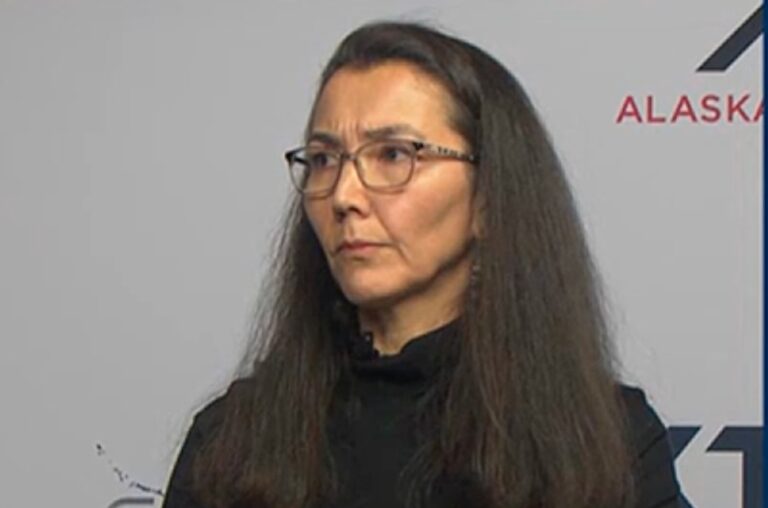
Mary Peltola named Pritzker Fellow in Chicago, fueling speculation on a platform for her 2026 political plans

Former US Rep. Mary Peltola has been selected as one of six new Pritzker Fellows at the University of Chicago’s Institute of Politics. It’s a prestigious appointment that will give her a platform this fall in a Democratic stronghold, even as speculation builds over her next political move.

The fellowship, announced this week, places Peltola alongside other Democratic and progressive figures including former Obama Administration official Alex Wagner, former US ambassador David Pressman, and Center for Constitutional Rights executive director Vince Warren. The Pritzker Fellows program, founded by longtime Barack Obama strategist David Axelrod, is dominated by strongly partisan Democrat choices.

Democrats’ Alaska play is to keep Sullivan busy, not beaten, with useful pawn Peltola

Peltola will be part of the fall cohort that begins in September. Pritzger Fellows participate in 8-week residencies during an academic quarter. Fellows must lead weekly 75-minute, non-credit, off-the-record seminars for University of Chicago students, focusing on their careers and experiences. Formats include discussions, simulations, or tabletop exercises.

Peltola will also have to hold four hours of weekly one-on-one office hours (20-minute appointments) to discuss career advice or current issues with students. As senior director of Alaska Affairs at Holland & Hart LLP, a law firm, where she works as a non-lawyer government affairs professional, she may take a leave from her job at to participate; more likely the company will keep her on the payroll.

Peltola’s application would have included a two-page seminar summary, a curriculum vitae/biography, and details of her background via an online form.

The timing of Peltola’s appointment comes as national Democrats are watching closely to see if she will reenter Alaska politics in 2026. On Aug. 21, the Cook Political Report reiterated the news that Senate Minority Leader Chuck Schumer has been urging Peltola to challenge Republican Sen. Dan Sullivan, who is up for reelection in 2026. But polls suggest Peltola might fare better in Alaska’s open governor’s race, where she would likely clear the Democratic field — even forcing out former legislator Tom Begich.

Still, Cook reported that Peltola has signaled more openness to a Senate run, despite the long odds for Democrats in the red-leaning state. The fellowship in Chicago gives her a taxpayer-subsidized springboard to raise money in a Democratic donor hub, under the cover of academia.

Peltola, who made history in 2022 as the first Alaska Native elected to Congress, served one term before losing her reelection bid in 2024 to Congressman Nick Begich. At the Institute of Politics, she will host student seminars and share insights from her time in Washington, even as she weighs a potential comeback bid.

Whether Peltola’s time in Chicago becomes a stepping stone to the governor’s mansion or the US Senate, Democrats are obsessed with gaming out how her next move could reshape Alaska’s political map in 2026.

Data for Progress poll shows Peltola vulnerable if Republicans unite behind one candidate

Breaking: Mary Peltola sues hunting guide and bush aviation company

Peltola sells out her donors by hawking their names and giving records to an out-of-state fundraiser

What Nat Herz missed about the Peltola speculation

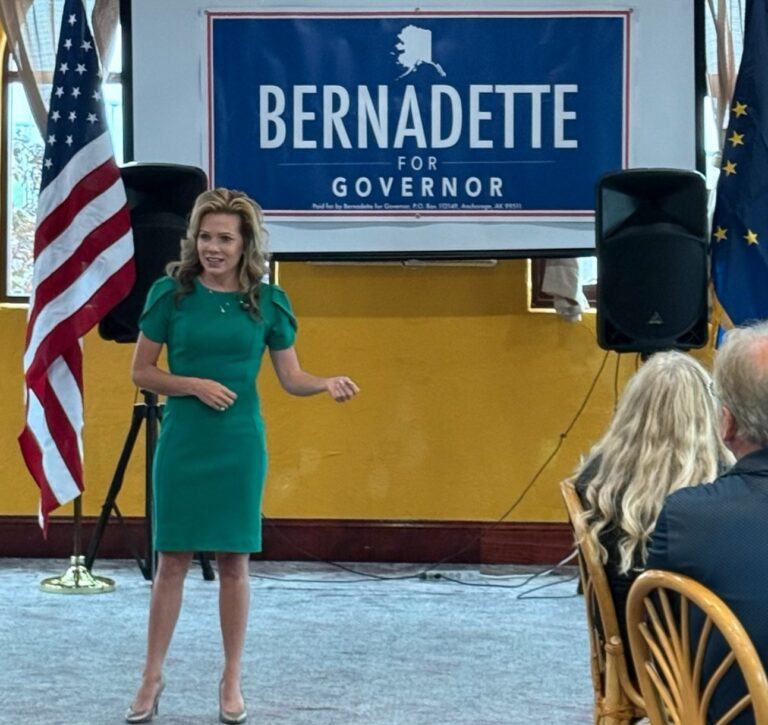
Bernadette Wilson leads GOP field in early 2026 governor’s poll

Bernadette Wilson emerged as far-and-away the frontrunner among Republican gubernatorial candidates in a new poll, the summary of which was released by the Building Alaska PAC, highlighting her early strength in the crowded 2026 race for governor.

The survey, conducted July 24–27 by Cygnal Research tested the standing of eight Republicans and Democrat Mary Peltola. Among likely GOP primary voters, Wilson led with 17% support, followed by Lt. Gov. Nancy Dahlstrom at 11%. Peltola, who has signaled interest in the race, registered 9%. No other candidate broke 6%.

The poll found that 41% of voters remain undecided, not unusual at this stage of a race; the primary is a year away. Even so, Wilson’s showing reflects a campaign that has gained traction early in the cycle.

Alaska has not elected a Democrat to the governor’s office since Tony Knowles in 1998, and Republicans have dominated the top of the ticket ever since. The state’s open primary and ranked-choice voting system, introduced in 2020, adds complexity to the contest, but the GOP remains favored to retain the governorship.

Only a short summary of the poll was released, with little granular data to back it up. Building Alaska PAC emphasized name recognition challenges faced by several candidates, including former Revenue Commissioner Adam Crum and Attorney General Treg Taylor, who is expected to announce his candidacy within two weeks.

But name ID hurdles are hardly unique to 2026. When Gov. Mike Dunleavy first launched his campaign in 2017, he too was little known outside the Mat-Su Valley, where he served as a state senator. Mary Peltola, who left the Alaska Legislature in 2009, had slipped back into obscurity before she rose to win the congressional seat in 2022.

The Cygnal poll surveyed 500 likely Republican primary voters and reported a margin of error of ±4.37%. Cygnal has polled before in Alaska, notably in the 2024 race for the congressional seat.

With eight Republicans in the field and one Democrat, Wilson’s early lead positions her as a candidate to watch as Alaska moves into the 2026 election season.

But for whom was the poll conducted? It appears to be pushing Lt. Gov. Nancy Dahlstrom. In the poll summary, it misspells the name of Adam Crum (spelling it “Crumb,”) and shrugs off former Revenue Commissioner Crum and Attorney General Taylor as also-rans, even while saying that voters want a record of leadership.

“Lieutenant Governor Nancy Dahlstrom stands out with 46% unknown, and the highest favorability at 31%.”

Yet in the question asking who people would vote for, there was a different result:

“When asked who they would support if the election were held today, Wilson led with 17%, Dahlstrom had 11%, and Peltola 9%; no other candidate reached 6%. After exposure to candidate messaging and positions on issues, Dahlstrom’s support grew to 23%, Wilson to 18%, while 30% remained undecided. This suggests that voters are leaning toward a candidate with a strong record of leadership,” the summary stated, signaling preference for the siting lieutenant governor.

Those who took the poll noted that the “push” questions clearly leaned toward messaging for Dahlstrom.

The poll also showed that 75% of respondents are GOP-leaning in a generic Congressional ballot, which explains why Peltola received 9%. President Donald Trump holds a 77% favorability and 82% job approval, while Gov. Mike Dunleavy has 64% favorability and 66% job approval among this cohort.

The Building Alaska PAC has supported Republicans in the past through doing strong opposition messaging against anti-business Democrats, and is likely to focus its efforts in a similar pattern in the coming election cycle.

Two Republicans — Nancy Dahlstrom and Click Bishop — file for governor

Breaking: Adam Crum files letter of intent to run for governor

Former Lt. Gov. Craig Campbell joins Bernadette Wilson campaign, calls her the leader Alaska needs

Video: Congressman Byron Donalds endorses Bernadette Wilson for governor of Alaska at rally

Bernadette Wilson brings in Trump A-Team for Alaska governor’s race

Breaking: Attorney General Treg Taylor exits Dunleavy Administration, eyes Governor’s Mansion

Attorney General Treg Taylor announced today he will resign at the end of the month, with his last day set for Aug. 29. The timing allows him to preside over the Attorney Generals Alliance annual meeting in Anchorage, Aug. 26–28, an event he helped secure for Alaska.

Taylor, who has served as Alaska’s attorney general since 2021, is widely expected to run for governor. The web domain TaylorforAlaska.com has already been reserved, and he has been raising his profile in recent weeks while reportedly seeking funding commitments from potential donors at numerous events around the state. Political observers anticipate a campaign announcement soon after Labor Day.

His tenure has not been without controversy. Critics, including Must Read Alaska senior contributor David Ignell, have taken aim at his handling of the forced resignation of Ketchikan Police Chief Jeffrey Walls, who was ousted after intervening in a bar incident involving his wife. Attorney General Taylor called Ignell a “progressive activist.”

David Ignell: How Attorney General Treg Taylor ran a decorated police chief out of Ketchikan

Walls’ wife has also publicly accused Taylor of being less than forthcoming about the case.

Sharon Walls: AG Taylor puts the truth in a chokehold

Ben Carpenter: The people’s power vs. the government’s gatekeepers with grand juries

Before becoming attorney general, Taylor served as deputy attorney general in charge of the civil division at the Alaska Department of Law, starting in 2018. Prior to public service, he worked as senior counsel for ASRC Energy Services, LLC, and as counsel for McKinley Capital Management. He began his legal career in Anchorage in commercial litigation.

Taylor holds a bachelor’s degree in political science and a law degree from Brigham Young University. He and his wife, Jodi, live in Anchorage and are the parents of six children.

“Attorney General Treg Taylor’s sound legal judgment and dedication to public service have made a meaningful difference for Alaska,” said Governor Dunleavy. “From defending our right to develop Alaska’s natural resources to fighting crime, his legal leadership has helped preserve and advance opportunities for everyday Alaskans.”

“It has been an honor and a privilege to serve as the Alaska Attorney General. I am incredibly proud of what the Department has accomplished together fighting federal overreach, making our communities safer, and defending the Alaska way of life. None of these victories would have been possible without the extraordinary attorneys and staff at the Department of Law and the support of the Governor. Their dedication and professionalism inspire me, and I will always be thankful for the opportunity to have served alongside them,” said Taylor.

David Ignell: With Trump gone, the arrival of Bondi and Patel is urgently needed in Alaska

David Ignell: How the Alaska attorney general tried to destroy a cop who fought fentanyl, Part II

David Ignell: AK Mom goes to court to try to get her children back, but it’s David against a systemic Goliath

Win Gruening: Juneau seasonal sales tax proposal is a permanent tax increase

By WIN GRUENING

As Juneau property taxes and municipal wastewater fees continue to spiral upward, the City and Borough of Juneau Assembly wants to make it even more expensive to live there.

The Assembly recently approved a ballot proposition for the upcoming municipal election on October 7 that would implement a new seasonal sales tax rate of 3.0% October 1 through March 31 and 7.5% April 1 through September 30. The current municipal sales tax is 5.0% year-round.

Sales tax revenue collection is extremely seasonal in Juneau. The second and third quarters see significantly higher collections compared to the first and fourth quarters. This is driven by summer tourism, fishing, boating, and local spending during the peak visitor season.

The city ballot proposition is being presented as a way to offset revenue reductions from a citizen initiative on the same ballot that, if passed, would exempt groceries and essential utilities from sales taxes for individuals.

In reality, however, a seasonal sales tax likely would increase the tax burden for many Juneau families. Except for 1% which would remain temporary through 2028, it would also make the entire tax permanent – removing the option for voters to choose to renew it every five years.

Even if local residents evenly split their taxable purchases between the summer and winters months, their average sales tax rate would still increase from the current 5% to 5.25%.

However, when considering seasonal spending patterns, the majority of Juneau residents are likely to spend considerably more during the months April through September than during the fall and winter months.

During citizen testimony at the July 28 Assembly meeting, Affordable Juneau Coalition member Angela Rodell testified against the seasonal sales tax, calling it ill-timed and unaffordable for many residents who are already struggling with the rising cost of living, housing, food, childcare, and utilities. 

The Assembly’s proposal doesn’t account for the increased spending by Mendenhall valley residents needing to prepare for annual flooding. Visqueen, lumber, sump pumps, duct tape, and other preparation costs as well as repairs and cleanup required for flood-related damage are significant.

Nor does it consider that 65% of residential home sales occur in the spring and summer months. Real estate commissions, appraisals, engineer’s reports, title fees, and other closing costs will be 2.5% more, driving the price of home ownership even higher.

Juneau homeowners spending dollars on yard and building maintenance each spring will pay the higher tax. This is when residents invest in home improvements, rent equipment, buy lawnmowers, fertilizer, potting soil, and plant flowers and trees to spruce up their properties.

According to Rain Coast Data, Juneau has about 5,900 registered boats and documented vessels – both recreational pleasure boats and commercial vessels. In the spring and summer, those local boat owners and charter operators repair and replace gear, buy ice chests and bait, and often encounter unexpected and expensive mechanical issues.

The summer months are when friends and family visit and residents spend more on meals in restaurants, on liquor, and available recreational opportunities.

Seniors who spend much of their fall and winter months south will definitely feel the pinch as almost all of their local spending will occur in the summer when they are in Juneau. Since they are already exempt from local sales tax on food and utilities, they won’t receive any additional benefit – but will pay 7.5% sales tax on everything else they buy.

Juneau city leaders won’t be talking about that though. Nor will they mention over-inflated reserve accounts, discretionary grants, outside consulting fees, and projects that voters either rejected, didn’t vote for, or aren’t clamoring for.

Their knee jerk reaction is always to raise taxes rather than take a hard look at where municipal tax dollars are going and how effectively they are being spent. This is the reason that a citizen-driven charter amendment is also on the ballot to cap Juneau’s property tax millage rate at 9 mills, slightly above where it was last year.

Juneau voters concerned about their community’s cost of living can make a difference by voting no on the seasonal sales tax, voting yes to exempt groceries and essential utilities, and saying yes to limit property tax increases by capping the millage rate.

After retiring as the senior vice president in charge of business banking for Key Bank in Alaska, Win Gruening became a regular opinion page columnist for the Juneau Empire. He was born and raised in Juneau and graduated from the U.S. Air Force Academy in 1970. He is involved in various local and statewide organizations.

Win Gruening: Nick Begich III is hitting it out of the ballpark in Congress

Win Gruening: Sullivan’s actions speak louder than his critics

Sharon Walls: AG Taylor puts the truth in a chokehold

By SHARON WALLS

“The rule of law doesn’t work unless it applies to all of us.” That was the ironic, and frankly hypocritical, headline chosen by Attorney General Treg Taylor in Must Read Alaska.

Treg Taylor: The rule of law doesn’t work unless it applies to all of us

Taylor’s article was not a defense of equal justice, but rather an attempt to discredit a man he dismissed as a “progressive activist, associated with the California Innocence Project.”

But what exactly made David Ignell “progressive”? Was it his work to fight for justice, expose corruption, and challenge malicious prosecutions? If so, then perhaps “progressive” simply means refusing to ignore injustice. In that case, I proudly stand in the same camp. More likely, the label was meant only as a cheap attempt to discredit.

This kind of rhetoric is dangerous. Our president has spoken forcefully against corrupt prosecutors, biased judges, and politically motivated cases. Suggesting that anyone who holds such views must be “progressive” trivializes a serious issue — one the American people care deeply about. Justice is not partisan. The rule of law must apply equally, or it fails us all.

Gross Misrepresentation of Facts

Taylor’s version of “what actually happened” relied almost entirely on a single witness: the bar manager. This was the same employee who failed to remove a drunk man after the first attack — and who later admitted he “had a good thing going with his job and didn’t want to lose it.” His former employer confirmed he had been fired for embezzlement. Yet Taylor chose to build his account around him.

Meanwhile, other evidence and witnesses directly contradicted that account. The attacker himself admitted he was never placed in a chokehold — something confirmed by recorded evidence. Two other state witnesses testified that it was the bar manager, not my husband, who applied a chokehold while my husband restrained the attacker. These statements, from Taylor’s own witnesses, were entirely omitted from his article.

Taylor claims this was “violence, not policing.” But how exactly should one detain a man — after two attacks, outweighing my husband by 60 pounds — without using force? The force was necessary, proportionate, and corroborated by a state witness. Waiting for a third attack would have been reckless.

The so-called “rock wall” never happened. No witnesses corroborated it, and the only video Alaska State Troopers obtained doesn’t support it. I can be heard on trooper audio asking whether they would obtain a warrant for all the surveillance video. I even warned the footage might be destroyed. The trooper told staff they were liable and soon after, multiple recordings vanished. Only a partial video survived.

Why were we pleading for video evidence? Because it could have told the truth, free from bias and omission. Its disappearance left the record shaped by selective testimony and contradictions.

Repeated Prosecutorial Failures

Taylor portrays the dismissed indictments as “procedural.” In reality, the judge explicitly described the state’s testimony as false, misleading, inaccurate, and incomplete — and faulted prosecutors for failing to correct it.

Even after two dismissals, the same trooper was brought back before the grand jury a third time, despite his credibility already being discredited in open court. This was not justice. It was a refusal to take responsibility, and a reckless abuse of the grand jury process.

Misconstruing “The Settlement”

Taylor further misrepresented “the settlement.” My husband retired so we could leave Alaska after years of harassment from Taylor’s office and this trooper. We communicated that we would continue legal action from outside the state.

At that point, Taylor’s prosecutors offered to drop all charges with prejudice, on the condition that my husband not return to Alaska law enforcement. That was never in question; we had no desire to stay. The prosecutors also promised to leave me alone, ending their repeated threats of new charges.

We left with everything we wanted: all charges dismissed with prejudice. What did Taylor’s office get? Nothing. So why drag this case through three grand juries, built on false and incomplete testimony? The answer is simple: to force us out of Ketchikan Alaska, where his leadership in the war against fentanyl was generating huge wins.

The Real Credibility Problem

Taylor speaks of law enforcement credibility. But credibility is his office’s biggest problem. He dropped all charges against the man who attacked me — yet pursued us for years, at immense public expense, despite the judge’s repeated warnings.

This isn’t leadership. At public meetings, Taylor blames troopers, judges, even the Supreme Court. Real leaders take responsibility. They face facts, even when uncomfortable.

Closing: Truth and Accountability

I write this not to rehash old wounds but to set the record straight. My husband and I are private citizens now, with zero convictions. Taylor’s article was unethical, dishonest, and malicious — much like his prosecution. His refusal to ever admit error mirrors a broader problem within Alaska’s justice system.

The truth is not negotiable. No amount of selective testimony, missing video, or repeated grand juries can change what actually happened. Alaska deserves better leadership than this.

Sharon Walls is the wife of a former Ketchikan police chief, was formerly law enforcement and private investigation.

David Ignell: How Attorney General Treg Taylor ran a decorated police chief out of Ketchikan

David Ignell: How the Alaska attorney general tried to destroy a cop who fought fentanyl, Part II

David Ignell: With Trump gone, the arrival of Bondi and Patel is urgently needed in Alaska

Treg Taylor: The rule of law doesn’t work unless it applies to all of us

David Ignell: To reform Alaska OCS, we must first reform the judiciary

NEA pushes transgender agenda and ‘inclusive’ sex ed with new teacher kits for school year

The nation’s largest teachers union, the National Education Association, is once again leaning into political and cultural battles rather than focusing on its core mission of representing educators in collective bargaining.

This fall, as students return to classrooms, the NEA has rolled out a new program called Everyone Is Welcome Here. The initiative, launched in partnership with Planned Parenthood, Advocates for Youth, and other activist groups, provides free “welcome kits” to teachers who sign up.

Each kit includes a tote bag, LGBTQ-themed stickers, lanyards, lapel pins, bracelets, and an “I’m Here” badge from the NEA’s LGBTQ+ caucus. The items are meant to serve as visible symbols that a classroom is “inclusive,” particularly for students identifying as LGBTQ or transgender.

NEA sticker for teachers to hand out includes encouraging children to “read banned books” and encourages teachers to teach “inclusive sex ed,” without guardrails.

The NEA frames the program as a way to ensure schools are “safe and affirming,” but it crosses the line into political indoctrination and sexual grooming. By teaming up with organizations that promote sexual education and radical gender ideology, the NEA is inserting itself into highly controversial territory — territory many parents believe does not belong in K–12 classrooms.

Planned Parenthood’s involvement adds to parent concerns. Long known as the nation’s largest abortion provider, the group also promotes expansive definitions of “inclusive sex education,” often encouraging teachers to introduce students to gender fluidity, sexual identity exploration, and topics far removed from reading, writing, and arithmetic.

Planned Parenthood is now one of the biggest providers of “gender affirming care,” which is the term used to refer to transgender procedures and drugs.

Instead of improving academic standards, addressing plummeting test scores, or focusing on the needs of students struggling to recover from pandemic-era learning loss, the NEA is devoting its resources to cultural activism. The organization insists that children must be “affirmed” in their gender identity in order to thrive. But the very branding of “Everyone Is Welcome Here” suggests the opposite: students, teachers, and parents who hold traditional beliefs may find their values are anything but welcome.

Opponents say that parents, rather than unions or activist groups, should decide what values are taught to children. “This is not about safety. It’s about sexualizing classrooms,” one education advocate told Must Read Alaska. “The NEA has strayed so far from its original mission of supporting teachers and negotiating for better wages and working conditions. Now, it’s just another political machine.”

The Everyone Is Welcome Here kits are available to the first 1,000 teachers who sign up, with shipments expected within two weeks. The message is clear: Classrooms across America are being transformed into ideological battlegrounds, with the NEA leading the charge.

Spurr of the moment: Back to sleep

After more than a year of heightened volcanic activity, the Alaska Volcano Observatory has lowered the aviation color code for Mount Spurr to green and the Volcano Alert Level to normal, signaling that the immediate threat of an eruption has passed.

Since early 2024, the volcano about 80 miles west of Anchorage had shown signs of unrest, including increased earthquakes, gas emissions, melting ice, and surface changes near its summit. Scientists say those indicators began tapering off this spring, and no ground deformation has been recorded since March 2025.

“Taken together, these observations indicate that the upward movement of magma has stopped,” AVO reported. “The chance of an eruption in the near-term is now considered extremely low.”

While the volcano has quieted, some activity remains. Small earthquakes are still occurring more often than before the unrest began, and volcanic gases continue to vent from both the summit crater and Crater Peak on the south flank. According to AVO, such activity is normal for a volcano where magma has risen but not erupted, and minor emissions could continue for months or even years.

Hazards still exist for those venturing onto the mountain. volcanologist have detected high levels of carbon dioxide gas along the rim of Crater Peak. The gas, which is both odorless and colorless, can be dangerous in enclosed areas and poses a potential risk to climbers and other recreators. AVO emphasized, however, that the emissions are not affecting surrounding communities.

Mount Spurr is the highest volcano in the Aleutian Arc, standing at 11,070 feet. Its most recent eruption occurred in 1992, when ash fell on Anchorage and disrupted air travel.