
By Paul A. Bauer, Jr.
To Whom It May Concern,
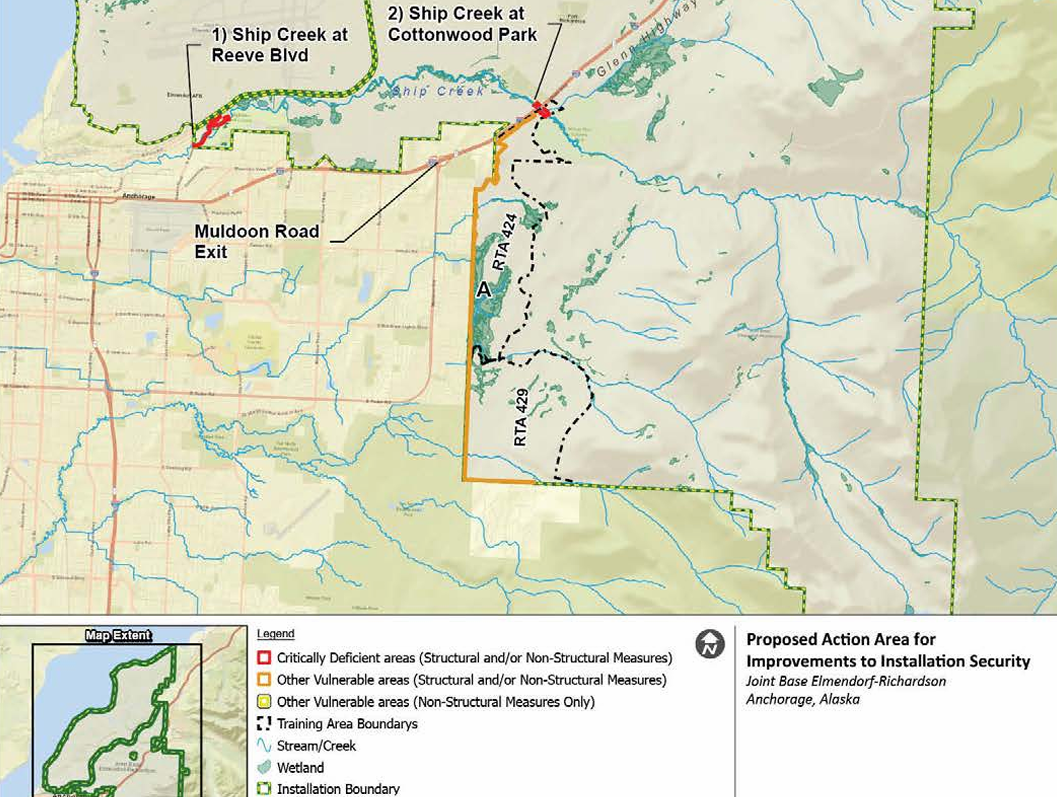
I am writing in support of the proposed fence project along the Joint Base Elmendorf Richardson boundary adjacent to East Anchorage neighborhoods.
I am a retired United States Army veteran, a longtime East Anchorage resident of more than 30 years, and a former Anchorage Assembly member. I retired from Fort Richardson and have spent much of my professional life in public service, security, investigations, and public integrity consulting. Based on that background, I strongly believe the security of JBER must take priority over informal recreational access.
Residents who live near the former Fort Richardson boundary, now part of JBER, have long known they border an active military installation. For decades, some community members have benefited from the open landscape and the appearance of informal access. However, that access was never ownership, and it should not be treated as a permanent community entitlement. Unauthorized trails, dog walking routes, and recreational paths along or across installation property demonstrate exactly why the boundary needs to be clarified and secured.
JBER is not ordinary vacant land. It is a strategic military installation. Alaska’s role in national defense continues to grow because of its location, air assets, training areas, missile defense relevance, Arctic operations, and proximity to global threats. In today’s security environment, military installations face risks that include trespassing, surveillance, sabotage, vandalism, and unauthorized observation of sensitive operations. A secure perimeter is a basic and responsible measure.
Some nearby property owners may enjoy the visual benefit of raw land adjacent to their homes, but that benefit does not override the security needs of the installation. Those who purchased property along the boundary of a military reservation did so with knowledge that the land next to them was not theirs and could be secured when necessary. Community convenience cannot be allowed to outweigh military readiness, force protection, and public safety.
The fence may also provide a safety benefit by reducing uncontrolled access to areas where residents, children, elders, pets, or wildlife could be placed at risk. A clear boundary protects both the installation and the surrounding neighborhoods.
If JBER determines that limited recreational access is appropriate in certain areas, that access should be controlled, permitted, and security-screened. Options could include designated access gates, user permits, fees to offset management costs, background checks where appropriate, posted rules, and immediate revocation for violations. However, any access must remain secondary to the installation’s mission and security requirements.
I also encourage JBER to maintain the fence with regular inspections, including checks for cuts, openings, tampering, or signs of unauthorized entry. Landscaping or visual buffering may be considered where practical, but it should not compromise visibility, patrol access, or perimeter security.
In the end, this issue is straightforward: JBER is a military installation, not a public park. East Anchorage residents may have become accustomed to informal use of the land, but long-term convenience does not create a right to access military property. I support the fence because national security, installation security, and public safety must come before recreational preference.
Respectfully,
Paul A. Bauer Jr.
U.S. Army Retired
East Anchorage Resident
Former Anchorage Assembly Member
Business Owner / Security Consultant
Protec Public Integrity Strategies



