By State Representative Kevin McCabe (R-Big Lake)
I have often argued that Ranked Choice Voting, and especially the jungle primary that came with it, rewards political camouflage and punishes political clarity. It encourages candidates to blur distinctions, avoid firm positions, and present themselves as something they are not. I have called it structured dishonesty built into the system itself. What I did not expect was to see the camouflage become this literal.
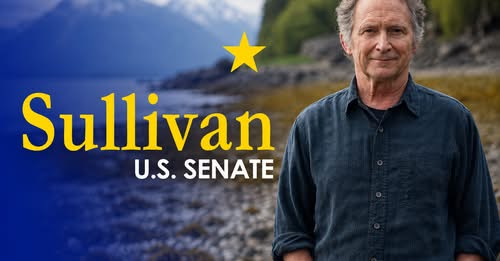
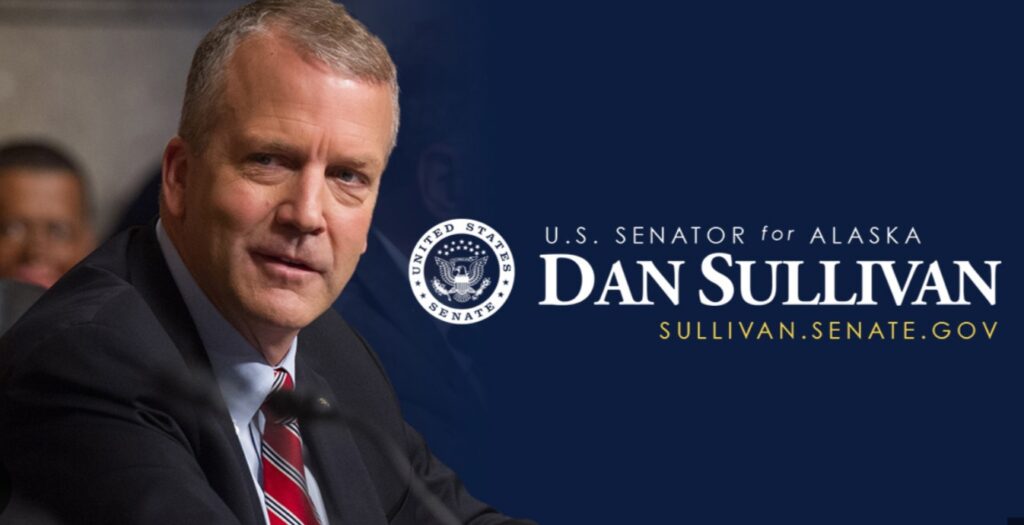
As of this week, Alaska voters may find themselves looking at two Dan Sullivans on the ballot in the 2026 US Senate race. One is our sitting United States Senator, a retired Marine, former Attorney General, and a public servant, Dan S. Sullivan, whose record is well known to Alaskans. The other is a relatively unknown candidate from Petersburg who filed at the eleventh hour and whose campaign materials have been linked to a progressive political consultant. The National Republican Senatorial Committee has raised concerns about what many Alaskans are already wondering: when you cannot beat a candidate on his record, do you try to make it harder for voters to find him on the ballot?

To be fair, facts matter. The Peltola campaign denies any involvement. The second Mr. Sullivan says he is running a legitimate campaign. I do not know who encouraged whom to run, and I will not pretend to know facts I cannot prove.
But I do know this: a system that creates an opportunity for this kind of tactic has a problem.
And make no mistake about why anyone would bother. This race was never just about Alaska.
Chuck Schumer recruited Mary Peltola into it himself. His allied groups have already spent millions going after Senator Sullivan, and the campaign has barely started. Senator Sullivan has said Schumer is prepared to spend millions more to beat him. They are not spending that kind of money because they care about Alaska. They are spending it because control of the United States Senate may come down to this one seat. If Schumer flips Alaska, he and the same anti-Alaska Democrats who fight our drilling, our development, and our way of life are one step closer to running the Senate. What happens on our ballot will be felt far beyond our borders, and it will be felt here in Alaska for decades.
Call it the RCV Nuclear Option.
If political operatives believe they cannot beat an incumbent, they find someone with the same name and put that person on the ballot. Maybe it works, maybe it does not. That is not really the point. The fact that anyone would even consider it a viable political strategy tells you something important about the RCV system itself. Voters should never have to wonder whether the name they marked is actually the person they intended to support.
Some defenders of the current system will point out that ballots include middle initials and other identifying information. Fair enough. But if election officials have to explain to voters how to tell two candidates with the same name apart, the problem is already obvious. Elections are supposed to be straightforward. The incumbent Alaska Senator, the Republican Senator, is Daniel S. Sullivan and voters should not need a guidebook to figure out which candidate is which. The burden should be on the system to provide clarity, not on voters to navigate confusion that never should have existed in the first place.
This is the rotten fruit of Ballot Measure 2.
I have said since it was first placed on the ballot, that the greatest weakness in Alaska’s current election system is not even the ranking process itself. It is the jungle primary, where every candidate from every party is thrown onto the same ballot and the top four advance. That is exactly where two identical names can do their damage. Confuse enough voters, split enough support, and a strong candidate can be pushed down the field before the ranked-choice process even begins. What was once an occasional accident in a crowded race becomes a tactic available to anyone willing to exploit the rules.
This would have been far less likely under the system Alaska had before outside money sold voters on “reform.” Republicans selected a Republican nominee. Democrats selected a Democratic nominee. Candidates appeared on the general-election ballot with clear labels and clear distinctions. The genius of that system was not that it was perfect. It was that it was legible. A voter could read it.
Supporters of Ranked Choice Voting promised more civility, broader appeal, and elections that better reflected the will of the people. Instead, every election cycle seems to reveal another weakness. We have seen exhausted ballots. We have seen outcomes that leave voters questioning whether they were fully represented. And now we may see two candidates with the same name competing for votes in one of Alaska’s most important races.
In November, Alaskans will again have the opportunity to decide whether this system should remain in place. Wherever you stand on that question, we should all be able to agree on one basic principle: elections should be clear, transparent, and worthy of public trust.
Two Dan Sullivans on one ballot is not transparency.
It’s a sneaky magic trick.
And Alaskans deserve an election, not a sleight of hand.