
This article was first published by 907 Honest on August 8, 2026.
In “Opinion: Oil & gas history every Alaskan should know,” we followed Harold Heinze from the North Slope discovery wells to the creation of the Permanent Fund. His generation treated Alaska’s oil as a depletable asset that had to be converted into permanent wealth for future residents. That philosophy became the Fund itself. The 1982 statutory formula that created the Dividend made every Alaskan a shareholder. It was ownership, not a government program.
That ownership has been dismantled.
The Alaska Permanent Fund Dividend was never a discretionary government program. Rooted in the 1976 constitutional amendment and the 1982 statutory formula, it was a universal ownership right—every Alaskan a shareholder in the state’s resource wealth. The formula delivered transparent, predictable income insulated from annual politics.
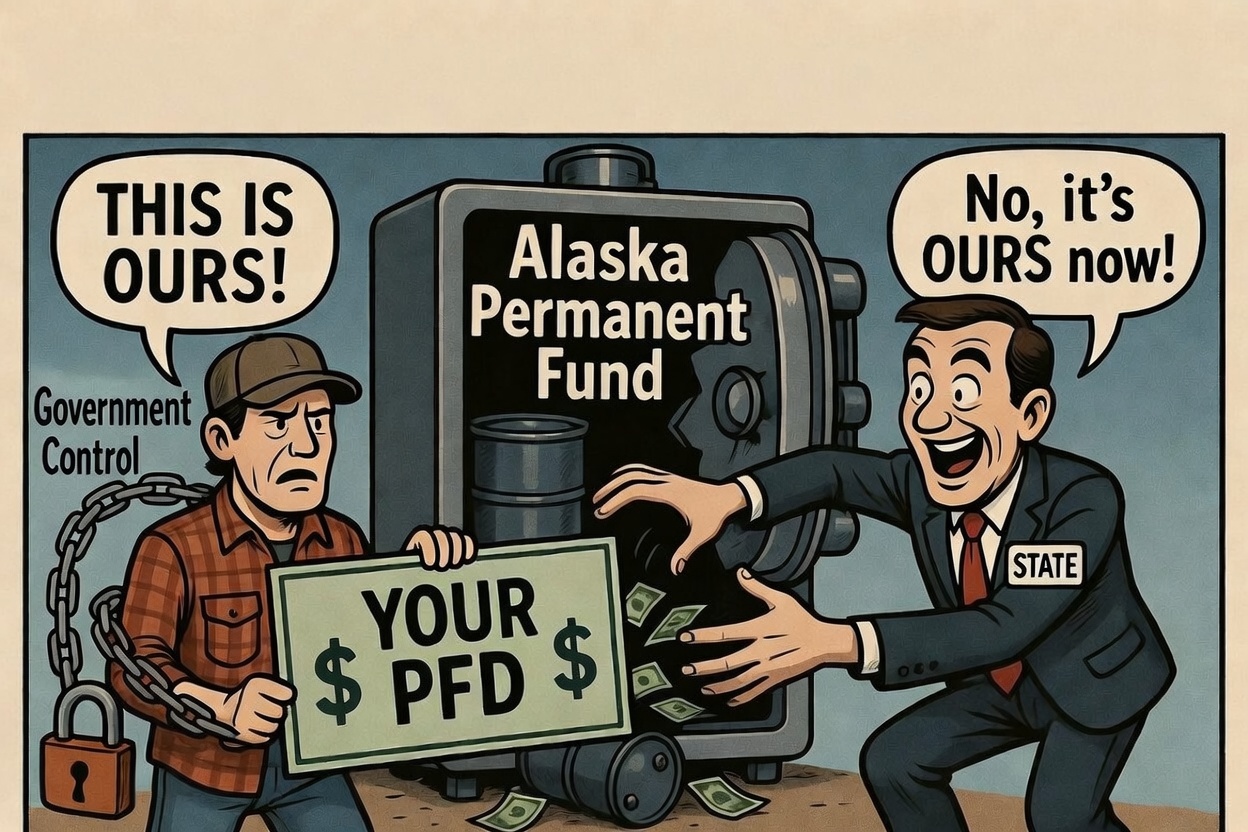
Governor Bill Walker’s 2016 line-item veto shattered that social contract. By unilaterally cutting the dividend, the state converted a formula-based entitlement into an ad-hoc appropriation. The result: a two-tiered fiscal reality.

Beginning with the 2016 veto, the state turned a formula-based right into a discretionary budget tool. What followed was the largest reallocation of resource wealth in Alaska history—maybe even American history—roughly $25 billion taken from household economies and redirected to the treasury.
The human cost is not abstract. A single year’s shortfall of nearly $2,000 per person lands as a 15 percent effective tax on a modest-income family of four and barely registers for the highest earners. The poorest Alaskans carry a burden ten times heavier than the wealthiest.
Children are taxed from birth. A child born in 2016 will lose more than $42,000 by age 18—seed capital that was meant for education and the next generation of Alaskan enterprise.
Rural communities feel it first. In places where the cost of living is already two to three times higher, the missing dividend has erased double-digit percentages of household income and pushed poverty higher.
The PFD money closed deficits, shored up pensions, and grew businesses and towns. Alternatives that would have shared the burden—progressive income or sales taxes—were set aside. The path of least resistance became the largest undeclared tax in American history: budgets stabilized by destabilizing family finances, while lining the pockets of NGOs, Unions, and Special Interest Groups.
Fifty years after the foundations Heinze helped build, the oil era’s easy over-achievement is over. The hard work of turning the remaining resource into lasting resident value remains unfinished. The Permanent Fund Dividend is not a free check from the sky. It is the product of decades of deliberate effort by people who understood that resource wealth must become permanent wealth.
Treating it as a discretionary budget tool severs the social contract those people wrote. The foundations are still here. The choice is still ours—though I have very little faith that the current legislature cares about the future of Alaska, and it shows.
Learn More About Alaska’s Permanent Fund Dividend
Check out Must Read Alaska’s series The Great Debate: The People of Alaska vs the Legislature by Jon Faulkner and Michael Tavoliero:
- Part I: Inflation-Proofing: Where’s the Problem?
- Part II: Follow the Money
- Part III: The 49 Forward Plan Takes the Permanent Fund Backwards
- Part IV: The PFD and the Search for Wisdom
- Part V: Ghost Busting: Dispelling Anti-PFD Phantoms
- Part VI: The People’s Possession: Alaska’s Ownership of the Permanent Fund Dividend
- Part VII: The People’s Constitutional Covenant and the Quieting of Title
- Part VIII: The Constitutional Intent of Alaska’s Resource Wealth
- Part IX: The Constitutional Trust Relationship: The State as Trustee, The People as Beneficiaries
- Part X: The People’s Right to the PFD Based on Quiet Title
- Part XI: How Historic Citizen Reliance Constitutes Legal Possession
- Part XII: The Path Forward


