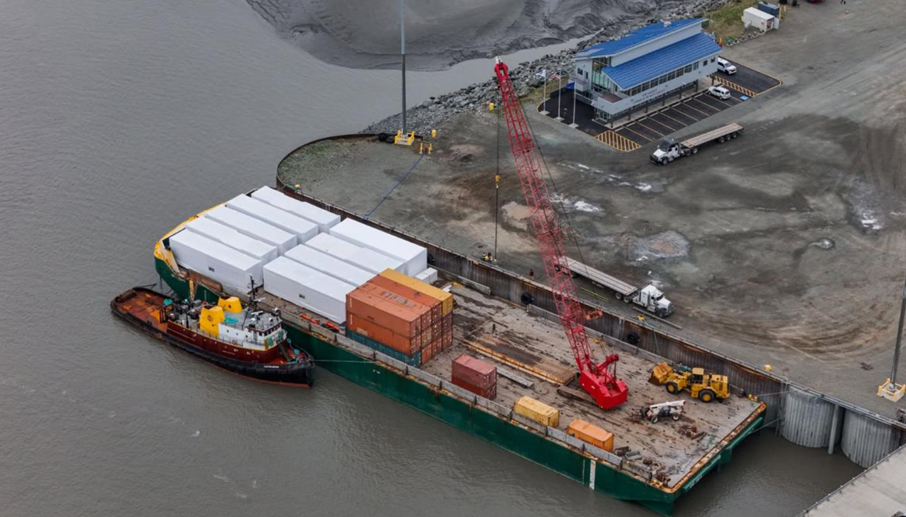
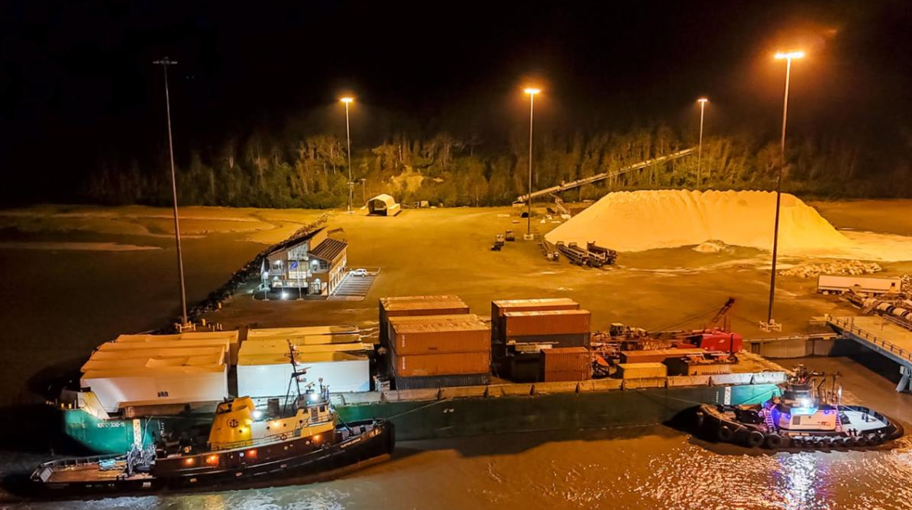
A barge loaded with approximately 500 tons of processing and refining equipment for the development of the critical mineral antimony arrived at Port MacKenzie at about 2:00 AM on Sunday, September 6, 2026. The arrival of the barge marked a significant milestone in the Nova Mineral Corps’ efforts to establish a fully secured and integrated domestic supply chain for antimony, funded by a $43.4 million award from the Department of War under Title III of the Defense Production Act.
The shipment included more than 40 containers and multiple oversized loads carrying crushing, ore sorting, milling, flotation and refining equipment. The barge departed Seattle on August 26 and arrived a full day ahead of schedule.
Nova CEO, Mr. Christopher Gerteisen, commented: “The shipment arrived ahead of schedule, which will enable us to get construction underway at speed. By acquiring and transporting modern processing and milling equipment from a recently decommissioned site in North America, rather than starting from scratch, we’ve been able to significantly accelerate the path to construction, and ultimately, the production of antimony. This approach has also delivered meaningful capital cost savings.

The development of the Nova Minerals antimony refinery is part of a concentrated effort across the U.S. to develop critical minerals at home rather than rely on foreign supply, which is primarily dominated by China. Critical minerals impact national security due to their importance in defense technology and electronics. “Antimony is one of the critical minerals recognized by the Department of War as a priority for the United States,” stated Mr. Gerteisen. “It has essential applications in defense, energy storage, and advanced electronics, which is why this project is so important to our national and economic security.”
Alaska plays an essential role in the development of these critical minerals, boasting vast reserves of 49 out of 50 critical minerals identified by the U.S. government. U.S. Congressman Nick Begich commented on Nova Mineral’s milestone toward establishing a domestic antimony supply, stating, “The arrival of nearly 500 tons of infrastructure and refining equipment at Port MacKenzie marks an important first step toward refining antimony in the Mat-Su Valley and building a secure, fully domestic supply chain right here in Alaska. I applaud the Department of War for recognizing the national security importance of this effort and investing in American production.”
Mat-Su Mayor Edna Devries noted the economic benefits the refinery will bring to the Mat-Su. “For some time, the Mat-Su Borough invested in the infrastructure necessary to position Port MacKenzie as an Alaskan industrial center. Seeing refining and processing equipment arrive at the port is evidence that those investments are paying off,” she remarked. “This project represents more than a shipment of equipment. It represents jobs, economic diversification, value-added resource development, and a stronger future for Alaska.”
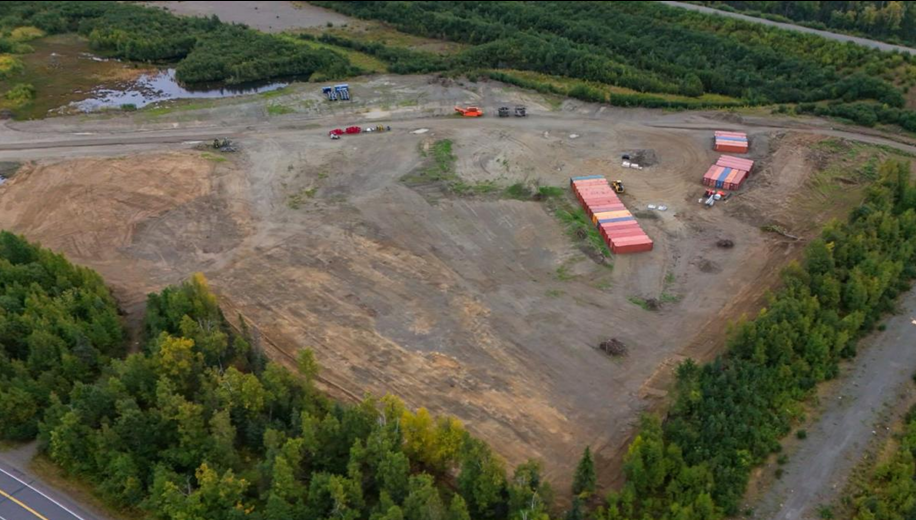
Alaska State Rep. Kevin McCabe represents the Big Lake area in the Mat-Su Valley, the area where Nova Minerals will be operating. He expressed his delight at the landmark occasion. “I could not be more excited to finally see this movement on the part of Nova Minerals,” said Rep. McCabe. “I have watched this project develop, have flown to the Estelle area, and I know how many jobs this will create and the stimulus it will provide to the Alaska economy. This is a fabulous stage of development, and Nova’s use of Port MacKenzie demonstrates their commitment to the Valley and Alaska.”
Rep. McCabe also spoke on the flexibility, scalability, and strategic location of Nova Minerals’ antimony refinery. “The Port MacKenzie processing facility is designed to process stibnite-bearing material and, initially, produce antimony trisulfide as part of the U.S. Department of War project,” said Rep. McCabe. “The modular design of the facility provides flexibility to scale operations over time and potentially expand into the production of additional saleable refined antimony products, including antimony metal and antimony trioxide. This flexibility is intended to allow Nova Minerals to respond to evolving market requirements while building an integrated domestic processing capability in the United States.
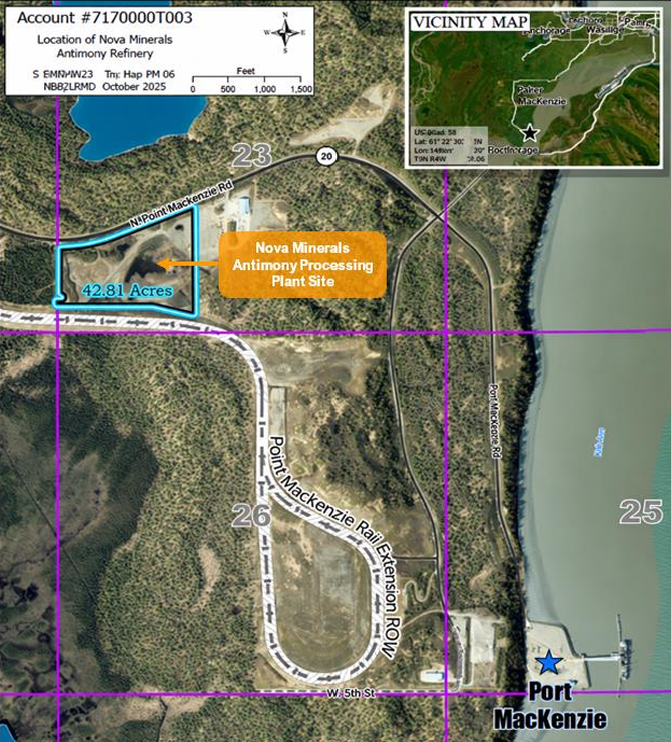
“The Port MacKenzie district provides a strategic location for the Company’s development of a critical minerals’ refinery. It affords access to a year-round deepwater port, Alaska’s road and highway system, the West Susitna Access Road, and the Port MacKenzie rail spur that will connect to the Alaska Railroad mainline. These infrastructure advantages are expected to support the movement of materials and products as the project advances toward production.”
In addition to Nova Minerals’ project in Mat-Su, the University of Alaska-Fairbanks is also playing a significant role in accelerating the development of the U.S. domestic critical mineral supply. In July of 2026, the Alaska Critical Mineral Collaborative, led by UAF, was selected by the National Science Foundation to be an NSF Regional Innovation Engine. The designation could bring up to $160 million in funding to Alaska over the next 10 years and will help advance critical mineral development, innovation, and collaboration across Alaska and the United States.
Development of America’s critical minerals is advancing in large part due to President Trump’s efforts to deregulate and clear the way for private companies like Nova Minerals to pursue these developments. President Trump signed an Executive Order titled “Immediate Measures to Increase American Mineral Production” on March 20, 2025, providing directives restoring America’s dominance in the global critical mineral market and further strengthening national security.