A new release of documents from U.S. Senator Rand Paul’s investigation into former National Institute of Allergy and Infectious Diseases Director Anthony Fauci raises questions about Fauci’s handling of government emails, his interactions with CIA officials, and the government’s examination of COVID-19’s origins.
The document release follows Fauci’s appearance before Sen. Rand Paul’s Senate committee, where he invoked the Fifth Amendment right against self-incrimination more than 100 times. Fauci was then held in contempt by the Senate Homeland Security and Governmental Affairs Committee with an 8-7 vote split along party-lines. Fauci’s repeated invocation of the Fifth Amendment does not itself establish criminal conduct. The committee’s subsequent contempt vote reflects its conclusion that his refusal to answer violated the subpoena, a position Fauci and his attorneys dispute.
The most direct issue concerns five emails in which Fauci explicitly instructed recipients to delete his messages after reading them. This potentially violates the federal law requiring the preservation of government records, including email conversations.
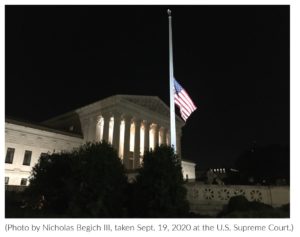
The emails span more than a decade, from 2009 through 2020. One 2012 message contains an unusually specific instruction: “Please delete this e-mail and then delete from the deleted file.”
Although the survival of the emails in the release by Sen. Rand Paul indicates Fauci’s requests were not granted, the requests themselves deserve scrutiny. Fauci repeatedly directed colleagues to delete correspondence sent from his government account— a direction that would be a federal crime with a penalty of up to three years in prison if complied with.
Five deletion requests
The documents contain evidence of at least five times Fauci made deletion requests.
In September 2009, Fauci wrote to Greg Folkers regarding a dispute involving AIDS-vaccine researchers and ended the message by asking the recipient to delete it after reading it.
In December 2011, Fauci wrote to Clifford Lane concerning controversy surrounding the National Science Advisory Board for Biosecurity and research involving H5N1 influenza. He told Lane that he did not want to put his thoughts about the matter into an email and again instructed him to delete the message.
In March 2012, Fauci wrote Lane about a New York Times article concerning H5N1 research associated with Dutch virologist Ron Fouchier. Fauci instructed Lane to delete the email and then remove it from the deleted folder.
In February 2020, shortly after a widely discussed conference call about the origins of SARS-CoV-2, Fauci wrote to NIH Director Francis Collins about the actions of other international health officials. He again instructed Collins to delete the message.
In July 2020, Fauci sent Folkers an email criticizing Sen. Rand Paul and discussing COVID-19 mortality statistics. He again asked the recipient to delete it.
The H5N1 connection
The 2012 deletion request warrants particular attention because of Fauci asking the recipient to not only delete the email, but also delete the email from the deleted folder.
Fauci was discussing research involving H5N1 influenza, including experiments designed to examine whether the virus could become more transmissible between mammals. The research became part of a broader debate over so-called gain-of-function research and the risks associated with experiments that increase the transmissibility or pathogenicity of viruses.
Although this particular email does not concern SARS-CoV-2, it does show Fauci privately discussing controversial virus research and directing a colleague to delete the correspondence.
Fauci and the intelligence community
The document package also contains records concerning Fauci’s interactions with intelligence officials investigating the origins of COVID-19.
One CIA memorandum describes a meeting in which Fauci discussed experiments at the Wuhan Institute of Virology, possible illnesses among laboratory personnel, and the absence of an identified intermediate animal host.
The memorandum also says Fauci referred CIA officials to scientists Robert Garry, Kristian Andersen and Eddie Holmes. Those scientists had argued that features of SARS-CoV-2 supported a natural-origin explanation. The same memorandum also records Fauci discussing questions about Wuhan laboratory research and the possibility that Chinese authorities had removed or destroyed evidence at the Huanan market.
A separate CIA-NIAID arrangement
Another exhibit in the released file concerns a CIA-funded arrangement with NIAID involving forensic comparative genomics. The work focused on bacteria associated with biological threats, including Francisella tularensis, which causes tularemia. The agreement included restrictions concerning the release of technical information.
According to Sen. Rand Paul’s initial summary of the documents: “Documents show that the CIA and NIAID had an interagency agreement under which the transfer of funds and the contractual relationship between the two agencies were unclassified but restricted from public release. The agreement provided that NIAID would not disclose the resulting data without the CIA’s permission.” The documents do not indicate anything beyond the usual contractual agreements involved in government research of potential biological threats.
A 2015 coronavirus document
The package also contains a 2015 CIA document concerning MERS coronavirus. The CIA’s Biological Sciences Experts Group received a request concerning MERS mutation rates and the number of human-to-human passages required for mutations to become established. The document demonstrates intelligence-community interest in coronavirus adaptation several years before the COVID-19 pandemic.
There is no evidence of Fauci being involved in this particular document. However, it does prove that U.S. intelligence officials were examining coronavirus mutation and human transmission five years before the Covid-19 pandemic.
Questions surrounding Scott Gottlieb
Another document concerns former FDA Commissioner Scott Gottlieb. A May 2020 CIA briefing included Gottlieb as an outside adviser. The CIA document identified him as a Pfizer director while he discussed vaccine technologies, remdesivir, seroprevalence, and the possibility that China could become the first country to deploy a vaccine. The document raises a potential conflict-of-interest question about the CIA’s use of an outside adviser who was a director of Pfizer. Fauci does not appear in this document.
What the documents establish
The latest release supports several factual conclusions.
Fauci repeatedly instructed colleagues to delete emails. The documents contain five examples spanning 2009 to 2020, including one instruction to even delete the email from the deleted folder.
The documents do not establish that any federal records were actually destroyed. Sen. Paul Rand’s release shows the emails survived. However, it seems reasonable to question whether other emails with the same directive were actually deleted, and what those emails may have said.
Fauci discussed laboratory-origin questions with intelligence officials. The documents show him asking about Wuhan laboratory research, laboratory personnel, and missing epidemiological evidence.
Fauci directed intelligence officials to scientists who favored a natural-origin explanation. The documents establish the referral but do not show that Fauci ordered investigators to reject the laboratory-origin hypothesis.
The CIA and NIAID collaborated on biological research. At least one document concerns biodefense research unrelated to COVID-19.
The CIA examined coronavirus adaptation before the pandemic. The 2015 MERS document establishes government interest in the coronavirus five years before the pandemic.
Read the documents yourself
Readers can review the released file here: