

By SCOTT LEVESQUE
The acting mayor of Anchorage shall not be recalled — at least not this acting mayor, and not by this petition request.
The Anchorage Municipal Clerk’s Office denied two petitions on Monday — one to recall Acting Mayor Austin Quinn-Davidson, and another to remove Assembly member Kameron Perez-Verdia.
The denial was at the recommendation of the Municipal Attorney’s Office.
Municipal Attorney Kate Vogel stated to the petitioners that the recall petition “does not satisfy the legal standards required for recall, and we, therefore, recommend that the application for recall petition be denied.”
Vogel explained, “The allegation that an assembly member voted yes on an ordinance, without more, is nothing more than a statement of political disagreement with the elected official’s legislative decisions. But this is not a valid basis for recall in Alaska.”
A recall is permitted only under three substantive statutory grounds: Misconduct in office, incompetence, or failure to perform prescribed duties. All three present the public with a broad scope for potential recall efforts.
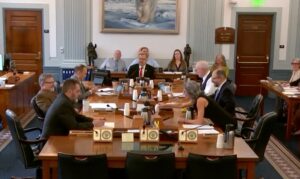
The Municipal Attorney’s Office is using a narrow and subjective review process to determine a petition’s validity and David Nees, one of the recall organizers, is dumbfounded:
“We’re really frustrated with it [the decision]. She [Vogel] is tightly interpreting a law that is supposed to be loosely interpreted so the general public, not attorney-types or full-time politicians, can participate in the process without being tangled in red tape and regulations.”
Delays from the Clerk and Municipal Attorney on the recall petitions have become standard since Sept. 2, when the first denial was issued after 30 days of review
Alaska State Statues, Section 29.26.290., states the Clerk’s Office must, within 10 days after the date a petition is filed: (1) certify on the petition whether it is sufficient; and (2) if the petition is insufficient, identify the insufficiency and notify the contact person by certified mail.
In August, the Municipal Clerk’s Office declared it would take 30 days, not 10 days stated in the statute, to certify a sufficient or insufficient recall petition. The Muni has also stated it has no certain deadline it must meet in terms of responding to an application for a recall petition.
Thus far, the only recall petition approved by the Clerk’s Office is a watered-down version, rewritten by the Municipality Attorney. That petition is to remove Assembly Chairman Felix Rivera.
Additionally, the sponsors of that petition request were initially informed they would not be allowed to hire signature collectors, although they have since determined on their own that they have a legal right to do so.
The Anchorage Clerk’s Office has denied four separate recall petitions — for Quinn-Davidson and Perez-Verdia and two recall petition requests against Assembly member Meg Zalatel, at the Municipality Attorney’s recommendation. Rivera’s is the only recall that is able to move forward at this writing.
As for the recent recall rejections from the Clerk’s Office, David Nees sees a long legal battle ahead:
“Yes, we are going to court. These decisions make no sense, and unfortunately, our only two options are to rewrite a recall petition, which we’ve already done, or head to court. We’ll go with the latter. It’s just so sad. The municipality keeps taking a narrow approach to the recall process, including how you can collect signatures. Personally, it’s against the fundamental groundwork of the state constitution.”
A prior attempt to recall Assembly member Zalatel — the first recall to be filed — is now awaiting review by Judge Kevin Saxby, after an appeal was filed by citizen Russell Biggs.



