A group of longtime Knik Lake residents is appealing the Mat-Su Borough Planning Commission’s approval of Resolution 26-10 involving the expansion of Knik Landing, associated with Doug Massie and Broken Boat LLC. At the heart of the appeal is a broader question of government accountability: Will the Mat-Su Borough consistently apply the plans, setbacks, and protections it has established, and clearly explain how those standards are applied when residents raise concerns?
Residents want to make one thing clear: this is not a fight against the historic Knik Bar or against development. The existing bar has long been part of the community, and residents say they have had no complaints about its traditional operation. Their concern is whether the Borough consistently and transparently applied its own standards when approving the much larger new venue and considering its potential effects on a residential lake community.
Protections Already Exist
The Knik Lake Management Plan has been in place since 1995 and remains published by the Mat-Su Borough. It addresses residential quality of life, recreation, water quality, access, fish and wildlife, and public health and safety. Residents also note that Knik Bar has publicly referenced the plan on its Facebook page.
Residents are not asking the Borough to create protections from scratch. They want existing noise and quiet-hour protections recognized and meaningfully enforced as Knik Landing expands.
Their concerns include noise, parking, traffic and highway safety, wastewater and septic capacity, shoreline setbacks, emergency access, and the overall intensity of the expanded operation.
Shoreline Setback Questions
Residents are also seeking clarification about how the Mat-Su Borough’s waterbody setback rules apply to the proposed expansion and what this decision could mean for commercial development around lakes throughout the Mat-Su Borough.
The Mat-Su Borough’s waterbody setback requirements generally regulate structures and development near designated waterbodies, including required setbacks from the ordinary high-water mark. Residents understand the rule to require a 75-foot setback from the ordinary high-water mark for structures, subject to the specific provisions, exceptions, variances, and definitions contained in Borough code and applicable land-use regulations.
Accordingly, approval of one project should not be interpreted to mean that future commercial development may automatically place structures within 5 or 40 feet of a waterbody without complying with Mat-Su Borough setback requirements. Any proposed structure or commercial use near the shoreline must be evaluated under current Borough code, including applicable exceptions, variances, and other requirements involving wetlands, floodplains, septic systems, access, parking, lighting, or public safety.
Residents are asking the Borough to identify the precise setback rule applied to Knik Landing, explain how the ordinary high-water mark was determined, disclose any approved exceptions or variances, and clarify what the decision could mean for future commercial development around Mat-Su lakes in general. They also want the Borough to explain how the project complies with the Knik Lake Management Plan and applicable waterbody setback provisions.
Impacts Before the Doors Even Open
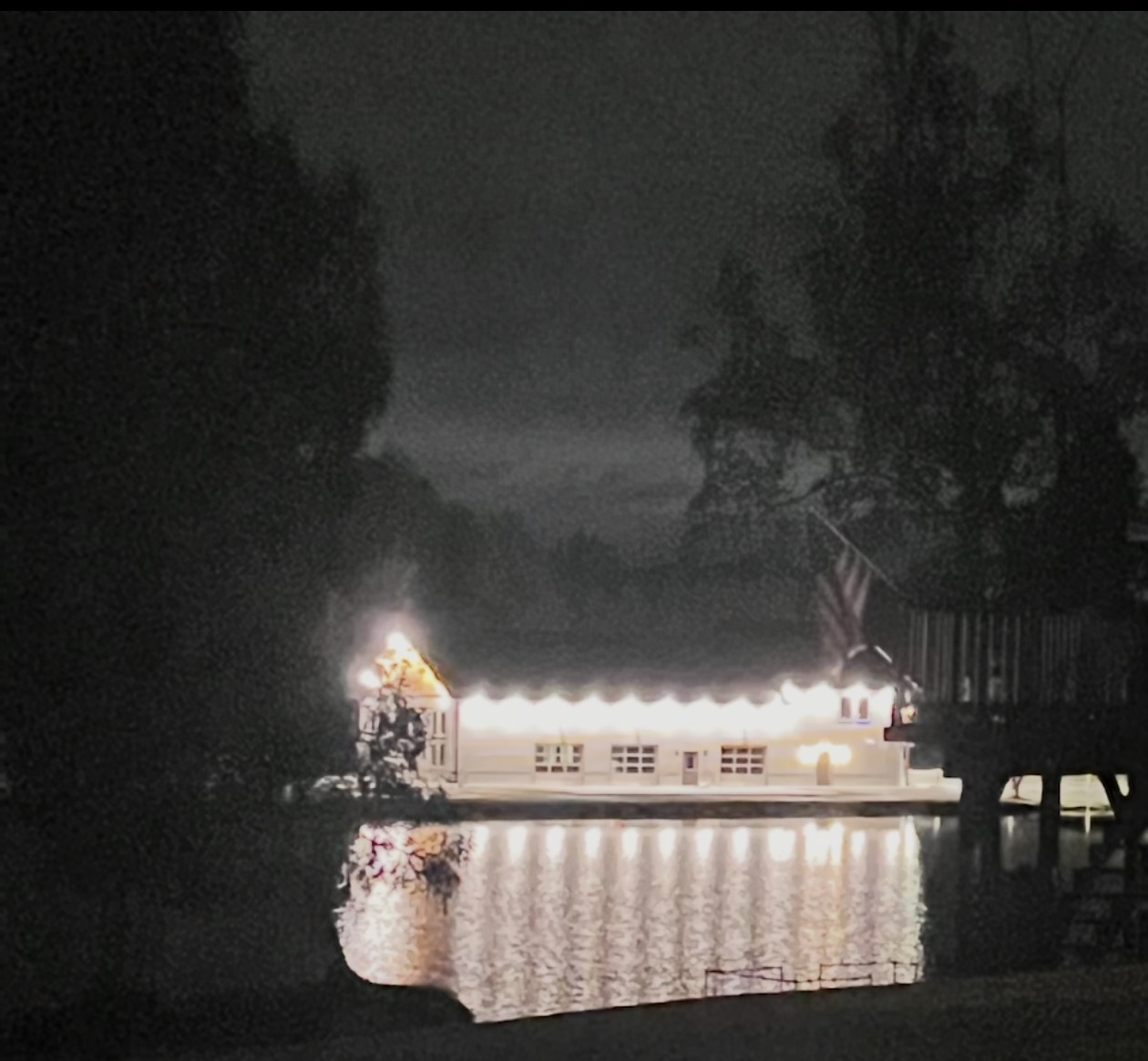
The new venue has not yet opened to the public, but residents say its impact is already visible. Nighttime photographs taken from across Knik Lake show extensive exterior lighting reflecting across the water. Residents who have long enjoyed dark skies, stars, and the northern lights worry that increased artificial lighting is changing an important part of rural lake life before the venue has even opened.
Because light and sound travel across open water, residents say impacts from a shoreline venue can extend well beyond the immediately adjoining properties.
Public access has also become a concern. In an August 20 public comment on the Knik Landing Facebook page, a longtime visitor described being heartbroken over the apparent loss of lake access she remembered from years of kayaking there and watching children play along the bank.
Questions for the Borough
Residents say important questions remained unresolved when the project was approved, including the combined occupancy and intensity of the operation, parking, emergency access, wastewater capacity, and shoreline setbacks. They are asking the Borough to clearly explain the standards it relied upon and how the project satisfied them.
They also point to a documented connection they believe deserves transparency. Borough records show Misty Massie served on the Mat-Su Borough Waterbody Setback Advisory Board in 2023 in the Home Builder, Lending and Real Estate representative seat. The same Borough record identifies Planning & Land Use Director Alex Strawn as support staff to that board.
Service on an advisory board does not establish wrongdoing or a conflict of interest. But because shoreline and setback issues are now part of the Knik Landing dispute, residents believe the connection is relevant background and should be transparent.
Why Residents Appealed
Residents participated in the Borough process, testified, and documented their concerns. After the Planning Commission approved the expansion, they exercised their right to appeal.
Some community members say they are uncomfortable speaking publicly and prefer to remain anonymous. They point to Doug Massie’s former senior law-enforcement role and his current candidacy for Alaska State House District 30 as reasons some perceive a power imbalance. This is not an allegation that Massie has threatened or retaliated against anyone; it explains why some residents say they are reluctant to publicly attach their names to their concerns.
The larger question is simple: How meaningful is public participation if residents can document concerns, appear at hearings, and point to longstanding Borough protections, yet still cannot clearly understand how those protections were applied in the final decision?
Mat-Su is growing, and development will increasingly meet established residential neighborhoods and lakes. Development and private property rights matter, but so do consistent rules, transparent decision-making, and the rights of neighboring property owners. The standards the Borough applies in this case may have significance well beyond Knik Lake as similar development questions arise around other Mat-Su lakes.
Knik Lake residents are asking the Borough for reasonable safeguards, enforcement of protections already in place, clear and consistent application of its waterbody setback rules, and a fair and transparent review of their appeal.
For the families around Knik Lake, this is not an abstract planning dispute. It is their neighborhood, their homes, and their lake.
Press release provided by Knik Lake residents.