
JUDGE PURPOSEFULLY DRAINING DUNLEAVY DEFENSE FUNDS?
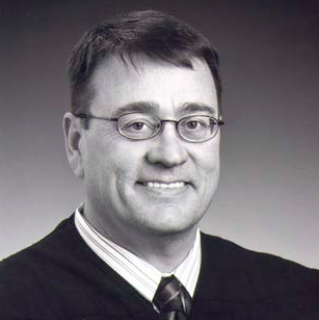
Judge Eric Aarseth is scraping egg off of his face this week. Trying to repair damage to his reputation of impartiality, he has called for another court hearing that involves one of his Jan. 10 decisions on whether the Recall Dunleavy petition can move forward to the signature-gathering stage.
Those oral arguments he says will be made on Jan. 29 in Anchorage.
BACKGROUND – A SERIES OF JUDICIAL MISSTEPS
The case involves a quest to unseat Gov. Mike Dunleavy via recall election. The State of Alaska and Stand Tall for Mike say there are no legitimate grounds for recall.
When the original oral arguments were made Jan. 10, observers noted that Aarseth had scheduled two hours for the court hearing. But when he arrived in court, the judge suddenly cut it to one hour — one half hour for each side.
That change left the Recall Dunleavy defense team scrambling without time to coordinate and cut their two presentations down by half. By the time Stand Tall for Mike’s attorney Brewster Jamieson stood to give his presentation, the judge quickly cut him off and told him to conclude.
As he began that hearing on Jan. 10, Aarseth announced he would have a decision at the end of it. This was an unmistakable signal he’d already determined the outcome.
And he had. After a 10-minute break after the hour of arguments, Aarseth returned with a 15-minute explanation of why the Recall Dunleavy petition was legal, and he then announced he would not be granting a “stay” on the petitions, while the matter was appealed to the Alaska Supreme Court by the Stand Tall for Mike group, defending the governor.
Don’t bother asking for a stay, he said, as he was ordering the petitions to be issued by Feb. 10.
Jamieson, arguing for Stand Tall for Mike, asked if he might ask for that stay anyway. Might he be permitted by the court to get that in writing, as this would allow the Stand Tall group to then appeal the “no stay” ruling to the Supreme Court as well as appealing the Aarseth ruling on the merits of the case? The judge begrudgingly agreed.
On Jan. 16, Aarseth had received the Stand Tall argument for a “stay” on the petition booklets, and he reversed his original ruling, and granted the stay, pending the decision by the Alaska Supreme Court.
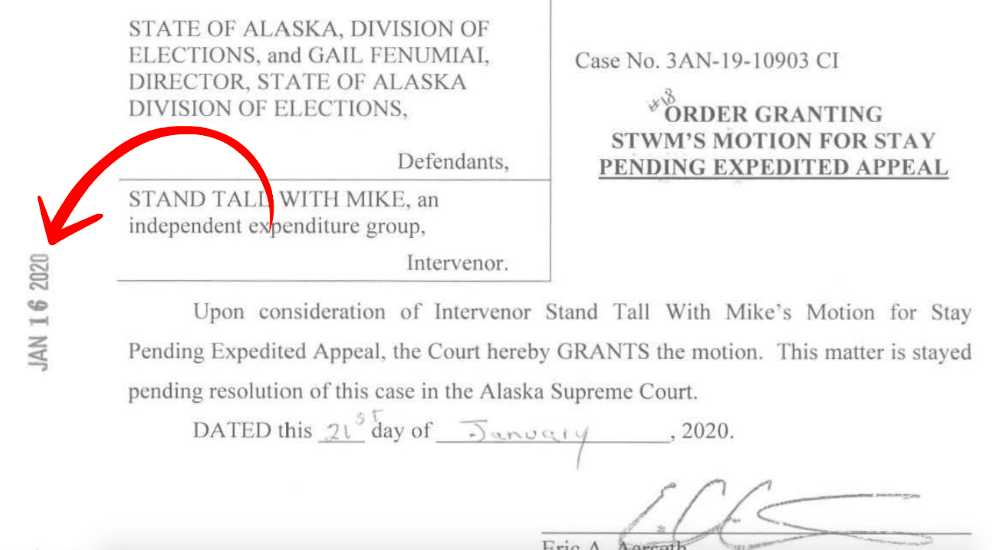
Six days later, on Jan. 22, Aarseth reversed that ruling and said he had made an error.
The court system issued an explanation on Twitter on Jan. 22:
“On January 21, Judge Aarseth reviewed the Unopposed Motion for Expedited Consideration of Motion for Stay Pending Appeal and the Motion for Stay Pending Expedited Appeal filed by STWM while out of town on a urgent family issue.”
“He telephonically authorized granting the Motion for Expedited Consideration only. The Motion for Stay Pending Expedited Appeal was inadvertently granted as well.”
Now, the hapless judge has scheduled oral arguments on the decision about whether the petition booklets can be issued while the case is still under consideration.
That court date, Jan. 29, is only 12 days from the date Aarseth had said the Division of Elections must have the petition booklets printed and available for the Recall Dunleavy group.
Each error and reversal runs up the bills for the Stand Tall group — writing motions, writing reply briefs — all in pursuit of appearing in a Kabuki courtroom, where both sides and the judge already know what the outcome will be: Judge Aarseth is going to rule against the governor and for the Recall Dunleavy group. That you can take to the bank.


