
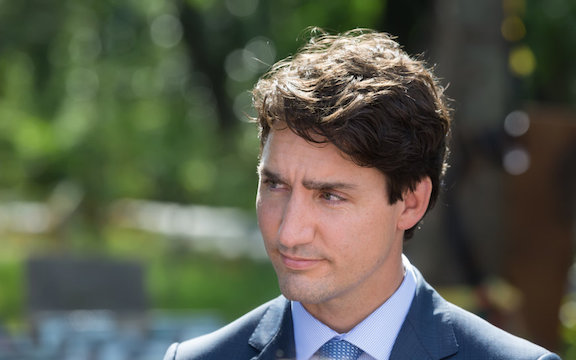
Canada’s Prime Minister Justin Trudeau has ordered major Canadian grocery companies to come up with a plan to “stabilize” prices of food. He has ordered them to come to Ottawa to meet with him, and given them until November to come up with a plan for lowering prices, or he will institute even higher taxes.
Trudeau told the heads of the five largest supermarket chains, including American stores Walmart and Costco, that they are to blame for high food prices.
“If their plan doesn’t provide real relief for the middle class and people working hard to join it, then we will take further action, and we are not ruling anything out including tax measures,” Trudeau said during meeting in London, Ontario, on Thursday.
“Large grocery chains are making record profits,” he said. “Those profits should not be made on the backs of people who are struggling to feed their families.”

The retailers have pushed back. While grocery prices have risen 8.5% in one year, retailers say the reason is higher costs from producers, suppliers, and transportation, as well as the war in Ukraine. Grocery stores typically work with extremely small profit margins of between 1 and 3%. They can stay in business only due to volume of sales.
“Rather than casting blame where the experts agree it does not belong, the federal government should look in the mirror,” the Retail Council of Canada said in a statement.“The government could take a number of steps to make food more affordable, including temporarily removing the carbon tax from farmers, food processors and distributors and cancelling government’s planned plastic packaging targets that could increase costs to grocers by $6bn a year.”
In addition to the plastic regulation, in 2021 Trudeau instituted a “carbon tax,” which he said would be capped at $50 a ton, but instead has tripled, driving prices up in Canada. He promised that 90% of the revenue from the carbon tax would be rebated to Canadians, but instead just 76% has been rebated.
Five main Canadian taxes increased in 2023 by hundreds of dollars per year for workers, employers, and consumers. According to the Fraser Institute think tank, Canada’s federal per-person program spending has reached unprecedented levels in recent years, “which puts a heavy burden on Canadian taxpayers who are ultimately responsible for footing the bill either through taxes today, or taxes tomorrow if the government allows debt to accumulate.”


